

 Whether you’re planning a family, are already pregnant, or have recently given birth, it’s beneficial to obtain as much knowledge and information as you can so that you are fully prepared. So, when we spotted a comprehensive antenatal course that allows free* access to UK families, we naturally wanted to share the opportunity with parents, expectant parents, and our readers. With that in mind, today’s post introduces you to a Complete Antenatal Course. It’s a free, 8-hour online course, led by midwives, that you can access today. We have already investigated it for you and thought it was fabulous! Read on to learn more about the course contents, highlights, and easy access details to get started — all at zero cost!
“This course has been carefully designed to guide you through every stage of your antenatal journey.” — NowBaby.
This well-presented antenatal course is delivered in video format. It contains 8 hours of content, divided into bite-sized chunks, which can be perused at your own pace. You can dip in and out, as time permits, via your login, which we’ll cover later in this article.
* Is the Course Really Free?
 Yes — the Complete Antenatal Course is currently free (correct at the time of writing, mid-February 2026). That assumes, of course, that you don’t choose to upgrade to premium options or sign up to other courses etc. We found it quick and easy to sign up without such add-ons — achieving virtually instant access to the course, without cost. That said, some families may consider paid upgrades if they so wish, for example, if they would like access to speak with midwives during the course, or get involved in Q&A sessions. It’s also worth pointing out that the main course is free because it’s funded through a commercial partnership — apparently saving £175! You may therefore see some short commercial clips during the course, but we found them minimal and unobtrusive.
“It’s divided into easy-to-follow modules, each containing short, focused videos. This structure allows you to learn at your own pace, whether you prefer to watch a few videos at a time or complete a full module in one sitting.” — NowBaby.
What Does the Antenatal Course Cover?
The online course provides evidence-based, practical guidance for new and expectant parents through the stages from pregnancy, through birth, right info early parenthood. Each module is led clearly by experienced midwives to inform and empower parents on their early parenting journey.
The following course content is included:
Pregnancy
The Pregnancy module includes 6 sub-sections that cover choosing a care provider, an antenatal appointment schedule explainer covering scans and tests, your diet including what you should/shouldn’t be eating during pregnancy, smoking, etc., self-care during pregnancy, possible complications to be aware of, and informed choice and consent information.
Preparing the Mind & Body for Birth
Preparing the Mind & Body for Birth has 7 sections that cover what affects the birth experience, choosing a birth place, what to pack in your birth/hospital bag, writing down your birth preferences (your Birth Plan), hormones and labour, your birth environment (a.k.a. Birth Zone), and finally perineal massage and its benefits.
Labour & Birth
Labour & Birth has ten sub-sections that include discussions around foetal position and which is best, signs that you’re heading towards labour, how to know you’re beginning labour, the various stages explained, the optimal time for cutting the umbilical cord, what’s known by midwives as ‘the golden hour’, the importance of skin-to-skin contact, checks on the newborn baby, the role of birth partners, and assisted births (using ventouse or forceps).
Pain Management
Pain Management comprises 6 course videos explaining the various options available to manage pain during labour. These include hypnobirthing, warm water showers, baths, TENS machines, Entonox (gas and air), opioids, and epidurals.
Induction of Labour
The Induction of Labour module is divided into 6 sub-sections that cover everything from what being induced means, augmentation of labour, decision-making, methods of induction, starting the process, and pain management during induction of labour (bearing in mind induced labour may be more intense for some).
Caesareans
The Caesareans module is divided into 3 sub-sections that include possible reasons for caesarean sections, the process of giving birth via caesarean and what to expect, and finally what to expect when you go home following a caesarean.
Postnatal Recovery
The Postnatal Recovery module discusses possible blood loss following birth, breast changes to expect, perineal tears, emotional and mental health considerations, and common postpartum concerns.
Newborn Care
The Newborn Care module is a very comprehensive course containing 12 sub-sections. These cover the Golden Hour that immediately follows birth — and why it’s important — along with the checks that are likely to be made for newborns, dressing your baby, swaddling, cleaning and bathing your baby, sleep for newborns, nappy change preparation and tips, jaundice and what to look for, and more. Towards the end of the module, there is also a commercial that you have to watch before being able to proceed to the next module, but it’s only short.
Breastfeeding
The Breastfeeding module is another comprehensive one and contains 9 sub-sections. These cover everything you need to know about breastfeeding, including anatomy and physiology, the benefits of breastfeeding to both mother and baby, how best to establish successful breastfeeding, expressing/pumping, ‘responsive’ feeding explained, what cluster feeding is and how it presents itself, potential problems or concerns around breastfeeding, and much more.
Infant First Aid & Medical Conditions
Infant First Aid & Medical Conditions is the final module in the free online course. This is a huge section, although most of the 20 or so sub-sections are only 1 or 2 minutes long. Covered are common conditions that may affect your baby, tips about how to manage them if you were at home without medical assistance nearby, common breathing problems, how to do resuscitation, first aid and basic life support for babies, tummy troubles, screening and tests commonly undertaken for babies, growth and centiles, followed finally by a section about jaundice and what the course midwife refers to as ‘funny head shapes’.
Remember: if you’re ever concerned about your baby, do reach out to a health professional, for example, your midwife, health visitor, GP, or paediatrician. In the event of a medical emergency, dial 999. For non-emergencies, the NHS number is 111.
The course is a “comprehensive guide for expectant parents to navigate pregnancy, prepare for labour, and care for newborns, ensuring a healthy and informed journey into parenthood.” — NowBaby.
How to Sign Up for the Free Antenatal Course
 You can currently sign up for the course here. Currently it’s free of charge and, when we tested it, we didn’t need to enter any payment details at all, having not selected any extras during sign-up. In fact, it was surprisingly quick and easy to gain access to the online course.
Choose your preferred password and, once you’ve signed up, you’ll receive various emails by return. These will include one welcoming you to the ‘Complete Antenatal Course’, and another confirming the login web address and a username reminder. Enjoy!
We hope many parents and prospective parents take the opportunity to make the most of this wonderful — and free — antenatal course. It’s incredibly comprehensive and informative, while also being presented in an easy-to-digest way. By immersing yourself in the course, you should feel more confident, informed, and empowered, and ready for the parenting journey ahead.
Your Childcare Provider in Clayton-le-Woods
Little Acorns Nursery provides high-quality childcare in Clayton-le-Woods, Chorley
 Are you looking for high-quality, reliable weekday childcare for your baby, toddler, or child under five? If you live in or around Clayton-le-Woods, Chorley, Little Acorns Nursery would be a great choice! With a Good Ofsted rating, support for free childcare hours for eligible working families and our own Forest School, Little Acorns would make a fabulous choice.
To start exploring a possible place for your child at Little Acorns Nursery, please get in touch via one of the following options:
As well as suiting families in Clayton-le-Woods, Clayton Brook, Clayton Green, and Chorley, Little Acorns Nursery may also be convenient for those in nearby locations like Thorpe Green, Pippin Street, Buckshaw Village, Whittle-le-Woods, Farington, Bamber Bridge, Lostock Hall, Euxton, Leyland, and Penwortham.
About NowBabyThe free antenatal course is delivered online by NowBaby, whose website states: they provide expert antenatal education online and in-person to expectant parents across the nation; courses are run by qualified and highly-experienced midwives and healthcare professionals and are peer-reviewed for accuracy; they work in partnership with over 140 NHS antenatal clinics across England and Wales and have partnered with the NHS for 24 years; they have a 4.8 rating on Trustpilot. (Learn more about NowBaby here). That said, we cannot make any guarantees in relation to third-party information, services or websites, including those of NowBaby. It is therefore important to do your own research and due diligence. |


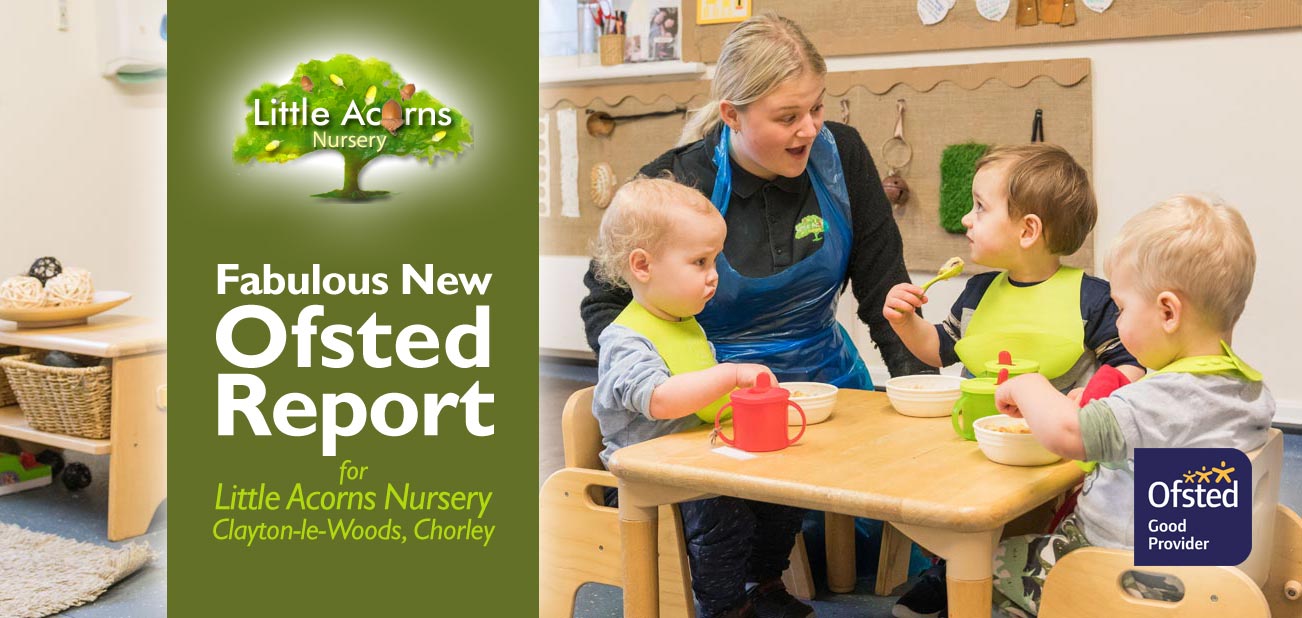
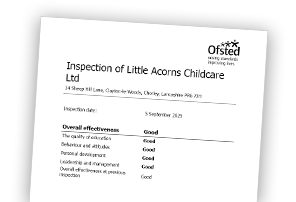 Overall effectiveness: Good



 In their earliest years, children’s brains are doing a phenomenal amount of developing. At this stage, little ones understand far more than they can express, and they’re learning to handle powerful emotions without the calm reasoning skills adults (mostly) have. The part of the brain responsible for emotional control is still under construction, so when they’re hungry, tired, frustrated, or simply want something right now, they can easily become overwhelmed. In short, they’re not trying to give you a hard time. They’re having a hard time.
 It’s not always easy as a parent, but your own composure is key. A calm, even tone and steady body language tell your child that you’re in control, even if you feel anything but. Also, try avoiding lengthy explanations in the heat of the moment — too many words can overwhelm an emotional toddler.
 The nightmare scenario: You’re halfway down the biscuit aisle when your toddler takes an unhealthy shine to a chocolate-covered, sugar-filled snack that’s really not going to be good for them. So, you say no. They flop to the floor, wail at a volume that seems to fill the entire supermarket, and protest in a dramatic fashion that catches the attention of every shopper in the vicinity. Not only is your child in full, public, tantrum mode, but you’re also going to feel judged!
 Scenario: At home, your child sees their sibling or a friend playing with the toy they absolutely must have right now. They shout, try to grab the toy, and then the sobbing begins.
 Scenario: Dinner is served, and your child takes one look at the plate and decides it’s the worst thing that’s ever happened to them. Cue gesticulating arms, shouting and, in all probability, some dramatic sliding under the table.
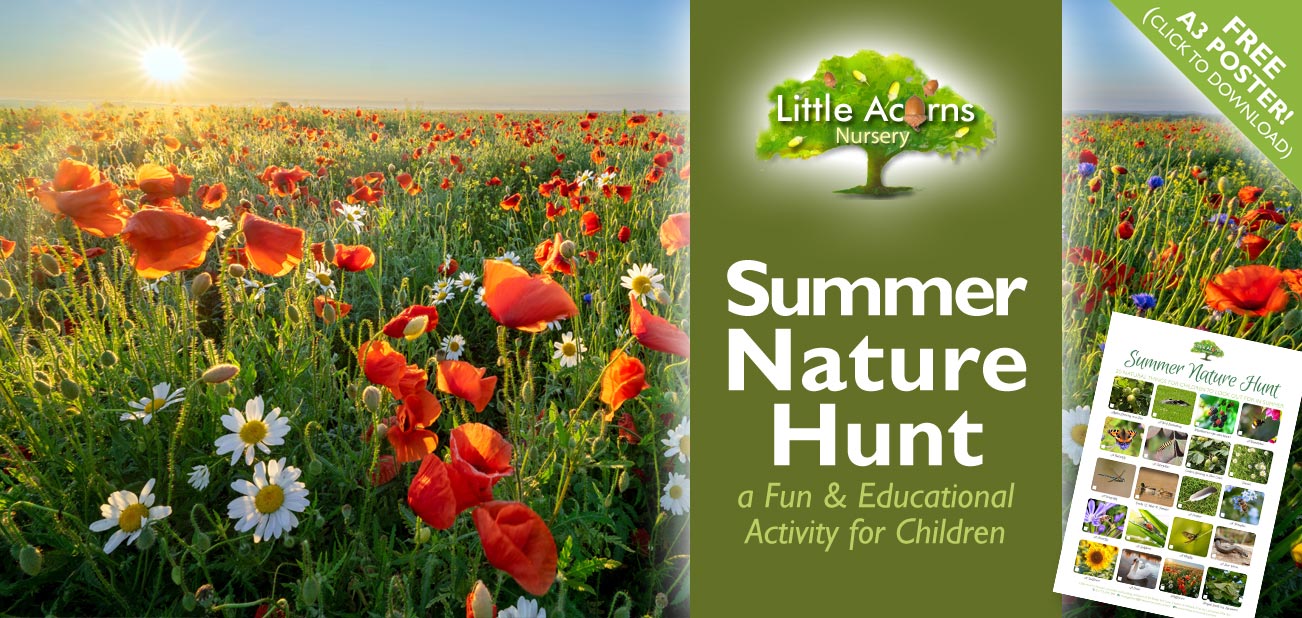
 Summer is a wonderful time for children to get outdoors. There, they can breathe the fresh air, benefit from being closer to the natural world, and escape from electronic screens. Nature is incredibly good for children as well as adults (more about that later). A simple way to encourage little ones outdoors is to take them on an exciting and educational nature hunt! There are many fascinating things to look out for during the summer months including butterflies, caterpillars, bees, beautiful wildflowers and much more. A summer nature hunt will open their eyes and minds to the wonders of nature’s flora and fauna, lead to educational conversations with accompanying adults, and be an enjoyable and educational activity. Within all that in mind, we’ve put together a free Summer Nature Hunt poster that will give children and families an idea of what to look out for during the warmer months of summer — and serve as useful visual reference. The poster is free to download right here in this blog post (see below). Once printed out, it can be displayed large on children’s bedroom walls or taken along during the activity — perhaps reduced to a convenient size like A5. Children can use the little tick boxes to tick off each item that’s been spotted. So, venture out little ones — see how many wonderful things you can spot in the natural world this summer!
 Many of the adorable creatures featured in the poster will be easy to spot at this time of year. Bees, hoverflies, and other pollinators are common to see where flowers are blooming. Butterflies are both stunningly beautiful and at their most abundant during July and August each year, so are sure to delight children with their fabulous colours and patterns. Delightful ladybirds are also rather abundant right now (time of writing: mid-July). Wildflowers like poppies and daisies always make the world a more beautiful place, so they’re a wonderful thing for children to discover too.
 Has your little one ever seen apples growing on a tree? All that blossom from earlier in the year has now given way to little green apples that will grow and ripen as we head further into the year — eventually becoming ready to fall or be eaten come autumn. It’s a great example to show under-fives where some food comes from and explain why pollinators are so important.
 We must also mention slow worms. Now we will be honest here: they’re quite a challenge to spot as they’re very shy and incredibly silent. They may hide in long grass, under grass cuttings, in the undergrowth, and in compost heaps. They are likely to come out only to warm themselves in the sunshine. That’s because they are essentially cold-blooded and legless lizards rather than any kind of snake. Children will have to be very lucky, patient, stealthy, or have deliberately made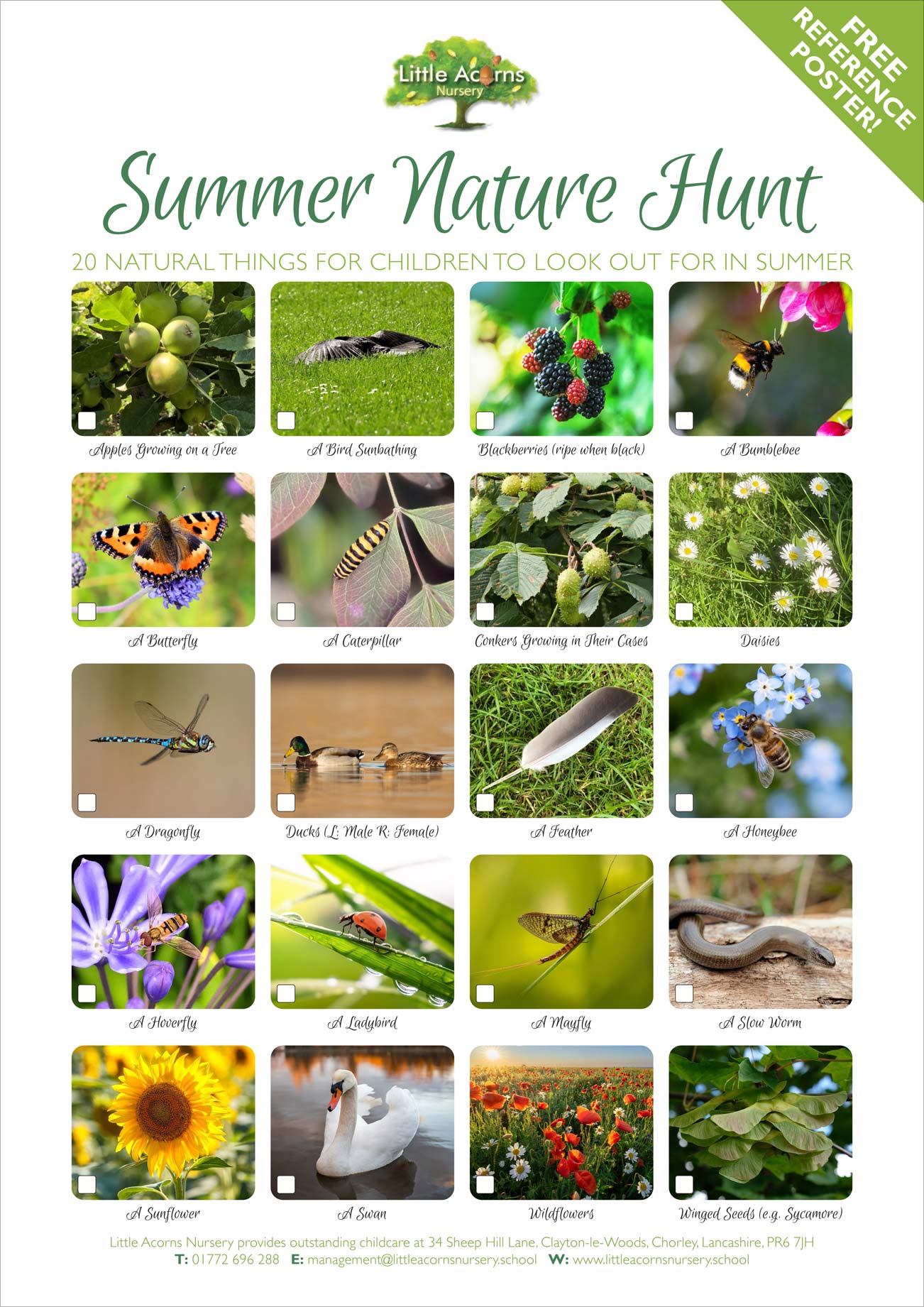
 As we said in the introduction, spending time in and around nature is incredibly beneficial to children of all ages. Studies have proven a myriad of benefits, in fact. Just a few examples include a lowering of stress and anxiety, improved motor skills, greater knowledge of the world (and children’s place within it), improved empathy for other living things, a feeling of greater responsibility for nature’s flora and fauna, a development of often lifelong greener values and choices, and even improved academic grades! These are just a few examples — the benefits of spending time closer to nature are incredible. Learn more about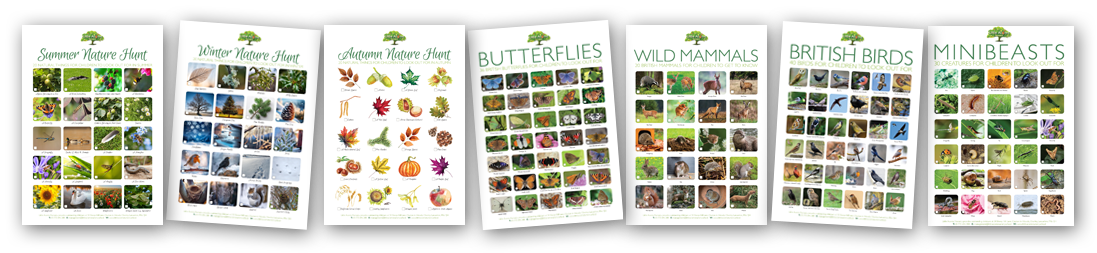

 In September this year (2025), free childcare for eligible working families expands to 30 hours per week for children as young as just 9 months. Little Acorns Nursery in Clayton-le-Woods is supporting the funding scheme too. Taken usually over 38 weeks* of the year, it means a generous 1140 hours of funded childcare will be available to eligible children in Central Lancashire over the course of a year. For the first time, the funding will cover eligible babies aged from only 9 months and children up to 2, the scheme having previously rolled out to eligible 3-and-4-year-olds last year. An urgent factor to be aware of, however, is that the funding application deadline is only weeks away for those wanting to start in the September 2025 term. So, whether you’re thinking of applying at Little Acorns Nursery or elsewhere, don’t delay your application any longer if you want to access the free funding from September. If your child is eligible and you do not apply by the deadline, your child will not be able to access the free funding for the entire September term. Read on to learn more about the new funding for eligible working families, the deadlines for applications, and the rules that apply.
 Helping to make childcare more affordable for working families;
 You can apply for funded childcare for eligible working families as soon as your child reaches the age of 23 weeks (that’s just over 5¼ months). If successful, they’ll be able to start using their free childcare hours the term after they reach the age of 9 months. Depending on when that occurs, they’ll be able to start accessing the funded childcare from either the 1st of September, the 1st of January, or the 1st of April, with application deadlines for each being the day before.
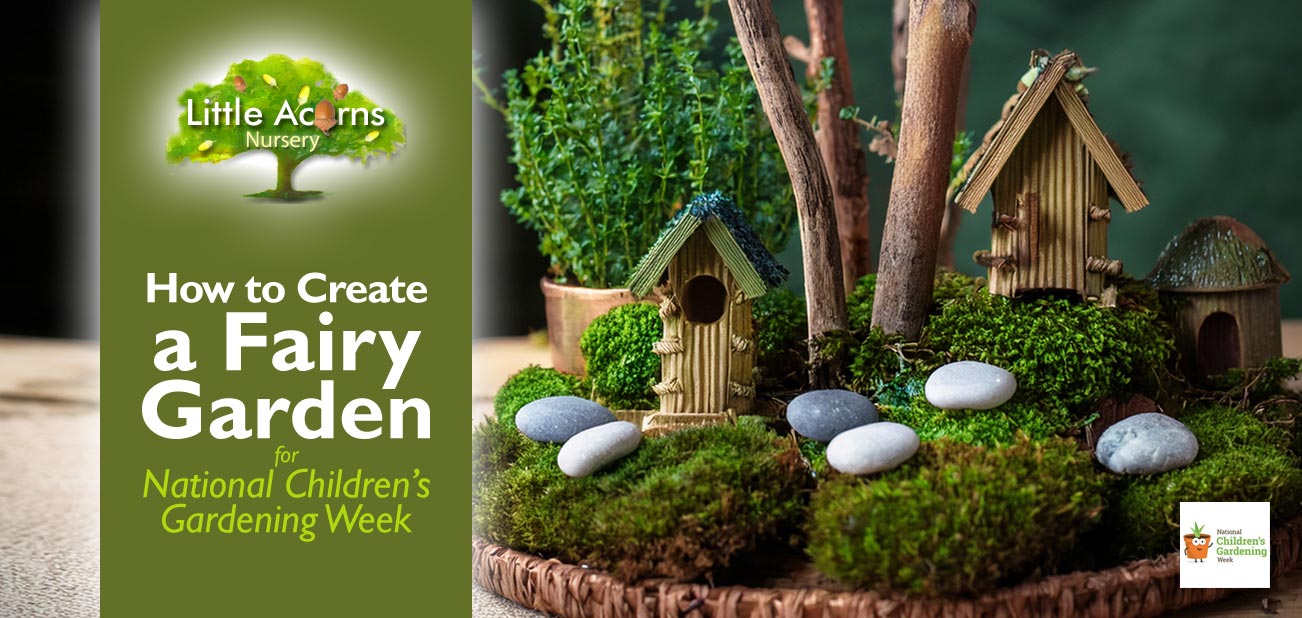
 National Children’s Gardening Week arrives in late May and is the perfect time for young children to get involved in gardening activities. In celebration of the event, we describe a wonderful gardening-related activity that’s small-scale, easy, fun, and educational — perfect for little ones! The finished result is also rather magical and, once complete, lends itself to imaginative play. Today, we outline how children can make their own miniature fairy gardens. These are a great way to introduce little ones to creative gardening at a child-friendly scale. Under parent supervision* and largely using scavenged materials from outdoors, under-fives can let their imaginations run free and get creative! What’s more, the results are simply enchanting and will bring magic and a whole lot of delight to young children!
 National Children’s Gardening Week begins on the 24th of May this year (2025) and runs until the 1st of June. The timing is no coincidence as it’s generally a warm week and therefore perfect for gardening and growing plants and flowers. What’s more, it also spans the half-term school holiday that most schools recognise in the last week of May.





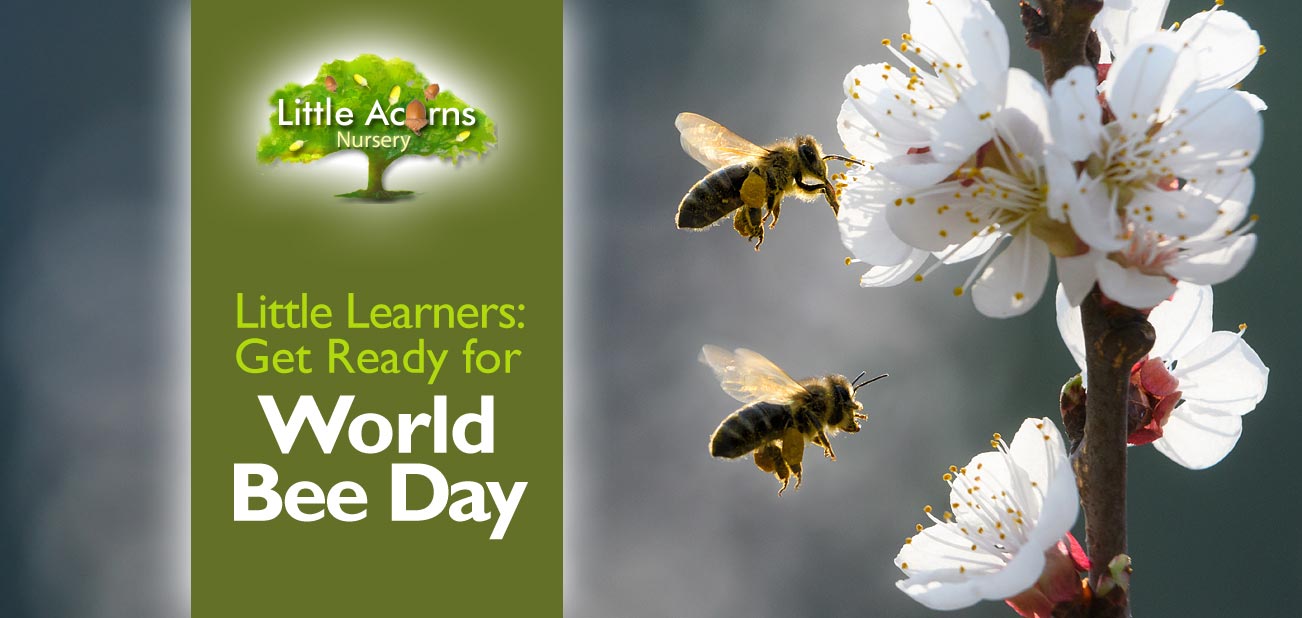
 Little learners, get ready – it’s almost time to buzz into action for World Bee Day! The annual event arrives in May and it’s a brilliant opportunity for children and families to get involved in something meaningful, fun, and full of learning opportunities.
 World Bee Day is celebrated every year on 20th May to raise awareness of the vital role that bees and other pollinators play in our world. From helping plants grow and supporting the food we eat every day, bees are some of nature’s hardest workers – and they need our help to survive and thrive.
 “Bee inspired by nature to nourish us all”
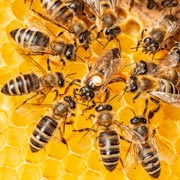 Getting involved in World Bee Day isn’t just fun — it also supports many areas of the Early Years Foundation Stage (EYFS), helping children learn and grow in meaningful, hands-on ways. Here are just a few ways bee-related activities can support early development:
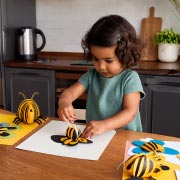 Expressive Arts and Design: Making bee crafts, drawing flowers, role-playing as working bees, or moving like insects in a dance — all help develop creativity and imagination.
 There are so many fun and simple ways for little learners to join in with World Bee Day! Here are a few activities that are perfect for children under five — each one encourages creativity, curiosity, and care for nature while also supporting the EYFS.
 Using paper plates, cardboard tubes, egg cartons or recycled materials, children can create their own bees! Add wings, stripes, googly eyes and antennae for a hands-on creative session. These are wonderfully creative activities that will boost several areas of the EYFS including Expressive Arts & Design and Physical Development.
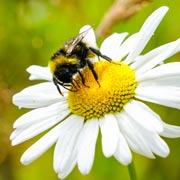
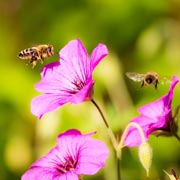 Explore the garden or outdoor space and, without disturbing them, see what pollinators your child can spot. Can they see any bees? What colours and flowers do they seem to like best? Are they collecting nectar? What type of bees are they? Bumblebees are super cute. Honey bees are super-hard workers and do so much for the world. A bee-spotting activity is a great opportunity to explore areas of the EYFS that include Understanding the World and Communication & Language.

 When April is on the horizon, there is a buzz amongst parents whose children will receive school offers that month. It’s quite a milestone in the lives of families as it’s the time they’ll find out if their children have received an offer for their top school choice. If not, will they be offered another “preferred” school listed lower on their application? It will often have felt like a long wait to find out the results, too, with families having applied in mid-January or potentially months earlier. Because we are an early years nursery, today’s guide focuses on primary school offers. We’ll explain in detail when to expect your child’s primary school offer, criteria that may have affected it, and your options if you’re not happy with the school place offered. To keep things as simple as possible, we’ll concentrate on applications for a standard school start date in the September term (rules and dates for ‘in-year’ applications are slightly different). If your child is due to start primary school this year, take a look.