Tag Archive for: Central Lancashire

Wildlife-Friendly Flower Growing Fun for Under-Fives

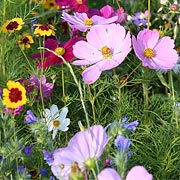
This wildflower-growing activity gets children outdoors, closer to nature, as well as doing some good for conservation and wildlife.Today’s flower-growing children’s activity follows on nicely from last month’s butterfly-counting activity. Once again, it focuses on getting children outdoors, closer to nature, and doing some good for conservation and local wildlife — including butterflies. Also, as we know, outdoor play is important and getting closer to nature is hugely beneficial to children.

This time, it’s all about growing wildflowers that help to feed pollinators and encourage them to come to gardens, balconies, patios, plant pots, and window boxes where children live. As well as butterflies, the pollinators include bees, hoverflies, dragonflies, damselflies, and some non-flying insects like beetles. What’s more, you may well find that wildflowers attract birds and sometimes even bats too!

Pollinators are not only beautiful and adorable, but they’re essential for a healthy environment and to pollinate food crops. So, all in all, this is another hugely worthwhile activity for under-fives and older children to get involved in. It’s also great fun and educational. So, without further delay, here is our simple guide explaining how children and families can start growing wildlife-friendly flowers to support and attract these magical little creatures. Enjoy!

When Children Should Sow Wildflower Seeds

Wildflower seeds sown in March and April will generally flower in late spring/early summerIt’s possible to sow wildflower seeds from March right through to mid-October or, at a push, early November so long as snow or frost is not forecast. Those sown closer to March and April will generally flower in late spring/early summer. Those sown very late in the year will flower the following year, from spring onwards. Any sown up to and including the middle period, for example during July, should still flower in the same year — wildflowers usually bloom some 60 to 80 or so days later if they’re timed to grow in the same year as they’re sown.

While pollen from the flowers is the main source of food for pollinators, the actual leaves of some late-growing varieties of wildflower plants are also useful as a food source, for example, for caterpillars. These will appear from around September followed by a second generation that will appear in April/May of the following year.

Given all of the above, the main message about timing is for parents and caregivers to plan ahead and also read seed packets and instructions carefully before sowing. In this way, children will know when to expect to see the plants, flowers, and resulting wildlife. Once the flowers and creatures appear, it’s sure to delight children!

Where to Get Wildflower Seeds

There are several easy ways for children and families to source wildflower seeds.There are several ways for children and families to source wildflower seeds. The most obvious way is to buy them commercially, in seed packets. These are available from any number of different outlets including nurseries, supermarkets, wildlife/nature charities, and countless websites online (here’s a good example).

A potentially cheaper way is to scour the Internet for free wildflower seeds and you may have some luck. Timing is important because some of the free wildflower seed schemes are likely to be early in the year — March/April for example. Some environment-centric organisations and companies may also provide free packets of wildflower seeds if you simply cover the cost of postage.

The best and totally free way to get hold of wildflower seeds, however, is to keep your – and your little one’s – eyes open when you’re outdoors around nature and plants. If you time it right, you’ll spot the seed pods of naturally-occurring wildflowers and, so long as they’re ready to be harvested, you can save the seeds for your child to sow later. Perhaps use small paper envelopes, so you can write the name or description of the wildflower being saved. If children help with harvesting seeds, ensure you adhere to our health and safety guidelines at the end of this article.

What Flowers to Grow

There are several ways to decide which wildflowers to grow.

  • Look out for bee, butterfly, and pollinator-friendly wildflower seed packets if buying commercially.If you buy your child commercially-available wildflower seeds, the information on the packet will often say if the resulting flowers are bee-friendly, butterfly-friendly, good for pollinators, and so on. So, if you’re sourcing seeds that way, much of the decision-making criteria around which actual flowers to grow is made clear and therefore the choice is easy.
  • Additionally, of course, the visual appeal of any flower photographs on the packets will help you with your choice. You may like a mixture of colours, or perhaps you’d rather limit the colour palette to just one or two colours. Cornflowers are blue, for example, while poppies can be red, orange, or yellow, and so on. Choosing by colour also therefore makes selection easier and indeed your child will probably enjoy helping in the decision-making process. Prompting them to choose by colour and pollinator-friendliness will, however, also be educational for them, subtly teaching them the importance of helping wildlife and the environment through the power of their personal choices.
  • On the other hand, if you/your child want complete control over the exact species of wildflower you/they want to see growing, then some homework will be needed unless, of course, you are already knowledgeable. The RSPB’s article on growing wildlife-friendly flowers may be a useful place to start and lists several varieties along with details of their colours.

Where to Sow the Wildflower Seeds

By their very nature, wildflowers are not terribly picky about what type of soil they will grow in.By their very nature, wildflowers are generally not very picky in regard to the type of soil they are happy to grow in. Therefore you/your child will have a greater choice of where to sow the wildflower seeds. A fairly clear sunny area is good, whether that’s garden beds, flower pots, window boxes, grow bags on a balcony, or even the lawn itself if you want a wild ‘meadow’ type lawn. Whatever the choice, it’s best if it’s somewhere that won’t be disturbed by you/the family though, as you wouldn’t want the wildflowers trampled once they do arrive.

How Children Can Grow the Wildflowers

Before sowing the seeds, ensure that the soil is free of weeds. Your child may enjoy helping with the weeding process or, if you are using pots and starting from scratch, you can avoid the weeding stage by using peat-free compost afresh. Either way, the topmost layer of soil will need to be loosened and raked neatly so there is somewhere for the seeds to fall and eventually embed. Again, children may enjoy getting involved in this part. If using pots or containers, ensure water can drain at the bottom, so the earth or compost will not become waterlogged later on.

Children will love it when their seeds have sprouted flowers and pollinators like bees and butterflies come to visit.With regard to sowing the seeds, follow any seed-specific instructions on packets in relation to timing and spacing. If you’re using self-harvested seeds or there are no instructions, simply sprinkle the seeds so they’re spaced, fairly evenly, i.e. not too densely sown. This will avoid the wildflower plants having to compete with one another once they start growing. A tip is to sprinkle from a height as this will naturally scatter them more widely. Once scattered, your child can help* to pat the soil surface down, either by hand or using the back of a tool like a spade or a trowel, so that the seeds are secured in the soil. Children can even ‘walk’ them in if they prefer. Once complete, ensure that you/your child keep the soil damp over the coming weeks. The preparation stage really is as simple as that!

Enjoy the Magic of Nature!

Ensure children know that they have now started a natural chain reaction that will result first in tiny shoots, then plants, then later beautiful flowers along with all the visiting pollinators, insects, birds and maybe more.

Don’t forget; following the flowering stage, the wildflowers are likely to ‘seed’ themselves at the end of their flowering season. That’s unless, of course, you/your child harvest the seeds yourselves, ready to sow at a place of your choosing next time. Some varieties of wildflowers will also naturally regrow next year — those are called perennials. — in contrast to those that only live for one year, which are called annuals. That said, even annual plants may self-seed, so their offspring appear next time, and such is the circle of life.

Nature & Forest School at Little Acorns Nursery, Clayton-le-Woods, Chorley

An outstanding childcare provider

Little Acorns Nursery, Clayton-le-Woods, Chorley

We hope today’s nature-based activity gives children, whether under five or older, an enjoyable time while also learning and helping to nurture the natural world. Nature teaches children a huge amount and that’s one of the many reasons why Little Acorns is a Forest School setting.

Little Acorns Nursery is an outstanding nursery/preschool in Clayton-le-Woods and the winner of an important National Nursery award. These are some of the many reasons why Little Acorns Nursery represents the very best early years childcare and education for babies and children under five in Central Lancashire. We also support Government childcare funding schemes, making it easier to afford for eligible families. To register your child for a nursery/preschool place, ask a question, or arrange a free guided tour of the setting, please select an option below:

For those not actually living in Clayton-le-Woods itself, we may also be a suitable choice if you live or work in nearby towns and villages including Clayton Brook, Clayton Green, Thorpe Green, Pippin Street, Buckshaw Village, Whittle-le-Woods, Farington, Bamber Bridge, Lostock Hall, Euxton, Leyland and Penwortham.

* Health & Safety of Little Ones

Parents/caregivers should supervise and accompany children, especially the very young, at all times to ensure their safety and well-being. For example, special care should be given near hazards including garden ponds, trip hazards and unhygienic areas. Children should be taught good practices around hygiene and self-care including the avoidance of poisonous plants, care around unhygienic soil, non-ingestion of seeds, avoidance of germs and so on. Keeping hands and fingers away from faces during outdoor activities, perhaps even wearing protective gloves when touching natural things like earth and plants, and washing hands with soap and water after outdoor activities, are also good examples to set for children.
 

The Big Butterfly Count: a Nature-Themed Activity for Families

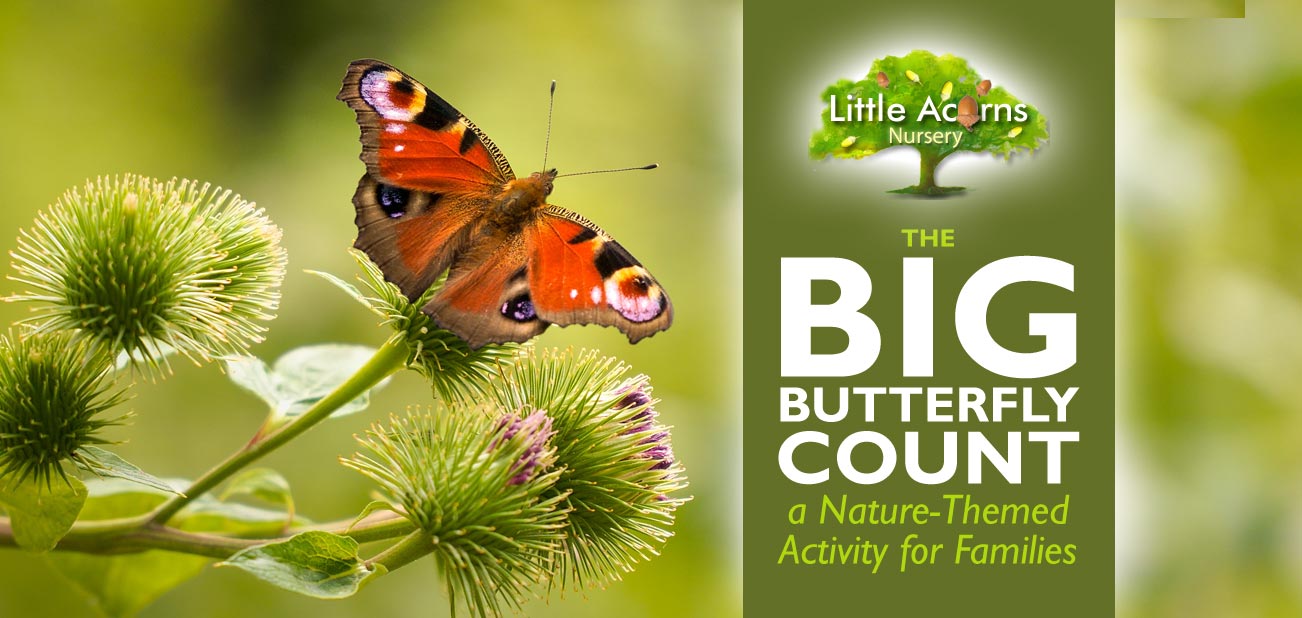
The Big Butterfly Count takes place in July and early August each year, when most butterflies have reached adulthood.Many will have heard of the Big Garden Birdwatch that takes place every year in January. However, fewer are aware of a similar activity called The Big Butterfly Count that takes place in July and early August. As well as being extremely worthwhile, it’s a wonderful activity for both children and adults to get involved in as citizen scientists. The activity helps with butterfly conservation, is educational for those taking part, and encourages families to get outdoors, closer to nature. And, as we know, getting closer to nature is very good for children and people of all ages. Today, we take a look at this wonderful butterfly-spotting activity and explain how children and families can get involved, help these beautiful little pollinators, contribute a little time to the conservation initiative and benefit themselves at the same time.
The Big Butterfly Count

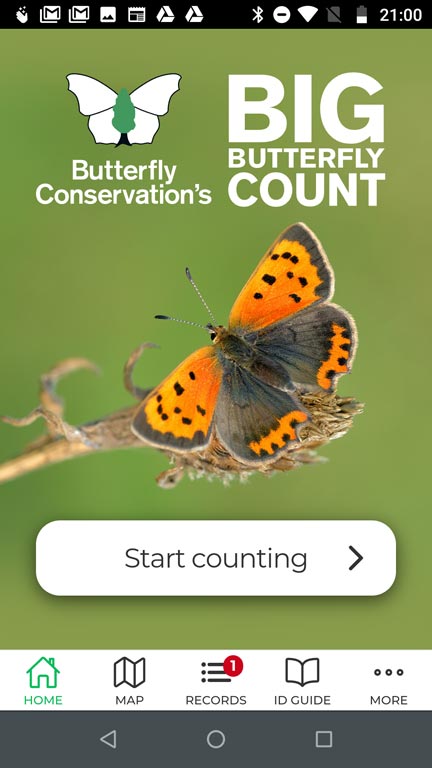
On 'Big Butterfly Count' day, families with smartphones can use the free smartphone app, which is available on both Apple IOS and Android.Organised by the charity Butterfly Conservation, the long-term aim of the Big Butterfly Count is for butterflies and moths to thrive and be enjoyed by everyone. That’s important because populations of butterflies have really suffered in recent decades, with some species of butterfly even becoming extinct in the UK and elsewhere. Changes in their numbers are also very good indicators of wider problems in pollinators of all types, including bees for example.

The key requirement of the Big Butterfly Count is simply for families across the UK to spend just a little time outdoors, during a very specific time of the year, to record how many different species they see during that time. The findings of thousands of families throughout the UK will then help Butterfly Conservation to understand what species are living in the different UK regions. Data submitted will allow a comparison of reported data from year to year, so Butterfly Conservation can see trends in butterfly populations and spot any significant increases, reductions and areas of concern.

“Help take the pulse of nature.”

When is the Big Butterfly Count?

For 2024, the Big Butterfly Count is any daylight time from Friday 12th July to Sunday 4th August. The reason this period is chosen is because that’s when most butterflies have reached adulthood, so people should be able to spot more of them. This ‘peak adult’ period is essentially at the same approximate period every year.

How Can Families Get Involved?

Getting involved in the Big Butterfly Count is easy and takes very little time. All that’s needed is a 15-minute period of time during daylight hours, between 12th July and 4th August. Bright, sunny weather conditions are preferred. Families simply need to find a good spot* outdoors and watch carefully, just for a quarter of an hour, and record which types of butterflies they spot. They can then submit their sightings any time up until 31 August. The count focuses on specific species within each area of the UK. These are mainly butterflies but they also include a few daytime-flying moths that Butterfly Conservation are interested in monitoring.

*Another alternative, by the way, is for children and families to monitor butterflies during a 15-minute walk i.e. you do not necessarily have to stay in one spot.

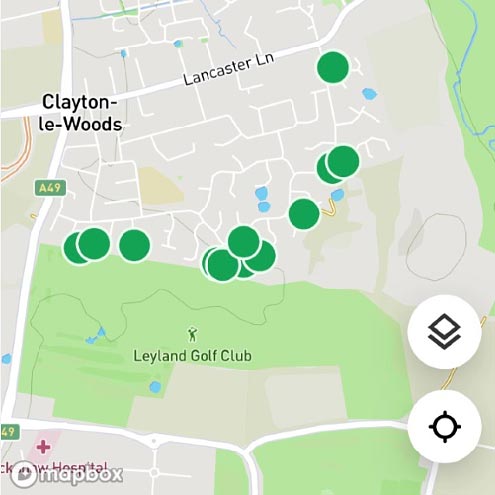
  • The Big Butterfly Count app shows the results of butterfly counts all over the UK. This image shows the number of counts in Clayton-le-Woods for 2022's count.If you are counting butterflies from  a static spot, count up how many of the same species you see at the same time. For example, if there are three Large Whites visible at the same time, count that as three. If you see only one at a time, but see it on three separate occasions during the 15 minutes, that counts as only one. That’s so that we can be sure it’s not the same one visiting three times!
  • If you’re counting while on a walk, however, simply count the number of each species you see during the entire 15-minute time frame.
  • You may do as many counts as you like; then simply submit the separate records, through the app, for each different location and/or date.
  • As well as having a section for your own submissions, an interactive map can be found on the smartphone app to show you results from other people across the entire UK. Zoom in for more detail. Shown in the image is the butterfly counts for 2022 in Clayton-le-Woods. In the app itself, each is clickable so you can find out which species were spotted and the number of them.

Where is a Good Spot to See Butterflies?

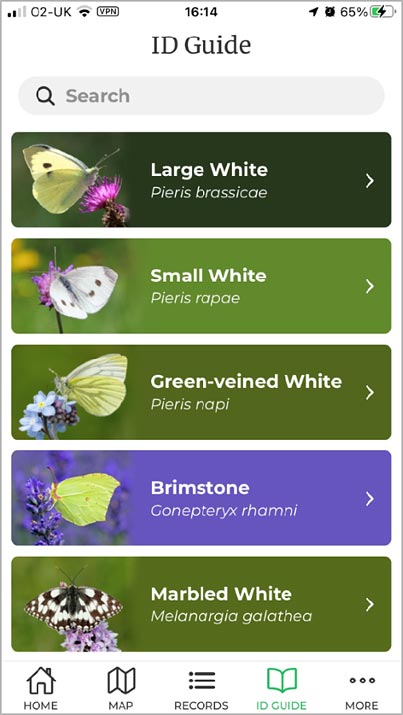
The 'Big Butterfly Count' smartphone app has a useful section to help you identify which butterflies and daytime-flying moths you see.A good spot, by the way, would be either somewhere outdoors with lots of flowers to attract butterflies and other pollinators, or somewhere you’ve left out some very ripe fruit e.g. pieces of ripe orange, apple, nectarine, grapefruit, banana, or strawberry— butterflies love sweet fruit even when it’s a little over-ripe! Whether that’s in your own garden, near potted flowers on a patio, school grounds, in a park, or out in the countryside is entirely up to you and your family. Even if you spot no butterflies during your 15-minute count, you should still submit your results, by the way, as that might indicate a problem with the butterfly population — and potentially other types of wildlife loss — in that area.

“Numbers of butterflies and moths in the UK have decreased significantly since the 1970s. This is a warning that cannot be ignored.”

How Can You Identify the Types of Butterflies?

Help is on hand to help children/families more easily identify which butterfly species they spot on the day — and at any other time. On the day, families with smartphones can use the free Big Butterfly Count phone app, which is available on both Apple IOS and Android. Below are the links to download them, free of charge, and they seem pretty fast to download too.

Download the Big Butterfly Count app for Apple IOS   Download the Big Butterfly Count app for Android.

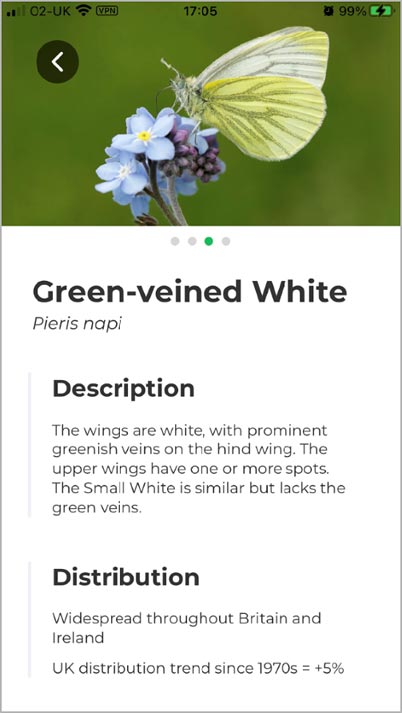
Detail pages include information like the difference between males and females and their distribution in the UK. Photos show wings both open and closed.For the youngest of children, an adult will need to supervise the use of the app but many older children will no doubt take to the technology like ducks to water. The app includes several sections including an excellent guide to up to about 21 species that the Big Butterfly Count is particularly interested in this year. Shown are details about each type along with photographs for reference and ID purposes. Details of each type of butterfly — or daytime-flying moth — include information like the difference between males and females, their distribution in the UK, and whether their populations have increased or decreased. Photos show each type with wings both open and closed, making identification even easier.

What if you Spot a Butterfly Species You Can’t Identify?

If you happen to spot a butterfly that’s not included in the species of interest shown in the Big Butterfly Count phone app for your area, you can instead submit them using the free iRecord Butterflies app, details of which are available here. That alternative app can be used any time of year and features many more types of butterflies and moths. It still, however, allows you to submit your sightings to help with conservation and monitoring efforts. Indeed, you could argue that it’s a more permanent way of children helping to both monitor and report butterfly sightings as little citizen scientists.

What If You Don’t Have a Smartphone?

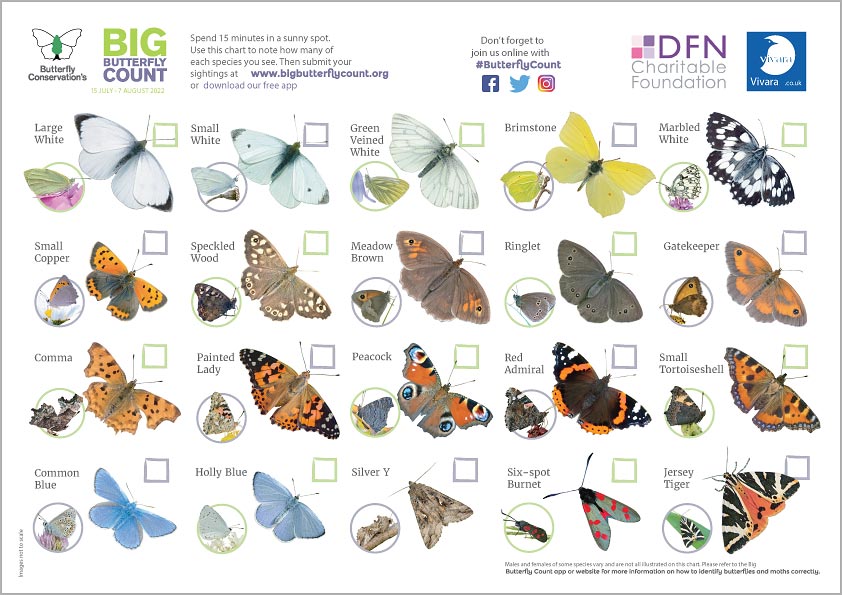
If you don't have a smartphone or can't use the app, downloadable charts of the butterflies in your area are available from the Big Butterfly Count website. This is the one for England for the Big Butterfly Count in 2023.You/your child can still get involved in the Big Butterfly Count even if you/they don’t have a smartphone. Instead of using an app, download charts of the butterflies in your area from the Big Butterfly Count website. You’ll need to fill in a very short form to access the chart links, but they are free of charge and obligation. Choose the most appropriate download link for your region and download the chart. You/your child can then view it on screen and zoom in for the best detail, or print it out on paper. Once you’ve ticked off any that you/your child have seen in the 15-minute period, you will need to ask a friend or family member who has the app if you want them to submit your count for you, however. That’s because paper, email and phone submissions cannot be accepted. Spotting butterflies is a wonderful activity for children, though, whether or not their results are submitted.

Safety & Well-Being of Children & Butterflies

Safety is paramount, of course, so young children should be accompanied and supervised by a responsible adult. It’s also important, of course, not to disturb or interfere with the butterflies. They are extremely delicate little creatures and their wings and bodies are too fragile for handling. Please do not try to catch them — you will do more harm than good.

“Butterfly declines are also an early warning for other wildlife losses … if their numbers are falling, then nature is in trouble. That’s why taking part in this massive citizen science enterprise is of great importance.”

A Focus on Nature at our Outstanding Nursery/Preschool in Clayton-le-Woods, Chorley

An outstanding childcare provider

Little Acorns Nursery, Clayton-le-Woods, Chorley

At Little Acorns Nursery, we know how important it is to get children involved with nature, so will always encourage worthwhile, educational activities like this one. As a Forest School setting, we encourage them to appreciate the natural world and all the flora and fauna within it, so this butterfly-spotting activity is a perfect fit. We also encourage children elsewhere and at home to get involved — it’ll do them, their families, butterflies and the natural environment great good.

Ofsted rate Little Acorns Nursery as an outstanding nursery/preschool in Clayton-le-Woods, and we’re also the winner of a National Nursery award. It simply doesn’t get any better than that and you therefore know your baby, toddler or child under five will be in good hands at Little Acorns. All Government childcare funding schemes are also supported for eligible families. To register your child for a place or to enquire about the possibility, please choose an option below:

Although Little Acorns is located in Clayton-le-Woods, Chorley, in Central Lancashire, we will also be a convenient option for those looking for high-quality childcare near Clayton Brook, Clayton Green, Thorpe Green, Pippin Street, Buckshaw Village, Whittle-le-Woods, Farington, Bamber Bridge, Lostock Hall, Euxton, Leyland and Penwortham.

Quotations in this article are from Butterfly Conservation.

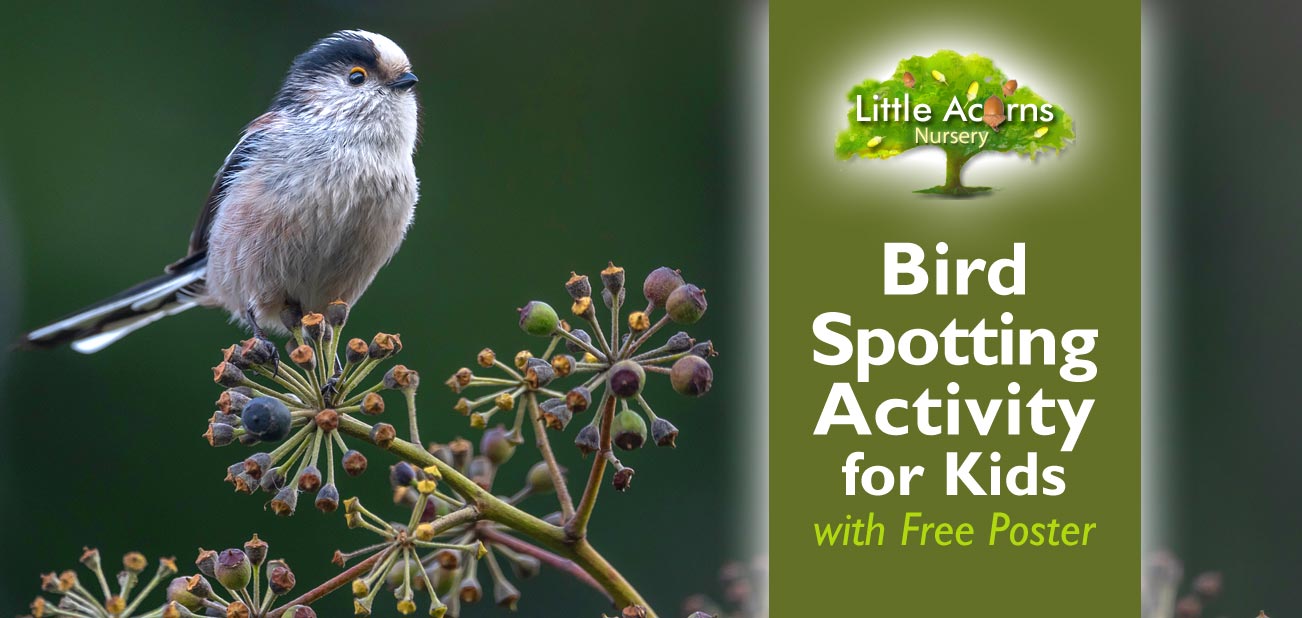
Bird Spotting Activity for Kids (with Free Poster)

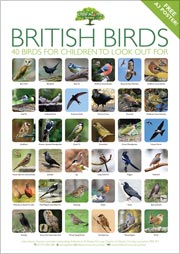
Free A3 bird poster for children use to see how many birds they can spot and identify over the course of a year. Read on (below) for download instructions.Are you looking for a fun and educational activity for your children? Why not encourage them to do some bird spotting? Not only is it a great way to spend time outdoors, but it’s also a wonderful opportunity for them to learn about nature and develop observation skills. As we know, being around nature is hugely beneficial to children and outdoor play is important.
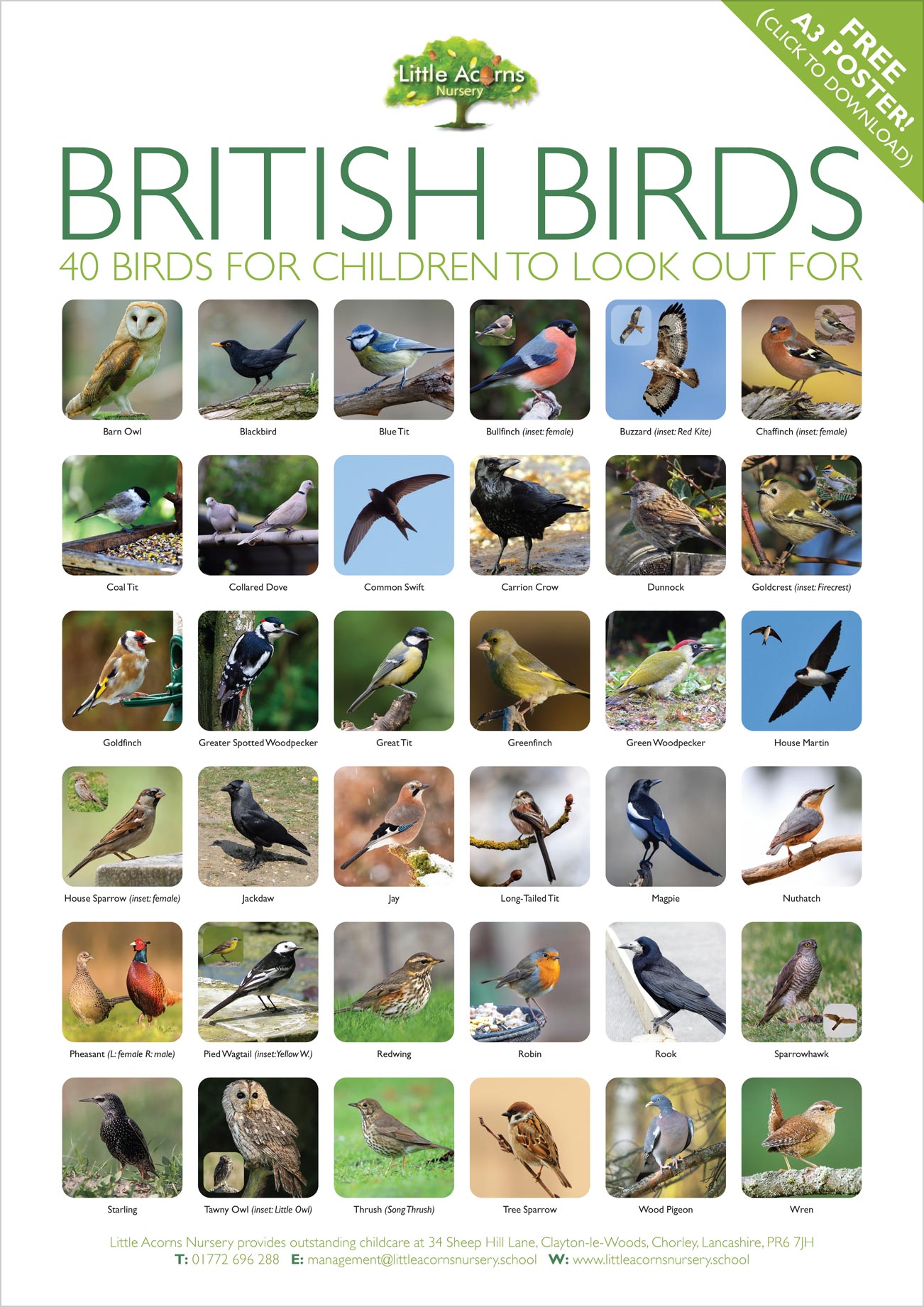
To help you get started, we’ve created a free PDF poster featuring 40 British birds that children can try to spot and identify. Whether little ones are in the garden, park, or countryside, there are plenty of opportunities to see these beautiful birds in their natural habitat. Children can even try to spot birds when they’re simply looking out the window — this is quite an accessible activity.

So why not download the poster, print it out, and head outside with your children? Instructions are given underneath the preview image shown below. Who knows, your little one(s) might just discover a new passion for birdwatching and nature!

Bird Poster Preview:

Bird Spotting Activity Poster - click to download (Acrobat PDF format, 4.8MB) then print out or view on screen.

Bird Poster Download Instructions

The poster is supplied as an A3 Acrobat PDF file and is less than 5MB in size. Click the large preview image above (or this link) to download the poster file. Depending on your device and web browser settings, you can usually left-click to view the poster on screen or right-click to save the file, then view it by opening it in Acrobat Reader . If printing, ideally print it to high quality A3 paper, or ‘reduce to fit’ if your printer only prints to A4. Viewing on screen is also recommended as the images are high resolution — you can zoom in to see the detail, even on the tiny inset images.

Teach Respect for Wildlife

Remember that the birds you’re observing are wild animals and should be treated with empathy and respect. Stick to designated trails or paths. This will help protect fragile habitats and minimize your impact on the environment. Teach children to avoid disturbing habitats, making loud noises, or getting too close to birds and other wild creatures. This is especially important when the time comes for young birds to leave their nests; they should not be disturbed and, generally speaking, their parents will know where they are even if you/your children cannot see them nearby.

With our free PDF poster featuring 40 British birds, you and your children can embark on an exciting adventure of birdwatching. Tick off each bird as you spot and identify them, and see how many of the 40 you can find over the course of the year. You might be surprised at how many different species you encounter!

An Outstanding Nursery & Preschool in Clayton-le-Woods, Chorley

An outstanding childcare provider

Little Acorns Nursery, Clayton-le-Woods, Chorley

We hope that our poster helps you and your family to start exploring the wonderful world of British birds! We love nature at Little Acorns and always encourage little ones to make the most of natural environments. It’s one of the many reasons we are also a Forest School setting.

We are an outstanding nursery/preschool in Clayton-le-Woods, offering the very best childcare service to babies and children under five. We support the Government’s free childcare funding schemes for eligible families too. If you’d like the very best start for your little one, enrol them for a place at Little Acorns and we’ll bring out the very best in them. We’d also welcome a visit, so why not arrange a tour and we’ll show you around and answer any questions you may have. Please select an option below to get started:

A Word About Safety:

While birdwatching is a fun and educational activity, it’s important to prioritise safety. Here are some tips to keep in mind while you’re out in the field:

  • Pay attention to your surroundings and any potential hazards, such as steep drops or bodies of water. Always keep a close eye on children and make sure they stay within your line of sight.
  • Make sure to wear comfortable, weather-appropriate clothing and footwear. Bring sunscreen and insect repellent if appropriate. Don’t forget some water, so you all stay hydrated.
  • Binoculars can be a valuable tool for birdwatching, but ensure they are used responsibly. Children and adults should avoid aiming them directly at the sun and be aware of surroundings while looking through them.

By following these safety tips, you can ensure a fun and enjoyable birdwatching experience for the whole family. So head outside to discover the wonderful world of British birds!

Little Acorns is a nursery and pre-school located in Clayton-le-Woods, Chorley, in Central Lancashire. We are also conveniently close for those families living or working near Clayton Brook, Clayton Green, Thorpe Green, Pippin Street, Buckshaw Village, Whittle-le-Woods, Farington, Bamber Bridge, Lostock Hall, Euxton, Leyland or Penwortham.

Significant New Childcare Funding Announced for Families.

A Guide to the Game-Changing Childcare Funding Initiatives Announced in the Chancellor’s Spring Budget 2023

Generous and far-reaching childcare funding reforms were announced in the Spring Budget 2023 last month. The Chancellor of the Exchequer’s new funding plans should give more parents, including those of even younger children, access to significant help with childcare costs going forwards. The new initiatives will:

  • allow Generous childcare funding was announced in the Spring Budget 2023, giving more parents, including those of even younger children, access to significant help with childcare costs.parents to return to the workplace sooner after the birth of their child if they so choose;

  • help fill vacant jobs in the workplace;
  • allow parents (particularly women) to progress their careers sooner after starting a family;
  • help to boost the UK economy, and;
  • perhaps most importantly give more children access to a good early years education, starting potentially at a younger age. Beginning no later than the age of 2 has been shown to better prepare children for the transition to school, boost children’s education overall, improve GCSE grades, improve career prospects and even increase earning potential once they reach adulthood. Learn more about the benefits of a good early years education here.

So, the new childcare funding should make a huge difference for those families that are eligible. Let’s take a look at the 3 key childcare funding initiatives announced…

Significant New Childcare Funding for Children Aged 9 to 36 Months

Many parents will already be aware of the existing, free, Government-funded childcare hours available to all 3 and 4-year-olds in England (plus some disadvantaged 2-year-olds). Well, in the biggest news from the Spring Budget, free childcare funding will soon extend to much younger children, aged from just 9 months of age if they suit eligibility requirements. Here’s how the free childcare will be rolled out:

  1. From April 2024,Significant new childcare funding has been announced for children aged from 9 to 36 months. children aged 2 from eligible working families will be able to claim 570 hours of free childcare each year. This is typically taken as 15 hours of free childcare each week over 38 weeks, although exactly how it’s taken may be agreed otherwise between the family and the childcare provider.

  2. From September 2024, just five months later, the same free childcare scheme will be extended to eligible children aged from just 9 months of age. This comes later so that childcare providers have time to adapt to the extra capacity.
  3. A year later, from September 2025, eligible children aged from 9 to 36 months will be able to claim double the amount of free childcare hours, taking their annual free childcare allowance up to 1140 hours. These will typically be taken as 30 free hours per week for 38 weeks of the year, but it may vary if childcare providers can offer flexibility.

In each case, eligibility for children aged from 9 to 36 months will use the same criteria as for those 3- and 4-year-olds receiving 30 hours of free childcare for 38 weeks of the year in the existing scheme. That scheme will continue to run too, meaning that children from 9 months to the age of four (inclusive) are all supported, right up until they start school. It should make a huge difference to working families and particularly benefit women, who have commonly found it difficult to return to careers following maternity leave.

Significant Improvements to Childcare Funded Through Universal Credit

Significant improvements have been unveiled for childcare funding through Universal Credit.Until now, 87% of those eligible to claim childcare support through Universal Credit were not doing so. One of the main reasons for this was that it’s geared towards low-income families yet required them to pay childcare fees in advance — and later claim them back. Paying in advance is not so easy when household income is low, as is typically the case for households that would otherwise be eligible. For this reason, another of the Chancellor’s initiatives announced in the Spring Budget 2023 is to roll out the following improvements:

  1. The Government will pay for childcare costs, subsidised through Universal Credit, in advance and;
  2. They will increase the amount eligible families can claim in childcare costs, through Universal Credit, by almost 50%. This will increase the amount of free childcare funding available through the scheme from £646 to £951 per month for a single child, and from £1,108 to £1,630 per month for two children. The increase will take effect from July 2023 and the rates paid may be linked to the Consumer Price Index until 2027/28.

The two measures combined should make a tangible difference to cash-strapped parents who would like to get back into the workplace, increase existing working hours, or boost household income. It will also mean, of course, that more children have access to an all-important early years education.

Significant Improvements to Funded Childcare Hours for Children at School

The Wraparound ‘Pathfinder’ Scheme

The Wraparound Pathfinder Scheme would fund childcare hours from 8 am until the start of the school and up to 6 pm after the school day ends.The final childcare-related initiative in the Chancellor’s Spring Budget aims to fix another key problem for parents: how to juggle their own longer working hours with their child’s shorter school hours. When a child attends school, they often finish their school day several hours before their parent is finished at work, for example. There is therefore a childcare requirement to bridge the gap and this may be required both at the start and end of the child’s school day. In view of this, the Chancellor announced the piloting of a new Wraparound Pathfinder Scheme, which would fund childcare hours from 8 am until the start of the school morning and, later in the day, fund childcare for the mismatched afternoon hours up to 6 pm. The pilot will test the scheme to see how well it works. If successful, the Chancellor aims to roll it out to the whole of the UK from September 2024.
A Good Early Years Education at Little Acorns Nursery, Clayton-le-Woods, Chorley

An outstanding childcare provider

Little Acorns Nursery, Clayton-le-Woods, Chorley

Little Acorns Nursery is an outstanding nursery and, with its incredible national award for childcare, offers babies and children possibly the best childcare provision available in Lancashire. So, if you are looking for the best nursery or preschool for your baby, toddler or child under five in Clayton, Chorley or Central Lancashire, please get in touch. We support all Government childcare funding and free childcare hours for eligible families and are a Forest School setting too. We’d love to show you and your little one around, register your child for a place or answer any questions that you may have. Please select an option below to take the next step and we’ll be happy to help.

Little Acorns Nursery is a high-quality nursery and preschool in Clayton-le-Woods, Chorley, near Clayton Brook, Clayton Green, Thorpe Green, Pippin Street, Buckshaw Village, Whittle-le-Woods, Farington, Bamber Bridge, Lostock Hall, Euxton, Leyland and Penwortham.

News Round-Up for Little Acorns Nursery, Clayton-le-Woods, Chorley

January began the new term with exciting Forest School sessions for our little ones.Having previously published guides and useful information here for parents, we thought it was time for a news round-up to highlight some of the wonderful activities that have been taking place with children at Little Acorns Nursery. Both children and staff have been extremely busy indeed, with exciting new initiatives, outings, special visits and extra-curricular activities. Let’s take a look at some of the most recent.

Forest School Sessions to Start the Year

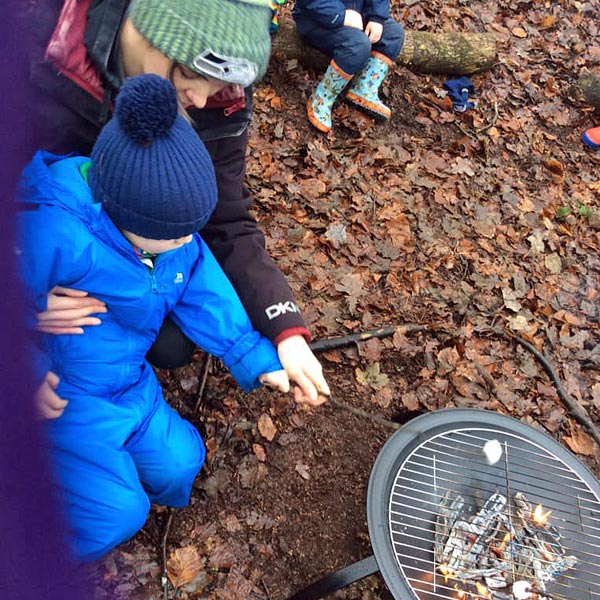
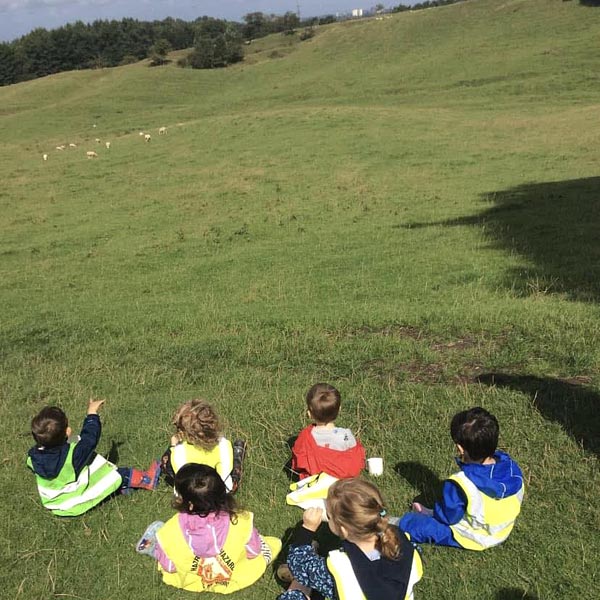
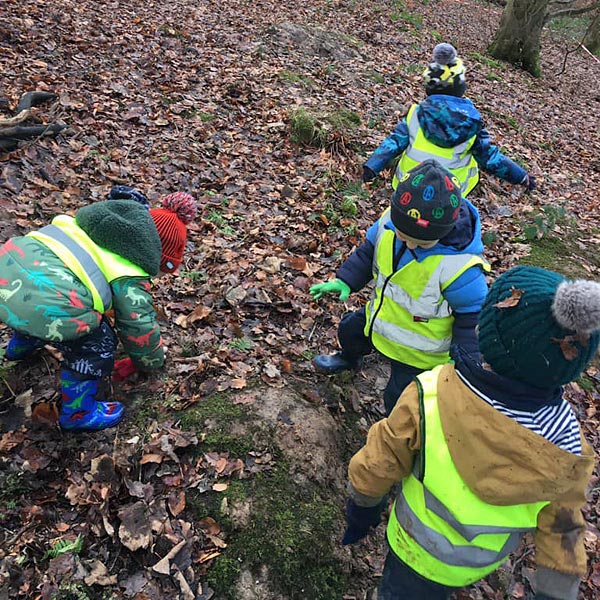
The pre-school children and ‘Rising 3s’ learnt all about fire safety.January began the new term with exciting Forest School sessions for our little ones. As well as trips to local countryside, woodland and natural open spaces, the pre-school children and ‘Rising 3s’ at Little Acorns learnt all about fire safety and its importance. (Take a look at  the small photographs to see the various activities — click any for a larger view).

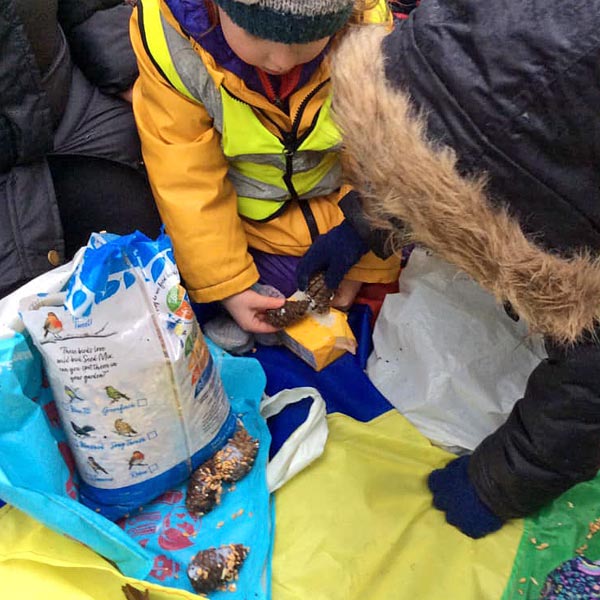
The children also enjoyed making some much-needed bird feeders for the local birds, many of whom struggle for food during the winter months. This coincided nicely with the RSPB’s Big Garden Birdwatch, which happens during the last week of January each year. During the annual event, both children and adults are asked to spend one hour outdoors to count up how many birds they see and which species they belong to. The children enjoyed making some pine cone bird feeders for the local birds.This is important for bird conservation, bearing in mind that the UK bird population has fallen by a staggering 38 million birds in only 50 years. Sadly, even some birds that may have been thought of as common are now in trouble — the starling, for example, is now on the RSPB’s ‘Red List’ — their list of birds whose populations have declined to worrying levels. Such birds need all the help they can get from us, so it’s good for children to be aware of the importance of conservation and caring for wild creatures.

“Not all classrooms have four walls.”

With access to the Great Outdoors, children can learn all about nature, the natural environment, and also about themselves.Forest School gives children access to the Great Outdoors so that they can learn all about nature and the natural environment — and also about themselves. As well as being educational and fun, spending time outdoors with nature has many benefits for children and some of these were previously explored here on the blog. Amongst other things, it teaches them new skills and even some they probably didn’t know they had — leadership, teamwork, critical thinking and problem-solving skills, for example. Learn more about Forest School in our comprehensive guide here.

Extra-Curricular Activities & New Skills

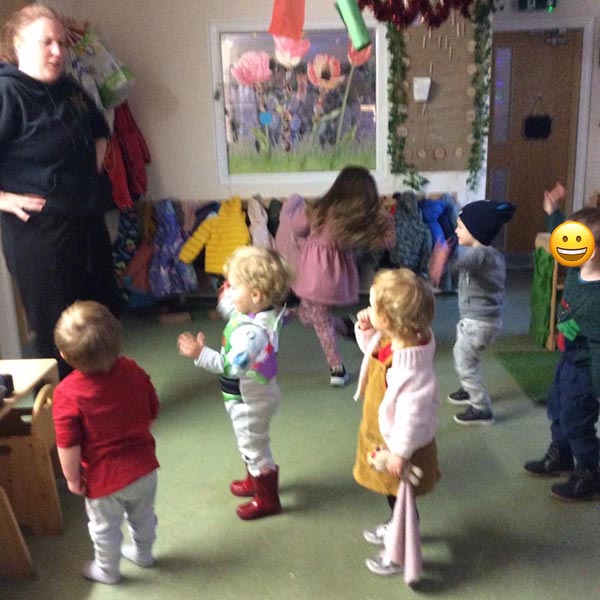
Toddler dance lessons are fun but also help to improve coordination, balance and motor skills.Babies and under-five children at Little Acorns Nursery are fortunate to have access to some fun, exciting and educational activities. These are optional but are very popular amongst the little ones. As well as the day-to-day activities and curriculum at the nursery, we also offer:

  • Baby Sensory Sessions, which are a perfect opportunity for babies to have various senses stimulated, potentially resulting in millions of new synapses being formed in their young brains. Sensory stimulation is incredibly important at their young age and we’ll write a separate guide all about it in due course, so watch this space.
  • Toddler Dance Lessons, which are not only immense fun for little ones but also an important activity that helps improve coordination, balance and motor skills.
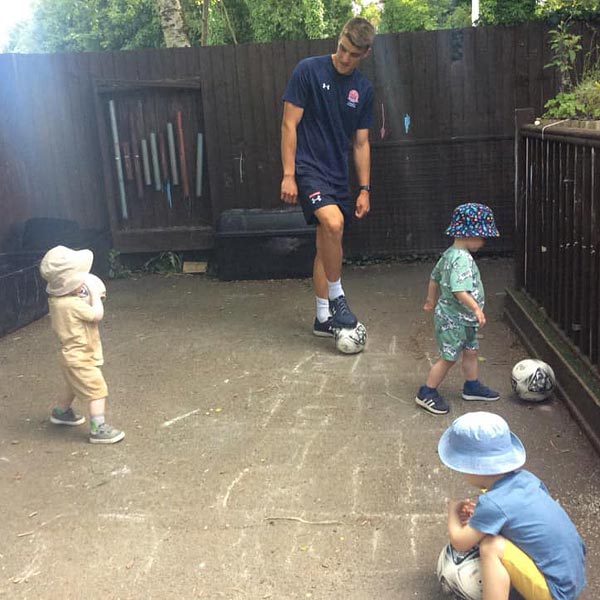
  • Football sessions allow children to have fun, keep fit, improve motor skills, learn the importance of teamwork and let off steam!Preschool Drama Sessions, where children get to act, role-play and entertain each other in fun and beneficial ways.
  • Football Sessions, which allow children to have fun, keep fit, improve motor skills, learn the importance of teamwork and let off steam!
  • Spanish Lessons, which introduce little ones to a second language, importantly at an early age. They have already mastered English at an incredibly early age, so adding a second language soon afterwards often comes surprisingly naturally to them — and is a great skill to have.

Baby Farm Animals Visit the Children

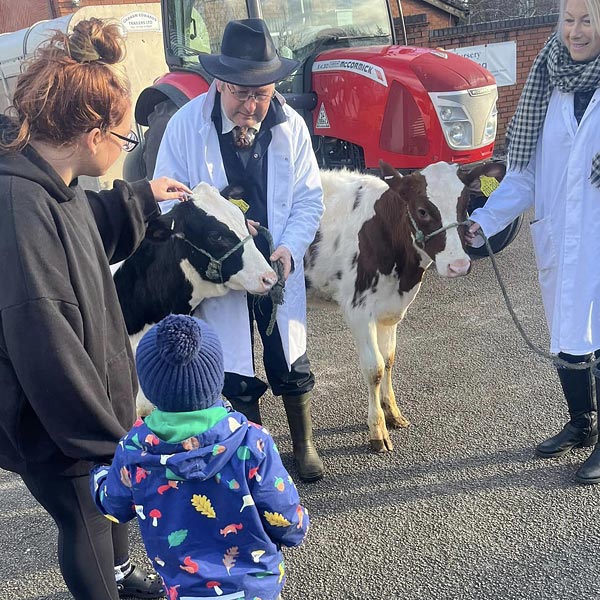
In January, the children had a surprise visit from 2 beautiful calves, called Louise and Jenny.During January, the children were delighted when they had a surprise meeting with 2 wonderful twelve-week-old baby cows, called Louise and Jenny. Both calves and children were intrigued to meet each other and it was an opportunity that many children may otherwise not have had access to. Special thanks go to one of our lovely parents, who kindly facilitated this magical event with the loan of their beautiful calves.

Weekly Visits to the Library

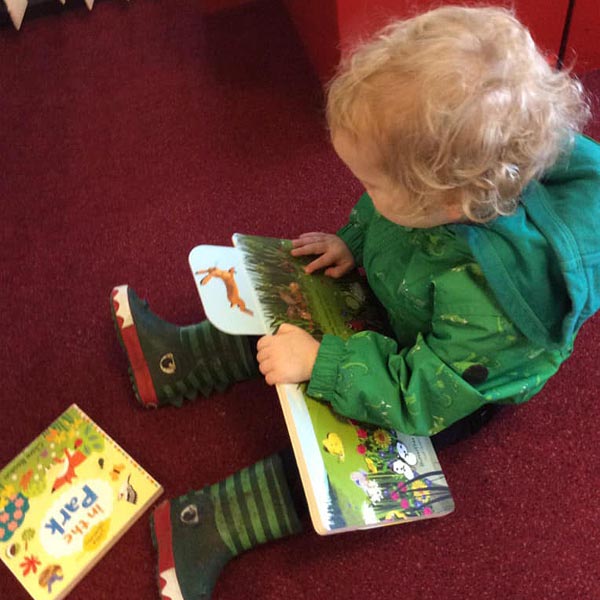
Our children enjoy weekly visits to the local library. There, they can independently look at their favourite books and discover new ones.One of Little Acorns Nursery’s regular features is our weekly visits to the local library with the children. There, they are able to independently look through their favourite books as well as discovering new ones. Encouraging a love of reading is hugely important as it’ll lead to an understanding of a wider range of topics, it will improve language skills, enhance cognitive development and teach them so much about — well — potentially everything!

The Children Visit a Local Care Home

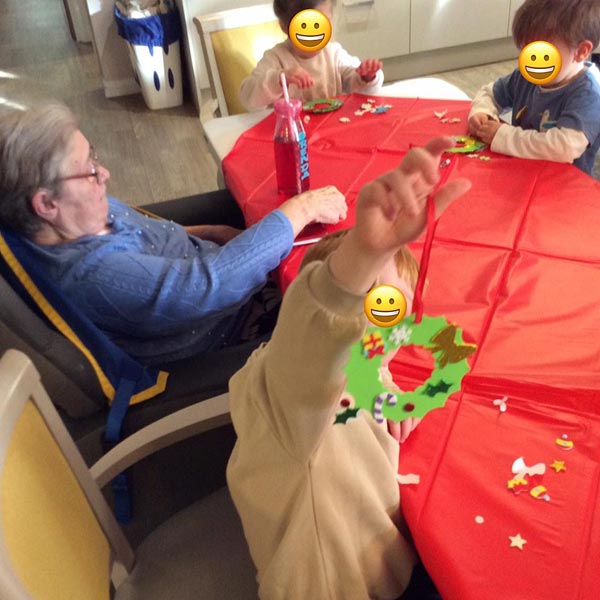
Children also enjoy monthly visits to the local care home, to meet and interact with the residents there.Children also enjoy their monthly visit to the local care home. It’s a great opportunity to meet and interact with the care home residents, who also really appreciate the youngsters’ company. Children and adults will bond as they talk, sing and even share in craft activities together. It’s a wonderful experience for all parties, teaching children many lessons about life and the importance of community, as well as enhancing communication and social skills. It also really brightens the day for the care home residents.

Gruffalo Crumble in Storytelling Week

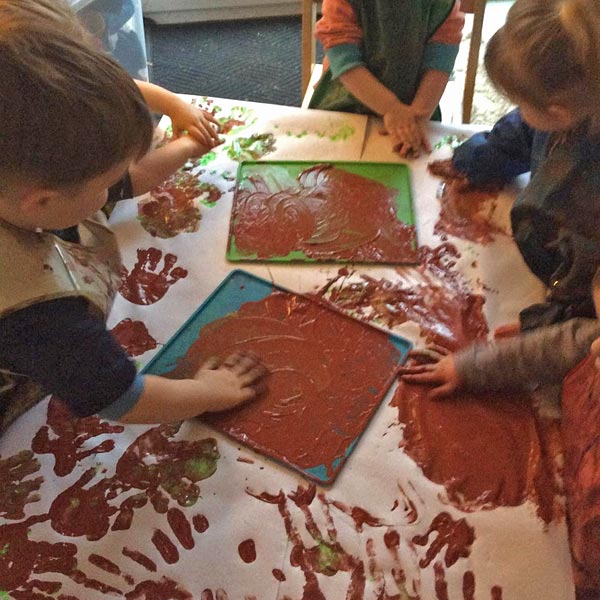
As January became early February, toddlers celebrated Storytelling Week in lots of different creative ways.As January became early February, toddlers at Little Acorns Nursery had great fun celebrating Storytelling Week in creative ways. Running between 30th January to 5th February, the event saw children doing things like making their own ‘Gruffalo Crumble’ and ‘Gruffalo Woods’ as well as playing in our ‘Blue River’. The accompanying photo (right) illustrates one of the many creative story-themed activities that the children enjoyed.

Vegetable & Fruit Growing at the Nursery

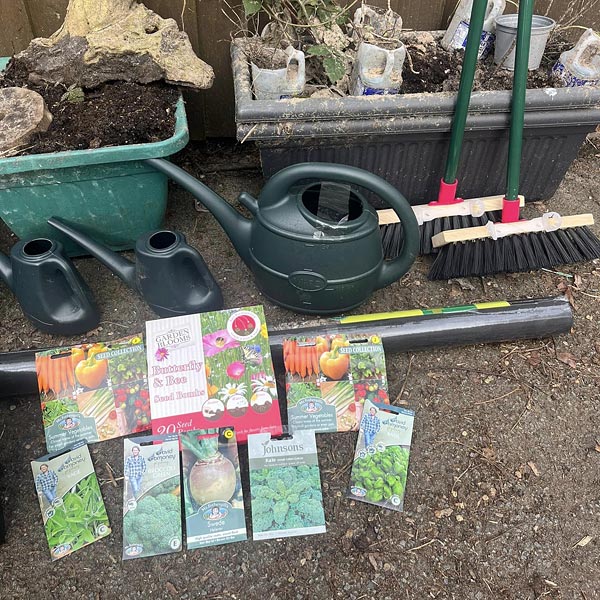
In February, we bought seeds and strawberry plants for the children, so they can begin the process of growing of their own vegetables and fruit at the nursery.By mid-February, staff and children at the nursery had begun to prepare for another nature-themed activity – the growing of our own vegetables and fruit! So, various seed packets were procured and preparation for sowing the seeds and eventually growing our own produce commenced. The plan is to incorporate this activity into daily nursery life. Children will thereby start to understand the importance of nurturing living plants and the benefits of growing their own food. They’ll learn to be responsible, they’ll learn new things about nature, where food comes from and the importance of tending their own vegetable patch at the nursery. It’s a thoroughly worthwhile and fulfilling activity for them to enjoy too.

We were also delighted when one kind grandmother noticed our Facebook post about this food growing activity and offered us some spare strawberry plants. A huge thanks to her for those and we’re now looking forward to a crop of delicious strawberries too!

An Outstanding Childcare Service & Forest School in Clayton-le-Woods, Chorley

An outstanding childcare providerLittle Acorns Nursery, Clayton-le-Woods, ChorleyIf you have a child under five and are looking for the best childcare in Lancashire, explore the opportunity of sending your baby, toddler or preschooler to our outstanding nursery and pre-school. Please get in touch to register your child for a nursery or pre-school place, request a guided tour of the setting or simply to ask any questions. Our staff are always happy to answer queries and to show families around this wonderful childcare setting. Please choose a button to get started:

Little Acorns Nursery offers award-winning childcare in Central Lancashire. We are a nursery and pre-school located in Clayton-le-Woods, Chorley, also being convenient for families in Clayton Brook, Clayton Green, Thorpe Green, Pippin Street, Buckshaw Village, Whittle-le-Woods, Farington, Bamber Bridge, Lostock Hall, Euxton, Leyland and Penwortham.

Follow Little Acorns Nursery on Social Media – for Nursery News, Early Years Information & Expert Insights.

Keep up-to-date with everything happening at Little Acorns Nursery and in early years news and research - subscribe to our social media channels.Are you are a parent or carer of a child under five? If so, you could learn a lot about childcare, parenting and early years learning and development by following Little Acorns Nursery on social media. We’re active across multiple social channels including Twitter, Facebook, Pinterest and Instagram and share high quality content useful to parents of under-fives. That includes parents of children at Little Acorns although, actually, parents anywhere will find the content educational and useful. Our high quality content includes unusually informative ‘early years’ articles and information. For example, a whole range of guides, the findings from various studies, suggested activities for kids and overviews of things like childcare funding schemes with eligibility guidelines. Also, of course, the social media channels include posts relating to the exciting activities happening at the nursery in Clayton-le-Woods, Chorley.

Following is an overview of where you can find — and follow — Little Acorns Nursery and what you can expect to see if you do …

Follow Little Acorns Nursery on Twitter

Follow Little Acorns Nursery on TwitterFollow Little Acorns Nursery on Twitter. There, you’ll see links to some great topics that relate to early years education. You’ll also see regular tweets and posts showing the exciting play and activities that children are taking part in at the nursery.

Follow Us on Facebook

Follow Little Acorns Nursery on FacebookOn Facebook, we share our ‘bigger’ guides and articles from our blog as well as showing interesting content from third parties. Also, of course, we post regular photos and updates for all the goings-on at Little Acorns Nursery in Clayton-le-Woods.

Follow our Pinterest Pins & Boards

Follow Little Acorns Nursery on PinterestWe love Pinterest! Its simple, pictorial approach makes it easy to just pick out something that interests you and save it to your own Pinterest pin board, so you can simply save it or share with others. We’ve got lots of pin ‘boards’ on our Pinterest profile, where we’ve pinned images and links to articles that interest us as early years practitioners. We think you’ll like them too. Board topics include nature activities, sensory activities for under-5s, early years parenting, Forest School, outdoor play, preschool, nursery school activities and, of course, Little Acorns Nursery itself.

Follow Us on Instagram

Follow Little Acorns Nursery on InstagramIf you’re on Instagram, check out our photo gallery on our own Instagram profile. It shows images of the children playing and learning at the nursery as well as featured images that link to our highly interesting blog posts.

Our Google Profile

See photos of the childcare setting, view a location map, read about us, find links to our blog posts and check out our customer reviews. Speaking of which …

Review Us

Review and rate Little Acorns Nursery on Google or FacebookIf you have used our childcare service and were pleased, please review and rate us on Google, or alternatively rate us on Facebook. Of course, though, if there’s anything at all that you’re not happy with, please contact us so that we can rectify the situation right away. We’re here to help!

Bookmark our Blog

Bookmark Little Acorns Nursery's blogWe’re active here on our Little Acorns blog too. Here, you’ll find larger articles that tend to cover the ‘bigger’ topics that parents and carers of children under five will find useful. These are well-researched, detailed and often very educational articles that will keep parents well-informed. For example, we cover topics like childcare funding schemes, help available to children with special educational needs or disabilities, educational food growing activities for under-fives, a myriad of ways parents can super-charge children’s reading and education, wonderful outdoor activity ideas for little ones, and a whole host of guides, how-to articles, activity ideas and useful information relating to parenting or early years learning and development. We’re adding to these great articles and guides regularly each month. So, if you haven’t already done so, bookmark our main blog page and come back regularly — our blog is a real treasure trove of information for parents! Follow the bold links for more information.

Little Acorns Nursery may add more social channels in the future, so watch this space.

An Outstanding Nursery & Pre-School in Clayton-le-Woods, Chorley

An outstanding childcare providerLittle Acorns Nursery, Clayton-le-Woods, ChorleyIt’s official, say Ofsted: Little Acorns is an outstanding nursery and pre-school. We provide exceptional, award-winning childcare in Clayton-le-Woods, Chorley, Central Lancashire (PR6). We are also conveniently located for those in the following towns and villages nearby: Clayton Brook, Clayton Green, Thorpe Green, Pippin Street, Buckshaw Village, Whittle-le-Woods, Farington, Bamber Bridge, Lostock Hall, Euxton, Leyland and Penwortham. If you would like your child to have the very best start in life, Little Acorns Nursery represents the ultimate childcare choice for families in Central Lancashire.

To register your child for a place, ask a question or to see the nursery in action, please click an appropriate button below:

Help for Children with Special Educational Needs & Disabilities (SEND)

Today, we look at how early years childcare providers can help children under five if they have special educational needs or disabilities.Today, we look at how early years childcare providers like Little Acorns Nursery can help children under five if they have special educational needs and disabilities. This is often referred to as ‘SEND’ or in longer forms like ‘SEN and disabilities’. Let’s explore the topic to get an overview of some of the help available.

Childcare Help for Children with Special Educational Needs & Disabilities

Early years and childcare providers can support children under five in a variety of ways if they have special educational or developmental needs, and/or a disability. Indeed, helping affected children as early as possible in their lives is of paramount importance:

“Early identification of needs and the timely provision of appropriate support, together with high aspirations, can help ensure that the vast majority of children who have SEN or disabilities can achieve well and make a successful transition into adulthood.” (DfE)*

The specific strategies used will depend on the child’s individual needs and the resources available to any particular provider. That said, typical examples of ways that early years childcare providers — and others — can support children with special needs include the following:

Identifying Children with Special Needs

If an area of special need is suspected, early years providers can work with parents and sometimes other professionals to get an assessment and support if needed.Actually identifying an area of special need or disability is, of course, the first, crucial step in being able to help a child. If an area of special need is suspected, early years providers can work with parents and sometimes other professionals, for example health visitors, speech and language therapists, paediatricians and so on. Involving such professionals will help with any diagnosis.

It’s worth bearing in mind that the presence of a special need may not be crystal clear in many cases, especially when children are very young. As an example, it would not be possible to diagnose dyslexia until a point when a child’s understanding of language is sufficiently developed to actually begin the process of reading text. However, the involvement of such external expertise may make the initial identification of a child’s special need or disability more feasible.

Following such a diagnosis, the various parties surrounding the child can then, together, develop a plan of how best to support that child during their early years and potentially beyond. For our part as a nursery and childcare provider, we will also ensure that we regularly review the support that an affected child receives, making adjustments and taking further actions etc. when appropriate. 

Creating an Inclusive and Supportive Environment

It's important for early years providers to create an inclusive environment that welcomes and supports children of all abilities.This is important. Early years providers can create an inclusive environment that welcomes and supports children of all abilities. Encouraging the inclusion of children in social groups and in the making of friends, for example, is of huge benefit to children’s well-being. Childcare settings can also provide special equipment or adapt the environment to make it more accessible for children with specific physical needs.

Creating a positive and responsive culture is also crucial, so that children feel comfortable to express themselves, irrespective of any differences or abilities/disabilities that they may have.

Additional Support and Resources Through Funding

In some circumstances, childcare providers can access special funding in order to provide additional support and resources to children with special educational needs or disabilities. Examples include the hiring of additional staff to provide one-to-one support, providing extra resources to support learning, or offering additional activities to extend children’s experiences. Access to the specific funding will, though, require eligibility criteria to be met. Often, such funding applications may require a team effort between parents/carers, childcare settings and potentially other types of early years professional mentioned above.

Tailoring Learning & Development Plans & Activities to Meet Individual Needs

Learning and development plans and activities are tailored to suit each child. This is designed to meet the needs of every child individually, including those with special needs.Early years providers like Little Acorns Nursery adapt the individual learning and development plans and activities to suit each child. In this way, they’re custom-designed to meet the needs of every child individually, including those with special needs. This is done as a matter of course as part of the Early Years Foundation Stage (EYFS) approach to early years education and development. The tailored approach helps to level-up the playing field and, in effect, encourage equal opportunities for each child. It also helps them to reach their own personal bests in every area of their learning and development.

Progress Checks

The EYFS approach means that our early years practitioners use a continuous assessment approach in regard to every child’s progress, whether or not they have special needs or any disabilities. However, for those affected by SEN or disabilities, such an approach is even more crucial.

Special education provision for children, including those with SEN or disabilities, follows four stages of action: “Assess, Plan, Do and Review.”

In tandem with this, all children receive a Progress Check at 2 and this will highlight whether progress is on track, additional support is appropriate and indeed whether there is a SEND-related issue. Either way, tailored activities and strategies will be planned and put in place to address any issues and help optimise every child’s progress.

Special education provision for children, including those with SEN or disabilities, follows four stages of action: “Assess, Plan, Do and Review.Later, each child will similarly have an ‘EYFS profile’ completed during the final term of reception year. However, as we’re focusing this article on children under five, we’ll not go into detail about that here.

The SENCo

As well as having a ‘Key Person’ allocated to each child, early years providers like Little Acorns have a Special Educational Needs Coordinator (SENCo). The SENCo oversees the setting’s tailored support for children, under their care, who have special educational needs or disabilities. Similarly, the local authority will have an Area SENCO. They will advise and help coordinate support for children with special needs between the local authority itself, the child’s parents, early years and education settings, health and social care services and so on. The Area SENCO will also help when the time comes to transition the under-five child to school.

Communicating with Parents and Other Professionals

Communication is key. Childcare providers like Little Acorns Nursery will communicate regularly with parents/carers and, when appropriate, local authorities, health visitors, paediatricians and other healthcare professionals. This is to ensure that everyone is aware of the child’s progress and any additional support that may be needed. Ensuring that all parties are pulling in the same direction is crucial to outcomes for each child, particularly if they have special needs and/or disabilities.

“When a child is very young, or SEN is first identified, families need to know that the great majority of children and young people with SEN or disabilities, with the right support, can find work, be supported to live independently, and participate in their community.” (DfE)*

EHC Assessments and Plans

In the event that a child does not make the expected progress despite everyone’s best efforts and high quality support, there is recourse to request an Education, Health and Care (EHC) needs assessment via the local authority. If such a request is made by a childcare setting, it would only be done with the knowledge of the child’s parent(s) and after discussion with them. Basically, such an assessment may result in a brand new plan to support the child, if that’s deemed appropriate. It’s a big topic in its own right, so we may follow up separately to explain more about EHCs in due course.

The ‘Local Offer’ from the Local Authority

The 'Local Offer' from local authorities outlines the help available in the area for children with SEN or disabilities, including how to access that support.It may be useful for parents and carers to note that local authorities have a duty to publish what’s known as a ‘Local Offer’. This outlines the help available in the area for children with SEND, including how to access that support.

A good example is the Local Offer published by our own local authority (Lancashire County Council), which can be found here. (Note that the early years childcare section of that particular Local Offer can be found here). A quick search there for SEND services will indeed reveal Little Acorns Nursery as an outstanding provider of childcare services, including for children with special educational needs and disabilities.

Free Funded Childcare Places for Children with SEND

While all 3- and 4-year-olds in England have access to free childcare provision each week, 2-year-olds with SEND may also be eligible for a significant number of free childcare hours if they get a Disability Living Allowance (‘DLA’), have a valid Education, Health and Care (‘EHC’) plan or have been referred through the local authority’s Portage service. Follow the bold links or speak to us at Little Acorns Nursery if you are local to Clayton-le-Woods, Chorley, and would like to learn more more about the options.

Outstanding Childcare in Clayton-le-Woods, Chorley

An outstanding childcare providerLittle Acorns Nursery, Clayton-le-Woods, ChorleyChildren get the very best start at Little Acorns Nursery. Little Acorns is an outstanding nursery and pre-school in Clayton-le-Woods, Chorley, Central Lancashire (PR6). We are also close to Clayton Brook, Clayton Green, Thorpe Green, Pippin Street, Buckshaw Village and Whittle-le-Woods. Farington, Bamber Bridge, Lostock Hall, Euxton, Leyland and Penwortham, so may suit those living/working in any of those nearby locations. Trust your child’s early years education and childcare to an award-winning nursery/pre-school and a nursery recognised by Ofsted as an Outstanding Provider

To register your child for a place at Little Acorns Nursery, to ask a question or to see the nursery in action, please contact us:

* Quotation references: DfE, ‘Early Years: Guide to the 0 to 25 SEND Code of Practice’

Educational Food Growing Activities for Kids

Nature is incredibly important for children With a little planning, care and effort, children can grow herbs, vegetables and even fruit.and that’s just one of many reasons why little ones should be encouraged to learn about sowing seeds and growing their own plants. Today, we’re taking that a step further by explaining how children can grow plants that will give them real, edible food! With a little planning, care and effort, children can grow herbs, vegetables and even fruit if they put their minds to it. What’s more, it’s possible without a garden and needn’t cost a penny!

The Benefits of Children Growing Their Own Food

If they successfully grow herbs, vegetables or fruit that the family can actually eat, little ones will have an immense sense of achievement — and justifiably so. They will have learnt so much during the process too, including where plants, flowers and foodstuffs come from, how seeds germinate into plants, the relationship between flowers, pollination, seeds and fruit, caring for living things — and the circle of life itself. Children love growing and caring for plants and growing edible food is even better!That will never be more evident than when a seed has grown into a plant that bears fruit, which contains more seeds, through which the whole process can start again.

Children will also love growing plants as an activity. They’ll learn from the responsibility of tending to living plants and seeing the progress that seedlings make when they have cared for them. It’ll be a real milestone, too, when their plants start bearing fruit (… or veg!). And — who knows — harvesting fruit, herbs and vegetables that they can eat may even get them interested in cookery and trying out more foods. All in all, growing food is a brilliant and highly educational activity for little ones.

Growing food is a fun, highly educational activity for little ones.

Take a look below for a few easy and inexpensive ways under-five children can get started.

Shop-Bought Seeds Are a Start But Free Seeds Are Even Better!

Shop-bought vegetables like peppers are full of seeds that can be grown into new plants.Seeds for herbs, vegetables and microgreens are all widely retailed in places like garden centres and even some supermarkets. Each seed packet will usually explain when and how seeds can be planted. This is perhaps the most obvious way for children to grow plants that, if all goes well, result in a healthy crop of food. However, we can be far more adventurous than that! Where is the fun in buying seeds in packets when children can get them for free? Let’s take a look at some cheaper and far more creative ways that children can start things off.

Grow Free Pepper & Tomato Plants!

Seeds from shop-bought tomatoes can be saved and grown into new tomato plants.“Free” you say? Well, pretty much! Next time you have some shop-bought tomatoes and/or peppers as part of your ordinary shopping, get your little one to take a few moments to save some of the seeds. These are found within things like tomatoes, before they’re eaten, and are usually discarded in the case of peppers. Such seeds can simply be spaced out on some compost or earth, watered in and a thin layer of soil or compost added on top. If these are left on the windowsill and the earth kept moist by the child over the coming days, little seedlings will soon start to appear. Our pepper plants were grown from the seeds found in shop-bought peppers. This one is about 4 weeks old.The image of the green plant shows our pepper seedling grown in this exact way — and it was incredibly easy to achieve. Ours is about 3 or 4 weeks old and it’s just about ready to be “planted out” outdoors, to mature. Once mature, they should flower then sprout some new peppers! It’s identical for tomatoes. If children have no garden for larger plants to be transferred to, ‘grow bags’ or any kind of suitable container can be used on a patio or balcony. Children will need to keep watering them every day, to keep the soil moist. Flowers will eventually appear and, with a little help from bees and insects, will be pollinated so that they eventually ‘fruit’. If appropriate care and attention continues, your child will eventually end up with vegetables that can eventually ripen and be eaten. That’s free tomatoes and peppers for the family, in our examples. Don’t forget to remind your child to save a few more seeds, though, so they can repeat the whole process again … and again!

If you have a large enough space in a garden, your child can do a similar activity using the seeds from squashes, pumpkins, marrows, courgettes and suchlike. However, those do take up quite a bit of room.

Grow Free Herbs!

Children will need water their little plants every day, to keep the soil moist.Does your little one know that he/she can grow new herb plants totally free of charge? This is done simply by clipping cuttings from your usual shop-bought herbs and leaving them in water to root. It’s incredibly easy so long as the child has some patience (that’s another useful lesson for them). All the child needs to do is to save some small (3 or 4 inch long) cuttings from the tips of herbs like basil or coriander. For safety, parents/carers may need to help with the cutting part if the children are very young. Cuttings from shop-bought herbs can grow into new plants by leaving them in water to root.The bottom sections of the clipped cuttings should be dangled into a glass, small bottle or other suitable vessel of water and left over a period of days until they sprout roots. See the photo for an example. A clear water vessel, e.g. drinking glass, will allow your child to clearly see the roots. Once suitably long, these new little plants can be transplanted individually into compost/soil in something like flower pots — or indeed a free, recycled alternative like a yoghurt pot. The little ones will need to continue attending to the plants with regular watering so that the herbs grow and mature. This activity can all be done indoors on a windowsill too, so requires minimal space. Growing their own herbs may even make children more inclined to eat them!

Grow Free Extra Lettuce & Celery!

A free and easy way to grow food is to “re-grow” it. This celery base would normally have been discarded, but it's growing new edible stems.Another ridiculously easy way to grow food is to “re-grow” it. A classic example of this is to save the root section from a salad vegetable like iceberg lettuce or celery. This is the part of a shop-bought vegetable that would normally be cut off and discarded. However, in what has to be the easiest food growing activity of all, the child simply needs to keep that root section and leave it root down in water for 1 to 3 weeks. It will eventually grow some roots but, before that, the upper tip will start to sprout new leaves. In our own test using an iceberg lettuce we ended up with loads! That is new, free salad that can be later harvested and eaten. Simple!

More Food Growing Ideas for Kids

Pop the 'root' section of lettuces into water and they will grow new edible leaves. This iceberg lettuce is re-growing in just 2 days.(Speaking of iceberg lettuces): Excuse the pun, but the ideas above are just the tip of the iceberg! There are so many other types of vegetable and fruit that children can grow (or re-grow) for next to nothing. For example, they can grow new apple trees from apple pips and new strawberry plants from the outside skin of strawberries. And the whole topic of growing microgreens merits its own stand-alone article, available here. We may follow up in due course with another batch of food growing ideas for under-fives and, indeed, for people of any age. In the mean time, we hope your little one has some fun with the wonderful ideas above.

Little Acorns: an Outstanding Nursery & Pre-School in Clayton, Chorley, Lancashire

An outstanding childcare providerLittle Acorns Nursery, Clayton-le-Woods, ChorleyOur award-winning nursery & pre-school in Clayton-le-Woods gives babies and children under five the very best early years education. It’s also a fun place for little ones to grow and thrive during their most formative years. We have an outstanding Ofsted rating, an integral Forest School and represent the best childcare service in Clayton-le-Woods, Clayton Green and Clayton Brook, Chorley, Central Lancashire.  Register a nursery place for your child today or get in touch to arrange a visit. Ask us any questions that you may have and we’ll be happy to help. Please choose a button below to get started …

Are You Due £2,000 in Help for Childcare? Rough Guide to Tax-Free Childcare

Each year, around 1 million families miss out on thousands of pounds in free childcare funding, despite being eligibleEach year, around 1 million families miss out on thousands of pounds in free childcare funding — despite being eligible through the Government’s Tax-Free Childcare scheme. Are you one of them?

In today’s guide, we take a look at Tax-Free Childcare, which could effectively contribute anywhere from £2,000 to £4,000 per child, per year, towards childcare costs for eligible families. Those are significant sums, which could really help families, especially with the rising cost of living. The funding is there for for the taking if you’re eligible So, don’t miss out!

Let’s take a look.

What is Tax-Free Childcare?

In effect, the Tax-Free Childcare scheme subsidises childcare costs by utilising the tax that eligible families would ordinarily have pre-paid on the taxed income they use to pay for childcare. Specifically, the Government will add an extra £2 for every £8 that eligible families pay into a special account used childcare costs — even more if the child has disabilities. We’ll explain more about the childcare account later, but the good news is that you can get as much as £2,000 per child per annum if you’re eligible, or up to twice that if your child has disabilities. That’s a lot of money!

Who is Eligible for Tax-Free Childcare?

We explain who is eligible for Tax-Free Childcare.Families, including single parent families, are usually eligible for tax-free childcare scheme if they meet the following criteria:

  • The claimants are working (employed or self-employed) in the UK;
  • They each earn under £100,000 per annum;
  • They each earn at least £152 per week, which is £1,976 over the next 3 months (the equivalent of 16 hours per week at the National Minimum Wage or National Living Wage at time of writing);
  • They are not in receipt of childcare vouchers (which are closed to new applicants anyway), Universal Credit, Tax Credits or a childcare bursary/grant;
  • Parents/carers/guardians are over 16;
  • Children for whom they are claiming tax-free childcare is/are no older than 11 years of age or, if they have disabilities, no older than 16;
  • They should usually be living with the parent/carer/guardian(s) making the claim.

The above list represents the key rules governing eligibility for most families. However, there are some additional rules around eligibility — and some welcome exceptions to the above. Immigration and citizenship status may affect eligibility, for example, and some who are not working may still be eligible for Tax-Free Childcare under certain circumstances. Learn about eligibility rules for Tax-Free Childcare in more detail here.

Many will also be pleased to learn that families can also claim for the 30 Hours of free childcare scheme for 3 and 4-year-olds if they’re also eligible for that.

Which Providers Can Provide Childcare Under the Scheme?

Childcare providers using the Tax-Free Childcare funding must be registered with the Early Years Register, the Childcare Register or Ofsted.The Tax-Free Childcare contribution from the Government can only be used to pay for childcare provided by approved childcare providers that have signed up to the scheme. Such providers must be registered with either the Early Years Register, the Childcare Register or Ofsted in order to be approved. However, they can be nurseries, childminders, nannies, play schemes or even after school clubs. Little Acorns Nursery is, of course, such an approved childcare provider and would be happy to assist families to make the most of this very useful, free childcare funding opportunity.

How to Apply for Tax-Free Childcare

If you think you are eligible, you can apply for Tax-Free Childcare here. Applications usually take only twenty minutes or so and you will need:

  • Your Government Gateway User ID (or set one up if you don’t yet have one);
  • An email address and mobile phone at the ready;
  • Your own National Insurance number and that of your partner if you have one;
  • Your Unique Taxpayer Reference number (UTR) if self-employed;
  • One or more of the following (for you and your partner, if you have one): UK passport, P60, recent pay slip if you are working, Tax Credits confirmation from HMRC.

The application for Tax-Free Childcare will usually confirm right away whether you are eligible for tax-free childcare. It will also confirm if you’re eligible for 30 hours of free childcare for 3 and 4-year-olds, which is an added bonus.

How is it Paid?

A successful application results in the generation of a Childcare Account, held jointly by you and your partner if you have one. You will then need to credit your account with your own payments for childcare provision and the Government will top this up with their contributions, equivalent to 20% of childcare costs worth up to £2,000 per annum (paid as £500 max. per quarter) or £4,000 (paid as £1,000 max. per quarter) if your child has disabilities. Paying your contributions specifically by Bank Transfer will apparently speed up payment of the Government contributions, by the way.

Once funds are showing as available, your childcare provider can be paid for childcare services direct from your childcare account, as either one-off, or regular payments. It cannot be used to pay for anything else and you’ll be required to confirm that your details are still up-to-date each quarter (a reminder will be sent when this is required).

Good luck and do let us know if you need any help or advice in regard to your application.

Little Acorns Nursery, Clayton-le-Woods, ChorleyLittle Acorns: the Best Nursery & Pre-School in Clayton, Chorley & Central Lancashire

An outstanding childcare providerOur amazing National nursery award and outstanding Ofsted rating prove that we are probably the best nursery and pre-school for babies and under-fives in Clayton-le-Woods, Clayton Green, Clayton Brook, Chorley, Central Lancashire and even beyond. Give your baby, toddler or under-five child the best start in life by choosing the exceptional childcare service from Little Acorns Nursery. For more information or to register for a nursery place, please get in touch. Choose a button below to get started …

Arrange a Nursery Visit Send Us a Message Call: 01772 696 288

Ofsted Report: “Outstanding Childcare Provision” from Little Acorns Nursery

An outstanding childcare provider in Clayton-le-Woods, Chorley, Central Lancashire

Last month we reported on Little Acorns Nursery winning best ‘Individual Nursery’ award at the National NMT Nursery Awards. When you consider that the nursery was selected from all the other possible nurseries from across the entire UK, that’s an incredible feat! It should now come as no surprise, then, to learn that Ofsted’s most recent report also scored the nursery as ‘Outstanding‘ — in every category.

In this post, we’ll go through Ofsted’s report to see what they said about the nursery and why they were so impressed during their inspection.

Ofsted Report for Little Acorns Nursery, ChorleyThe Ofsted Report Concludes that Little Acorns Nursery Provides …

So, “Outstanding” — right across the board! Click the report image to download/view it in full (Acrobat PDF format) or read the highlights below.

We’ll cover each of those areas in more detail below. First, though, we’ll highlight some general comments received in the Ofsted Report. Every one of them is extremely positive; indeed Ofsted had literally nothing negative to say about this outstanding Chorley nursery anywhere in their report …

Continuous Improvement “to the Highest Possible Levels”

In the Ofsted Report, the inspector recognised the culture of continuous improvement at the nursery, saying:

“Managers are highly reflective and extremely passionate about continually raising the quality of service to the highest possible levels. Together with their dedicated staff team, they conscientiously evaluate all aspects of the provision to identify and consistently make sharply targeted improvements.”

Exceptionally effective observation & assessment of children“Exceptionally Effective Observation & Assessment” of Children

The Ofsted Report also highlighted how exceptional the staff are in their approach to children’s learning, saying:

“Staff complete exceptionally effective observation and assessment methods that focus on children’s individual needs and all aspects of their learning. They know precisely the progress and attainment of every child, meaning any small gap or delay in children’s learning is swiftly recognised and addressed.”

On Preparing Children for School …

In regard for the nursery’s expertise in preparing children well for school, the Inspector’s report said:

“Staff have high expectations of what children can achieve and teach with passion, energy and purpose. They help them to make excellent progress in their learning, including being well prepared for school.”

At Little Acorns, literally everything we do has a purpose behind it, so it’s great to see this recognised by Ofsted.

“Rich & Well-Resourced Learning Environments”

We have rich and well-resourced learning environments, both indoors and outside

Ofsted also recognised the outstanding learning environment at Little Acorns, commenting:

“Staff are extremely successful in creating rich and well-resourced learning environments, both indoors and outside. Children confidently choose from the highly stimulating resources set out in a very relaxed and homely atmosphere. They have plenty of opportunities to explore and investigate indoors and outside, and their creativity is supported exceptionally well.”

Learn more about our learning environment, resources and activities here.

“Superb” Behaviour

The Ofsted Inspection also highlighted the incredible behaviour, care and consideration demonstrated by the children. They reported:

“Children’s behaviour is superb. They show exceptional care and concern to their friends, the resources and the environment. For example, they alert their friends of their presence when using wheeled toys, so they do not crash into each other.”

This is wonderful feedback and shows that we teach children good manners, encourage exceptional behaviour along with respect and consideration for others  – and for the world around them.

“Exceptionally Strong” Parent-Teacher Relationships

Another critically important element of successful learning and development is the relationship between parents and the setting. In regard to this, Ofsted were incredibly impressed, saying:

“Relationships with parents and other professionals are exceptionally strong. Parents feel valued by the staff in supporting their children’s learning. The highly effective communication systems ensure that parents are fully aware of their children’s experiences and how to continue this support while at home.”


In due course we will cover more detail about why parent support for children’s learning and development is so crucial — and impactful — whilst children are at home. That is a huge topic, which will merit its own, separate, post in due course, so watch this space.

We’ll now take a closer look at the more specific areas of the Ofsted report for Little Acorns Nursery.

The Little Acorns Nursery team celebrate their award winOutstanding Effectiveness of Leadership & Management

The Ofsted Inspector was evidently extremely impressed with quality of leadership and management at the nursery:

“The managers are highly experienced and qualified leaders. They offer staff targeted support and training to expand further their knowledge of high-quality early years practice.”

They continued: “For example, following training, staff redesigned the environment to successfully enable children to develop their own ideas, inspire their curiosity and imagination and explore the world. Safeguarding is effective. Staff are extremely well trained in child protection issues and are highly confident about what to do should they have any concerns about any child in their care. Managers follow rigorous procedures to ensure staff’s suitability. They thoroughly evaluate every aspect of the provision to continuously improve outcomes for children. Action plans show targeted improvements, such as continuing to nurture children’s love of outdoor adventure, sensory play and unique experiences in the natural environment.”

Outstanding Quality of Teaching, Learning & Assessment

The quality of teaching, learning and assessment at the nursery was also strongly praised by Ofsted. As part of this, their report recognised how well the approach to continual assessment works at the nursery and how the planning of tasks and learning activities is tailored to each individual child. They highlighted the following:

“Well-qualified and experienced staff carry out regular assessments of children’s learning and development. This provides them with an exceptionally clear understanding of children’s interests and their next steps in learning.”

They went on to explain this in more detail: “Children’s interests and areas of development are consistently used to plan the environment and activities. For example, in the baby room, there is a strong focus on enhancing speaking skills and in the toddler room staff focus on mathematical learning. Staff nurture children’s imagination, creativity and curiosity while handling and exploring natural and real-life objects. Staff nurture children’s enjoyment of books while reading stories aloud with them and they sing nursery songs using props. Staff enable children to take the lead in their play, to ‘have a go’, interact and build on their strong desire to learn. For example, children confidently name colours, enjoy counting objects and recognise numerals they find submerged in water.”

A child enjoying the outdoor nursery facilities with a staff memberOutstanding Personal Development, Behaviour & Welfare

The Ofsted Inspector also praised how well staff approach the personal development, behaviour and welfare of babies and children at the nursery. Importantly, they also recognised how this approach positively benefits those children:

“Staff constantly praise children’s achievements. This contributes to the high level of confidence and independence children display.”

The Ofsted Inspector further explained: “They learn to listen to others and join in routine activities, such as sweeping the floor and setting the table” also adding: “Children’s physical development is well supported. For example, young children develop good control of their movements as they clamber up steps and ramps. Children access well-organised outdoor play areas and use a wide range of resources.”

In regard to healthy, hygiene, welfare and well-being, the report says:

“Staff place the utmost priority on children’s health, hygiene, welfare and well-being. Babies are relaxed, settled and secure in the care of nurturing staff. ”

They went on to say: “Children enjoy regular walks and outings outside of the nursery, and staff use these opportunities to further broaden children’s experiences of people and communities.”

Outstanding Outcomes for Children

Awards and glowing Ofsted reports would mean nothing if they didn’t improve outcomes and life choices for children. Here again, though, Ofsted recognised the huge positive impact that Little Acorns Nursery has on children and babies under its care, commenting:

“All children make excellent progress given their starting points. They develop many important skills that help prepare them for their future learning, and they are exceptionally well motivated and eager to learn. Children are extremely successful at learning to do things for themselves …”

An Outstanding Nursery for Your Child in Clayton-le-Woods, Chorley, Central Lancashire

Children enjoying a Forest School session with Little Acorns Nursery, Chorley, PR6Are you looking for the best nurseries or pre-schools for your baby or child? Then consider Little Acorns Nursery in Clayton-le-Woods, Chorley, in Central Lancashire. Officially rated as “Outstanding” by Ofsted and picking up the best Individual Nursery Award in the National NMT Nursery Awards, nurseries and pre-schools simply don’t get any better than Little Acorns. We have a few spaces available at time of writing so, if this is of interest, please get in touch very soon to avoid disappointment:

Arrange a Nursery Visit Send Us a Message Call: 01772 696 288

Please note: the above relates to the then current Ofsted Report from early 2019 and was correct at the time of posting. For the latest Ofsted Report, please click the Ofsted logo in the footer of this website.