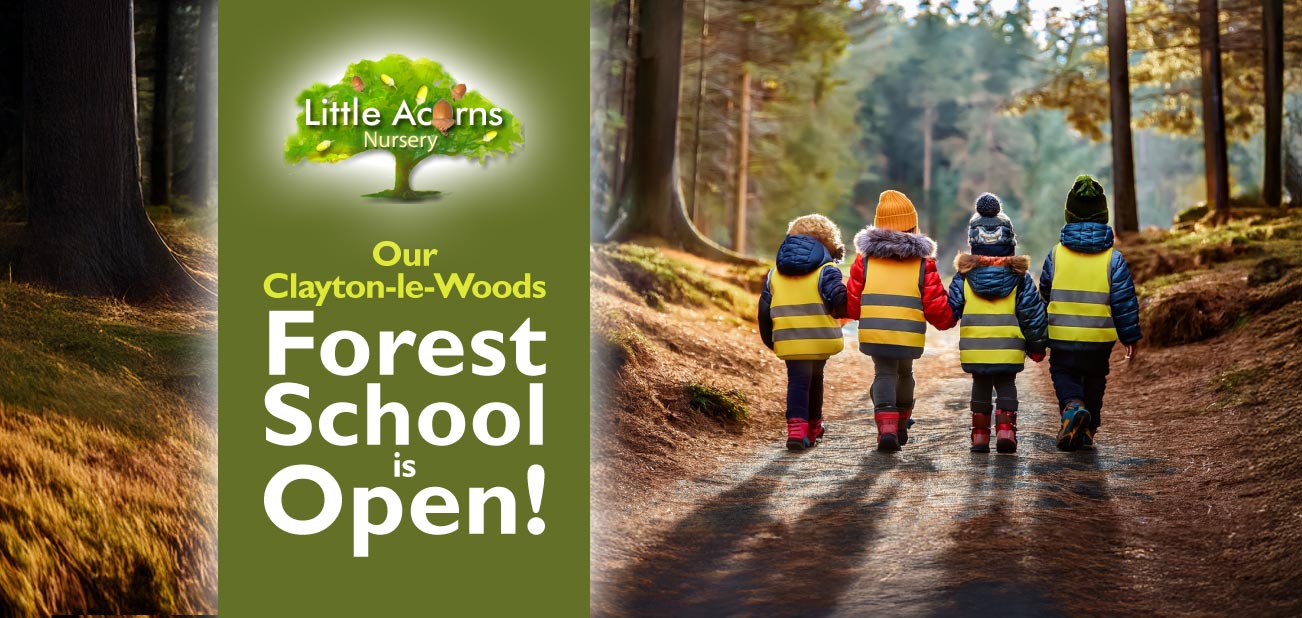
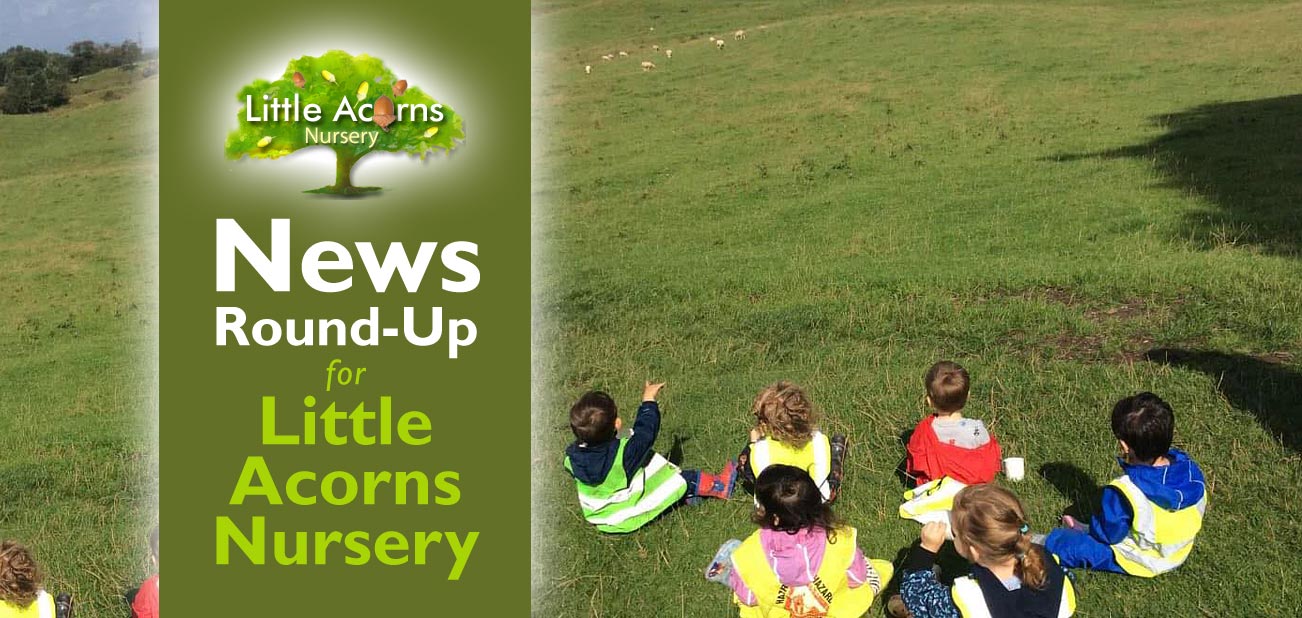
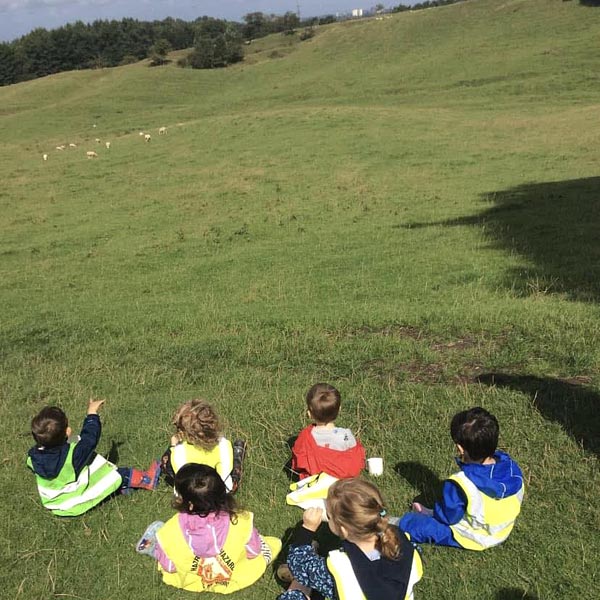
 We’re delighted to share some very exciting news: our much-loved Forest School in Clayton-le-Woods re-opens in Spring (2026). After dedicated staff training, careful preparation and thoughtful planning, we’re ready to welcome children back to outdoor learning — and we know it’s something they will be extremely excited about.
Forest School has always been an important part of who we are as a nursery. In fact, we are proud to have been the very first setting in the area to establish a Forest School, and it quickly became a highlight of the week for our children. Bringing it back now feels like a natural and meaningful step forward, rooted in the proven belief that young children thrive when they are given time, space and freedom to explore the natural world around them. Indeed, spending time in and around nature is profoundly beneficial to children.
A Natural Choice for Our Nursery & Children
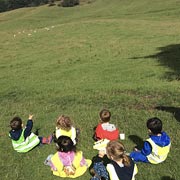 Our nursery is surrounded by local parks, green spaces and natural open areas, making Forest School a perfect fit. What’s more, nature is already part of daily life here, and Forest School will allow children to experience it more deeply and more intentionally. They are naturally curious and want to touch, observe, ask questions and make sense of what they see around them. Being outdoors opens up the enormity of the natural world to them. It gives them opportunities to notice changes in the seasons, discover plants and wildlife, better understand the circle of life, and their place in the world. It helps them develop a real sense of connection to their environment, and their power and responsibility over it. Those are all things that would be difficult to replicate indoors alone.
Safety FirstForest School’s re-opening follows comprehensive training for our team, alongside detailed preparation of activities, routines and risk assessments. Safety is, of course, always our top priority. Sessions are well supervised, thoughtfully structured, and designed to support exploration in a calm, nurturing, and safe way. |
What Forest School Is All About
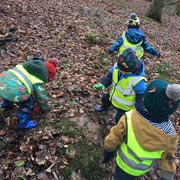 Forest School is a child-centred approach to learning that takes place outdoors and encourages children to explore, investigate, and learn about the natural world through hands-on experiences. Sessions are led by trained practitioners and are carefully planned to be age-appropriate for under-fives. They allow children to learn about nature, build new skills, learn to assess risks, and grow in confidence and independence.
Forest School isn’t about rushing or achieving a set outcome. It’s about giving children time — time to wonder, to try, to persevere and to feel proud of what they can do — all at their own pace.
Supporting Development, Confidence & the EYFS
 Forest School offers rich opportunities for learning across all areas of the Early Years Foundation Stage. As children climb, balance, build, dig, collect and create, they naturally develop physical strength, coordination and problem-solving skills. They learn to communicate with one another, take turns, share ideas and work together, supporting social and emotional development in a meaningful context.
Being outdoors also supports children’s emotional wellbeing. Nature has a calming influence, helping children to regulate their emotions, build resilience and develop self-confidence. Whether a child is energetic and adventurous, or quieter and more reflective, Forest School offers something valuable for every personality and learning style.
Learning About Nature, Responsibility & Our Place in the World
Spending regular time in nature helps children build an understanding of living things — plants, animals and insects — and how they all play a role in the world around us. Through observation and gentle guidance, children begin to develop empathy and respect for flora and fauna, learning that all living things need care and consideration.
Forest School also supports early understanding of responsibility towards the environment and one another. Children learn that their actions matter, helping them develop a sense of stewardship for the planet and a growing awareness of their own place within it. Such early experiences lay important foundations for values such as kindness, responsibility and respect.
Forest School Beyond the Woodland
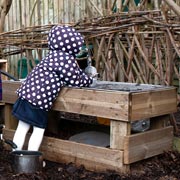 Forest School is not limited to time spent outdoors for children at Little Acorns Nursery. The Forest School approach is also reflected throughout our nursery environment, both indoors and in our garden and grounds. Natural materials, open-ended resources and opportunities for exploration are woven into everyday play, allowing children to continue their connection with nature — whether indoors or outside.
This consistency helps children feel confident and supported, reinforcing learning and curiosity across multiple areas of the setting.
Discovering Nature in Every Season
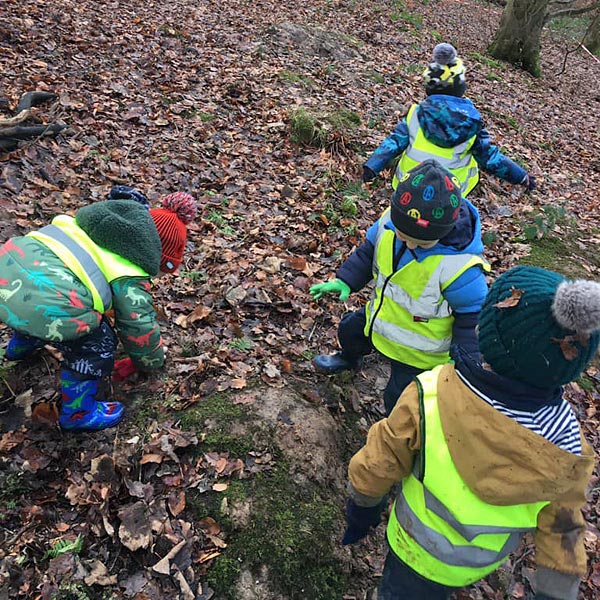
Re-opening Forest School means children will initially experience the unique magic of nature in winter. Frosty mornings, muddy puddles, bare trees and changing weather all offer rich learning opportunities that will inspire meaningful — and often profound — conversations. Forest School is a year-round experience, though. So, as the seasons pass from winter, through spring and summer into autumn, each will bring new discoveries and moments of wonder to the children in our care.
A Special Part of Nursery Life
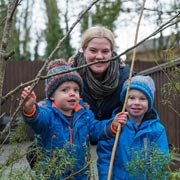 For families already with us, Forest School adds another enriching layer to the care and education your child receives. For those considering joining our nursery, it’s one of the many reasons we believe our setting offers something truly special. Being able to offer Forest School — especially as a nursery that pioneered it locally — reflects our commitment to high-quality, thoughtful early years practice.
After all, childhood is about curiosity, connection and discovery — and there is no better place to begin than in nature itself. Learn more about Forest School in our ultimate guide here.
Contact Little Acorns Nursery
Clayton-le-Woods, Chorley
 The whole team at Little Acorns Nursery is incredibly excited to see Forest School come back to life this spring. We can’t wait to watch our children grow, learn and flourish outdoors. If you’d like to find out more about Forest School or our weekday childcare services for under-fives, contact us, speak to our team, or come and see us; we’ll be delighted to tell you more.
Little Acorns is a childcare nursery in Clayton-le-Woods, Chorley, but may also suit families living close by, for example, in Clayton Brook, Clayton Green, Bamber Bridge, Lostock Hall, Penwortham, Buckshaw Village, Thorpe Green, Pippin Street, Whittle-le-Woods, Farington, Euxton, and Leyland.
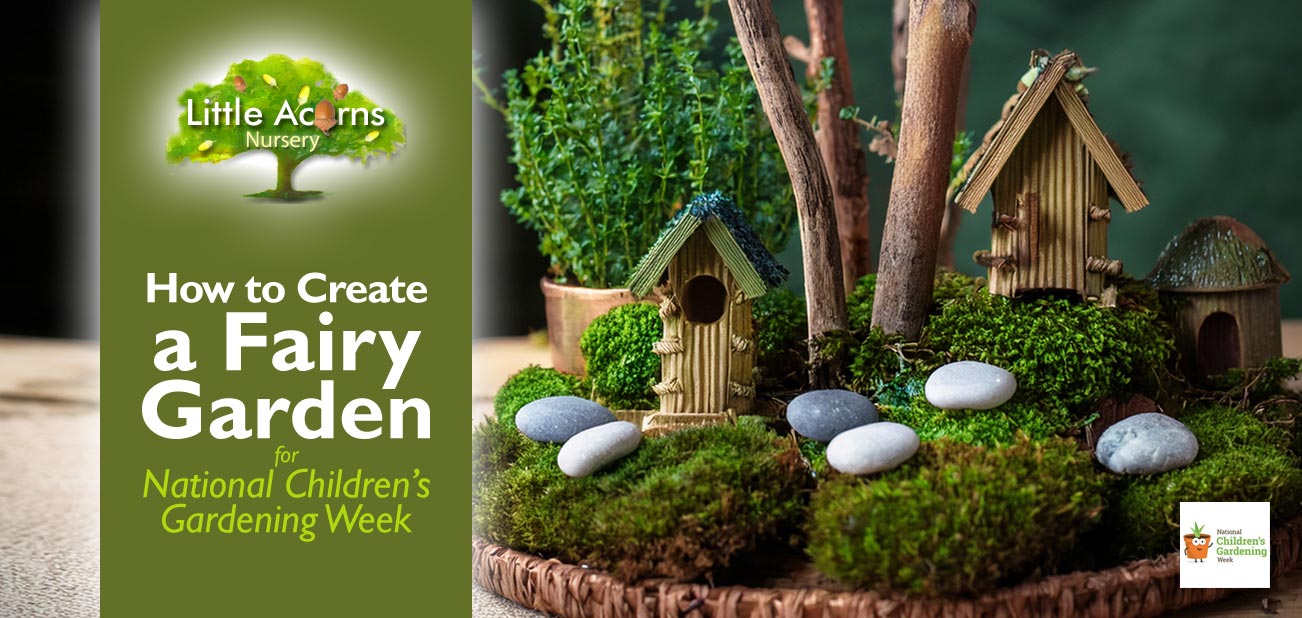
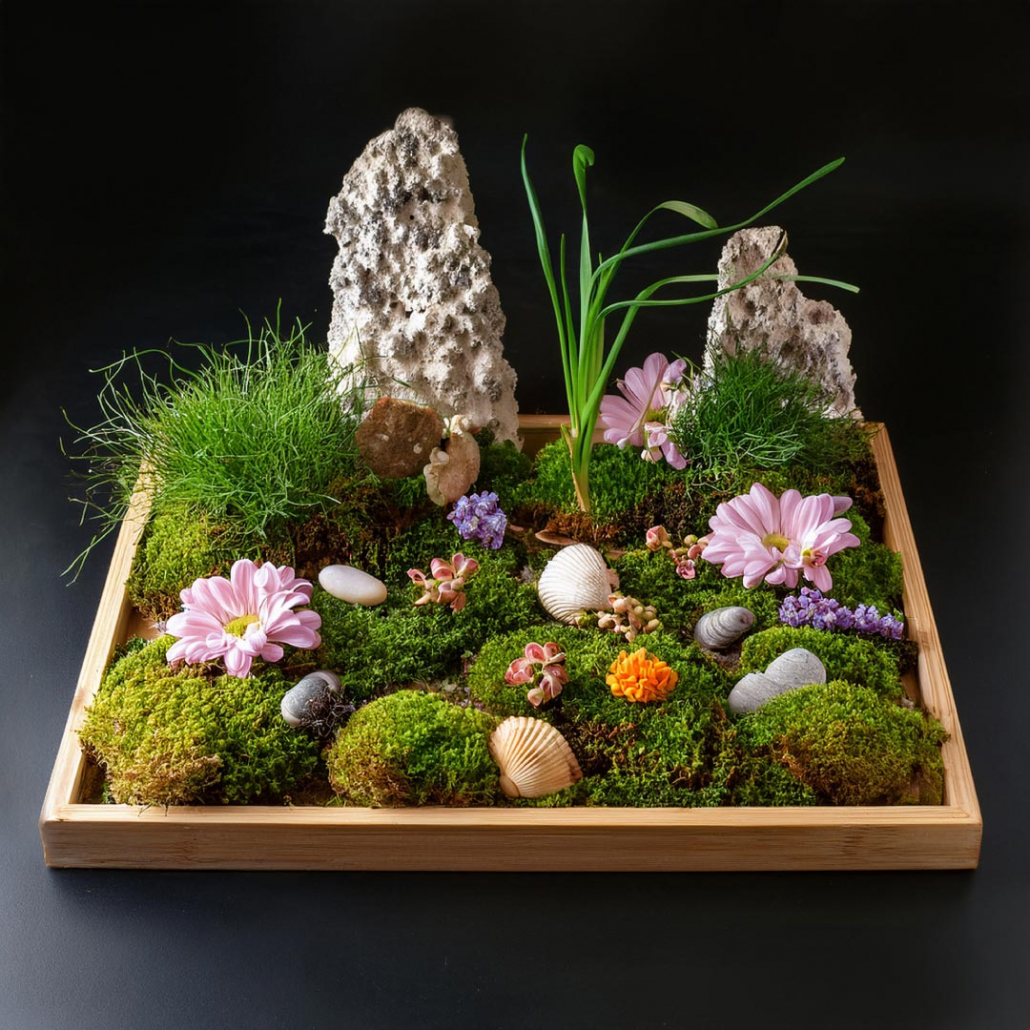
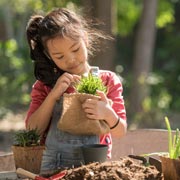 National Children’s Gardening Week arrives in late May and is the perfect time for young children to get involved in gardening activities. In celebration of the event, we describe a wonderful gardening-related activity that’s small-scale, easy, fun, and educational — perfect for little ones! The finished result is also rather magical and, once complete, lends itself to imaginative play. Today, we outline how children can make their own miniature fairy gardens. These are a great way to introduce little ones to creative gardening at a child-friendly scale. Under parent supervision* and largely using scavenged materials from outdoors, under-fives can let their imaginations run free and get creative! What’s more, the results are simply enchanting and will bring magic and a whole lot of delight to young children!
 National Children’s Gardening Week begins on the 24th of May this year (2025) and runs until the 1st of June. The timing is no coincidence as it’s generally a warm week and therefore perfect for gardening and growing plants and flowers. What’s more, it also spans the half-term school holiday that most schools recognise in the last week of May.




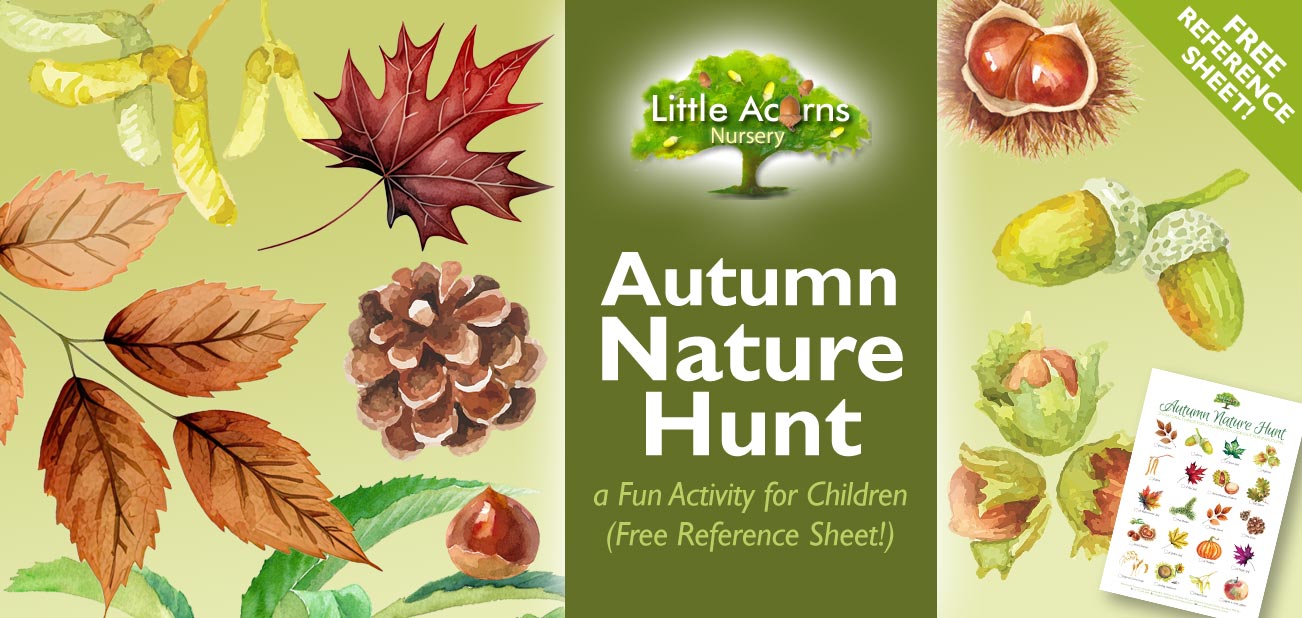
 By mid-November, autumn is in full swing and leaves are turning a myriad of different colours. Scenes of green, yellow, red and golden trees can be breathtakingly beautiful and the air is often crystal clear at this time of year — that’s great for photos! The autumn season also brings with it a treasure trove of fascinating natural things that children can discover if they take the time to look. Indeed, an autumn nature hunt is the perfect excuse for little ones to spend some time outdoors, where they will also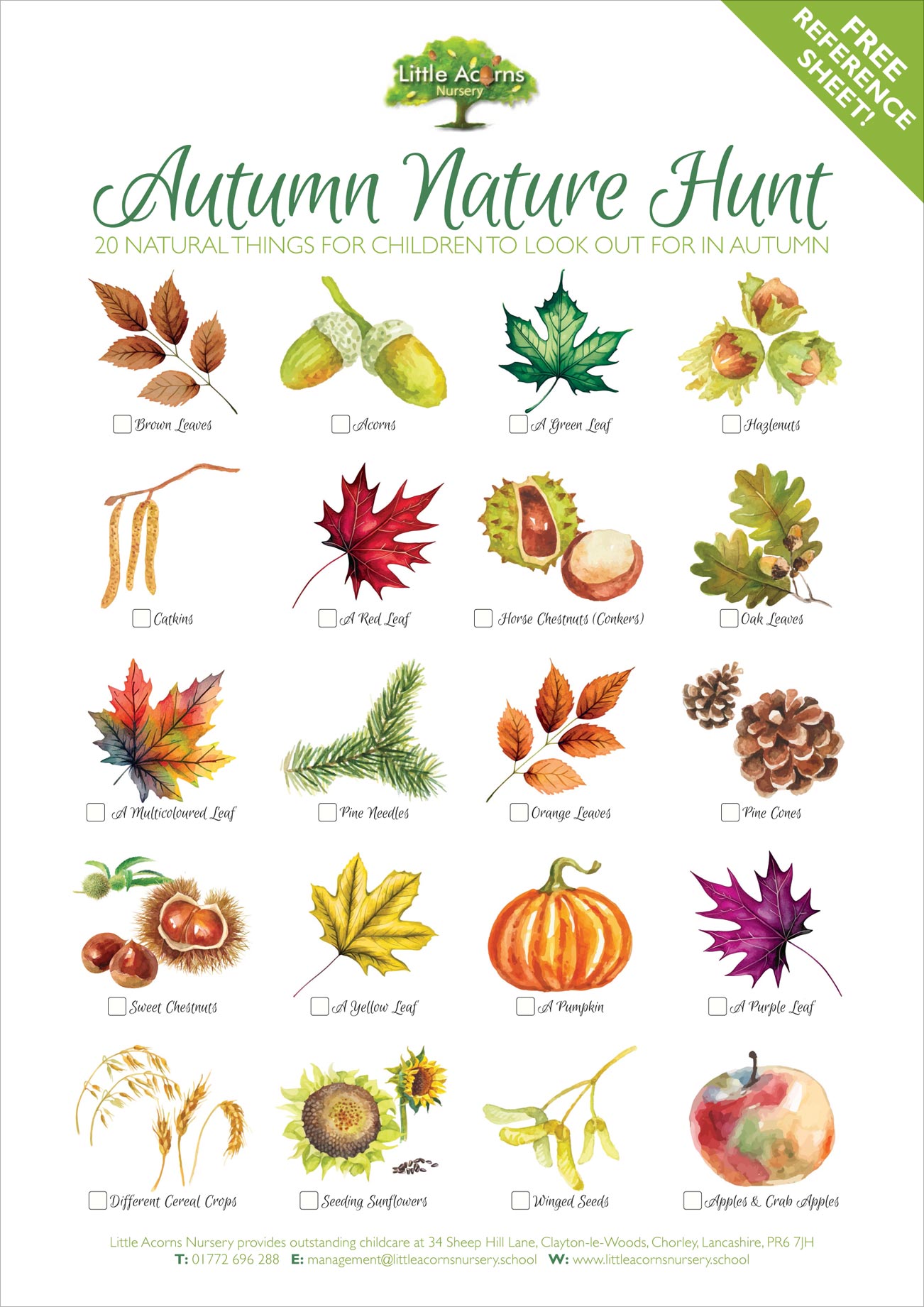
 Ensure children, particularly the very young, receive appropriate adult supervision at all times. Although fascinating and fun, the outdoors holds many hazards for the unwary. Therefore, children will need to be closely monitored by a responsible adult in order to safeguard their well-being.


 Children and parents, let’s go minibeast spotting! Whether you have a garden, neighbourhood park, or just a few potted plants, there are bound to be minibeasts visiting or living there. What’s more, summer is the perfect time to spot them. Spending time in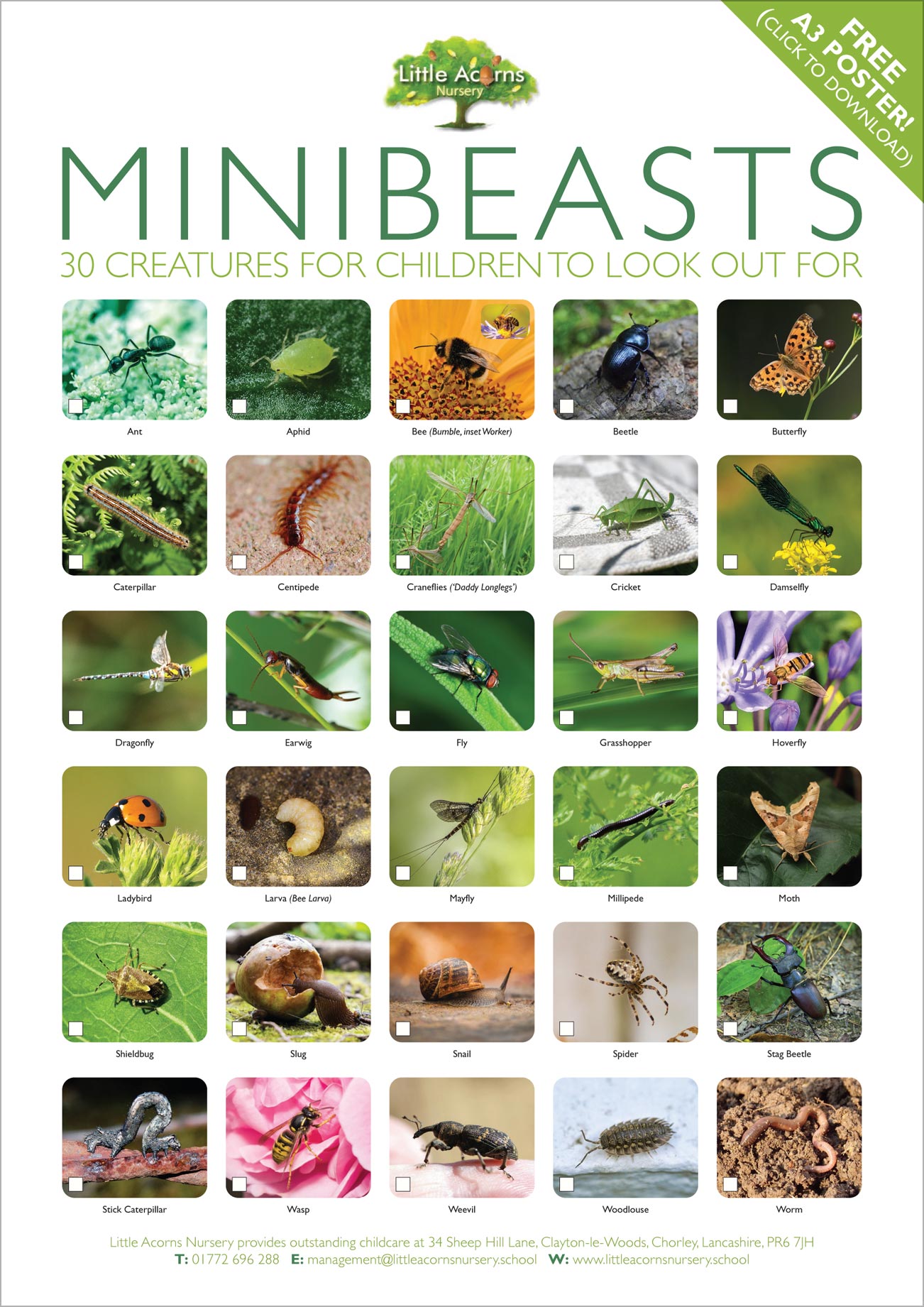
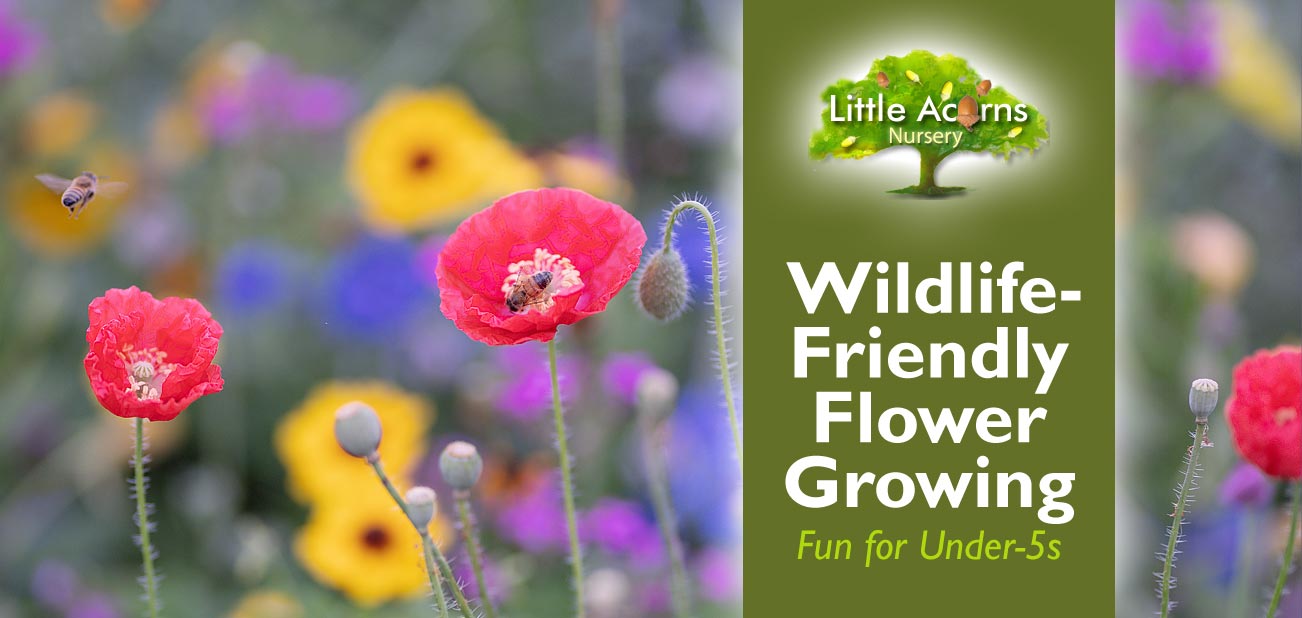
 Today’s flower-growing children’s activity follows on nicely from last month’s
 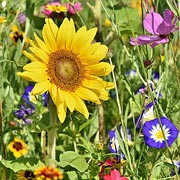 It’s possible to sow wildflower seeds from March right through to mid-October or, at a push, early November so long as snow or frost is not forecast. Those sown closer to March and April will generally flower in late spring/early summer. Those sown very late in the year will flower the following year, from spring onwards. Any sown up to and including the middle period, for example during July, should still flower in the same year — wildflowers usually bloom some 60 to 80 or so days later if they’re timed to grow in the same year as they’re sown.
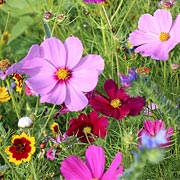 There are several ways for children and families to source wildflower seeds. The most obvious way is to buy them commercially, in seed packets. These are available from any number of different outlets including nurseries, supermarkets,
 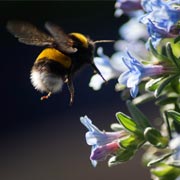 If you buy your child commercially-available wildflower seeds, the information on the packet will often say if the resulting flowers are bee-friendly, butterfly-friendly, good for pollinators, and so on. So, if you’re sourcing seeds that way, much of the decision-making criteria around which actual flowers to grow is made clear and therefore the choice is easy.
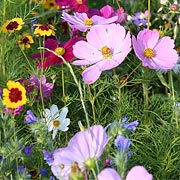 By their very nature, wildflowers are generally not very picky in regard to the type of soil they are happy to grow in. Therefore you/your child will have a greater choice of where to sow the wildflower seeds. A fairly clear sunny area is good, whether that’s garden beds, flower pots, window boxes, grow bags on a balcony, or even the lawn itself if you want a wild ‘meadow’ type lawn. Whatever the choice, it’s best if it’s somewhere that won’t be disturbed by you/the family though, as you wouldn’t want the wildflowers trampled once they do arrive.
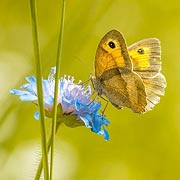 With regard to sowing the seeds, follow any seed-specific instructions on packets in relation to timing and spacing. If you’re using self-harvested seeds or there are no instructions, simply sprinkle the seeds so they’re spaced, fairly evenly, i.e. not too densely sown. This will avoid the wildflower plants having to compete with one another once they start growing. A tip is to sprinkle from a height as this will naturally scatter them more widely. Once scattered, your child can help* to pat the soil surface down, either by hand or using the back of a tool like a spade or a trowel, so that the seeds are secured in the soil. Children can even ‘walk’ them in if they prefer. Once complete, ensure that you/your child keep the soil damp over the coming weeks. The preparation stage really is as simple as that!
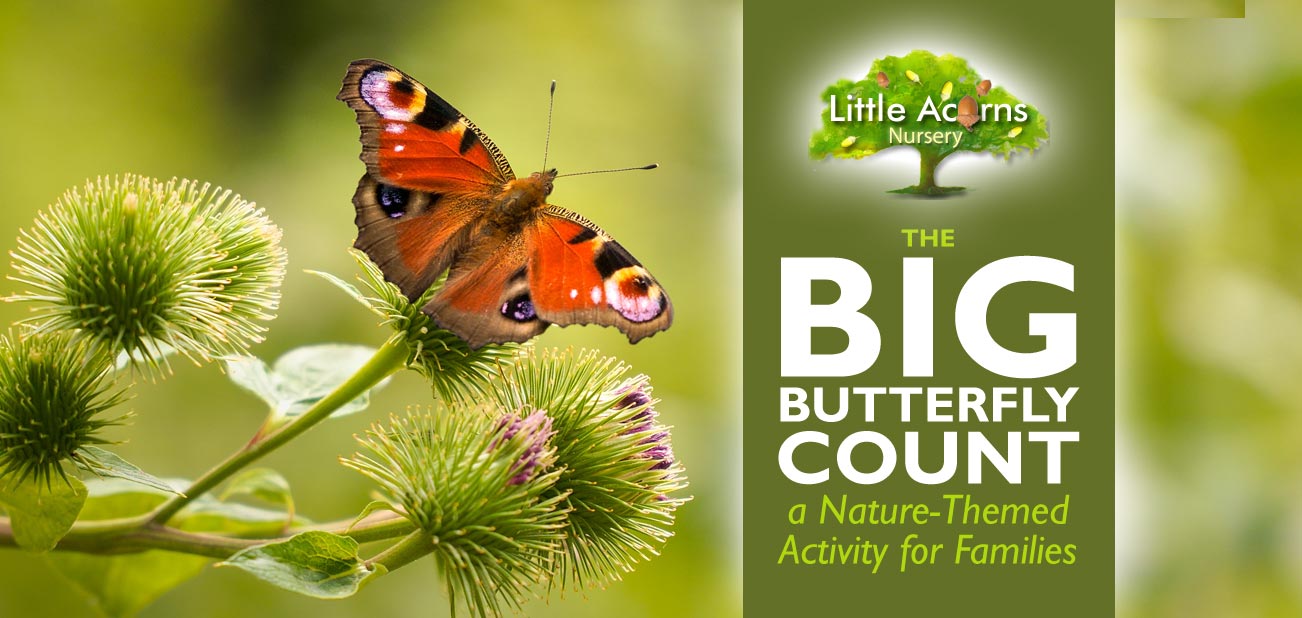
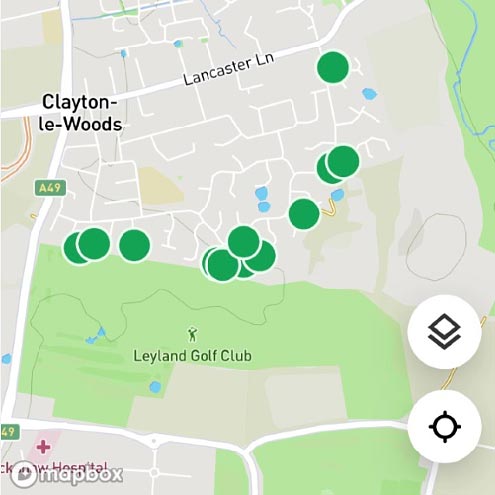
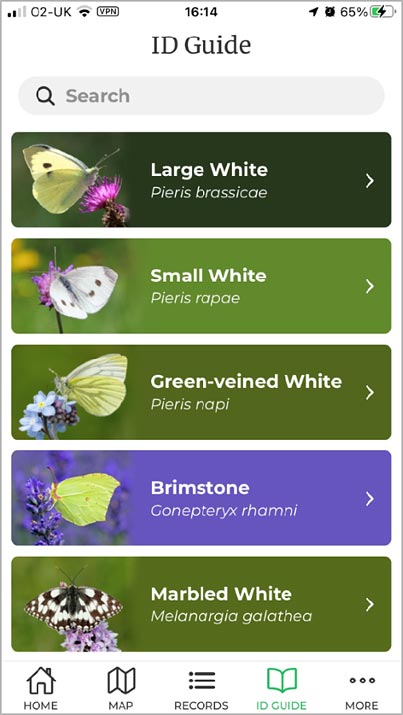
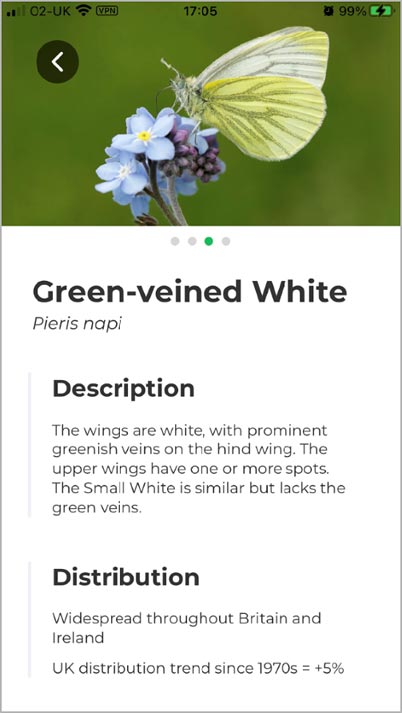
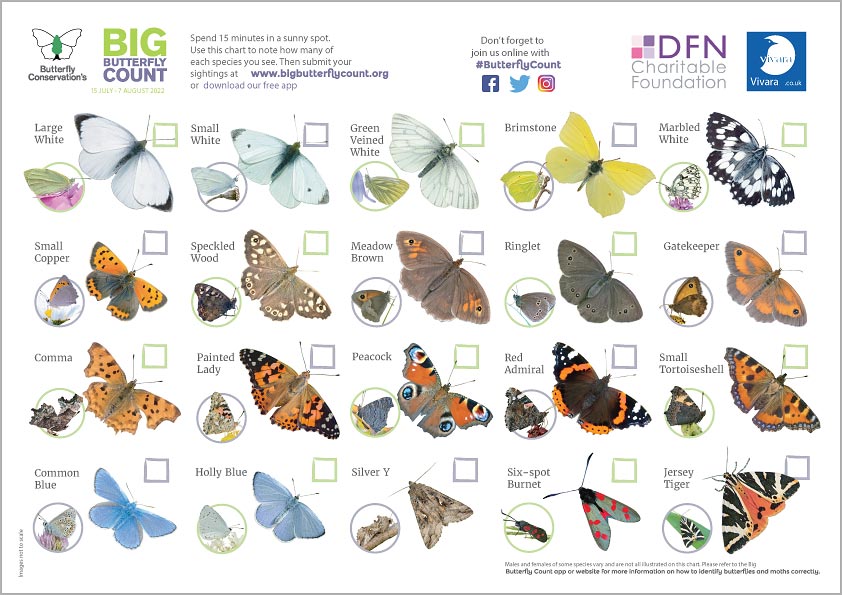
 Many will have heard of the Big Garden Birdwatch that takes place every year in January. However, fewer are aware of a similar activity called The Big Butterfly Count that takes place in July and early August. As well as being extremely worthwhile, it’s a wonderful activity for both children and adults to get involved in as citizen scientists. The activity helps with butterfly conservation, is educational for those taking part, and encourages families to get outdoors, closer to nature. And, as we know,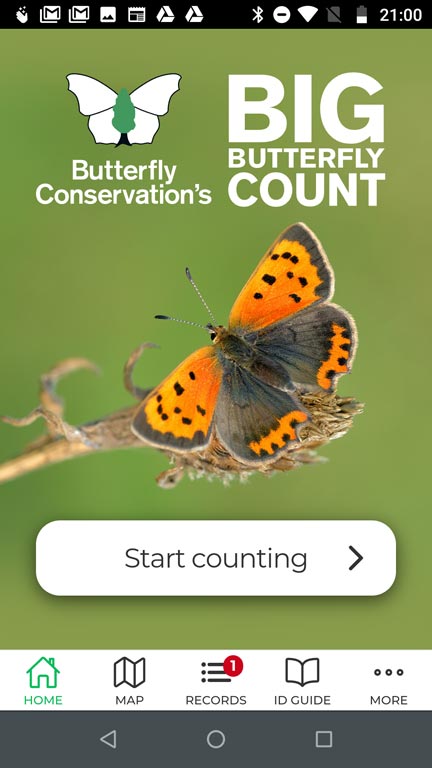


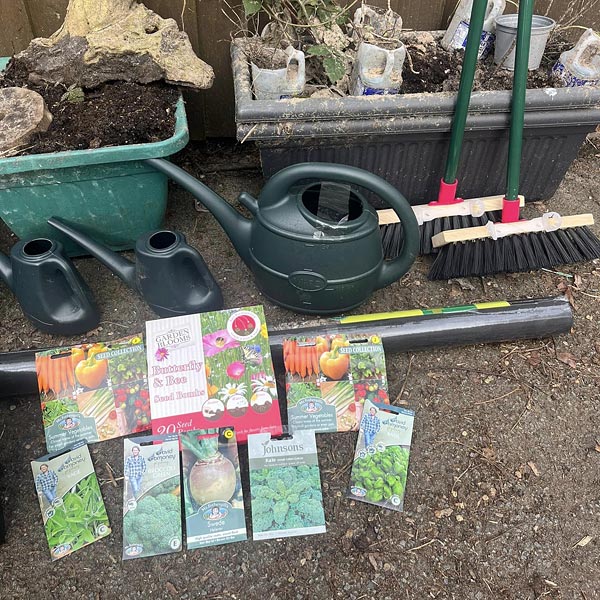
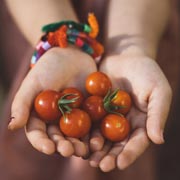 and that’s just one of many reasons why little ones should be encouraged to learn about sowing seeds and growing their own plants. Today, we’re taking that a step further by explaining how children can grow plants that will give them real, edible food! With a little planning, care and effort, children can grow herbs, vegetables and even fruit if they put their minds to it. What’s more, it’s possible without a garden and needn’t cost a penny!
 That will never be more evident than when a seed has grown into a plant that bears fruit, which contains more seeds, through which the whole process can start again.
 Seeds for herbs, vegetables and microgreens are all widely retailed in places like garden centres and even some supermarkets. Each seed packet will usually explain when and how seeds can be planted. This is perhaps the most obvious way for children to grow plants that, if all goes well, result in a healthy crop of food. However, we can be far more adventurous than that! Where is the fun in buying seeds in packets when children can get them for free? Let’s take a look at some cheaper and far more creative ways that children can start things off.
 “Free” you say? Well, pretty much! Next time you have some shop-bought tomatoes and/or peppers as part of your ordinary shopping, get your little one to take a few moments to save some of the seeds. These are found within things like tomatoes, before they’re eaten, and are usually discarded in the case of peppers. Such seeds can simply be spaced out on some compost or earth, watered in and a thin layer of soil or compost added on top. If these are left on the windowsill and the earth kept moist by the child over the coming days, little seedlings will soon start to appear.
 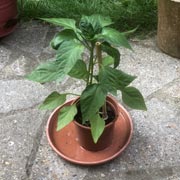 The image of the green plant shows our pepper seedling grown in this exact way — and it was incredibly easy to achieve. Ours is about 3 or 4 weeks old and it’s just about ready to be “planted out” outdoors, to mature. Once mature, they should flower then sprout some new peppers! It’s identical for tomatoes. If children have no garden for larger plants to be transferred to, ‘grow bags’ or any kind of suitable container can be used on a patio or balcony. Children will need to keep watering them every day, to keep the soil moist. Flowers will eventually appear and, with a little help from bees and insects, will be pollinated so that they eventually ‘fruit’. If appropriate care and attention continues, your child will eventually end up with vegetables that can eventually ripen and be eaten. That’s free tomatoes and peppers for the family, in our examples. Don’t forget to remind your child to save a few more seeds, though, so they can repeat the whole process again … and again!
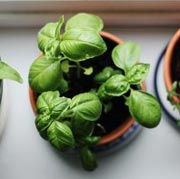
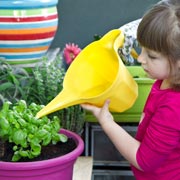 Does your little one know that he/she can grow new herb plants totally free of charge? This is done simply by clipping cuttings from your usual shop-bought herbs and leaving them in water to root. It’s incredibly easy so long as the child has some patience (that’s another useful lesson for them). All the child needs to do is to save some small (3 or 4 inch long) cuttings from the tips of herbs like basil or coriander. For safety, parents/carers may need to help with the cutting part if the children are very young.
 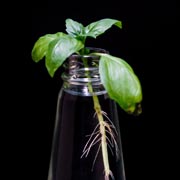 The bottom sections of the clipped cuttings should be dangled into a glass, small bottle or other suitable vessel of water and left over a period of days until they sprout roots. See the photo for an example. A clear water vessel, e.g. drinking glass, will allow your child to clearly see the roots. Once suitably long, these new little plants can be transplanted individually into compost/soil in something like flower pots — or indeed a free, recycled alternative like a yoghurt pot. The little ones will need to continue attending to the plants with regular watering so that the herbs grow and mature. This activity can all be done indoors on a windowsill too, so requires minimal space. Growing their own herbs may even make children more inclined to eat them!
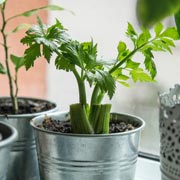 Another ridiculously easy way to grow food is to “re-grow” it. A classic example of this is to save the root section from a salad vegetable like iceberg lettuce or celery. This is the part of a shop-bought vegetable that would normally be cut off and discarded. However, in what has to be the easiest food growing activity of all, the child simply needs to keep that root section and leave it root down in water for 1 to 3 weeks. It will eventually grow some roots but, before that, the upper tip will start to sprout new leaves. In our own test using an iceberg lettuce we ended up with loads! That is new, free salad that can be later harvested and eaten. Simple!
 (Speaking of iceberg lettuces): Excuse the pun, but the ideas above are just the tip of the iceberg! There are so many other types of vegetable and fruit that children can grow (or re-grow) for next to nothing. For example, they can grow new apple trees from apple pips and new strawberry plants from the outside skin of strawberries. And the whole topic of

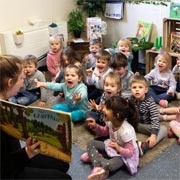 If you are looking for the very best childcare provision for your child in Central Lancashire, there are a multitude of reasons why you should choose Little Acorns Nursery. Put simply, Little Acorns offers the very best possible childcare service for under-fives — but you don’t need to take our word for it. This is independently verified, as you’ll see below. Take a look at our top 20 reasons to choose Little Acorns Nursery and you’ll soon see why it’s virtually impossible to beat when it comes to outstanding childcare provision.
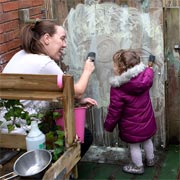 The quality of teaching, learning and assessment at the nursery was also found to be simply outstanding when Ofsted appraised us. It doesn’t get any better than that.
 Little Acorns Nursery has received a number of awards for it’s healthy eating policy. These include a Recipe 4 Health Award and accreditation via the Smiling For Life Award. Each recognises the healthy meals and snacks that we provide to children under our care.
 It almost goes without saying that, of course, Little Acorns Nursery has a 5-star food hygiene rating. Once again, that’s the topmost rating. Quality and professionalism are, after all, at the heart of everything we do.
 Everything we do at the nursery has a purpose, whether it’s a customised approach to learning for a specific child, the choice of a particular activity or game for another, the purchase of a piece of new equipment, or the way we keep parents informed about their child’s progress each day — there is a reason for everything we do. Ultimately, our goal is to give every child the very best start in life and to equip them to achieve their personal best in every area. In this way, they are given the tools to achieve the very best outcomes in their lives.
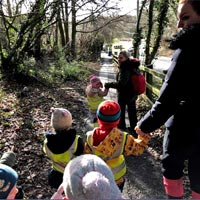 Our Forest School should be open from Autumn 2022. Children love Forest School and it teaches them so much about nature, the natural world and ultimately about themselves.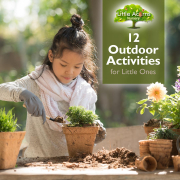
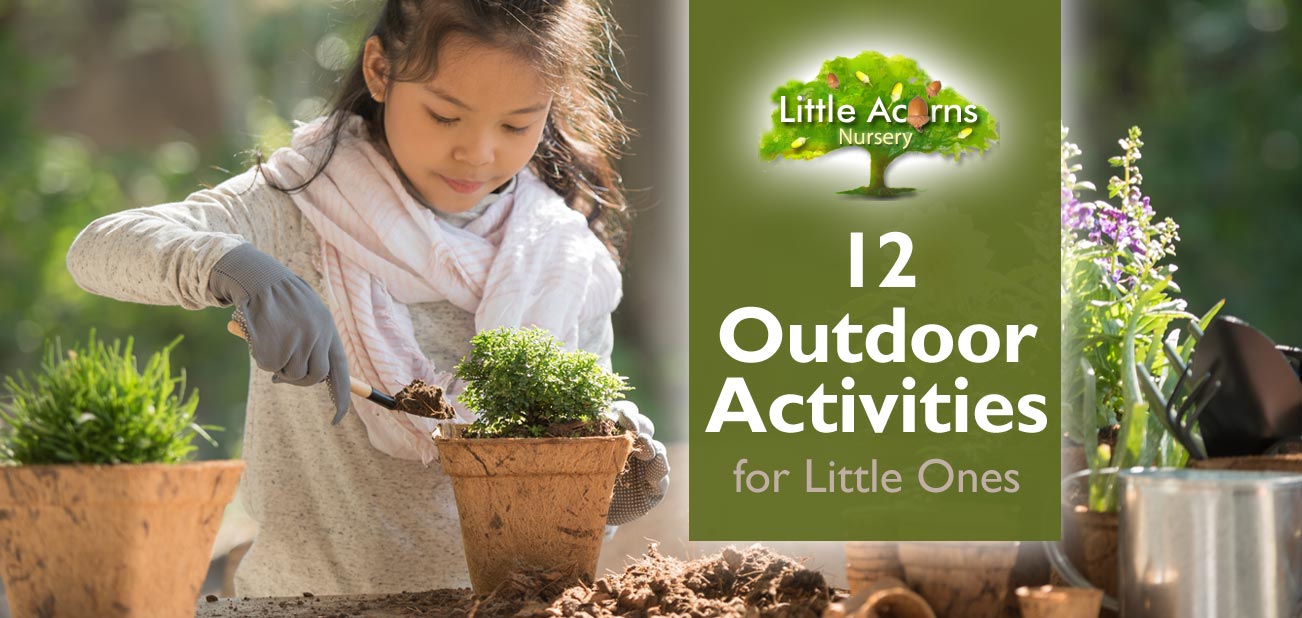
 1. Bird spotting
 ee & Butterfly Spotting
 3. Search for Animal Tracks
 4. Make a Den
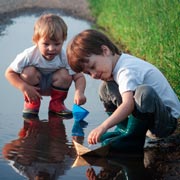 5. Float a Boat
 6. Go on a Ramble
 7. Get into Photography
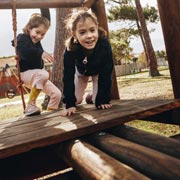 8. Obstacle Course
 9. Have a Picnic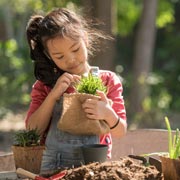
 11. Hunt for Mini Beasts
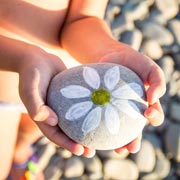 12. Get Creative with Rocks & Stones
 Whether on the beach or in the garden, it’s surprising how creative children can be with stones and rocks! Stones can be painted with lovely patterns or images, perhaps combined with simple words or as part of a ‘stone story’. Bigger rocks can be piled one on top of the other to form sculptures — these look magical. Children will love these and other creative activities that they can take part in outdoors, with simple stones and rocks.