

 Whether you’re planning a family, are already pregnant, or have recently given birth, it’s beneficial to obtain as much knowledge and information as you can so that you are fully prepared. So, when we spotted a comprehensive antenatal course that allows free* access to UK families, we naturally wanted to share the opportunity with parents, expectant parents, and our readers. With that in mind, today’s post introduces you to a Complete Antenatal Course. It’s a free, 8-hour online course, led by midwives, that you can access today. We have already investigated it for you and thought it was fabulous! Read on to learn more about the course contents, highlights, and easy access details to get started — all at zero cost!
“This course has been carefully designed to guide you through every stage of your antenatal journey.” — NowBaby.
This well-presented antenatal course is delivered in video format. It contains 8 hours of content, divided into bite-sized chunks, which can be perused at your own pace. You can dip in and out, as time permits, via your login, which we’ll cover later in this article.
* Is the Course Really Free?
 Yes — the Complete Antenatal Course is currently free (correct at the time of writing, mid-February 2026). That assumes, of course, that you don’t choose to upgrade to premium options or sign up to other courses etc. We found it quick and easy to sign up without such add-ons — achieving virtually instant access to the course, without cost. That said, some families may consider paid upgrades if they so wish, for example, if they would like access to speak with midwives during the course, or get involved in Q&A sessions. It’s also worth pointing out that the main course is free because it’s funded through a commercial partnership — apparently saving £175! You may therefore see some short commercial clips during the course, but we found them minimal and unobtrusive.
“It’s divided into easy-to-follow modules, each containing short, focused videos. This structure allows you to learn at your own pace, whether you prefer to watch a few videos at a time or complete a full module in one sitting.” — NowBaby.
What Does the Antenatal Course Cover?
The online course provides evidence-based, practical guidance for new and expectant parents through the stages from pregnancy, through birth, right info early parenthood. Each module is led clearly by experienced midwives to inform and empower parents on their early parenting journey.
The following course content is included:
Pregnancy
The Pregnancy module includes 6 sub-sections that cover choosing a care provider, an antenatal appointment schedule explainer covering scans and tests, your diet including what you should/shouldn’t be eating during pregnancy, smoking, etc., self-care during pregnancy, possible complications to be aware of, and informed choice and consent information.
Preparing the Mind & Body for Birth
Preparing the Mind & Body for Birth has 7 sections that cover what affects the birth experience, choosing a birth place, what to pack in your birth/hospital bag, writing down your birth preferences (your Birth Plan), hormones and labour, your birth environment (a.k.a. Birth Zone), and finally perineal massage and its benefits.
Labour & Birth
Labour & Birth has ten sub-sections that include discussions around foetal position and which is best, signs that you’re heading towards labour, how to know you’re beginning labour, the various stages explained, the optimal time for cutting the umbilical cord, what’s known by midwives as ‘the golden hour’, the importance of skin-to-skin contact, checks on the newborn baby, the role of birth partners, and assisted births (using ventouse or forceps).
Pain Management
Pain Management comprises 6 course videos explaining the various options available to manage pain during labour. These include hypnobirthing, warm water showers, baths, TENS machines, Entonox (gas and air), opioids, and epidurals.
Induction of Labour
The Induction of Labour module is divided into 6 sub-sections that cover everything from what being induced means, augmentation of labour, decision-making, methods of induction, starting the process, and pain management during induction of labour (bearing in mind induced labour may be more intense for some).
Caesareans
The Caesareans module is divided into 3 sub-sections that include possible reasons for caesarean sections, the process of giving birth via caesarean and what to expect, and finally what to expect when you go home following a caesarean.
Postnatal Recovery
The Postnatal Recovery module discusses possible blood loss following birth, breast changes to expect, perineal tears, emotional and mental health considerations, and common postpartum concerns.
Newborn Care
The Newborn Care module is a very comprehensive course containing 12 sub-sections. These cover the Golden Hour that immediately follows birth — and why it’s important — along with the checks that are likely to be made for newborns, dressing your baby, swaddling, cleaning and bathing your baby, sleep for newborns, nappy change preparation and tips, jaundice and what to look for, and more. Towards the end of the module, there is also a commercial that you have to watch before being able to proceed to the next module, but it’s only short.
Breastfeeding
The Breastfeeding module is another comprehensive one and contains 9 sub-sections. These cover everything you need to know about breastfeeding, including anatomy and physiology, the benefits of breastfeeding to both mother and baby, how best to establish successful breastfeeding, expressing/pumping, ‘responsive’ feeding explained, what cluster feeding is and how it presents itself, potential problems or concerns around breastfeeding, and much more.
Infant First Aid & Medical Conditions
Infant First Aid & Medical Conditions is the final module in the free online course. This is a huge section, although most of the 20 or so sub-sections are only 1 or 2 minutes long. Covered are common conditions that may affect your baby, tips about how to manage them if you were at home without medical assistance nearby, common breathing problems, how to do resuscitation, first aid and basic life support for babies, tummy troubles, screening and tests commonly undertaken for babies, growth and centiles, followed finally by a section about jaundice and what the course midwife refers to as ‘funny head shapes’.
Remember: if you’re ever concerned about your baby, do reach out to a health professional, for example, your midwife, health visitor, GP, or paediatrician. In the event of a medical emergency, dial 999. For non-emergencies, the NHS number is 111.
The course is a “comprehensive guide for expectant parents to navigate pregnancy, prepare for labour, and care for newborns, ensuring a healthy and informed journey into parenthood.” — NowBaby.
How to Sign Up for the Free Antenatal Course
 You can currently sign up for the course here. Currently it’s free of charge and, when we tested it, we didn’t need to enter any payment details at all, having not selected any extras during sign-up. In fact, it was surprisingly quick and easy to gain access to the online course.
Choose your preferred password and, once you’ve signed up, you’ll receive various emails by return. These will include one welcoming you to the ‘Complete Antenatal Course’, and another confirming the login web address and a username reminder. Enjoy!
We hope many parents and prospective parents take the opportunity to make the most of this wonderful — and free — antenatal course. It’s incredibly comprehensive and informative, while also being presented in an easy-to-digest way. By immersing yourself in the course, you should feel more confident, informed, and empowered, and ready for the parenting journey ahead.
Your Childcare Provider in Clayton-le-Woods
Little Acorns Nursery provides high-quality childcare in Clayton-le-Woods, Chorley
 Are you looking for high-quality, reliable weekday childcare for your baby, toddler, or child under five? If you live in or around Clayton-le-Woods, Chorley, Little Acorns Nursery would be a great choice! With a Good Ofsted rating, support for free childcare hours for eligible working families and our own Forest School, Little Acorns would make a fabulous choice.
To start exploring a possible place for your child at Little Acorns Nursery, please get in touch via one of the following options:
As well as suiting families in Clayton-le-Woods, Clayton Brook, Clayton Green, and Chorley, Little Acorns Nursery may also be convenient for those in nearby locations like Thorpe Green, Pippin Street, Buckshaw Village, Whittle-le-Woods, Farington, Bamber Bridge, Lostock Hall, Euxton, Leyland, and Penwortham.
About NowBabyThe free antenatal course is delivered online by NowBaby, whose website states: they provide expert antenatal education online and in-person to expectant parents across the nation; courses are run by qualified and highly-experienced midwives and healthcare professionals and are peer-reviewed for accuracy; they work in partnership with over 140 NHS antenatal clinics across England and Wales and have partnered with the NHS for 24 years; they have a 4.8 rating on Trustpilot. (Learn more about NowBaby here). That said, we cannot make any guarantees in relation to third-party information, services or websites, including those of NowBaby. It is therefore important to do your own research and due diligence. |
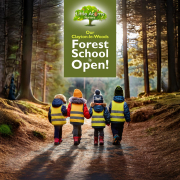
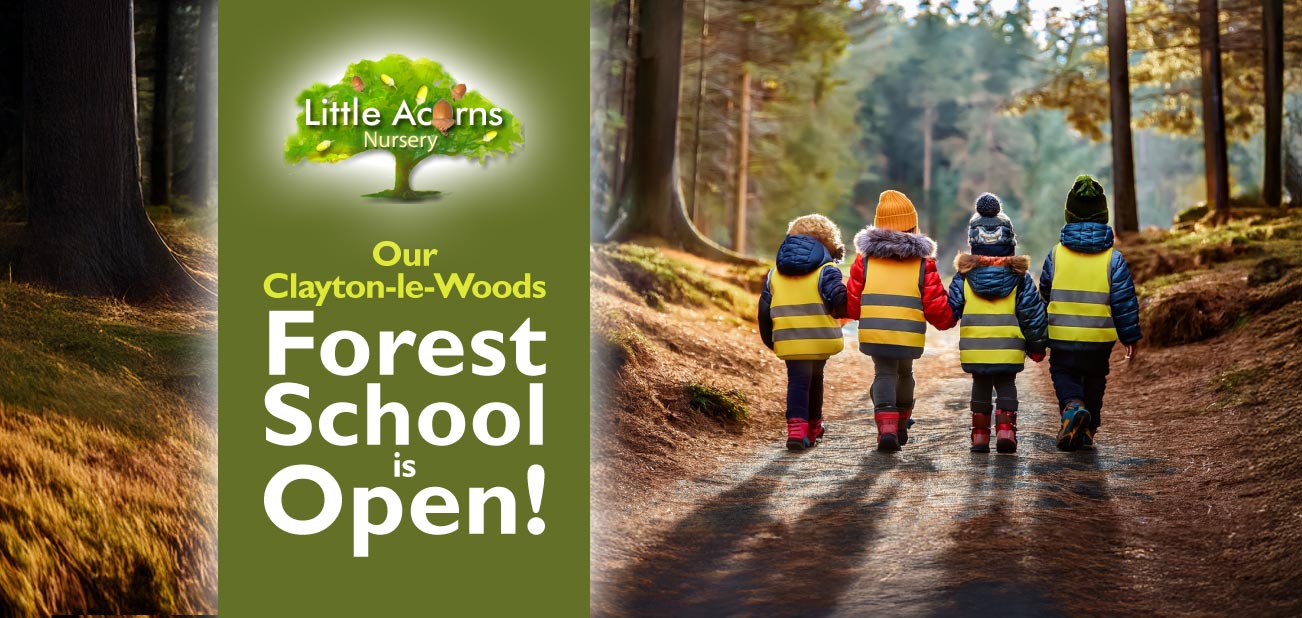
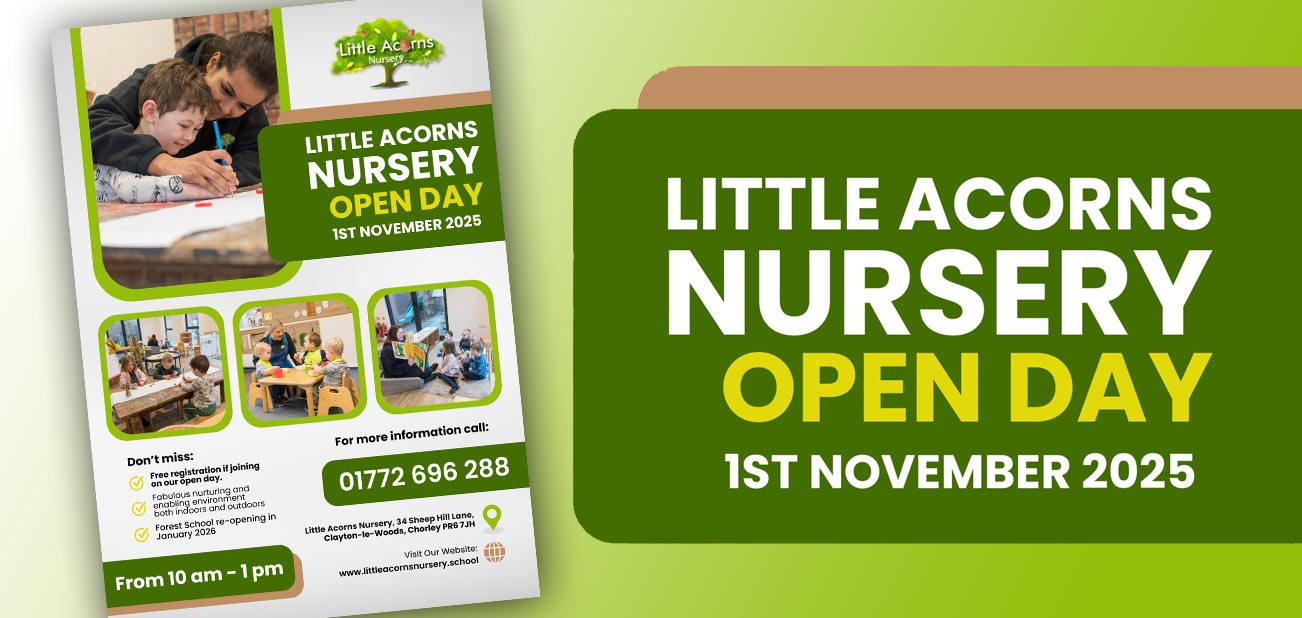
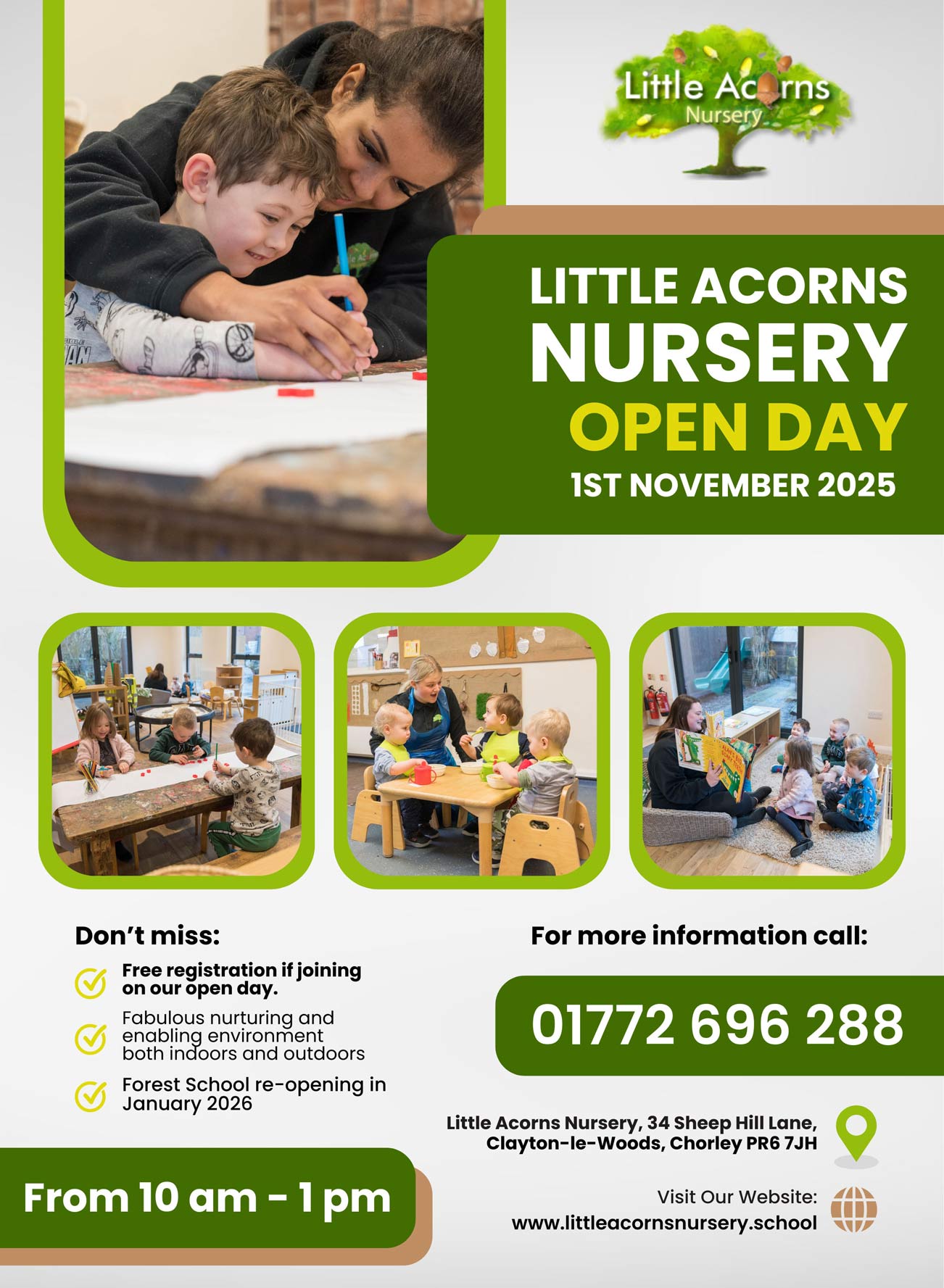
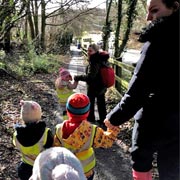 We’re delighted to share some very exciting news:
 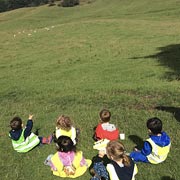 Our nursery is surrounded by
 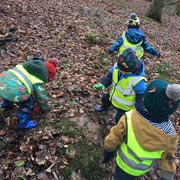 Forest School is a child-centred approach to learning that takes place outdoors and encourages children to explore, investigate, and learn about the natural world through hands-on experiences. Sessions are led by trained practitioners and are carefully planned to be age-appropriate for under-fives. They allow children to learn about nature, build new skills, learn to assess risks, and grow in confidence and independence.
 Forest School offers rich opportunities for learning across all areas of the Early Years Foundation Stage. As children climb, balance, build, dig, collect and create, they naturally develop physical strength, coordination and problem-solving skills. They learn to communicate with one another, take turns, share ideas and work together, supporting social and emotional development in a meaningful context.
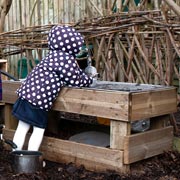 Forest School is not limited to time spent outdoors for children at Little Acorns Nursery. The Forest School approach is also reflected throughout our nursery environment, both indoors and in our garden and grounds. Natural materials, open-ended resources and opportunities for exploration are woven into everyday play, allowing children to continue their connection with nature — whether indoors or outside.
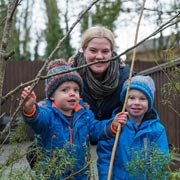 For families already with us, Forest School adds another enriching layer to the care and education your child receives. For those considering joining our nursery, it’s one of the many reasons we believe our setting offers something truly special. Being able to offer Forest School — especially as a nursery that pioneered it locally — reflects our commitment to high-quality, thoughtful early years practice.

 Overall effectiveness: Good

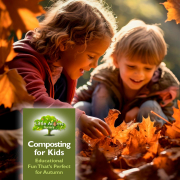

 As the bright days of summer give way to crisp autumn air, parks, gardens, and pavements begin to fill with a carpet of crunchy leaves. For children and under-fives, autumn is one of the most exciting times of the year. With the landscape so full of textures, sounds, and colours, it’s the perfect time to get outdoors, explore, and learn about the natural world. It’s also the ideal time for them to begin a simple but deeply rewarding project: composting. In today’s post, we outline how children can approach this wonderful activity and explain its significant benefits.
 Composting is a wonderfully simple, hands-on activity that provides children of all ages with an opportunity to enjoy the outdoors and connect with nature. It will introduce big ideas about recycling and responsibility in a child-friendly way, teach patience, and make good use of all those autumn leaves. Best of all, it’s fun, messy in all the right ways, and will lead to fascinating discoveries — from the changing smells of the compost heap to the tiny minibeasts that wriggle in to help the process along. Composting is also an activity that can be done with just a little guidance from grown-ups.
 Spending time outdoors gathering materials will not only help children understand where natural resources come from, but it will also give them valuable time in the fresh air, where they can move, play, and make discoveries. At this age, such experiences are vital for confidence and development. And because composting is a gentle, ongoing project, children can revisit it over weeks and months, and watch as nature slowly transforms what they collected into something new and incredibly useful.
 It encourages children to care for the environment and understand recycling in its most natural form.
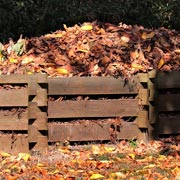 Composting shows children how cycles work in nature — how things grow, fall, break down, and then help new life grow again. This is an early introduction to science and sustainability in action.
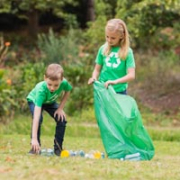
 Head outdoors with a small bucket or bag and invite your child to gather leaves, twigs, and other natural “treasures.” Encourage them to notice the crunch, colour, and shapes of the leaves. Kitchen scraps can also be sourced from indoors, for example, apple cores, banana skins, and vegetable peelings from mealtimes.
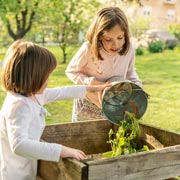 Show them how to tip the scraps into your compost heap, bin, or tub. Explain that the pile needs a mix of “green” (like fruit and vegetable peelings and grass cuttings) and “brown” (like dry leaves and cardboard) to work properly. Young children will enjoy the action of sprinkling, layering, and patting it all down. It’s a great moment to remind them that all living things eventually return to the earth — and through composting, they can see that process step by step.
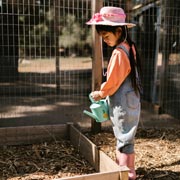 Sometimes compost can dry out. You might therefore encourage your child to sprinkle a little water with a small watering can. Every few weeks, show them how to “stir” the compost gently, for example, with a small trowel or child’s spade — this lets in air and helps it break down.
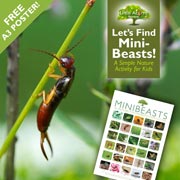 Encourage your child to check the compost regularly. Ask what they can see, smell, and feel. Over time, the compost heap will shrink and darken in colour. Your child may begin to spot minibeasts like worms, beetles, woodlice, and centipedes — all busy at work breaking down the compost pile. This is a brilliant moment to draw your child’s attention to our
 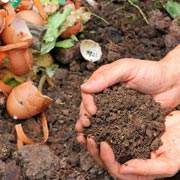 After a few months, the compost turns into a dark, crumbly, earthy material. This is the finished product, which is perfect for feeding plants. Involving your child in scooping and spreading it onto flowerbeds or into plant pots helps them see the complete cycle: from scraps to soil, and then back into growing things again. This is a lovely moment of achievement — through their endeavours, they have produced something valuable that will feed plants in the year ahead. It’s the perfect way to show children the cycle of seasons and how nature gives back when we take care of it.
 By introducing composting at a young age, you’ll plant more than just seeds in the soil — you’ll plant ideas in your child’s mind. They’ll learn that waste can have value, that patience is rewarded, and that nature is full of tiny helpers working behind the scenes.

 When April is on the horizon, there is a buzz amongst parents whose children will receive school offers that month. It’s quite a milestone in the lives of families as it’s the time they’ll find out if their children have received an offer for their top school choice. If not, will they be offered another “preferred” school listed lower on their application? It will often have felt like a long wait to find out the results, too, with families having applied in mid-January or potentially months earlier. Because we are an early years nursery, today’s guide focuses on primary school offers. We’ll explain in detail when to expect your child’s primary school offer, criteria that may have affected it, and your options if you’re not happy with the school place offered. To keep things as simple as possible, we’ll concentrate on applications for a standard school start date in the September term (rules and dates for ‘in-year’ applications are slightly different). If your child is due to start primary school this year, take a look.



 Children will love creating wildlife art. Whether it’s drawing animals and plants, making a collage, or constructing an animal out of cardboard or origami, wildlife art is a wonderful way to get children involved. What’s more, they will get a sense of satisfaction from the activity and it can help them appreciate wildlife more.
 Another incredibly worthwhile activity that children can get involved in is fundraising for a wildlife-related charity. This can be done, for example, through a sponsored activity of some kind. That could be a sponsored walk, hop, swim, or whatever children and families choose (under supervision, of course, for the youngest). A sponsored fundraising activity will not only raise funds for a wildlife charity of choice but also spread the word. Furthermore, children will get an enormous sense of achievement at the end when their actions raise vital funds for animals or conservation. Volunteering for local wildlife charities is also hugely worthwhile, of course, but it is more suited to when children are older.
 World Wildlife Day brings into focus the enormous challenges that affect nature’s flora and fauna. Sadly, many of those challenges are caused by humans, whether it’s due to habitat loss, global warming, or something else. By raising awareness through World Wildlife Day activities, children and families can also challenge themselves to live more sustainably. This is a whole topic in itself! However, some easy measures can be things like:
 Children can also get closer to wild flora and fauna if they live near a wildlife sanctuary (or zoo) or somewhere like a national park. Nothing can really replace seeing animals and plants in real life and so it’s worth researching to find somewhere to visit close by. In Lancashire, just five miles from Little Acorns Nursery, for example, is
 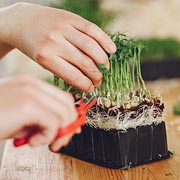 Teaching children how to grow their own plants and, better still, food is a wonderfully educational and fulfilling activity. As well as learning to appreciate wild plants growing in parks and the countryside, learning how to grow their own, at home, is also great fun. Luckily, we have a whole blog post dedicated to
 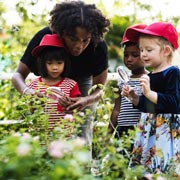 A nature scavenger hunt is also great fun and is sure to get children interested in nature, wildlife, and the outdoors. The activity involves looking out for specific natural things, for example, a pine cone, a robin, a squirrel’s drey (i.e. nest), a winged seed, or animal tracks. It will also
  Encouraging (and supervising, where appropriate) an activity where children try to see different types of animals, birds, and insects is also a wonderful way to get them interested in nature. To make it easier, we have published some free, downloadable reference sheets, which also double as posters, for families to use during this activity. These include
 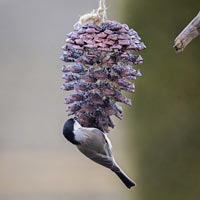 If children like the idea of attracting birds and other wildlife to their own garden, there are many easy ways to make this possible. As well as putting out suitable food to attract birds, children can help make a quiet, wild area with a compost heap to attract minibeasts. There are so many ways to attract wildlife so, to get you started, check out our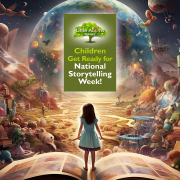

 With the start of the new year now behind us, it’s time for children to get ready to take part in National Storytelling Week. This year it begins on Saturday the 1st of February and ends on Sunday the 9th. It’s a wonderful initiative that brings children and families together to use their imaginations, get creative, and entertain one another. What better time of the year to do that than during mid-winter? National Storytelling Week is perfectly timed to be a fabulous antidote to cold, blustery, winter days and is a wonderful way for children to escape through the power of the mind.
 Whether listening to another’s story or creating it themselves, storytelling is a fun activity for children and adults alike. In either case, imagination is a powerful thing that will allow children to immerse themselves in new worlds, new situations, and new adventures. What’s more, it can even allow them to temporarily become someone or something else. That’s hugely powerful!
 With a theme as open-ended as reimagining their world, children have free reign to come up with all kinds of storylines and scenarios. When it comes to creating stories the world is, as they say, their oyster and it’s only limited by their imaginations. They could perhaps come up with some kind of fantasy with colourful landscapes, magic, and weird, wonderful creatures. Or perhaps the story revolves around a futuristic city where travel by hoverboard is the norm. Or maybe the storyline is something more simple and subtle that’s not so different to reality. It’s entirely their choice and, for supervising adults and parents, it’ll certainly be interesting to see what they create.
 First-time storytellers may better grasp the idea if an adult/parent first tells a story as an example. This will help them see what’s possible — and indeed show that anything is possible.
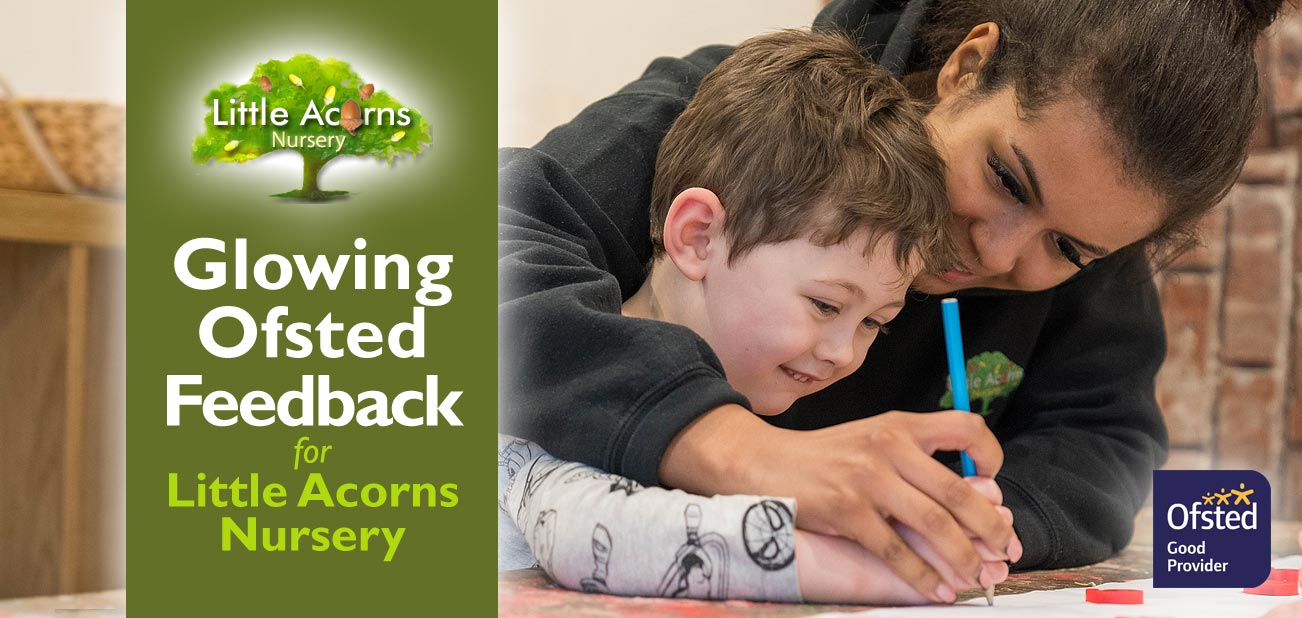
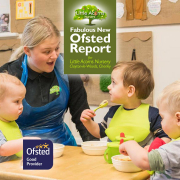
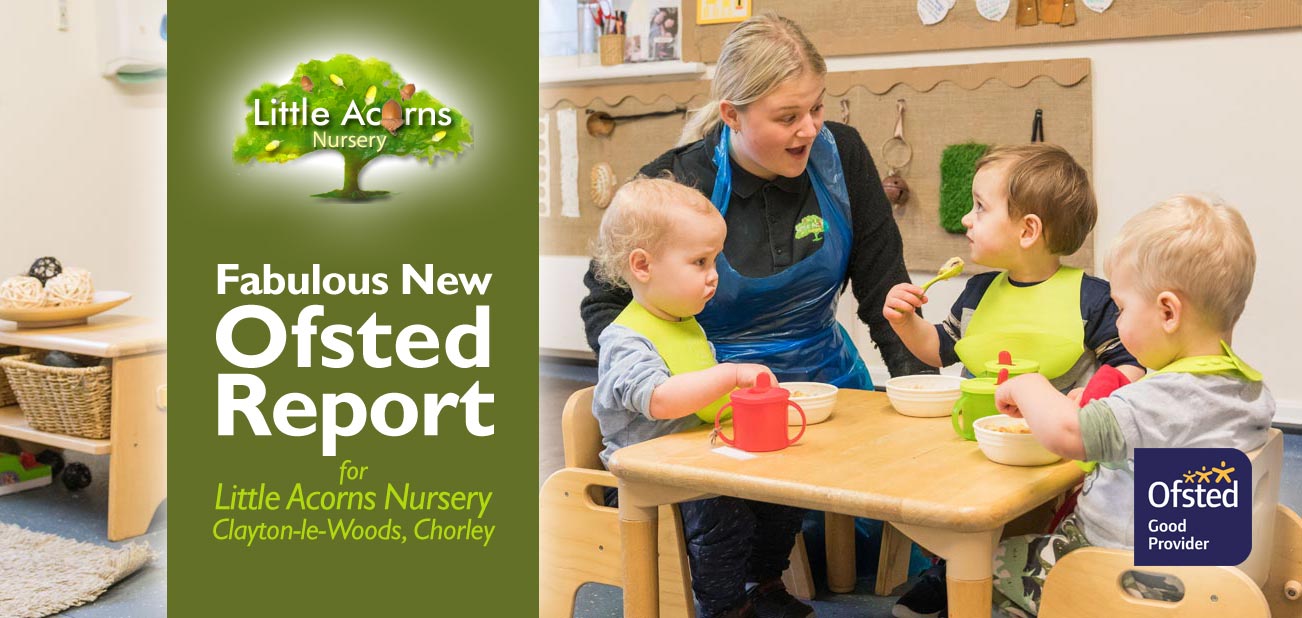
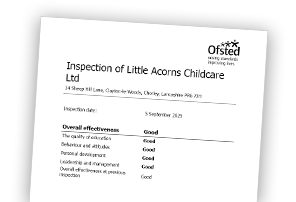
 Today we look at the wonderful Ofsted report published recently for Little Acorns Nursery in Clayton-le-Woods, Chorley. Ofsted is The Office for Standards in Education, Children’s Services and Skills. Their inspector visited this fabulous Lancashire childcare setting in late August and released its official report a month later on 25 September 2024. Our post today spotlights some of the many glowing comments made by the inspector therein, following her visit. It also highlights the reasoning for ‘good provider’ ratings across all areas of the Ofsted report. Take a look and you’ll see why babies, children under five, and those with special educational needs and/or disabilities absolutely thrive at Little Acorns.
 Overall effectiveness: Good
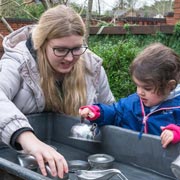 Any good nursery or childcare provider will ensure that children understand right from wrong and are mindful of the effect their actions have on others, including peers. Nurturing good manners and appropriate behaviour amongst little ones benefits everyone including, of course, the children themselves. Ofsted’s latest report recognised that Little Acorns is very successful in this regard:
 Children find messy play hugely rewarding as well as being immense fun. Messy play nurtures children’s imaginations, creativity, dexterity, and self-expression and benefits them in many other ways. It is therefore a crucial part of early years learning and development — and more important than it perhaps sounds. Ofsted picked up on the quality of messy play activities at Little Acorns Nursery within its report: