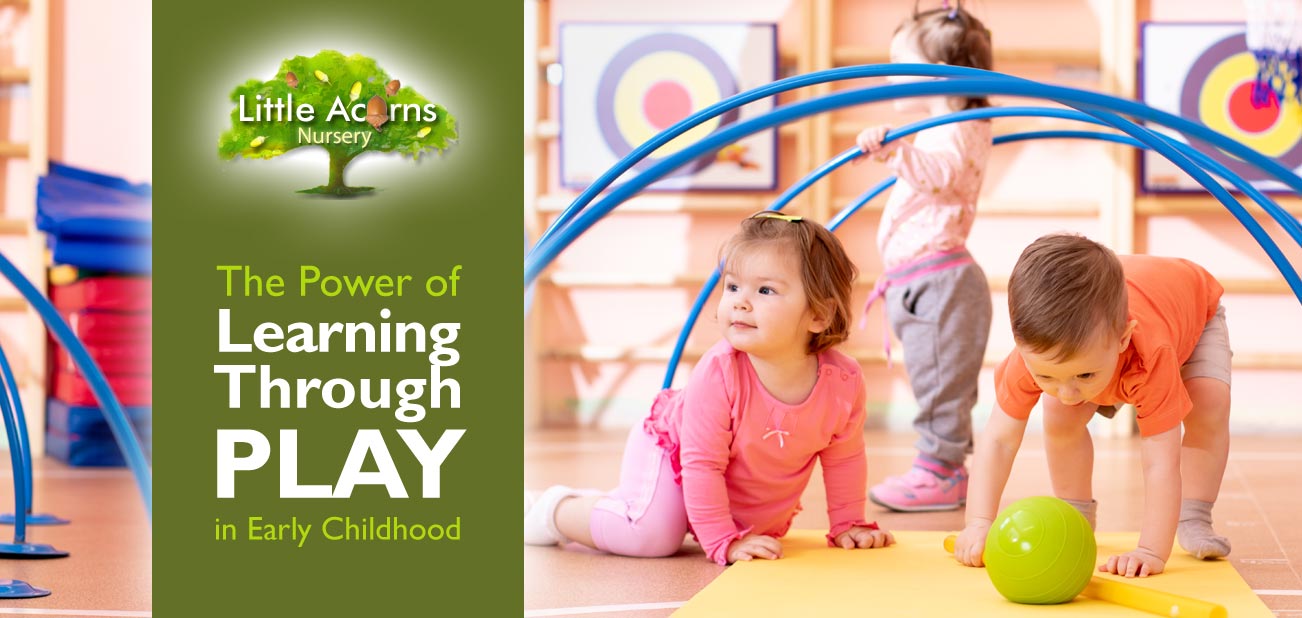
 In the world of child development and early education, there is a simple yet profound truth: children learn best when they are learning through play. Play is the universal language of childhood and, indeed, it transcends both borders and cultures. Whether it’s building sand castles on a sunny beach or arranging blocks on the floor at home, play is the gateway through which children explore, discover, and grow.
But how and why is play so important? And can it benefit even babies, the tiniest members of society? In today’s article, we’ll unravel the secrets of learning through play. We’ll refer to some findings of scientific studies that attest to its incredible impact, explore play’s significance in the early years and infancy, and explain how childcare nurseries like ours harness its potential to nurture young minds.
So, join us today as we explore the power of play and why it should be at the heart of every child’s learning experience. Let’s open the door to a world where fun, laughter, imagination, and natural discovery pave the way to a brighter future for our children.
Why Is Learning Through Play So Important?
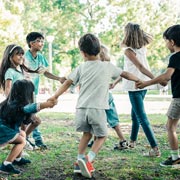 As adults, we often associate learning with classrooms, textbooks, and structured lessons. However, for children, the process of learning is a dynamic and ever-evolving adventure, with play being their very best companion during the journey.
- It develops cognitive skills. Play serves as a powerful vehicle for the development of cognitive skills. When children engage in activities like building with blocks, solving puzzles, or pretending to be characters in their favourite stories, they are actively honing their problem-solving abilities, critical thinking, and creativity. Importantly, these skills are also the building blocks of a lifelong love of learning, which we’ll come to later.
- It sparks social & emotional growth. Play isn’t just about individual growth; it’s a social endeavour. Through play, children learn to navigate the complex world of relationships. They practise communication, cooperation, and negotiation as they interact with peers, siblings, and caregivers. Sharing toys, taking turns, and resolving conflicts during playtime are valuable life skills that lay the foundation for healthy social development.
- Exploration feeds the imagination. One of the most beautiful aspects of play is its ability to fuel the imagination. When children engage in imaginative play, whether it’s hosting a tea party for stuffed animals or embarking on a make-believe adventure, they are cultivating their creativity and expanding their understanding of the world. Imagination is the driving force behind innovation and problem-solving in adulthood, making it a vital skill to nurture from a young age.
- It fosters a love for learning. Perhaps the most compelling reason to prioritise learning through play is that it fosters a genuine love for learning. When children associate learning with fun, joy and discovery, they will naturally develop a thirst for knowledge that stays with them throughout their lives. Such an intrinsic motivation is priceless and will serve them well in all their pursuits, whether academic, work-related or personal.
So, as we can see, learning through play is a fundamental part of a child’s educational journey. It lays the groundwork for cognitive development, social and emotional growth, imaginative thinking, and a lifelong passion for learning.
Babies & Under-5s
Play-based learning is not just for older children. In reality, its influence begins right from infancy and continues to shape young minds throughout their early years. Let’s explore that a little further.
Play for Babies – Building Foundations
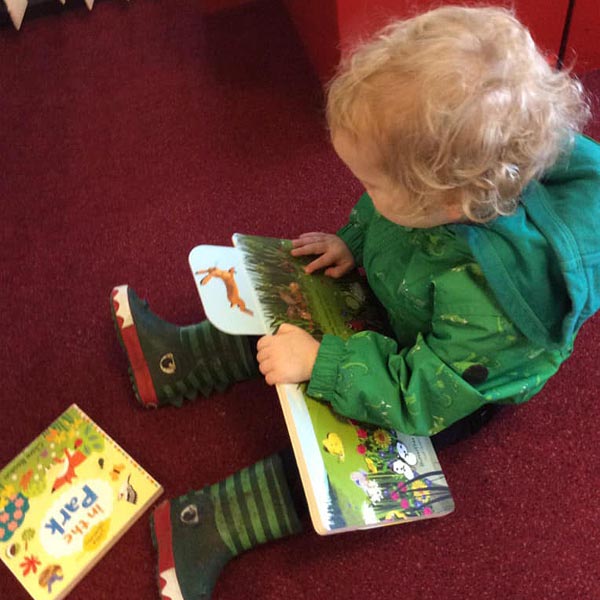
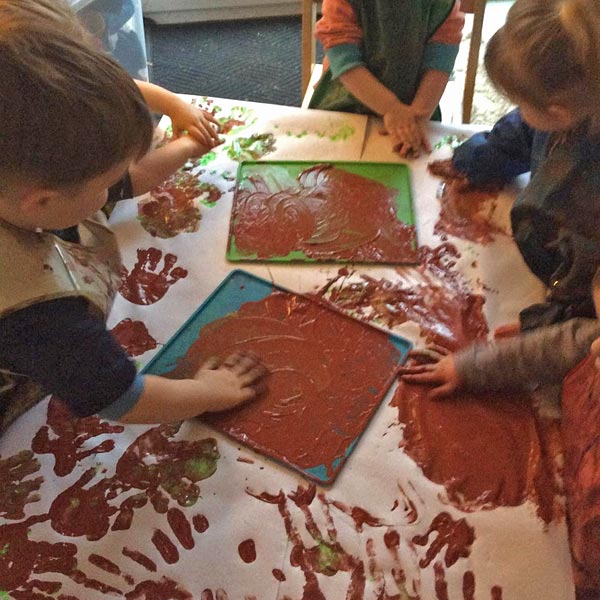
 Do babies benefit from play? Absolutely. Play is the first way through which infants start understanding their world. They use their senses to explore toys, grasp objects, and make sense of the environment around them. Sensory play, such as touching different textures or listening to soothing sounds, stimulates their developing senses and lays the groundwork for future learning.
Infant play also plays a crucial role in the development of fine and gross motor skills. As babies reach for toys, practise tummy time, and eventually start crawling and walking, they are strengthening their muscles and improving coordination.
Early Years Play – Growing Skills
 During the run-up to the age of 5, play is integral to children’s development. During this phase, children are like little sponges, soaking up information from their surroundings. Play allows them to experiment, make connections, and refine their cognitive and many other skills. Skills enhanced through play include:
- Language development. Through imaginative play, storytelling, and conversations with peers and caregivers, children will naturally expand their vocabulary and improve their communication skills.
- Maths and science concepts. Counting blocks, sorting shapes, and exploring basic scientific principles through hands-on experiments are all part of early years play. Such activities build a firm foundation for mathematical and scientific understanding.
- Problem-solving and critical thinking. Whether it’s solving puzzles, figuring out how to build a tower without it toppling, or strategising during a game, play encourages children to think critically, make decisions, assess risk, and find solutions to challenges.
- Emotional intelligence. Role-playing and interactive games help children navigate complex emotions. Through these, they will naturally enhance emotional intelligence, develop empathy, and learn about relationships. Such skills are vital for their social and emotional growth going forward.
Play is a powerful and natural tool that’s critical to the development of babies and young children. From sensory exploration in infancy to the cognitive challenges of early years, play enriches their lives and gives them foundational skills and knowledge that will serve them throughout their educational journey.
The value of play is backed up by extensive research
The scientific evidence is clear: play is not just a pastime; it’s a fundamental component of child development 1. Indeed, learning through play is a major part of a good, holistic, approach to child development. It teaches children almost infinite amounts about the world around them while fostering cognitive skills, emotional intelligence, creativity, and a love for learning that will benefit them throughout their lives. Play is the primary vehicle through which children explore, discover, and grow, and it should be at the heart of every child’s educational journey.
The Role of Childcare Providers Like Little Acorns Nursery
Childcare settings like Little Acorns Nursery are often a child’s first introduction to structured learning outside the home. We play a pivotal role in nurturing young minds through a play-based approach to education. This is designed to encourage children to explore, experiment, and naturally discover through play.
-
 Creating playful environments — we understand the importance of a conducive environment for learning through play. With that in mind, we provide carefully designed play spaces that are rich in stimulating materials and resources. These spaces allow children to engage in various types of play, from imaginative to sensory, in a safe and supportive setting.
 - Trained educators — our nursery staff are trained to facilitate play-based learning effectively. They observe and engage with children during their play, providing guidance when necessary while allowing children the autonomy to explore and experiment. Our skilled educators recognise the many learning opportunities that arise naturally during such play.
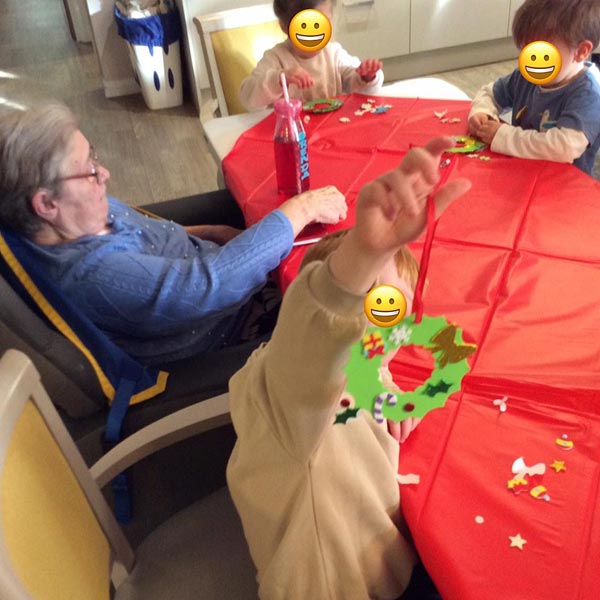
- A balance of structured and unstructured play — we strike a careful balance between structured and unstructured play. Structured activities may include group games, circle time, and planned art projects, while unstructured playtime allows children to choose their activities, fostering independence and decision-making skills.
- Incorporating learning goals — while play is central to the nursery experience, it doesn’t mean a lack of educational goals. Childcare providers like Little Acorns Nursery align play activities with specific learning objectives. For example, a play dough activity can promote fine motor skills and creativity, while a group storytelling session enhances language development.
- Assessing progress — continuous assessments help our childcare practitioners and each child’s Key Person to gauge children’s development. Such assessments consider, for example, children’s engagement, problem-solving abilities, social interactions, and other skills that emerge during play. This holistic approach helps our educators to tailor their support to each child’s individual needs.
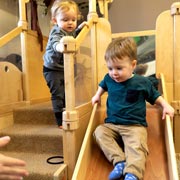 Creating playful environments — we understand the importance of a conducive environment for learning through play. With that in mind, we provide carefully designed play spaces that are rich in stimulating materials and resources. These spaces allow children to engage in various types of play, from imaginative to sensory, in a safe and supportive setting.
By recognising the immense value of play in child development and providing a nurturing environment where children can learn, grow, and thrive through play-based activities, we not only prepare children for the transition to school but also facilitate the development of essential life skills.
Nursery Places at an Outstanding Nursery in Clayton-le-Woods, Chorley

Are you looking for an outstanding nursery for your child in Clayton-le-Woods or near Chorley? If so, you should consider Little Acorns Nursery. Not only does Ofsted rate us as an ‘Outstanding Provider’ but we also have a highly prestigious national nursery award under our belt. All Government-funded childcare schemes are supported at the nursery too, making childcare provision more affordable for eligible families. To register your little one for a place, arrange a tour with your child, or ask a question, please contact us:
Little Acorns is a nursery in Clayton-le-Woods, near Chorley, Central Lancashire. Families living or working nearby in Clayton Brook, Clayton Green, Thorpe Green, Pippin Street, Buckshaw Village, Whittle-le-Woods, Farington, Bamber Bridge, Lostock Hall, Euxton, Leyland or Penwortham may also find it convenient.
Coming Soon:
How to Encourage Learning Through Play at Home
Parents and caregivers also play a crucial role in fostering an environment that supports exploration, curiosity, and growth through play. Your home can be a vibrant hub for play-based learning. Moreover, by creating a nurturing environment, providing the right resources, and actively engaging with your child during play, you empower them to explore, learn, and really grow as individuals. We explore the topic of Encouraging Learning Through Play at Home here.
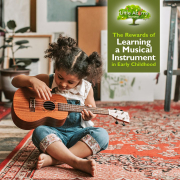

 While listening to music has a unique way of resonating with the human spirit, actually creating it on a musical instrument elevates that connection to entirely new levels. What’s more, learning to play an instrument leads to a whole host of multifaceted benefits. Whether tinkling piano keys, strumming guitar strings, or playing a wind instrument, children who learn to play a musical instrument will soon discover a whole world of opportunities and advantages that extend far beyond the realm of melody and harmony. With that in mind, today’s article explores the myriad of sometimes surprising benefits that learning to play music will bring to children, even at a very young age. Take a look below and discover how musicianship could benefit your child, extend their skills and potentially enrich their life profoundly.
 The influence of music on brain development is nothing short of remarkable. Learning to play an instrument engages various parts of the brain simultaneously and is like a 360-degree workout for the mind! As such, its cognitive benefits are profound. Children who take up musical instruments therefore tend to excel in memory, problem-solving, and mathematical skills. Indeed, studies have shown that musical training can lead to improved academic performance, enhancing children’s abilities, particularly in subjects like mathematics and science. So, when your child learns to play a violin, piano, guitar or even a simple recorder, they’re not just making music; they’re also fine-tuning their cognitive abilities.
 Learning an instrument represents a real journey of creativity and imagination. Children explore melodies, experiment with harmonies, and may often progress to compose their own tunes. This creative process nurtures their imagination and encourages them to think in new and alternative ways. Making music really is a powerful tool for unlocking children’s artistic potential.
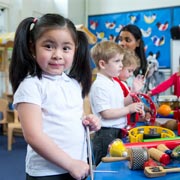 Music is often a collaborative endeavour and that, in itself, will bring additional benefits to children. As well as simply being enjoyable, group music lessons and ensemble playing will teach children valuable social and teamwork skills. Through music-making, they will learn to listen, cooperate, and communicate effectively with others at appropriate times — and even to make more friends. Such skills go well beyond the world of music and are fundamental in importance and positive impact.
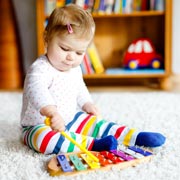 For infants and toddlers, musical exploration can start with simple activities like singing lullabies, clapping to a rhythm, or playing with simple musical or percussive toys. These activities introduce them to the world of sound and rhythm in a playful and engaging way.

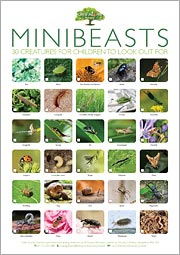 Children and parents, let’s go minibeast spotting! Whether you have a garden, neighbourhood park, or just a few potted plants, there are bound to be minibeasts visiting or living there. What’s more, summer is the perfect time to spot them. Spending time in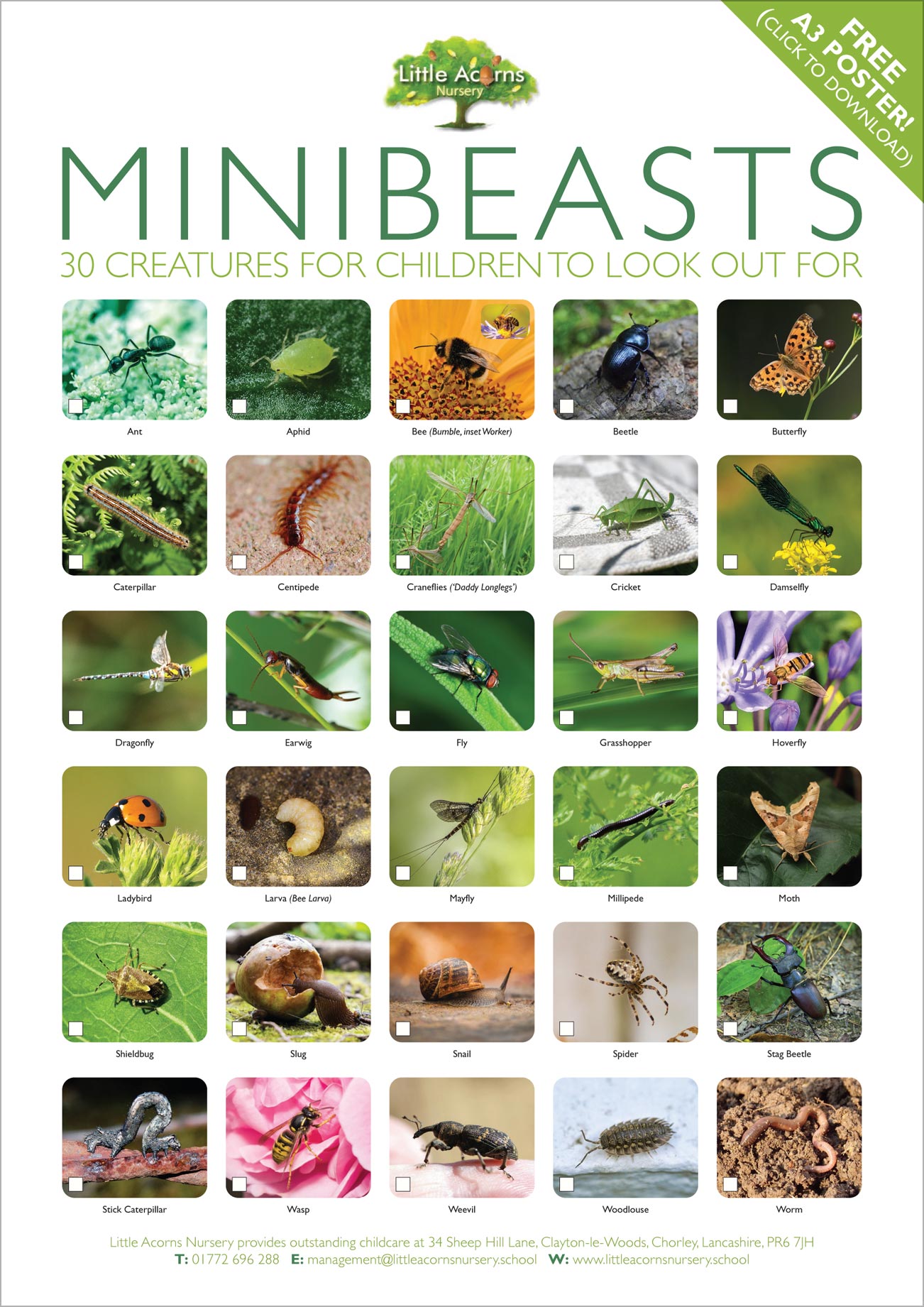
 Today’s flower-growing children’s activity follows on nicely from last month’s
 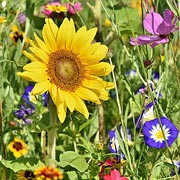 It’s possible to sow wildflower seeds from March right through to mid-October or, at a push, early November so long as snow or frost is not forecast. Those sown closer to March and April will generally flower in late spring/early summer. Those sown very late in the year will flower the following year, from spring onwards. Any sown up to and including the middle period, for example during July, should still flower in the same year — wildflowers usually bloom some 60 to 80 or so days later if they’re timed to grow in the same year as they’re sown.
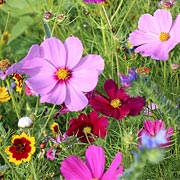 There are several ways for children and families to source wildflower seeds. The most obvious way is to buy them commercially, in seed packets. These are available from any number of different outlets including nurseries, supermarkets,
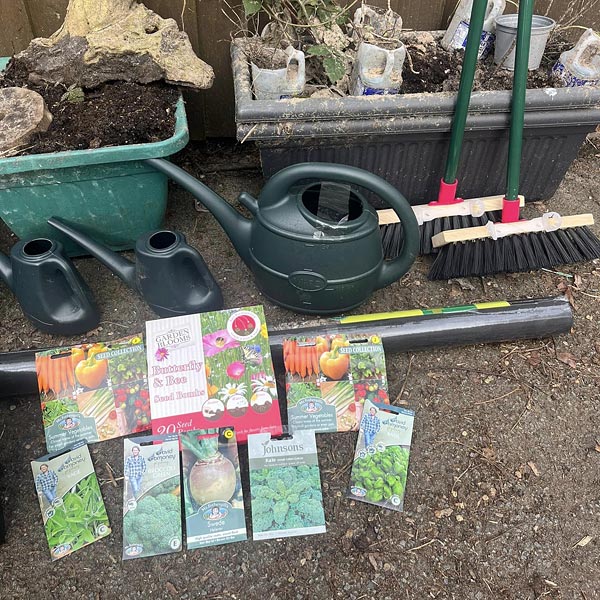
 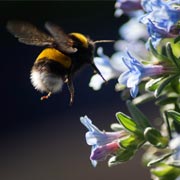 If you buy your child commercially-available wildflower seeds, the information on the packet will often say if the resulting flowers are bee-friendly, butterfly-friendly, good for pollinators, and so on. So, if you’re sourcing seeds that way, much of the decision-making criteria around which actual flowers to grow is made clear and therefore the choice is easy.
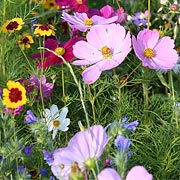 By their very nature, wildflowers are generally not very picky in regard to the type of soil they are happy to grow in. Therefore you/your child will have a greater choice of where to sow the wildflower seeds. A fairly clear sunny area is good, whether that’s garden beds, flower pots, window boxes, grow bags on a balcony, or even the lawn itself if you want a wild ‘meadow’ type lawn. Whatever the choice, it’s best if it’s somewhere that won’t be disturbed by you/the family though, as you wouldn’t want the wildflowers trampled once they do arrive.
 With regard to sowing the seeds, follow any seed-specific instructions on packets in relation to timing and spacing. If you’re using self-harvested seeds or there are no instructions, simply sprinkle the seeds so they’re spaced, fairly evenly, i.e. not too densely sown. This will avoid the wildflower plants having to compete with one another once they start growing. A tip is to sprinkle from a height as this will naturally scatter them more widely. Once scattered, your child can help* to pat the soil surface down, either by hand or using the back of a tool like a spade or a trowel, so that the seeds are secured in the soil. Children can even ‘walk’ them in if they prefer. Once complete, ensure that you/your child keep the soil damp over the coming weeks. The preparation stage really is as simple as that!
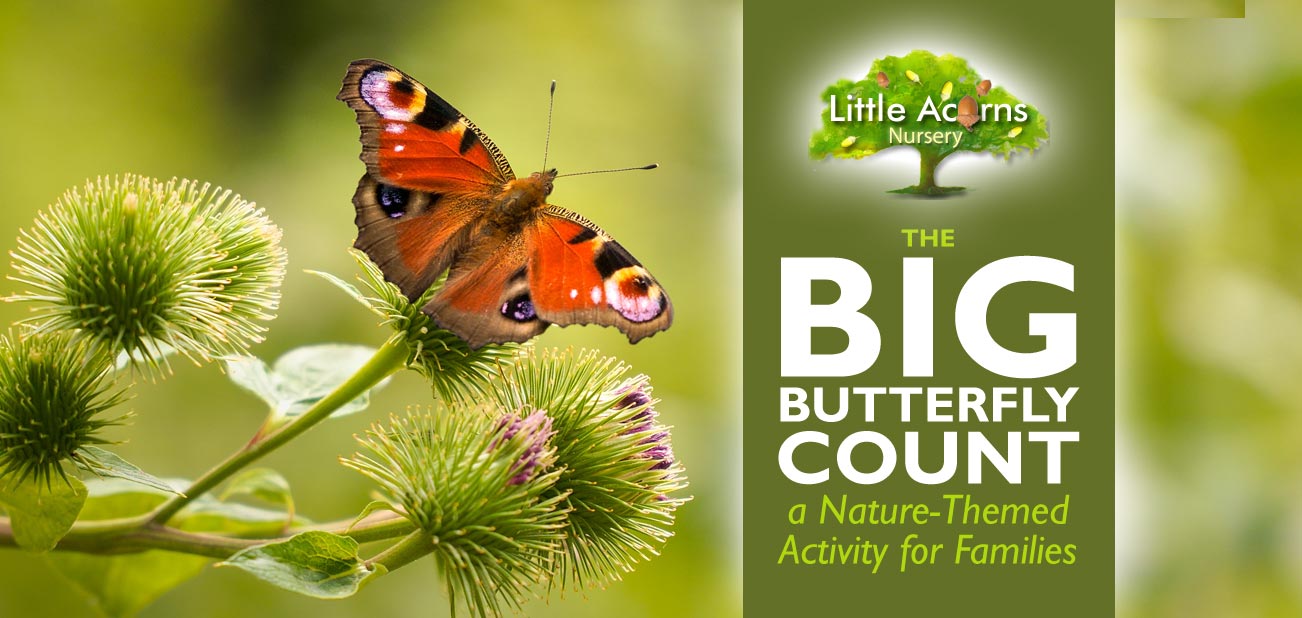
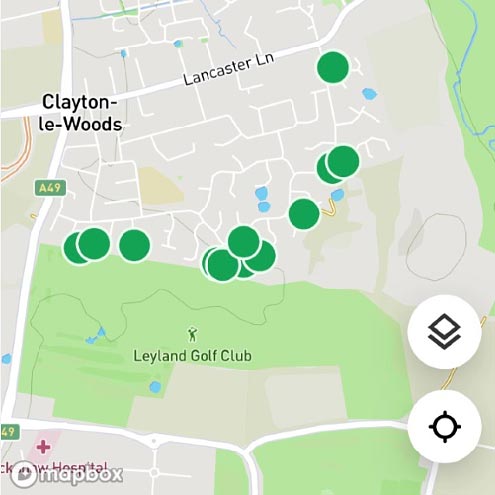
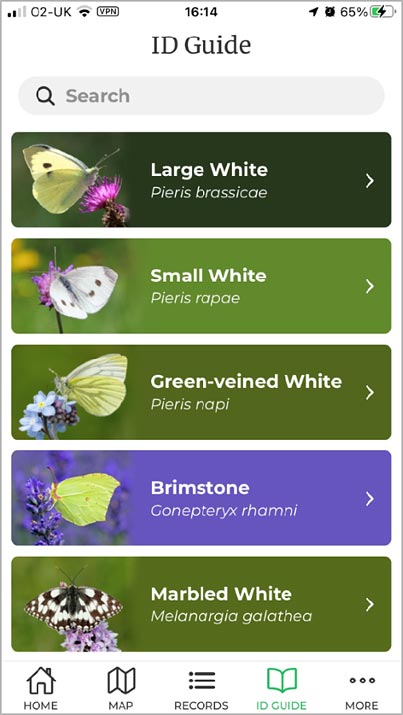
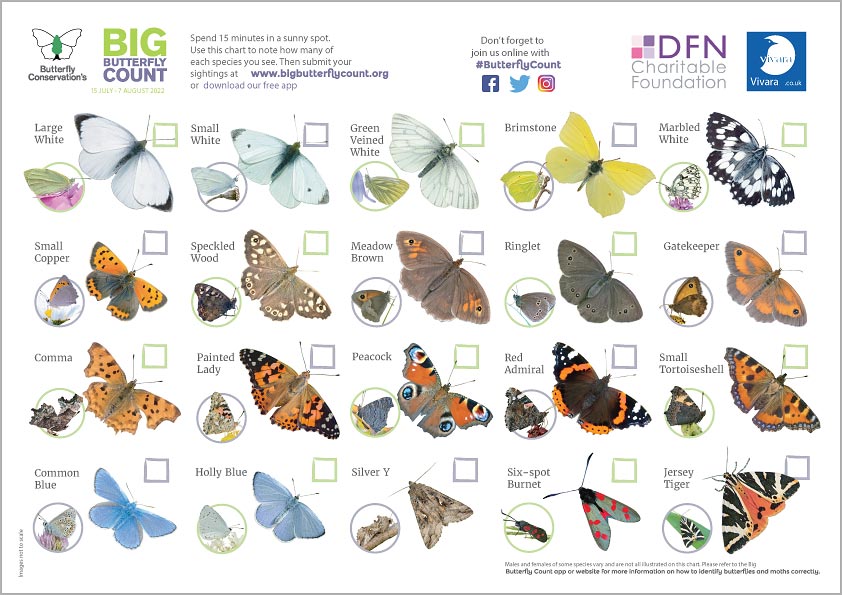
 Many will have heard of the Big Garden Birdwatch that takes place every year in January. However, fewer are aware of a similar activity called The Big Butterfly Count that takes place in July and early August. As well as being extremely worthwhile, it’s a wonderful activity for both children and adults to get involved in as citizen scientists. The activity helps with butterfly conservation, is educational for those taking part, and encourages families to get outdoors, closer to nature. And, as we know,



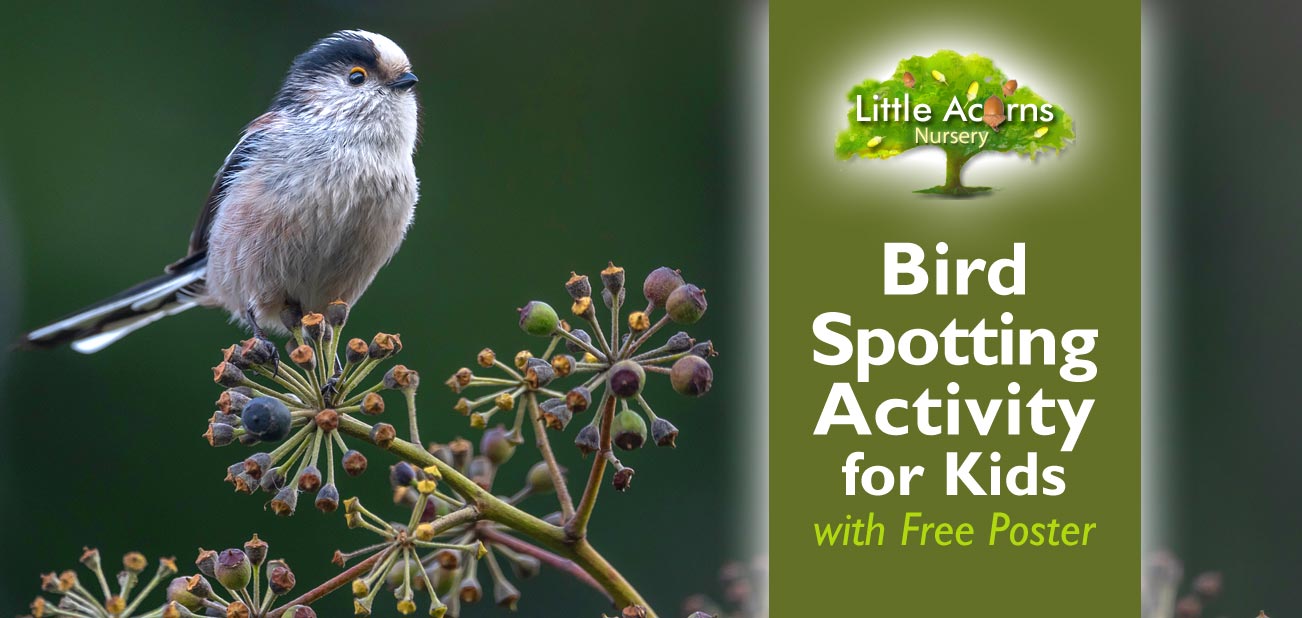
 Are you looking for a fun and educational activity for your children? Why not encourage them to do some bird spotting? Not only is it a great way to spend time outdoors, but it’s also a wonderful opportunity for them to learn about nature and develop observation skills. As we know,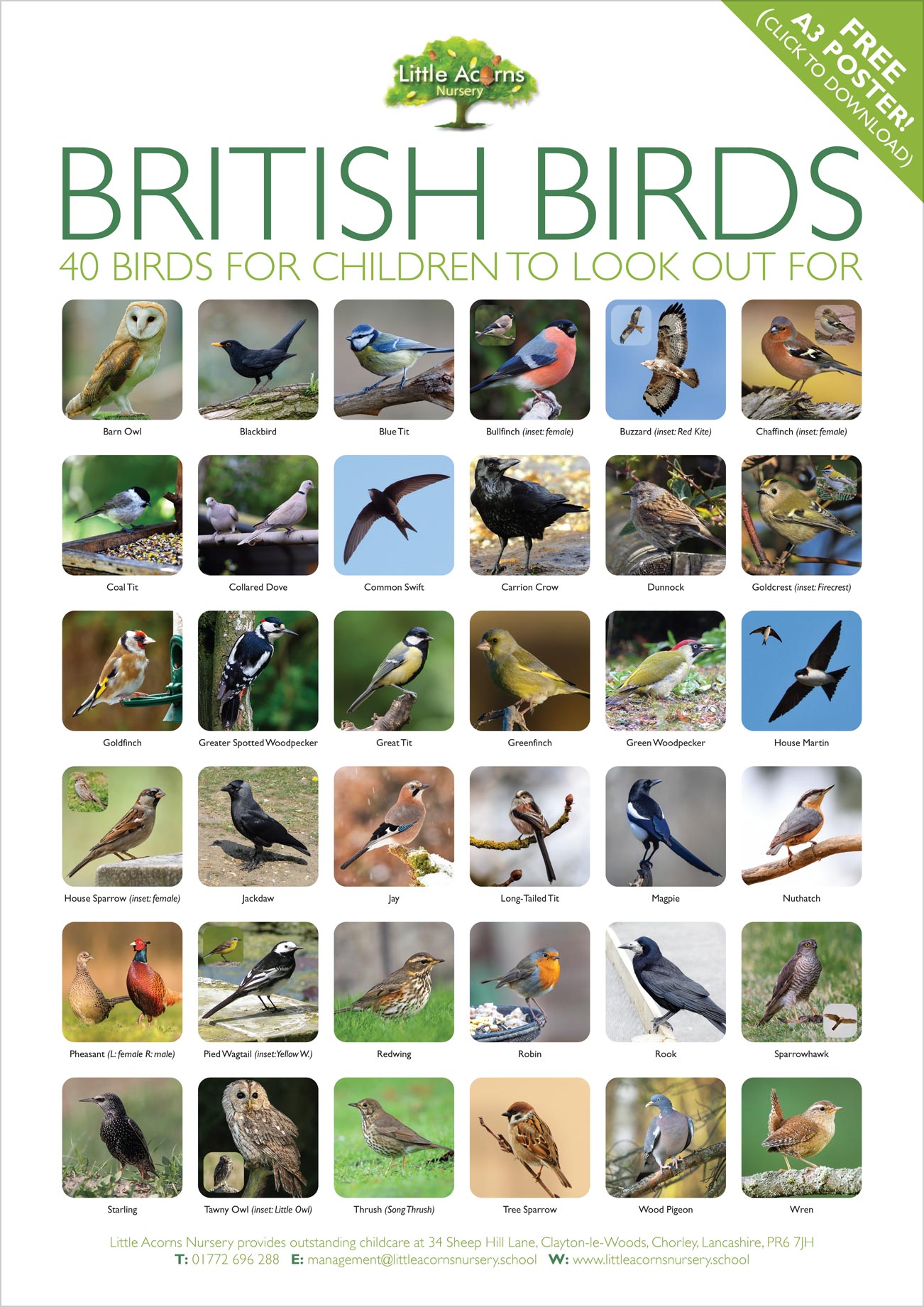
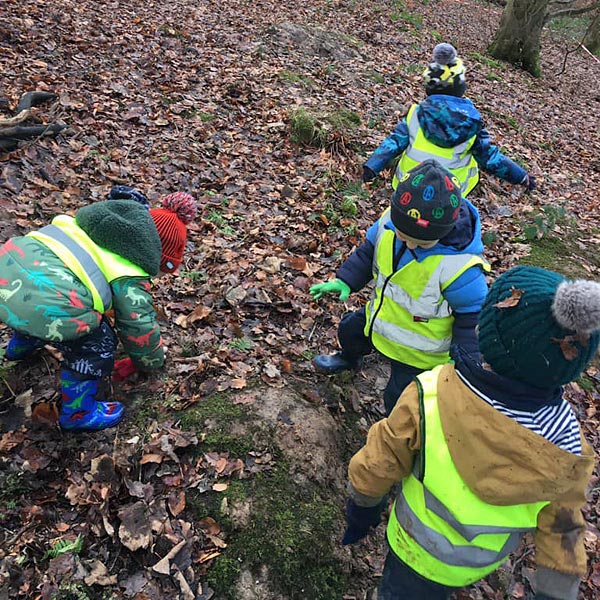
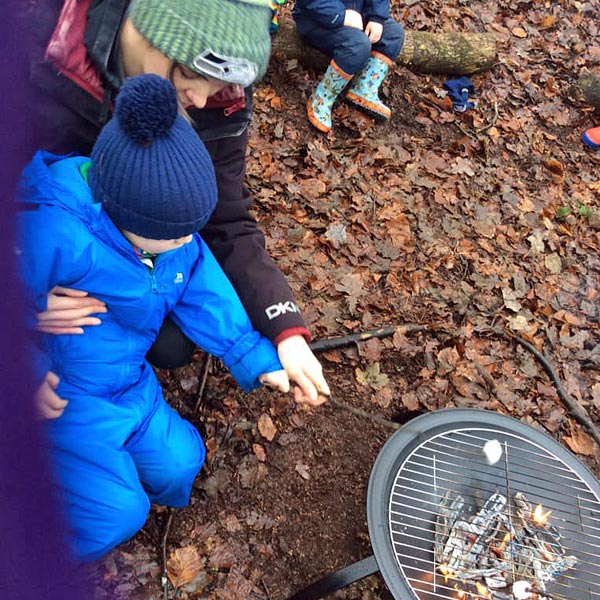
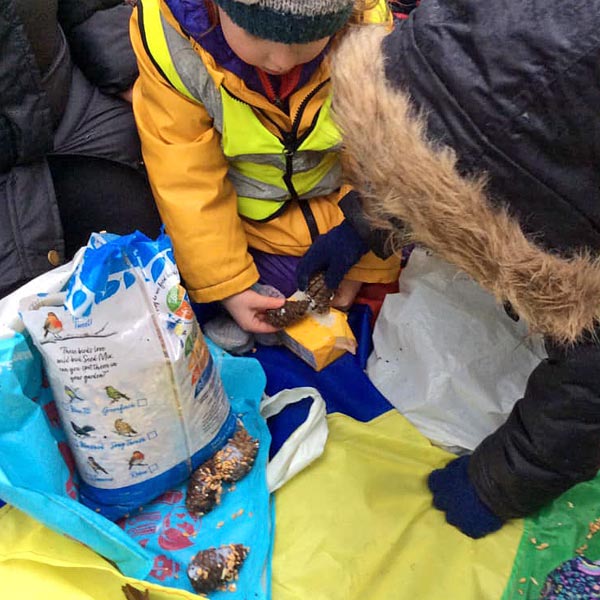
 As promised in our recent
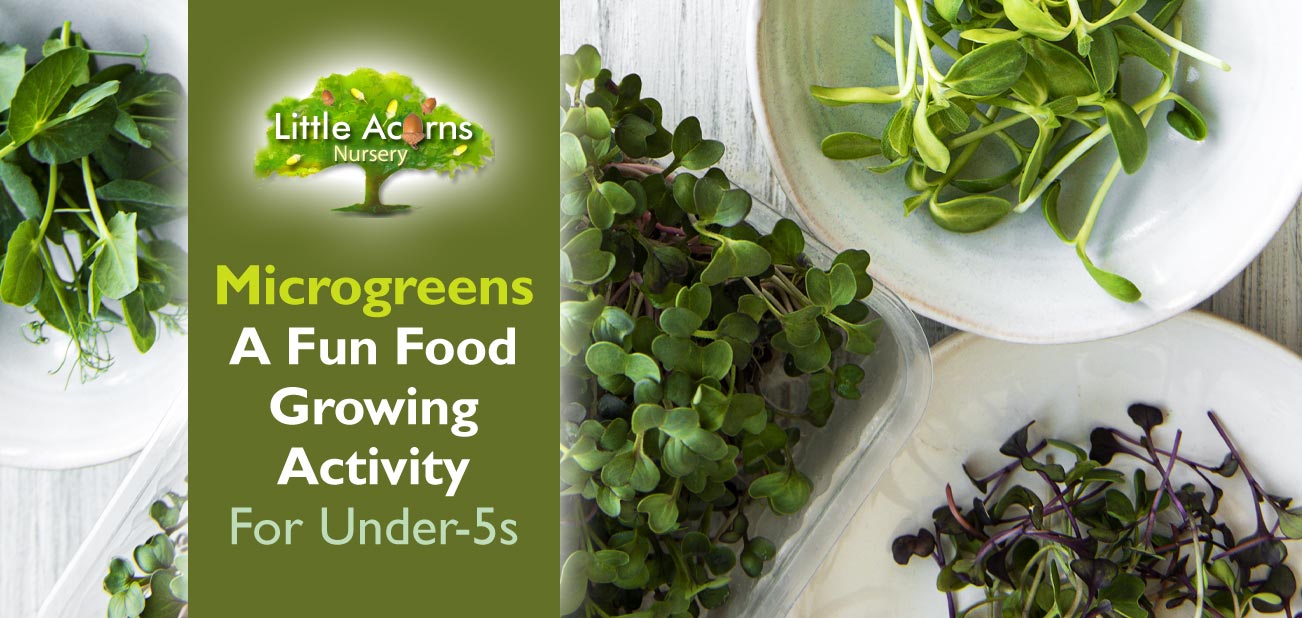
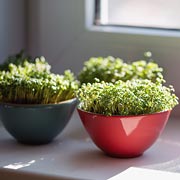
  Microgreens, also known as micro leaves, are the young shoots of growing plants that are edible. Examples include the seedlings of herbs like basil and coriander, red cabbage micro leaves and the shoots from root vegetables like beetroot. When growing, the seedlings form a thick and rich ‘carpet’ of shoots that, when ready, can be snipped off en masse and used in meals as salads or garnishes. What’s more, they’re delicious, highly nutritious and make meals look amazing. The entire activity can also be accomplished indoors in any home. You do not need to have a garden because a well-lit windowsill or counter top will more than suffice.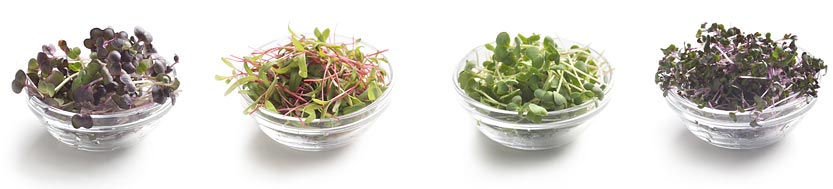
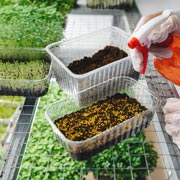 Microgreen seeds. These are available inexpensively online or at places like garden centres and even some supermarkets. You can buy microgreen mixed seeds or choose seeds for rocket, beetroot, spinach, red cabbage, fennel, broccoli, radish or mustard. Each has a distinctive look, when growing, and flavour, when eaten. Read the packets for more detail or just have fun and experiment!
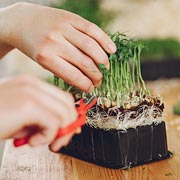 Different microgreen seeds grow at different rates but usually a dense carpet of growing shoots and tiny leaves will cover the trays or pots within one or two weeks. Generally speaking, when you can see small, immature leaves at the top of shoots about 1 to 1¼ inches tall, they are about ready to be harvested. For young children in particular, snipping them off is best done by parents, to avoid injury. The carpet of microgreens can be snipped off, using scissors, low down near where the shoots begin. It’s best to snip them off rather than to pull them up by the roots because then they have the chance to regrow and give you/your child a second crop later on. The microgreens can then be washed in a fine colander, under a cold tap, to remove any remnants of soil.
 Your child can then continue the fun by helping with meal preparation (with adult supervision for safety). Microgreens make wonderful garnishes, are lovely in salads and sandwiches and can also be added to things like soup, risotto, pasta, baked potatoes and burgers. They are incredibly attractive to look at, jazzing up any meal and also giving children extra nutrients to consume. They are also a great way to encourage children to try new tastes and food textures.

 October sees one of the year’s biggest traditions in the form of Halloween, which arrives on the 31st. Halloween, which is short, in effect, for “All Hallows’ Eve”, has it’s historical roots in Christian and, many believe, Celtic, Gaelic and Pagan festivals. Broadly speaking, these festivals were events to remember the dead, including saints (a.k.a. “hallows”). However, for virtually all children these days, it’s simply a traditional time for some themed fun. And what fun it can be! Today we’ll therefore take a look at the activities and opportunities that Halloween has for little ones at this time of year.
 Halloween Costumes — Dressing Up Fun!
 Edward Scissor Hands is another favourite. Try taping teaspoons or kitchen foil to your little one’s fingers to simulate Edward’s hands — but only if they’re old enough to be able to control movements so they don’t hurt themselves or others.
 Halloween Parties
 Parents and children can prepare for such parties, or when staying at home for the evening, with a range of Halloween-themed party food. This is also great fun and may even encourage little ones to eat foods they may not normally try (as appropriate for their age, of course). Try baking plain biscuits in Halloween themed shapes. Some can be made to look like pumpkins, bats and ghosts, for example, with suitable icing. Use whichever recipe is your favourite for the actual biscuits. Children will love the theming, which will make the food fun!
 Carved pumpkins are, of course, a great tradition for Halloween and one that children will love. For the safety of little ones, though, parents/adults will need to do the carving. Children can get involved in emptying out the pumpkin flesh and perhaps saving seeds, which they can later grow into new pumpkin plants for next year. They can also get involved in decorating outside of the carved pumpkins with paint or Sharpie pens. Red or green food dye can also be used to paint the inside. A good hand wash will be needed after all of this.
 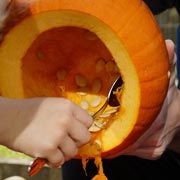 A lit candle (or an LED equivalent) can be placed inside by the adult and this will shine through and illuminate the design or face. Then the finished pumpkin can be placed somewhere safe — where little ones cannot endanger themselves if a real flame is used — for example out in the garden or on the front drive.
 Pumpkin Picking Locally
 Another pumpkin farm that’s open to families is also in Leyland, again less than 4 miles away from Clayton, at Moss Lane, Farington Moss, Leyland PR26 6QD. To pick your own pumpkin there (weekends only in October), call 07701 082 482 or get
  Trick or treating is the Halloween tradition of knocking on neighbours’ doors, shouting “trick or treat?” and hoping that some sweets or similar will be handed over to children by kindly neighbours. That would be the ‘treat’ element. The ‘trick’ element is more rarely used today, especially with the younger children. However, it still occasionally involves funny tricks being played on those neighbours who didn’t offer sweets. This ‘trick’ element is to be used only with particularly friendly households, though, and perhaps only with those that have been forewarned by the parents involved. If not handled with care, it can backfire and cause terribly bad feeling or even be thought of as antisocial behaviour. For that reason, forewarning neighbourhoods about any group trick or treat sessions is wise, including agreeing a way for them to opt out if they prefer.
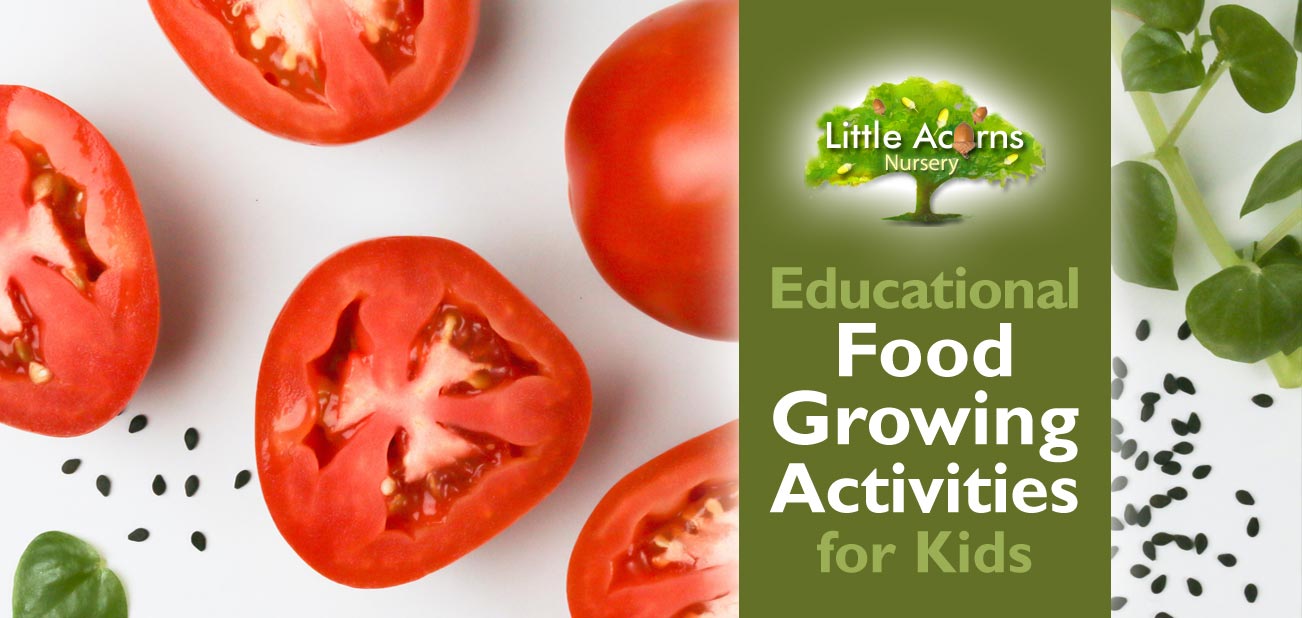
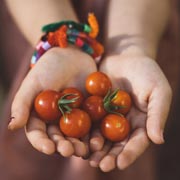 and that’s just one of many reasons why little ones should be encouraged to learn about sowing seeds and growing their own plants. Today, we’re taking that a step further by explaining how children can grow plants that will give them real, edible food! With a little planning, care and effort, children can grow herbs, vegetables and even fruit if they put their minds to it. What’s more, it’s possible without a garden and needn’t cost a penny!
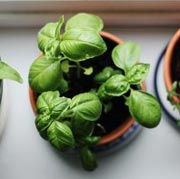 That will never be more evident than when a seed has grown into a plant that bears fruit, which contains more seeds, through which the whole process can start again.
 Seeds for herbs, vegetables and microgreens are all widely retailed in places like garden centres and even some supermarkets. Each seed packet will usually explain when and how seeds can be planted. This is perhaps the most obvious way for children to grow plants that, if all goes well, result in a healthy crop of food. However, we can be far more adventurous than that! Where is the fun in buying seeds in packets when children can get them for free? Let’s take a look at some cheaper and far more creative ways that children can start things off.
 “Free” you say? Well, pretty much! Next time you have some shop-bought tomatoes and/or peppers as part of your ordinary shopping, get your little one to take a few moments to save some of the seeds. These are found within things like tomatoes, before they’re eaten, and are usually discarded in the case of peppers. Such seeds can simply be spaced out on some compost or earth, watered in and a thin layer of soil or compost added on top. If these are left on the windowsill and the earth kept moist by the child over the coming days, little seedlings will soon start to appear.
 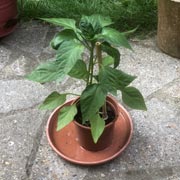 The image of the green plant shows our pepper seedling grown in this exact way — and it was incredibly easy to achieve. Ours is about 3 or 4 weeks old and it’s just about ready to be “planted out” outdoors, to mature. Once mature, they should flower then sprout some new peppers! It’s identical for tomatoes. If children have no garden for larger plants to be transferred to, ‘grow bags’ or any kind of suitable container can be used on a patio or balcony. Children will need to keep watering them every day, to keep the soil moist. Flowers will eventually appear and, with a little help from bees and insects, will be pollinated so that they eventually ‘fruit’. If appropriate care and attention continues, your child will eventually end up with vegetables that can eventually ripen and be eaten. That’s free tomatoes and peppers for the family, in our examples. Don’t forget to remind your child to save a few more seeds, though, so they can repeat the whole process again … and again!
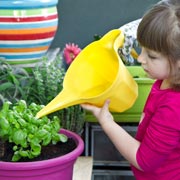 Does your little one know that he/she can grow new herb plants totally free of charge? This is done simply by clipping cuttings from your usual shop-bought herbs and leaving them in water to root. It’s incredibly easy so long as the child has some patience (that’s another useful lesson for them). All the child needs to do is to save some small (3 or 4 inch long) cuttings from the tips of herbs like basil or coriander. For safety, parents/carers may need to help with the cutting part if the children are very young.
 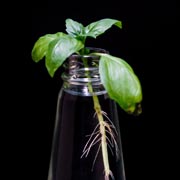 The bottom sections of the clipped cuttings should be dangled into a glass, small bottle or other suitable vessel of water and left over a period of days until they sprout roots. See the photo for an example. A clear water vessel, e.g. drinking glass, will allow your child to clearly see the roots. Once suitably long, these new little plants can be transplanted individually into compost/soil in something like flower pots — or indeed a free, recycled alternative like a yoghurt pot. The little ones will need to continue attending to the plants with regular watering so that the herbs grow and mature. This activity can all be done indoors on a windowsill too, so requires minimal space. Growing their own herbs may even make children more inclined to eat them!
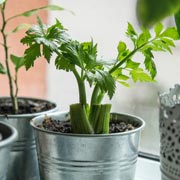 Another ridiculously easy way to grow food is to “re-grow” it. A classic example of this is to save the root section from a salad vegetable like iceberg lettuce or celery. This is the part of a shop-bought vegetable that would normally be cut off and discarded. However, in what has to be the easiest food growing activity of all, the child simply needs to keep that root section and leave it root down in water for 1 to 3 weeks. It will eventually grow some roots but, before that, the upper tip will start to sprout new leaves. In our own test using an iceberg lettuce we ended up with loads! That is new, free salad that can be later harvested and eaten. Simple!
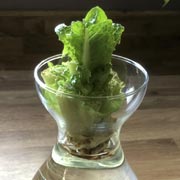 (Speaking of iceberg lettuces): Excuse the pun, but the ideas above are just the tip of the iceberg! There are so many other types of vegetable and fruit that children can grow (or re-grow) for next to nothing. For example, they can grow new apple trees from apple pips and new strawberry plants from the outside skin of strawberries. And the whole topic of