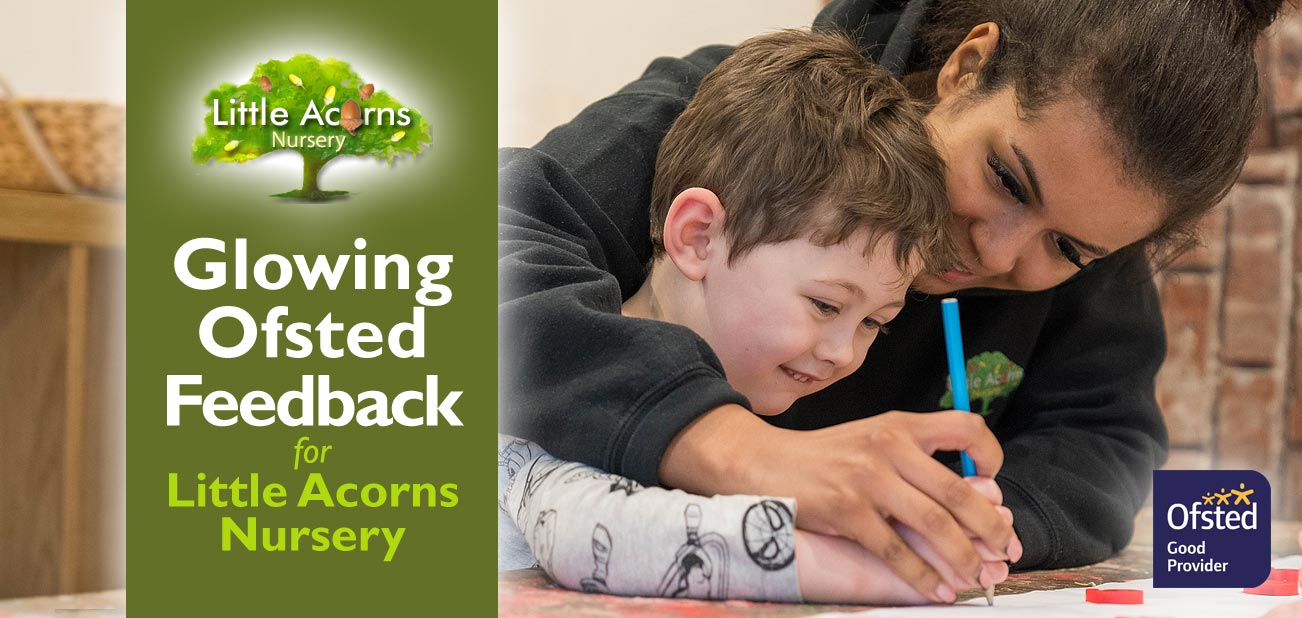
 Today we look at the wonderful Ofsted report published recently for Little Acorns Nursery in Clayton-le-Woods, Chorley. Ofsted is The Office for Standards in Education, Children’s Services and Skills. Their inspector visited this fabulous Lancashire childcare setting in late August and released its official report a month later on 25 September 2024. Our post today spotlights some of the many glowing comments made by the inspector therein, following her visit. It also highlights the reasoning for ‘good provider’ ratings across all areas of the Ofsted report. Take a look and you’ll see why babies, children under five, and those with special educational needs and/or disabilities absolutely thrive at Little Acorns.
How Does Ofsted Rate Little Acorns Nursery, Chorley?
It’s a clean sweep across all sectors of the Ofsted report:
“The provision is good” — Ofsted
 Overall effectiveness: Good
- The quality of education: Good
- Behaviour and attitudes: Good
- Personal development: Good
- Leadership and management: Good
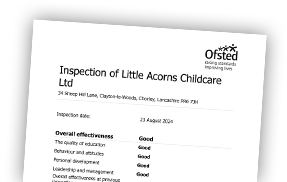 Overall effectiveness: Good
Let’s look at some of the wonderful comments made by the Ofsted inspector in her latest report for the setting:
Children are Happy at Little Acorns Nursery
It’s great to see that the Ofsted inspector picked up on just how happy children are at Little Acorns Nursery, Chorley:
“Children are welcomed warmly by the friendly staff. They arrive happily and are excited to spend time with staff and their peers.” — Ofsted
Little Acorns Children are Confident
We also do everything we can to ensure that children feel confident and valued at Little Acorns and it’s good to see that this was also abundantly clear to the Ofsted inspector:
“Children are confident, and those who need reassurance receive it in abundance from staff. This helps to enhance children’s self-esteem.” — Ofsted
Tailored Learning & Support for Children with Special Needs/Disabilities
Little Acorns Nursery’s support for children with special educational needs and/or disabilities (‘SEND’) was particularly well regarded by the Ofsted Inspector. In her report, she commented:
“All children, including those with special education needs and/or disabilities (SEND), make good progress from their starting points.” — Ofsted
And later …
“Staff are knowledgeable about the individual needs of all children attending the nursery, including those with SEND. They ensure that, if needed, children are referred to other professionals in a timely manner. Staff work collaboratively with a range of outside agencies. This helps to ensure that the curriculum meets children’s individual needs. — Ofsted
Safeguarding — Child Safety at Little Acorns Nursery
The safety and well-being of children is of paramount importance in any setting. Ofsted recognised the good safeguarding policies and measures taken at Little Acorns Nursery, where staff ensure child safety at all times, including mealtimes:
“The arrangements for safeguarding are effective […] There is an open and positive culture around safeguarding that puts children’s interests first.” — Ofsted
“Staff notice and minimise risks to children’s health and safety in the nursery. They complete effective risk assessment and take swift action when they identify hazards. Staff show a good understanding of children’s dietary requirements and allergies. Each mealtime, staff check that children only receive food appropriate for their dietary needs.” — Ofsted
High-Quality Staff
The quality of staff at childcare settings is critically important in so many ways. The Ofsted inspector’s comments demonstrate the quality and suitability of the team at Little Acorns Nursery:
“… staff ensure the smooth running of the setting […] Children are welcomed warmly by the friendly staff.” — Ofsted
“Staff form close bonds with children. Their nurturing interactions help children settle quickly into nursery routines.” — Ofsted
Being a good role model to children is also hugely important, especially in the early years. Little Acorns Nursery staff were recognised in this regard as well as in respect to the high-quality curriculum that’s tailored for each child:
“Staff are positive role models.” — Ofsted
“Staff create an ambitious curriculum for all children.” — Ofsted
Good Behaviour at Little Acorns Nursery
 Any good nursery or childcare provider will ensure that children understand right from wrong and are mindful of the effect their actions have on others, including peers. Nurturing good manners and appropriate behaviour amongst little ones benefits everyone including, of course, the children themselves. Ofsted’s latest report recognised that Little Acorns is very successful in this regard:
“Staff are positive role models. They help children learn how to share the toys and resources […] children behave well, they understand some rules such as having kind hands. ” — Ofsted
 Any good nursery or childcare provider will ensure that children understand right from wrong and are mindful of the effect their actions have on others, including peers. Nurturing good manners and appropriate behaviour amongst little ones benefits everyone including, of course, the children themselves. Ofsted’s latest report recognised that Little Acorns is very successful in this regard:
Good Support for Children’s Emotional Development
Sound emotional development goes hand-in-hand with good behaviour. Staff were recognised by the Ofsted inspector for facilitating good emotional development in the children under their care:
“Staff support children’s emotional development well. Pre-school children […] take turns to discuss what makes them feel happy and why. Children understand about different feelings and they are learning how to regulate their own emotions.” — Ofsted
Encouraging Creativity
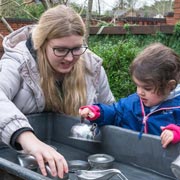
Children find messy play hugely rewarding as well as being immense fun. Messy play nurtures children’s imaginations, creativity, dexterity, and self-expression and benefits them in many other ways. It is therefore a crucial part of early years learning and development — and more important than it perhaps sounds. Ofsted picked up on the quality of messy play activities at Little Acorns Nursery within its report:“[Staff] provide plenty of opportunities for children to engage in messy play. For example, babies splash in the raspberry filled water tray and explore the lemon and flowers inside. Pre-school children dip their fingers in paint and create their own colour monster. ” — Ofsted
What’s more, such activities are good for their motor skills and coordination:
“These opportunities help to develop children’s hand muscles in readiness for early writing.” — Ofsted
 Children find messy play hugely rewarding as well as being immense fun. Messy play nurtures children’s imaginations, creativity, dexterity, and self-expression and benefits them in many other ways. It is therefore a crucial part of early years learning and development — and more important than it perhaps sounds. Ofsted picked up on the quality of messy play activities at Little Acorns Nursery within its report:
Nurturing Physical Development in Children
Physical development is a crucially important part of a child’s early years and, as such, staff at Little Acorns Nursery are always keen to nurture it amongst children under their care:
“Babies have plenty of space to crawl and to learn to walk. They beam with joy as they climb up the steps before coming down the indoor slide … Toddlers use spades to scoop up sand and fill their buckets. Pre-school children practise their hand eye coordination as they throw balls through hoops with staff outdoors. This helps to develop children’s larger muscle movements.” — Ofsted
Nurturing Independence
Learning how to be more independent is hugely important for children, particularly in their early years. Not only does it help them learn to be more self-sufficient, but it also boosts confidence and self-esteem and helps to better prepare them for school.
“Staff promote children’s independence well. Toddlers try to put their own superhero costumes and masks on as they dress up. Pre-school children serve their own food at mealtimes. Children are learning how to manage their own personal hygiene. These opportunities help children to feel proud of the tasks they can complete by themselves.” — Ofsted
Well-Promoted Communication & Language Skills
Communication and language are two of the major keystones of child development. Without such skills, children will really struggle. It is therefore heartening to see that the Ofsted inspector recognised the successes of our approach at Little Acorns:
“Children’s communication and language skills are promoted well.” — Ofsted
View or download the full [September 2024] Ofsted Report for Little Acorns Nursery here.
[2025 UPDATE]: A later Ofsted report was released at the end of September 2025. Learn more about the excellent findings here.
Little Acorns Nursery: a Good, Caring Childcare Provider in Clayton-le-Woods
 As you can see from the wonderful Ofsted comments in their latest report, Little Acorns is a high-quality nursery in Clayton-le-Woods, Chorley. Children have a fabulous start at the setting, in a warm, loving, caring and nurturing environment where the best is brought out in each child in readiness for school. If this sounds like something you’d like for your baby or child under five, contact us, register for a place, or request a free guided visit today:
As an award-winning childcare provider located in Clayton-le-Woods, near Chorley, we may also suit those living in Clayton Brook, Clayton Green, Thorpe Green, Pippin Street, Buckshaw Village, Whittle-le-Woods, Farington, Bamber Bridge, Lostock Hall, Euxton, Leyland, Penwortham and Central Lancashire.
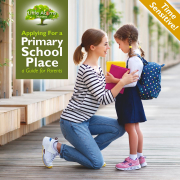
 If your child is 3 or, at the latest, has just turned 4, it’s time for you to apply for their primary school place. What’s more, you only have until about mid-January to do so. That’s all true whether you intend them to start school at 4 or leave it until they’re 5. In today’s guide, we explain the rules around applying for a primary school place, the key dates you need to know, what to expect, and the various options open to you and your child.
 Most children in England start primary or infant school earlier, in ‘Reception’ year. For most, this will be in the September term when they’re still only 4. That’s just one reason why applying for a primary school place is so important while they’re only 3 or, at the very latest, have just turned 4.
 Registering an interest that you’re interested in a particular primary school is sensible and, indeed, may result in the school supplying some useful information. However, it will not guarantee your child a place even if it’s attached to their nursery or preschool. You therefore need to make your official application through
  Research your local primary schools, visit them to get a feel for them, and ask teachers and heads any questions you may have. Schools often have open days or evenings or accept appointments for these purposes.
 The child’s proximity to the school;
 For primary** school places, offers are released around the 16th* of April each year, the exact date depending on whether the 16th otherwise falls on a weekend or public holiday. For 2025, 2026, and 2027, primary school ‘offer day’ will therefore fall right on target on the 16th of April as each is a weekday for each of those years. Those applicants who had applied online, on time, and supplied an email address during the application process, will be the first to receive offers via email. Later the same day, others who supplied an email address will also receive offers via email. Those who applied without supplying an email address will have their offers posted via 2nd Class post, meaning they may find out what school their child has been offered a day or two later than the 16th of April. That said, some local authority portals allow all parents to log in to view school offers online.
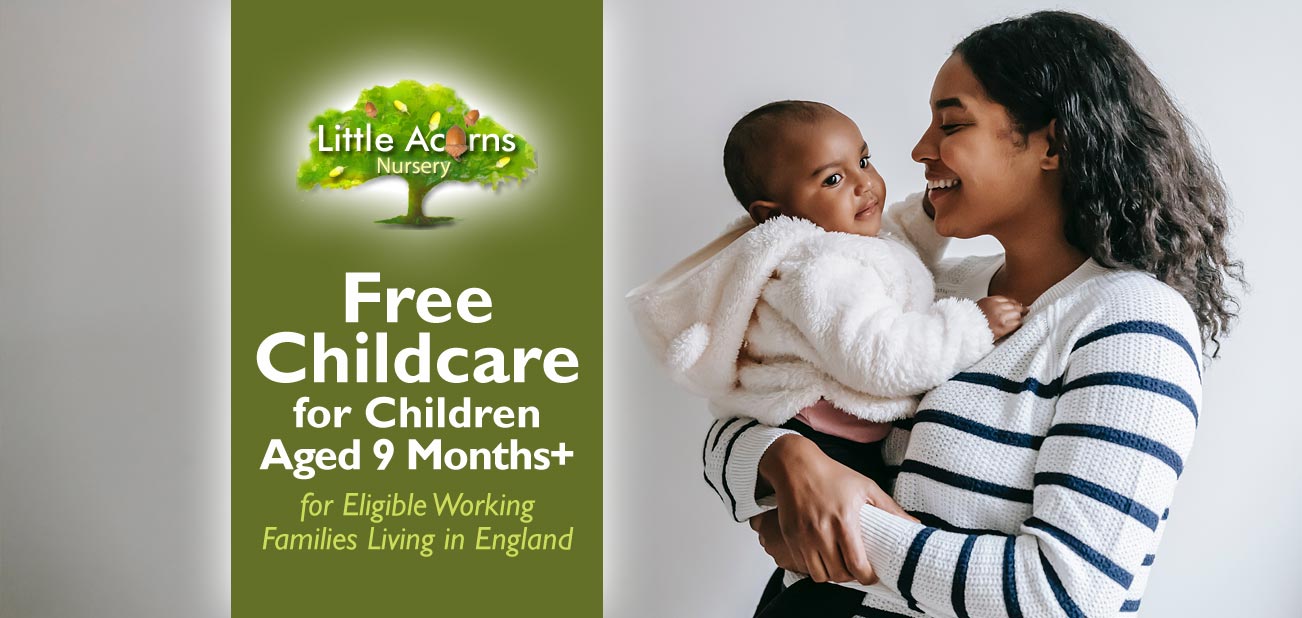
 With September 2024 arriving, eligible children aged as young as 9 months can now access free childcare in England. The new childcare ‘hours’ are available where working families are eligible for the support and, in tandem, where local childcare providers are set up with appropriate staffing ratios and capacity. The good news, however, is that Little Acorns Nursery, in Clayton-le-Woods, supports the new scheme. It’s therefore with great pleasure that we’re now beginning to welcome children as young as just 9 months of age for free childcare hours at the Chorley setting.
 From September 2024 (so already active), eligible children aged from 9 months to 3 years of age can access 570 hours and eligible children aged 3 and 4 can access 1140 hours of free childcare support per year. The free hours are usually taken over the course of 38 weeks (equating to 15 and 30 hours per week respectively). However, some childcare providers may allow the hours to be spread over more weeks of the year by reducing the number of hours per week. Speak directly to your specific childcare provider about the availability of this more flexible option.
 Must not have an
  Little Acorns is a wonderful
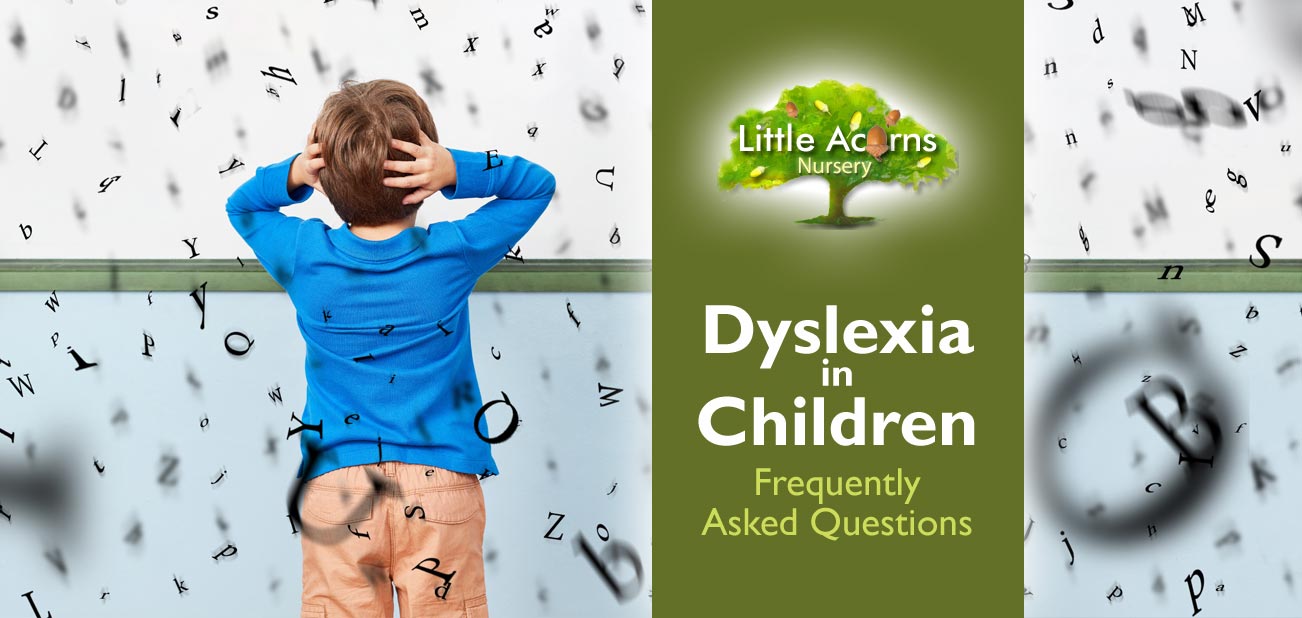
 As a condition that affects children’s reading and writing abilities, Dyslexia is something that can significantly hold little ones back. If not diagnosed and addressed in good time, it can have a knock-on effect that adversely affects the education and potentially whole lives of people affected. It’s therefore important to learn what to look out for so as to recognise the possible signs of dyslexia in children should they occur. With that in mind, today’s article explores the answers to frequently asked questions about dyslexia so as to explain what dyslexia is, how it affects children and adults, what to look out for, and what to do to mitigate its potentially harmful effects.
 Described back in the 19th century as ‘word blindness’, Dyslexia is a lifelong problem that primarily affects the ease with which a person can read (especially) as well as affecting other language-based skills like writing, spelling, and sometimes even pronunciation. As such, it has potential knock-on effects in a wide array of areas of people’s lives and can present daily challenges for those affected.
 Some people with dyslexia have described its effects as causing letters to jump around and words to jumble up. Others say that words blend together and even spaces between them can disappear. Individual letters and numbers can mix up and, for some, characters may seem incomplete. Sometimes, they are perceived in mirror form (so, for example, a “b” becomes a “d”) or are even perceived as being upside down (so, a “6” would be perceived as a “9”). Whatever the specific effect, the result is to make words unintelligible. Immense concentration is required to try to make any sense of them. Clearly, this presents enormous challenges to reading, writing, spelling, reading out loud, and even mathematics. The knock-on effect of all this is that reading and learning from books about any number of topics — including those in the curriculum — can therefore be hugely challenging and profoundly impactful.
 The signs of dyslexia vary from child to child and this, in itself, makes spotting the issue more tricky. That said, the most common signs of possible* dyslexia, specifically in children of pre-school and school age, relate to language-related difficulties. Examples include:
 Dyslexia is a specific learning difficulty. While some children affected have no additional limiting condition, some have additional problems. These can include dyscalculia, dyspraxia, ADHD, short-term memory issues, and issues with time management. We’ll aim to cover some of those topics separately, in future posts.
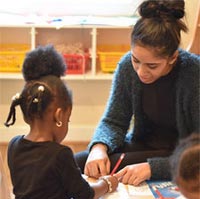 Where an issue like dyslexia is suspected, parents/carers should speak with their early years provider or school teacher to voice any concerns — and vice versa. The earlier an issue like dyslexia is spotted, the sooner measures can be implemented to help the child. Such early intervention is really important when reading and language are affected because they have such a snowball effect on other areas of learning. That said, it is more difficult to diagnose dyslexia in the pre-school years, as signs are not so obvious at such an early age. However, a few early signs may sometimes become evident as indicated in the early entries of our list of possible signs of dyslexia earlier in this article.
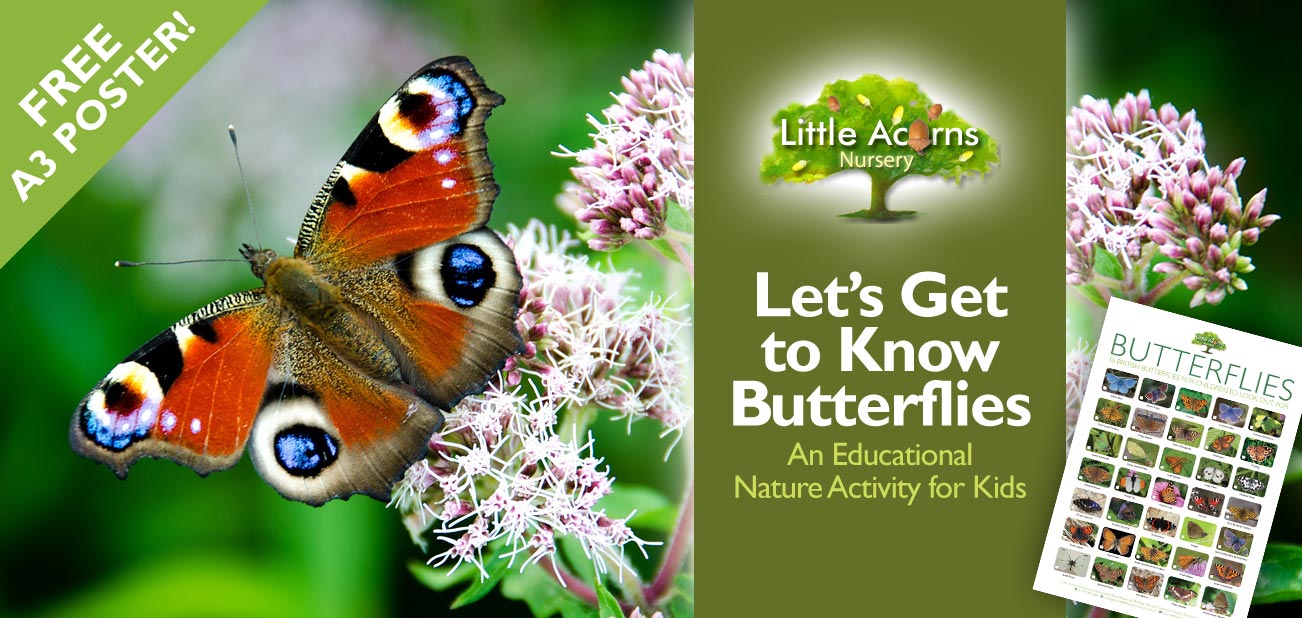
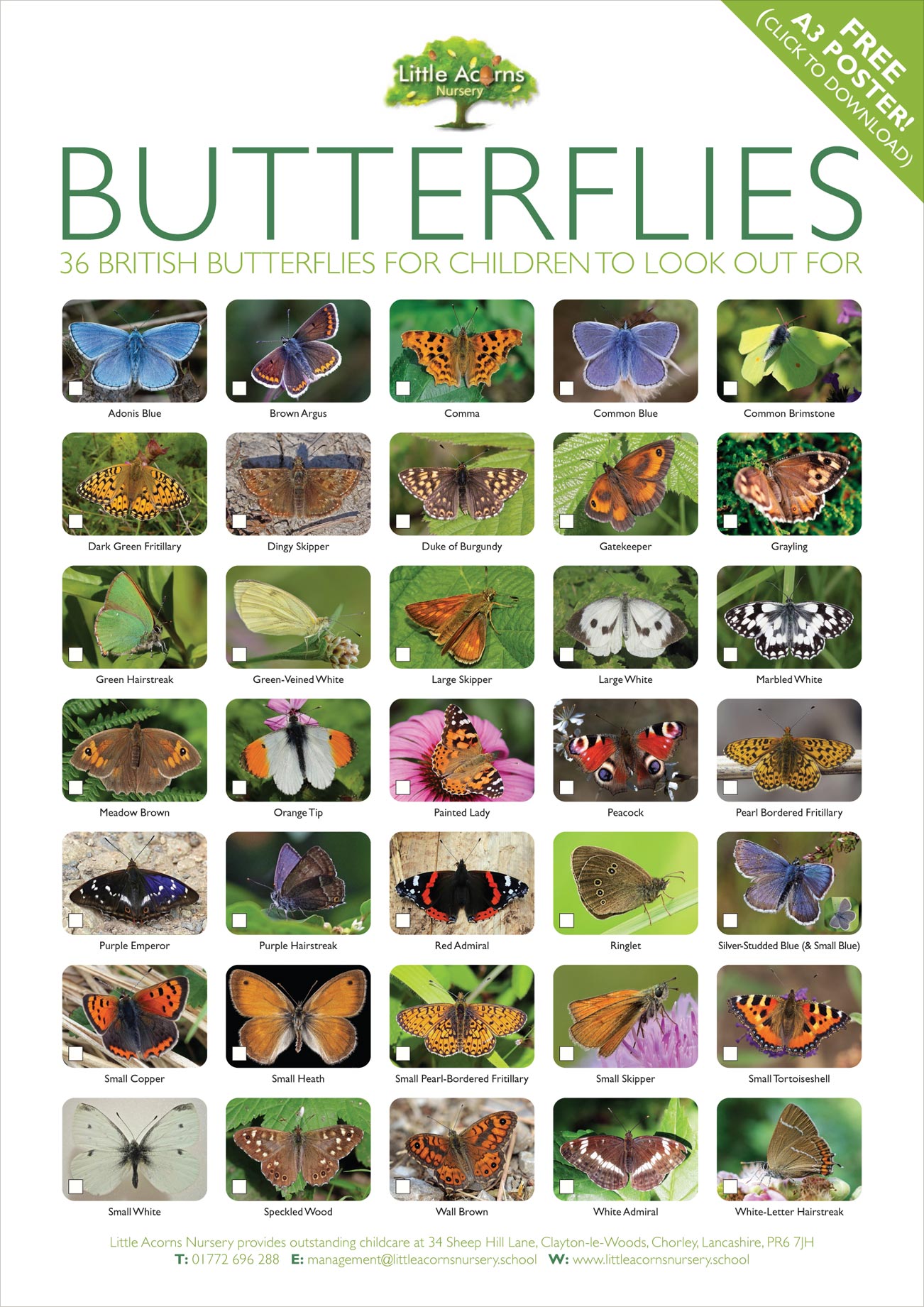
 For many species, population numbers have plummeted over recent decades. Introducing your child to today’s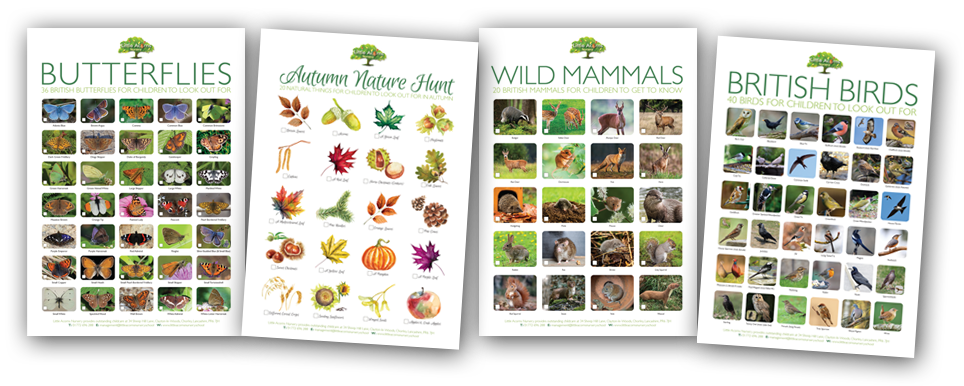
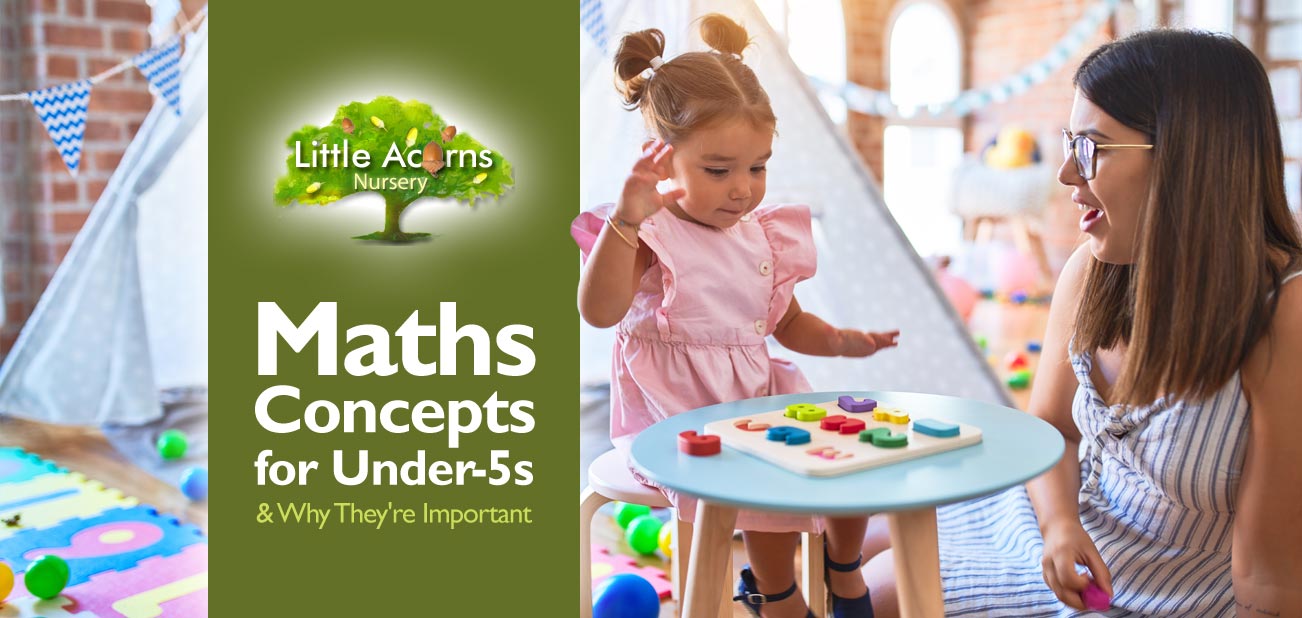
 Once babies have transformed into toddlers, it’s never too early to introduce them to maths-based concepts and language. Indeed, introducing under-fives to such concepts in the earliest years will benefit them hugely as it lays the foundations for future learning. That’s one of the main reasons it is a part of
  Familiarity with mathematical terms and concepts also helps to prepare children for formal education, including in many areas other than pure mathematics. Understanding maths concepts from an early age will allow them to confidently engage in number-related exercises and discussions, greatly enhancing their school readiness across multiple topics. Such preparation will allow them to take maths-based challenges in their stride right from the moment they begin Reception Year in primary school. What’s even more striking is that studies show a direct correlation between early mathematical skills and later educational achievement.
 Counting is the most obvious example. Counting can be introduced and practised by your little one in many, many situations, from counting how many more mouthfuls of food a child should eat, to the number of Lego blocks in a tower they’re creating.
 Shapes also have roots in maths, so children should get familiar with 3-sided triangular shapes, 4-sided shapes like squares and rectangles, and so on.
 Creative endeavours can also be vehicles through which supervising adults can highlight elements of mathematics that are built into designs and creations that children may generate. Patterns and shapes are obvious examples of that. Last but not least, parents can involve children in maths facets which are integral to everyday life, for instance, counting items when out shopping, or measuring when putting ingredients together for a meal. Children will love being more involved in such activities and will learn about maths in a fun, natural, and engaging way. Doing so will create the strongest foundations for their future learning.
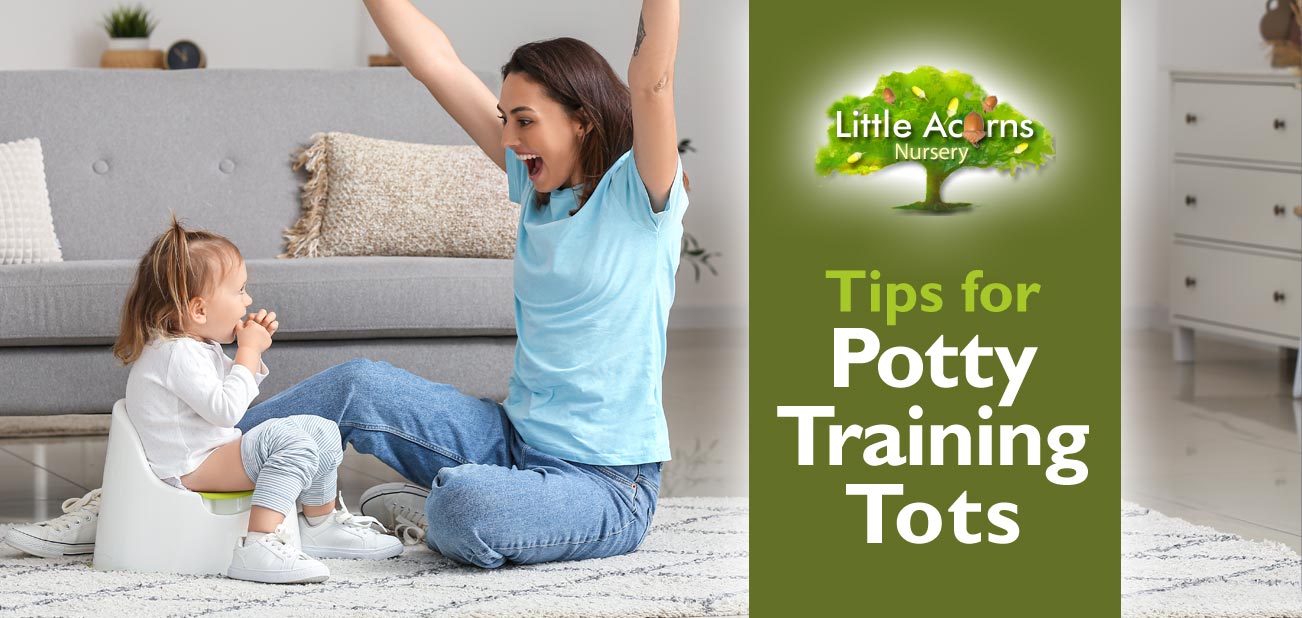
 One of the key tasks all tots must face, in tandem with parents, is potty training. It’s something we all had to master as toddlers and therefore we know it’s 100% achievable — despite it sometimes seeming to be rather a challenge. Achieving success, though, will improve the quality of life for the child, the parent, and other guardians involved in the child’s care. Learning to master the use of the potty and later the toilet will also be a major boost to self-confidence and independence when the child is at nursery, preschool, and later school. With that in mind, today’s guide outlines our top tips for successful potty training.
 Children become ready for potty training at different times — every child is different in that respect, with some starting as early as 18 months and others not training until the age of 3. That said, the majority of little ones begin potty training between the ages of 2 and 3. There are some signs to look out for that will help parents decide when the time is right and we’ll look at those below.
 Ensuring children understand the language around toileting is helpful, of course. So, it’s healthy to help children learn the various terms involved, whether talking about a potty, wee-wees, or anything else. Learning appropriate words will empower children to ask for what they need, at appropriate times.
 Potties with designs that are attractive to toddlers e.g. dinosaurs, licensed TV characters etc.
 Only start potty training when your child shows signs that they’re ready. (See the When Should You Begin Potty Training? section above for details).

 Children and childcare staff at Little Acorns Nursery love nature. So, with World Wildlife Day coming earlier this month and Spring now upon us, it’s the perfect opportunity to release our free Wild Mammals poster. Shown in full colour and printable in high resolution at A3 or A4, it features 20 British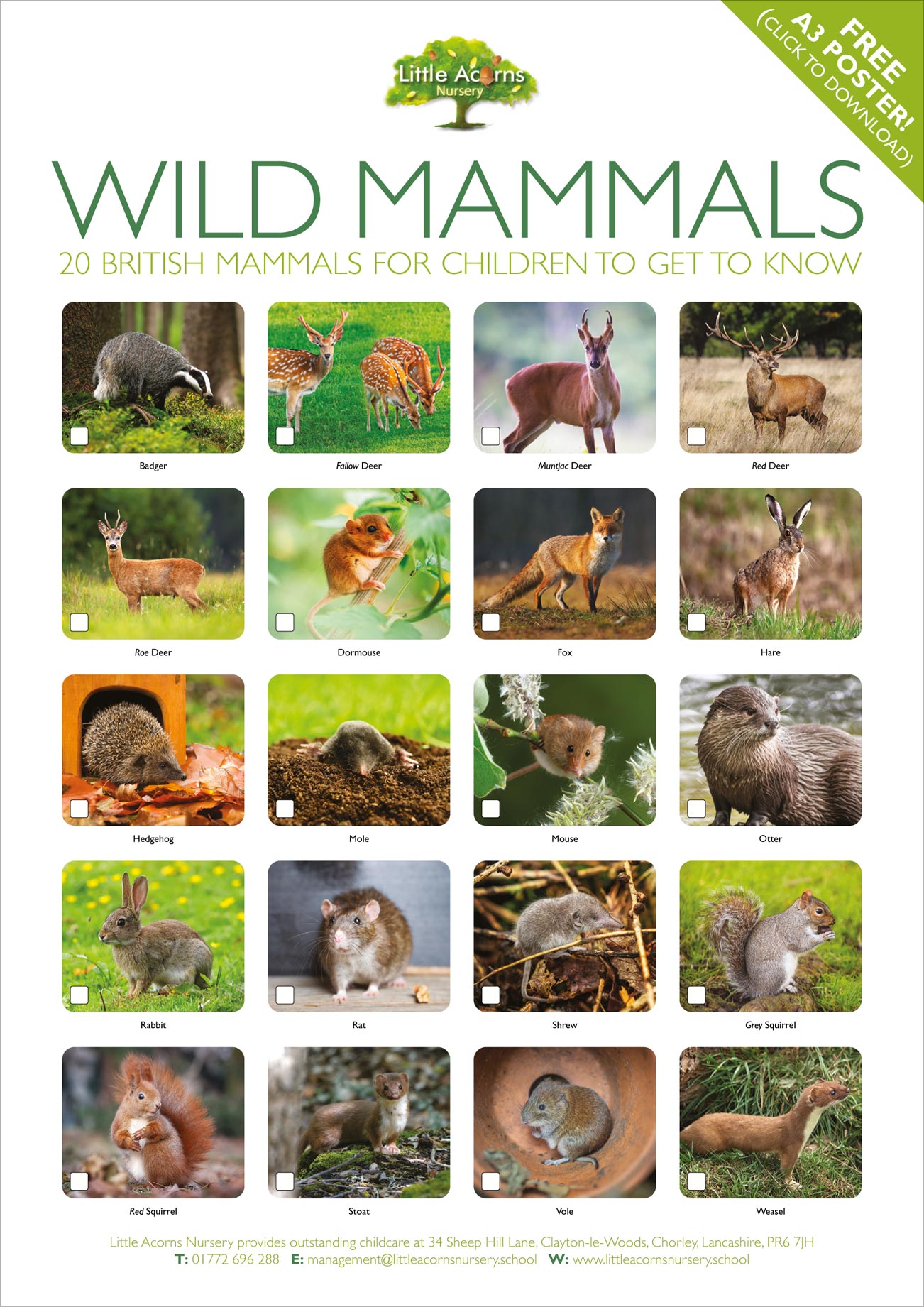



 With Chorley Football Club being only 4.8 miles and a 14-minute drive from
  Participation in sports benefits children in many different – and often profound – ways. That’s especially true for children in their early years, being a stage when they learn fundamental skills like jumping, running, throwing and catching balls, etc.
 Sports and active hobbies will also help little ones hone balance, agility, coordination and motor skills. That’s incredibly important during early childhood as these key skills are still developing and, as the old proverb goes, “practice makes perfect.”
 Sport is a great socialiser too. Through sport, they’ll get used to interacting with other children as well as coaches, teachers, or childcare professionals. Moreover, children not only make new and deeper friendships through sport, but also learn social skills before, during and after such play. These skills and benefits will stay with them for the long term and will help to enrich their lives in profound ways.
 January’s Big Garden Birdwatch is a perfect home learning opportunity where children can find out about wild birds and get a better understanding of nature itself. What’s more, it’s a hugely worthwhile event that will benefit birds, conservation efforts, and children themselves. The activity also demonstrates how easy it is for little ones to become citizen scientists. With that in mind, let’s explore today the Big Garden Birdwatch, explain what it is, how to take part, and why it’s important for families to get involved.
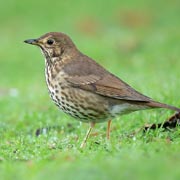 The idea of the Big Garden Birdwatch is to understand how garden birds are faring in the UK. Sadly, many bird populations are in decline, with some species facing huge declines over recent decades. Some 38 million fewer birds are now seen compared to 60 years ago. Song Thrush populations, for example, are down by 80% since the survey started in 1979. Even House Sparrow numbers have more than halved during that time. By studying the bird populations each year, trends can be identified including whether any bird species are in danger. Then the RSPB and other conservation organisations can work out what the problems are and how we might go about rescuing the situation as a nation. It also follows that, if there is a problem with bird populations, then there is likely to be a wider problem in nature too. This could be, for example, due to disease, over-intensive farming methods, habitat loss, invasive species, climate change, use of chemicals in gardens and farmland, and so on. Gathering data across the UK each January will help guide the nation to improve things — and children can help by getting involved in the Big Garden Birdwatch each January.
 — it’s quick, easy and free to do so. Once registered you’ll receive detailed instructions in your free guide to the event, which includes your free bird identification reference sheet. This will be useful to you and your children so each bird species can be recognised more easily.
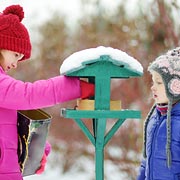 This wonderful activity is a great way to encourage families outdoors, where children benefit from nature in a myriad of ways. From lower stress and increased well-being to improved academic performance, stimulated imaginations, and better sleep,
 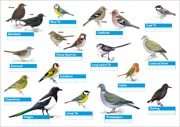 Together with the RSPB, we also have bird identification covered for children. The first option is the RSPB’s free bird reference sheet, which families will receive when they register for the event. Their digital version is best because it’s more environmentally friendly, is quicker to access, and usually shows a larger list than is shown on their printed version.
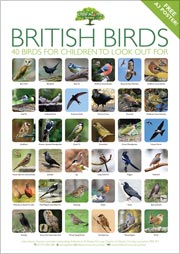 However, don’t forget that Little Acorns Nursery also published
  How to Encourage Birds to Visit Your Garden