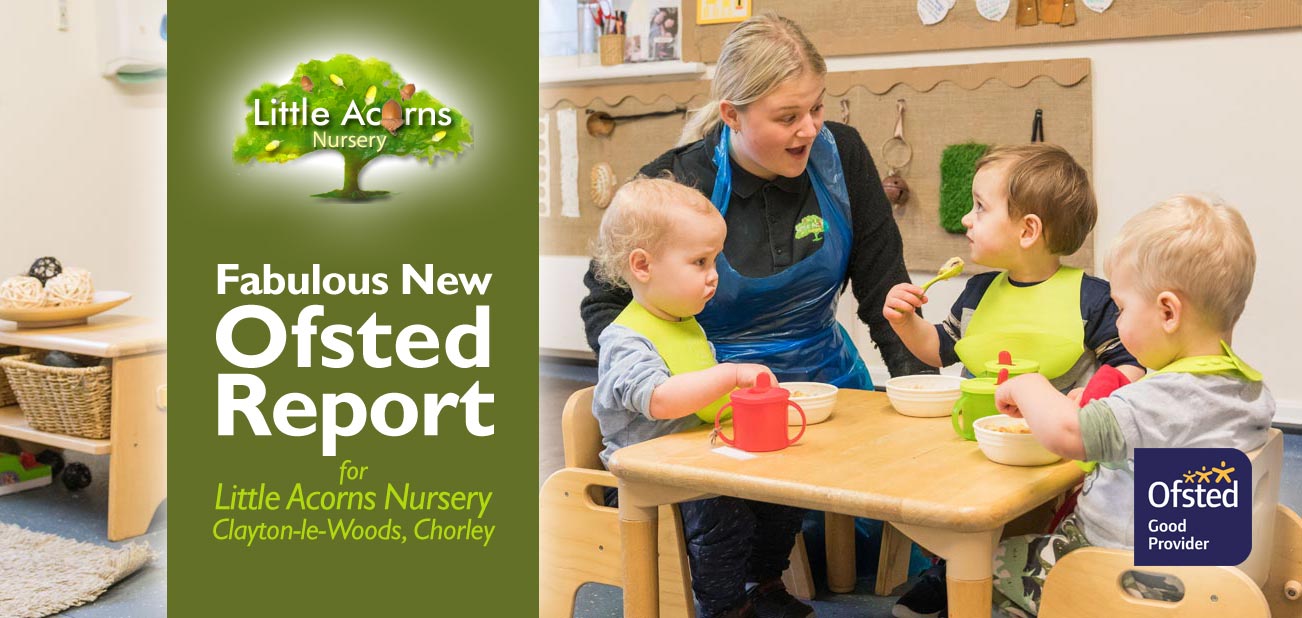
A fabulous new Ofsted report is out for Little Acorns Nursery, Clayton-le-Woods, Chorley. Published on 30 September 2025, it follows an inspection earlier that month. Parents and local families will be delighted to learn that, once again, Little Acorns Nursery was rated as ‘Good’ across all categories. That’s a high rating for overall effectiveness, the quality of education, the behaviour and attitudes of those attending, the personal development of staff, and the quality of leadership and management at the setting. A clean sweep! It’s news that will instil confidence in families that are considering enrolling a child at the nursery, and a clear demonstration that little ones who attend will benefit enormously — and be kept safe.
“What is it like to attend this early years setting?”
“The provision is good” — Ofsted.
 Overall effectiveness: Good
- The quality of education: Good
- Behaviour and attitudes: Good
- Personal development: Good
- Leadership and management: Good
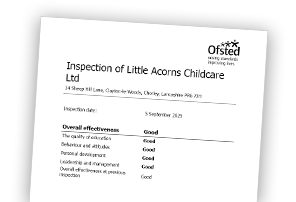 Overall effectiveness: Good
Let’s take a look at some of the positive findings and encouraging comments from the Ofsted Inspector who prepared this latest report.
Children Feel Happy, Settled,
Safe & Secure at the NurseryThe Ofsted Inspector could clearly see that children at Little Acorns are happy and feel at home at the nursery:
“Children are happy and settled at the nursery… Staff help children to learn important language, such as to describe their feelings. This helps children to feel safe and secure at the nursery.” — Ofsted.
She later also remarked that staff “are responsive to children’s needs, feelings and moods” and “encourage children to express and say what they feel,” later concluding in the report that “Children’s well-being is supported effectively.”
A Positive Attitude to Learning
As the Ofsted Inspector said in her report, “Children make good progress in their learning of the nursery’s curriculum”, and she recognised the positive approach to children’s learning at the setting:
“Leaders are ambitious for children’s learning and development. They are clear about the knowledge that they want children to learn and why.” — Ofsted.
And, with that in mind, it was clear to the Inspector that children’s learning and development are nurtured well by thoughtful and attentive staff:
“Staff know the children well. They provide meaningful learning opportunities that build on children’s interests effectively… Children demonstrate a positive attitude to their learning.” — Ofsted.
Children’s Personal Development is Promoted Well
Ofsted’s report also points out that children’s personal development is nurtured very effectively, resulting in them becoming independent and “confident in their own abilities.”
“Leaders make certain that staff promote children’s personal development well. Children benefit from the many opportunities that staff provide to help them to become independent.” — Ofsted.
Help Making Friends
The Ofsted Inspector also recognised the nursery’s positive role in helping babies and children socialise and make friends:
“They develop important knowledge about how to make friends because of staff’s skilful help. Babies show curiosity and are inquisitive about others. Older children are confident when meeting new people.” — Ofsted.
Help Developing Physical Skills
The way the nursery and its practitioners help children develop physical skills was also picked up in the latest Ofsted report. The Inspector sang the praises of the ‘thoughtful’ early years practitioners and the appropriateness of equipment:
“The nursery provides plenty of opportunities for children to develop essential physical skills. For example, staff working with babies provide climbing equipment, such as low-level steps, for babies to explore how they can move their bodies. Staff working with older children provide them with access to large equipment, such as the outdoor slide and wheeled ride-on toys. Children delight in testing out how strong they have become because of the thoughtful help of the nursery.” — Ofsted.
Strong Safeguarding at the Nursery
Ofsted’s inspector applauded the nursery’s “effective” safeguarding arrangements:
“There is an open and positive culture around safeguarding that puts children’s interests first.” — Ofsted.
She also recognised recent safeguarding enhancements. With regard to possible allergens, for example, she remarked:
“The provider ensures that known allergies for children are identified, understood and managed well… It is now a nut-free nursery. Staff have attended relevant training and leaders have strengthened risk assessments.” — Ofsted.
And, with regard to security, she noted the excellent measures in place:
“The provider ensures that the premises are safe and secure […] additional locks and entrance bells have been added to the nursery’s external gate. Staff understand their responsibility to ensure that external doors are locked and that they adhere to the nursery’s risk assessments. Leaders ensure that children are adequately supervised. This ensures the safety of children.” — Ofsted.
Little Acorns Nursery: a High-Quality Childcare Service in Clayton-le-Woods, Chorley
 As the latest Ofsted report testifies, Little Acorns Nursery is a great choice if you’re looking for a high-quality childcare service in Clayton-le-Woods, near Chorley. We’re open virtually all year round, support funded childcare places for children aged 9 months to 4 years (inclusive), and give under-fives the best start in life. Contact us today to arrange a guided visit to the nursery, ask any questions, or enrol your child for a nursery place. We can’t wait to meet you!
Little Acorns is an award-winning nursery in Clayton-le-Woods, near Chorley, Central Lancashire, and may also represent a convenient choice for families living nearby in Clayton Brook, Clayton Green, Thorpe Green, Pippin Street, Buckshaw Village, Whittle-le-Woods, Farington, Bamber Bridge, Lostock Hall, Euxton, Leyland, and Penwortham.
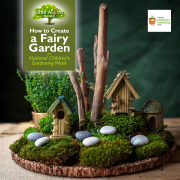
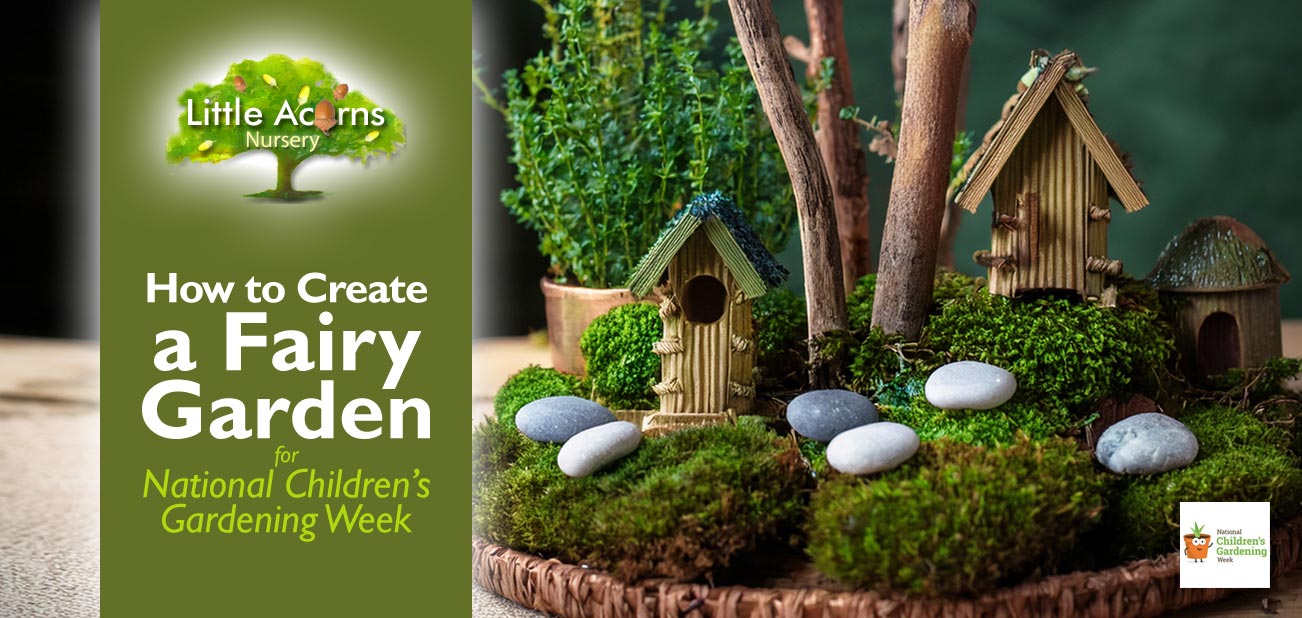
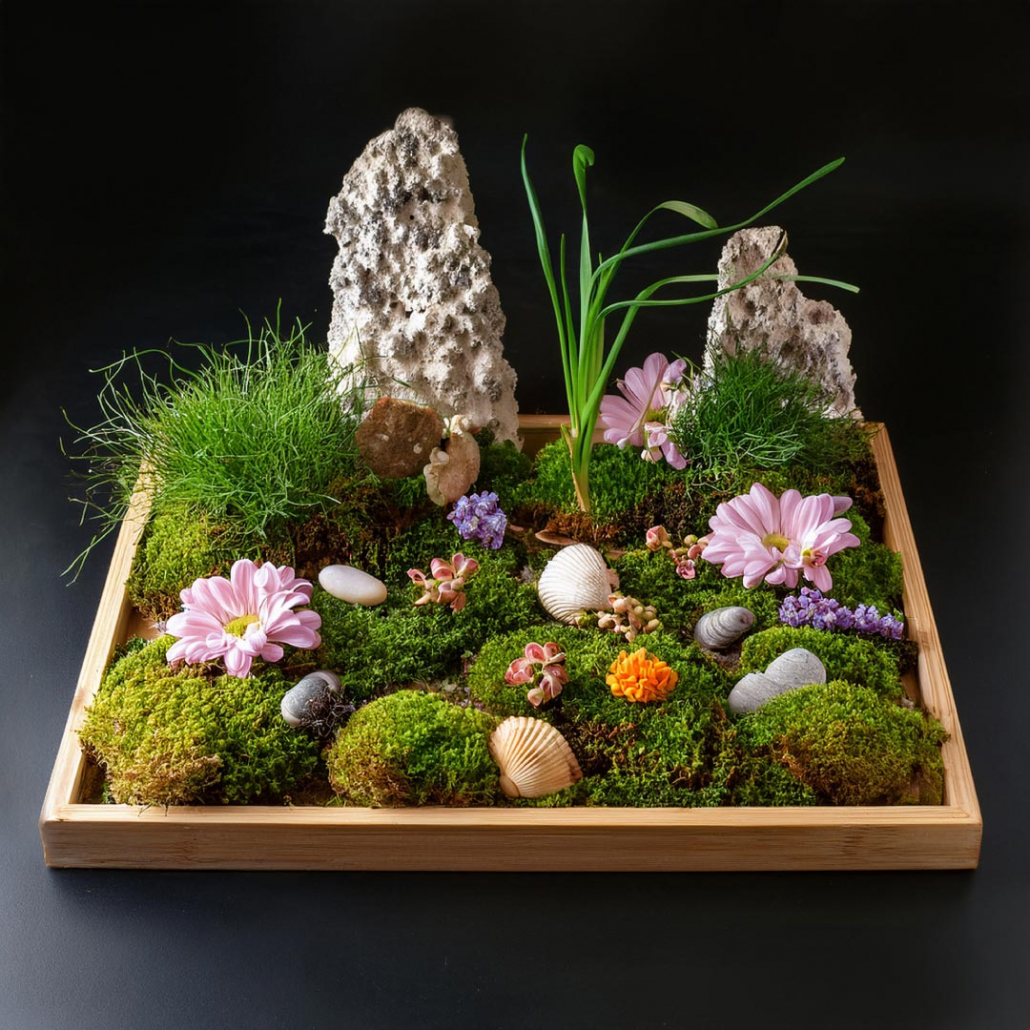
 National Children’s Gardening Week arrives in late May and is the perfect time for young children to get involved in gardening activities. In celebration of the event, we describe a wonderful gardening-related activity that’s small-scale, easy, fun, and educational — perfect for little ones! The finished result is also rather magical and, once complete, lends itself to imaginative play. Today, we outline how children can make their own miniature fairy gardens. These are a great way to introduce little ones to creative gardening at a child-friendly scale. Under parent supervision* and largely using scavenged materials from outdoors, under-fives can let their imaginations run free and get creative! What’s more, the results are simply enchanting and will bring magic and a whole lot of delight to young children!
 National Children’s Gardening Week begins on the 24th of May this year (2025) and runs until the 1st of June. The timing is no coincidence as it’s generally a warm week and therefore perfect for gardening and growing plants and flowers. What’s more, it also spans the half-term school holiday that most schools recognise in the last week of May.






 When April is on the horizon, there is a buzz amongst parents whose children will receive school offers that month. It’s quite a milestone in the lives of families as it’s the time they’ll find out if their children have received an offer for their top school choice. If not, will they be offered another “preferred” school listed lower on their application? It will often have felt like a long wait to find out the results, too, with families having applied in mid-January or potentially months earlier. Because we are an early years nursery, today’s guide focuses on primary school offers. We’ll explain in detail when to expect your child’s primary school offer, criteria that may have affected it, and your options if you’re not happy with the school place offered. To keep things as simple as possible, we’ll concentrate on applications for a standard school start date in the September term (rules and dates for ‘in-year’ applications are slightly different). If your child is due to start primary school this year, take a look.


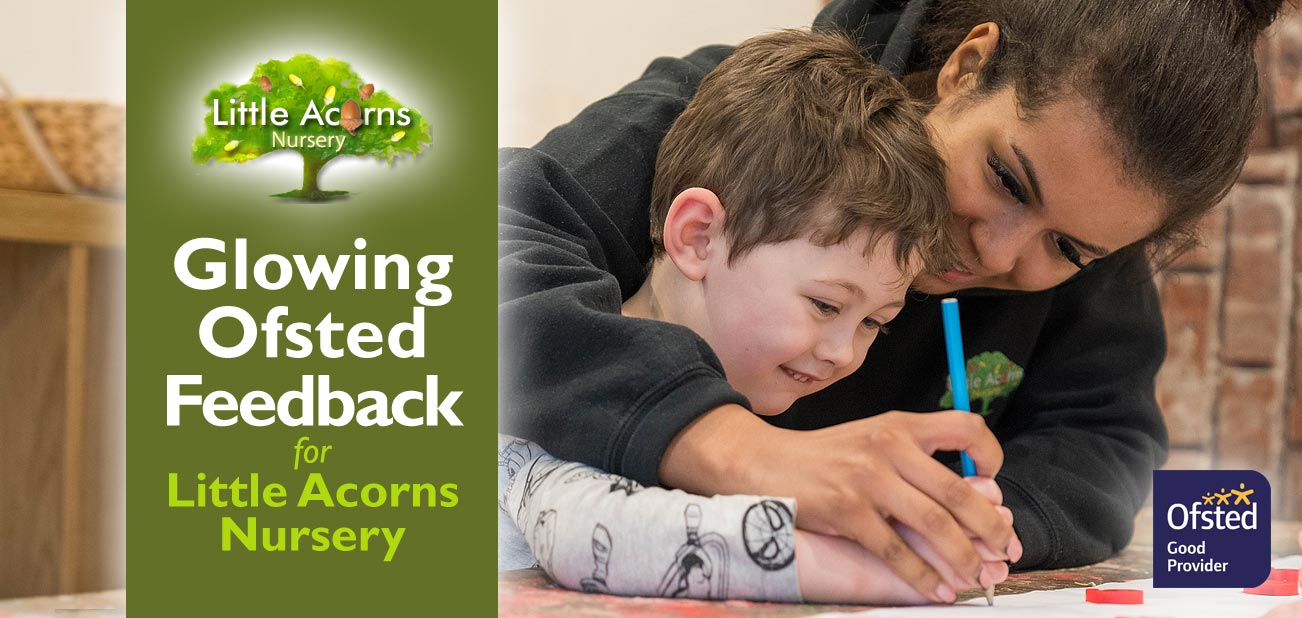
 Today we look at the wonderful Ofsted report published recently for Little Acorns Nursery in Clayton-le-Woods, Chorley. Ofsted is The Office for Standards in Education, Children’s Services and Skills. Their inspector visited this fabulous Lancashire childcare setting in late August and released its official report a month later on 25 September 2024. Our post today spotlights some of the many glowing comments made by the inspector therein, following her visit. It also highlights the reasoning for ‘good provider’ ratings across all areas of the Ofsted report. Take a look and you’ll see why babies, children under five, and those with special educational needs and/or disabilities absolutely thrive at Little Acorns.
 Overall effectiveness: Good
 Any good nursery or childcare provider will ensure that children understand right from wrong and are mindful of the effect their actions have on others, including peers. Nurturing good manners and appropriate behaviour amongst little ones benefits everyone including, of course, the children themselves. Ofsted’s latest report recognised that Little Acorns is very successful in this regard:
 Children find messy play hugely rewarding as well as being immense fun. Messy play nurtures children’s imaginations, creativity, dexterity, and self-expression and benefits them in many other ways. It is therefore a crucial part of early years learning and development — and more important than it perhaps sounds. Ofsted picked up on the quality of messy play activities at Little Acorns Nursery within its report: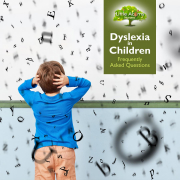
 As a condition that affects children’s reading and writing abilities, Dyslexia is something that can significantly hold little ones back. If not diagnosed and addressed in good time, it can have a knock-on effect that adversely affects the education and potentially whole lives of people affected. It’s therefore important to learn what to look out for so as to recognise the possible signs of dyslexia in children should they occur. With that in mind, today’s article explores the answers to frequently asked questions about dyslexia so as to explain what dyslexia is, how it affects children and adults, what to look out for, and what to do to mitigate its potentially harmful effects.
 Described back in the 19th century as ‘word blindness’, Dyslexia is a lifelong problem that primarily affects the ease with which a person can read (especially) as well as affecting other language-based skills like writing, spelling, and sometimes even pronunciation. As such, it has potential knock-on effects in a wide array of areas of people’s lives and can present daily challenges for those affected.
 Some people with dyslexia have described its effects as causing letters to jump around and words to jumble up. Others say that words blend together and even spaces between them can disappear. Individual letters and numbers can mix up and, for some, characters may seem incomplete. Sometimes, they are perceived in mirror form (so, for example, a “b” becomes a “d”) or are even perceived as being upside down (so, a “6” would be perceived as a “9”). Whatever the specific effect, the result is to make words unintelligible. Immense concentration is required to try to make any sense of them. Clearly, this presents enormous challenges to reading, writing, spelling, reading out loud, and even mathematics. The knock-on effect of all this is that reading and learning from books about any number of topics — including those in the curriculum — can therefore be hugely challenging and profoundly impactful.
 The signs of dyslexia vary from child to child and this, in itself, makes spotting the issue more tricky. That said, the most common signs of possible* dyslexia, specifically in children of pre-school and school age, relate to language-related difficulties. Examples include:
 Dyslexia is a specific learning difficulty. While some children affected have no additional limiting condition, some have additional problems. These can include dyscalculia, dyspraxia, ADHD, short-term memory issues, and issues with time management. We’ll aim to cover some of those topics separately, in future posts.
 Where an issue like dyslexia is suspected, parents/carers should speak with their early years provider or school teacher to voice any concerns — and vice versa. The earlier an issue like dyslexia is spotted, the sooner measures can be implemented to help the child. Such early intervention is really important when reading and language are affected because they have such a snowball effect on other areas of learning. That said, it is more difficult to diagnose dyslexia in the pre-school years, as signs are not so obvious at such an early age. However, a few early signs may sometimes become evident as indicated in the early entries of our list of possible signs of dyslexia earlier in this article.
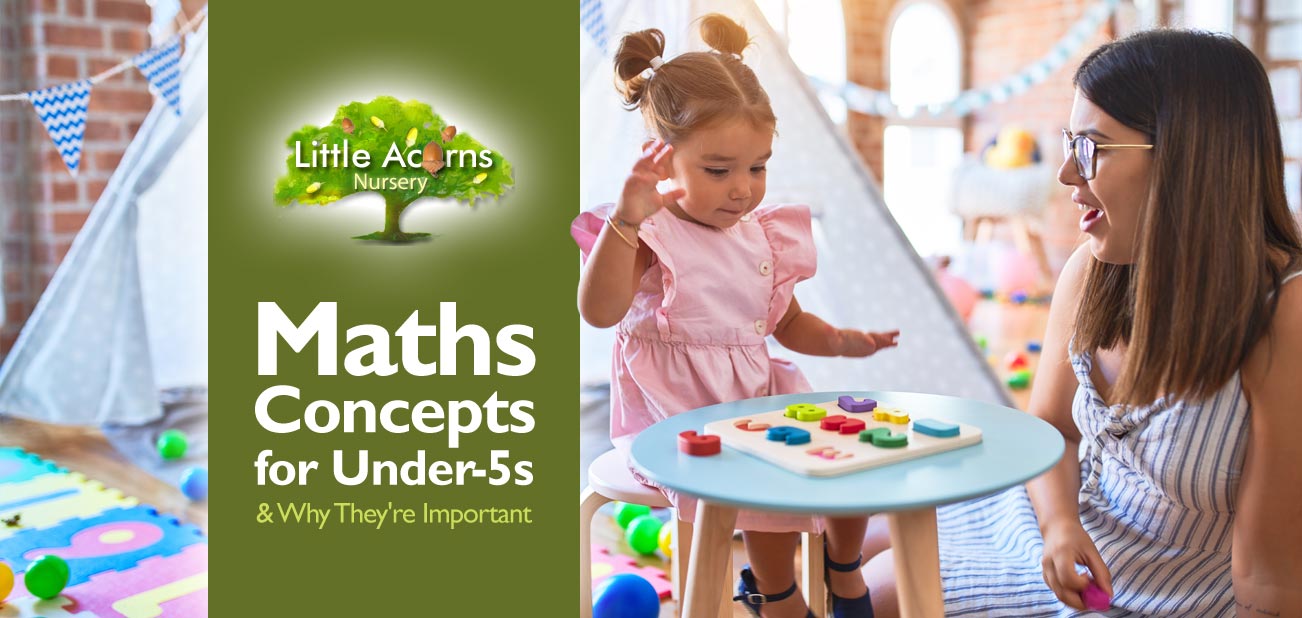
 Once babies have transformed into toddlers, it’s never too early to introduce them to maths-based concepts and language. Indeed, introducing under-fives to such concepts in the earliest years will benefit them hugely as it lays the foundations for future learning. That’s one of the main reasons it is a part of
  Familiarity with mathematical terms and concepts also helps to prepare children for formal education, including in many areas other than pure mathematics. Understanding maths concepts from an early age will allow them to confidently engage in number-related exercises and discussions, greatly enhancing their school readiness across multiple topics. Such preparation will allow them to take maths-based challenges in their stride right from the moment they begin Reception Year in primary school. What’s even more striking is that studies show a direct correlation between early mathematical skills and later educational achievement.
 Counting is the most obvious example. Counting can be introduced and practised by your little one in many, many situations, from counting how many more mouthfuls of food a child should eat, to the number of Lego blocks in a tower they’re creating.
 Shapes also have roots in maths, so children should get familiar with 3-sided triangular shapes, 4-sided shapes like squares and rectangles, and so on.
 Creative endeavours can also be vehicles through which supervising adults can highlight elements of mathematics that are built into designs and creations that children may generate. Patterns and shapes are obvious examples of that. Last but not least, parents can involve children in maths facets which are integral to everyday life, for instance, counting items when out shopping, or measuring when putting ingredients together for a meal. Children will love being more involved in such activities and will learn about maths in a fun, natural, and engaging way. Doing so will create the strongest foundations for their future learning.
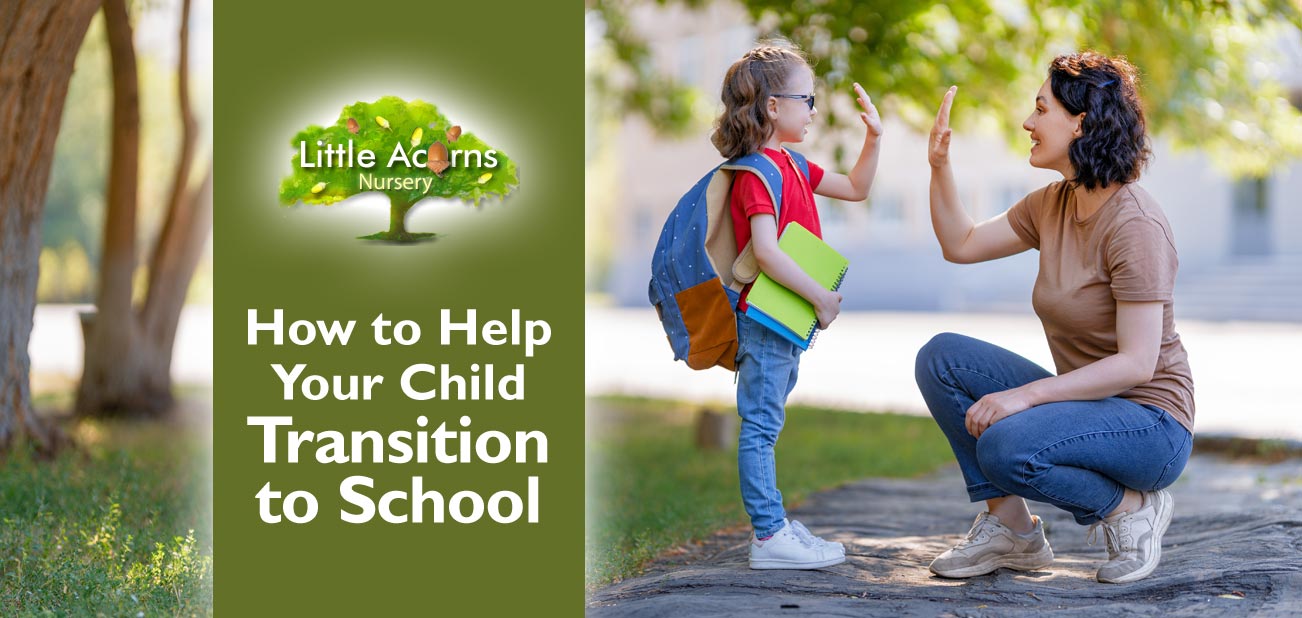
 Beginning school is a huge milestone for any child as well as for the child’s parents or guardians. Whether transitioning from nursery/preschool or straight from home, beginning school can be a daunting step in a child’s life — especially if they’re unprepared. Today’s post therefore aims to help parents/guardians make the transition to school as easy and stress-free as possible for their child, so they are empowered to feel at home and hit the ground running from the moment they begin. Take a look, therefore, at our guide on How to Help Your Child Transition to School. Following the advice should help make this milestone plain sailing for everyone involved.
 One of the most critically important steps for a smooth transition to school is to ensure your child receives a comprehensive early years education. By this we mean they need to have been nurtured between birth and school age in all areas of their learning and development — ideally including the
  During their journey from birth to school age, it’s also important to nurture children’s independence, social skills and soft skills.
 When starting school is only a few weeks away, there are several small but impactful things you can do to better prepare your child for the transition:
 Pack your child’s backpack and ensure it includes everything they’ll need. For example, perhaps a snack and/or lunch box, any spare clothes, PE kit, stationery if needed, and so on.
 Be on time. Dropping off or picking up late will stress both you and your child out!
 Children and childcare staff at Little Acorns Nursery love nature. So, with World Wildlife Day coming earlier this month and Spring now upon us, it’s the perfect opportunity to release our free Wild Mammals poster. Shown in full colour and printable in high resolution at A3 or A4, it features 20 British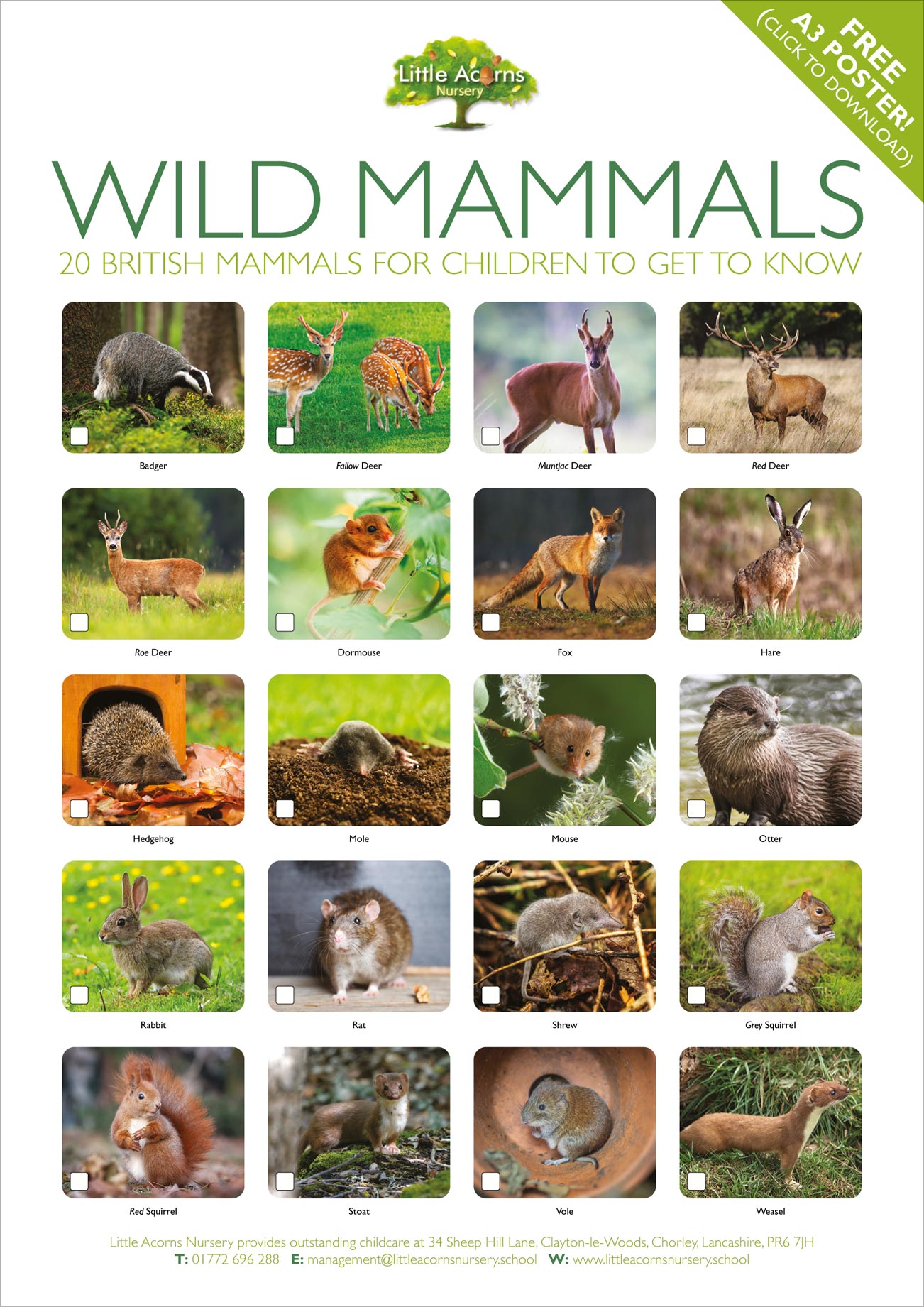
 January’s Big Garden Birdwatch is a perfect home learning opportunity where children can find out about wild birds and get a better understanding of nature itself. What’s more, it’s a hugely worthwhile event that will benefit birds, conservation efforts, and children themselves. The activity also demonstrates how easy it is for little ones to become citizen scientists. With that in mind, let’s explore today the Big Garden Birdwatch, explain what it is, how to take part, and why it’s important for families to get involved.
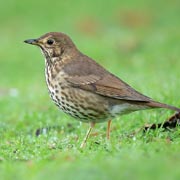 The idea of the Big Garden Birdwatch is to understand how garden birds are faring in the UK. Sadly, many bird populations are in decline, with some species facing huge declines over recent decades. Some 38 million fewer birds are now seen compared to 60 years ago. Song Thrush populations, for example, are down by 80% since the survey started in 1979. Even House Sparrow numbers have more than halved during that time. By studying the bird populations each year, trends can be identified including whether any bird species are in danger. Then the RSPB and other conservation organisations can work out what the problems are and how we might go about rescuing the situation as a nation. It also follows that, if there is a problem with bird populations, then there is likely to be a wider problem in nature too. This could be, for example, due to disease, over-intensive farming methods, habitat loss, invasive species, climate change, use of chemicals in gardens and farmland, and so on. Gathering data across the UK each January will help guide the nation to improve things — and children can help by getting involved in the Big Garden Birdwatch each January.
 — it’s quick, easy and free to do so. Once registered you’ll receive detailed instructions in your free guide to the event, which includes your free bird identification reference sheet. This will be useful to you and your children so each bird species can be recognised more easily.
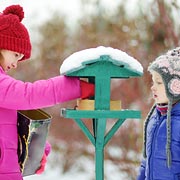 This wonderful activity is a great way to encourage families outdoors, where children benefit from nature in a myriad of ways. From lower stress and increased well-being to improved academic performance, stimulated imaginations, and better sleep,
 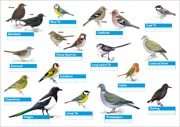 Together with the RSPB, we also have bird identification covered for children. The first option is the RSPB’s free bird reference sheet, which families will receive when they register for the event. Their digital version is best because it’s more environmentally friendly, is quicker to access, and usually shows a larger list than is shown on their printed version.
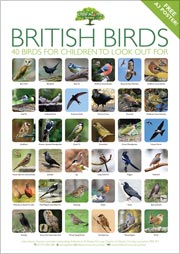 However, don’t forget that Little Acorns Nursery also published
 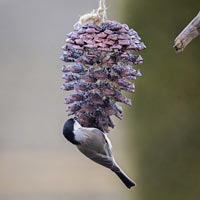 How to Encourage Birds to Visit Your Garden