Are You Due £2,000 in Help for Childcare? Rough Guide to Tax-Free Childcare
 Each year, around 1 million families miss out on thousands of pounds in free childcare funding — despite being eligible through the Government’s Tax-Free Childcare scheme. Are you one of them?
In today’s guide, we take a look at Tax-Free Childcare, which could effectively contribute anywhere from £2,000 to £4,000 per child, per year, towards childcare costs for eligible families. Those are significant sums, which could really help families, especially with the rising cost of living. The funding is there for for the taking if you’re eligible So, don’t miss out!
Let’s take a look.
What is Tax-Free Childcare?
In effect, the Tax-Free Childcare scheme subsidises childcare costs by utilising the tax that eligible families would ordinarily have pre-paid on the taxed income they use to pay for childcare. Specifically, the Government will add an extra £2 for every £8 that eligible families pay into a special account used childcare costs — even more if the child has disabilities. We’ll explain more about the childcare account later, but the good news is that you can get as much as £2,000 per child per annum if you’re eligible, or up to twice that if your child has disabilities. That’s a lot of money!
Who is Eligible for Tax-Free Childcare?
 Families, including single parent families, are usually eligible for tax-free childcare scheme if they meet the following criteria:
- The claimants are working (employed or self-employed) in the UK;
- They each earn under £100,000 per annum;
- They each earn at least £152 per week, which is £1,976 over the next 3 months (the equivalent of 16 hours per week at the National Minimum Wage or National Living Wage at time of writing);
- They are not in receipt of childcare vouchers (which are closed to new applicants anyway), Universal Credit, Tax Credits or a childcare bursary/grant;
- Parents/carers/guardians are over 16;
- Children for whom they are claiming tax-free childcare is/are no older than 11 years of age or, if they have disabilities, no older than 16;
- They should usually be living with the parent/carer/guardian(s) making the claim.
The above list represents the key rules governing eligibility for most families. However, there are some additional rules around eligibility — and some welcome exceptions to the above. For example …
 If you are looking for the very best childcare provision for your child in Central Lancashire, there are a multitude of reasons why you should choose Little Acorns Nursery. Put simply, Little Acorns offers the very best possible childcare service for under-fives — but you don’t need to take our word for it. This is independently verified, as you’ll see below. Take a look at our top 20 reasons to choose Little Acorns Nursery and you’ll soon see why it’s virtually impossible to beat when it comes to outstanding childcare provision.
 We’re
We’re  The quality of teaching, learning and assessment at the nursery was also found to be simply outstanding when Ofsted appraised us. It doesn’t get any better than that.
 Last year, we wrote a detailed post outlining
  Interestingly, under-five children who came from disadvantaged backgrounds were shown to benefit even more than those who didn’t. For this reason, reading with parents/carers has been proposed as a possible way to close the performance deficit often seen with children from such backgrounds. It may well represent a perfect solution to even up the playing field.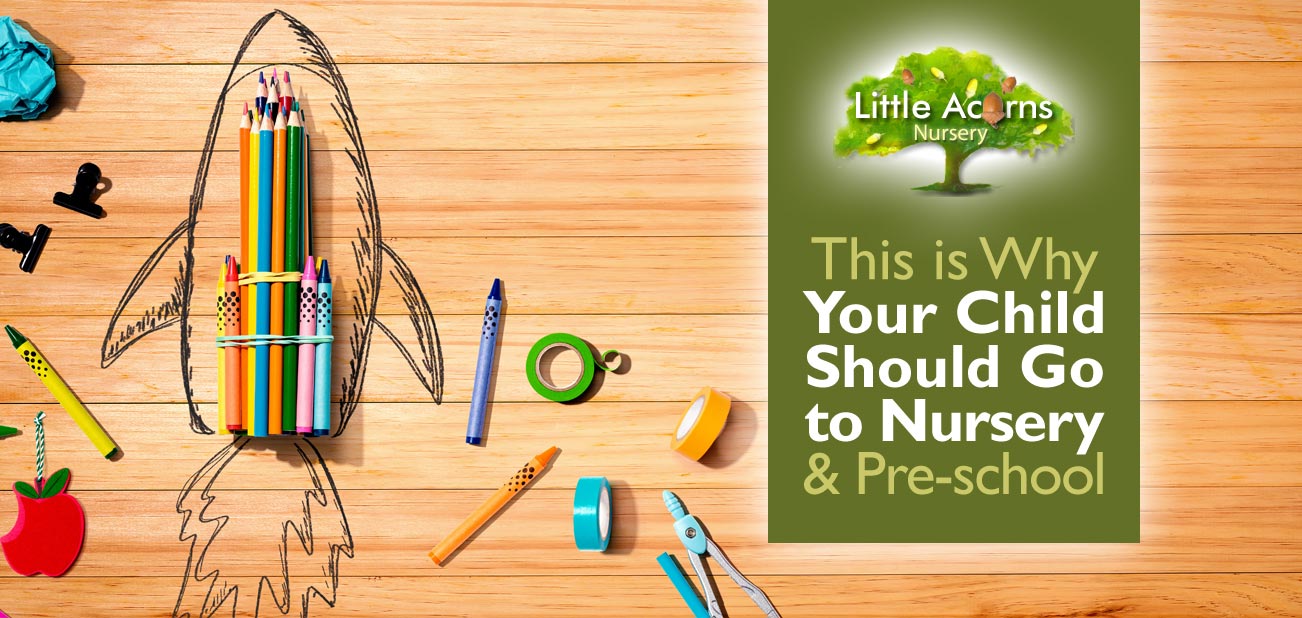
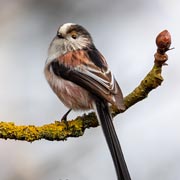 1. Bird spotting
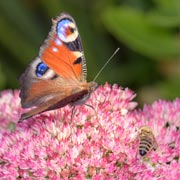 ee & Butterfly Spotting
 3. Search for Animal Tracks
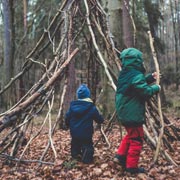 4. Make a Den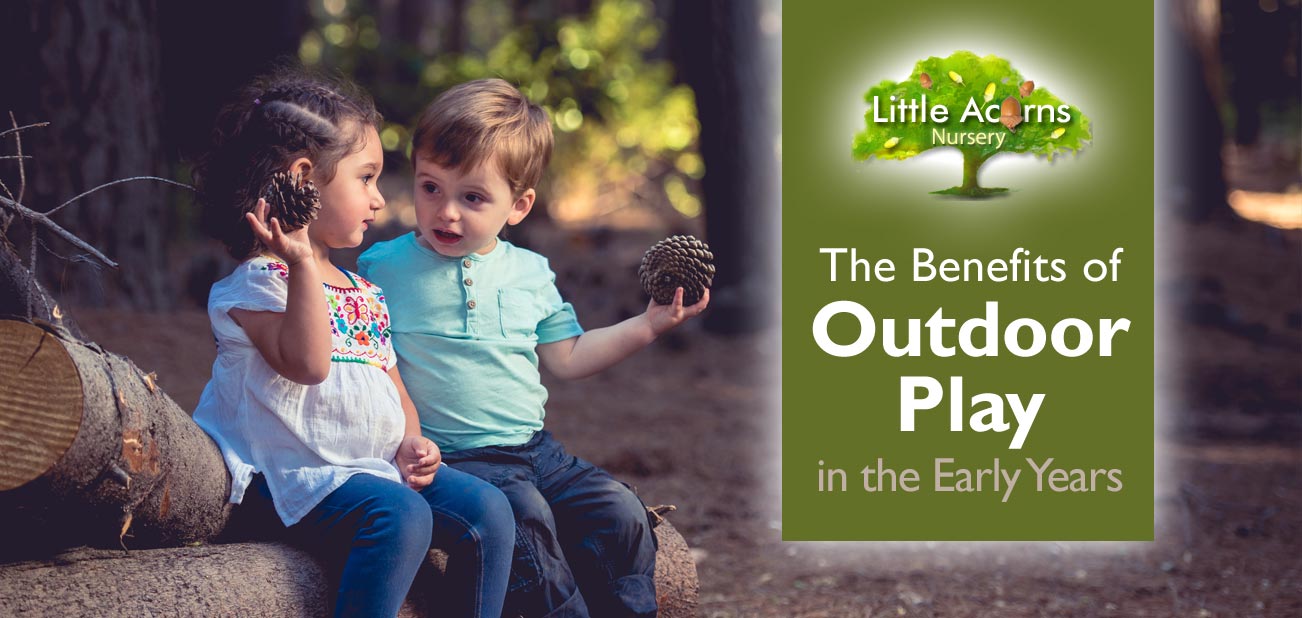
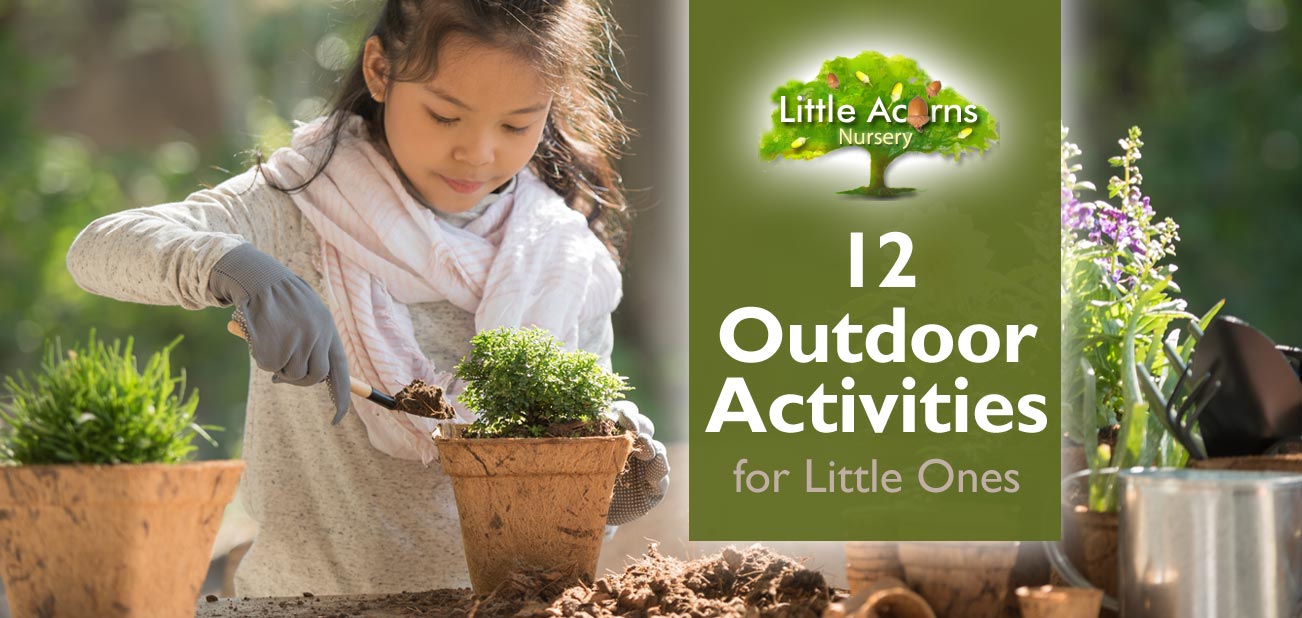
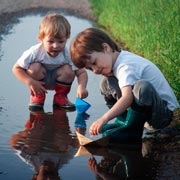 In today’s post, we take a look at the importance of outdoor play for children in their early years. Indeed, there are many benefits, as we’ll see …
 Playing outside is also a healthy release from things like TV, electronic screens and, potentially, from an otherwise more sedentary lifestyle. Away from the confines of the indoors, outdoor play allows children the freedom to move about more freely. Outside, they’ll learn to navigate spaces, obstacles and play equipment, all the time improving spatial awareness, coordination, balance and gross motor skills. These include running, jumping, climbing and so on. Their fitness levels will naturally improve too, as they build stamina, muscle and strength. This is all incredibly good for them.
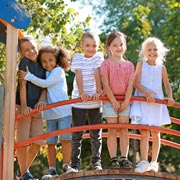 At Little Acorns, we understand the importance of outdoor play. Little ones, from the age of two have access to our outdoor gardens and play areas — all under close supervision, of course. We have invested heavily in a whole range of exciting, stimulating and educational outdoor facilities for the children to explore, play with and learn from. As they do, they will not only learn but they’ll also hone fine and gross motor skills, improve coordination and balance, improve physical fitness, enhance social skills and build friendships. They will also soon become better at recognising and balancing risk, they’ll become more independent as they move around freely. They’ll also learn from mistakes. Their self-confidence and self-esteem will also naturally grow. These are all incredibly important skills that will stand them in good stead as they gradually approach the age where they’ll leave us to …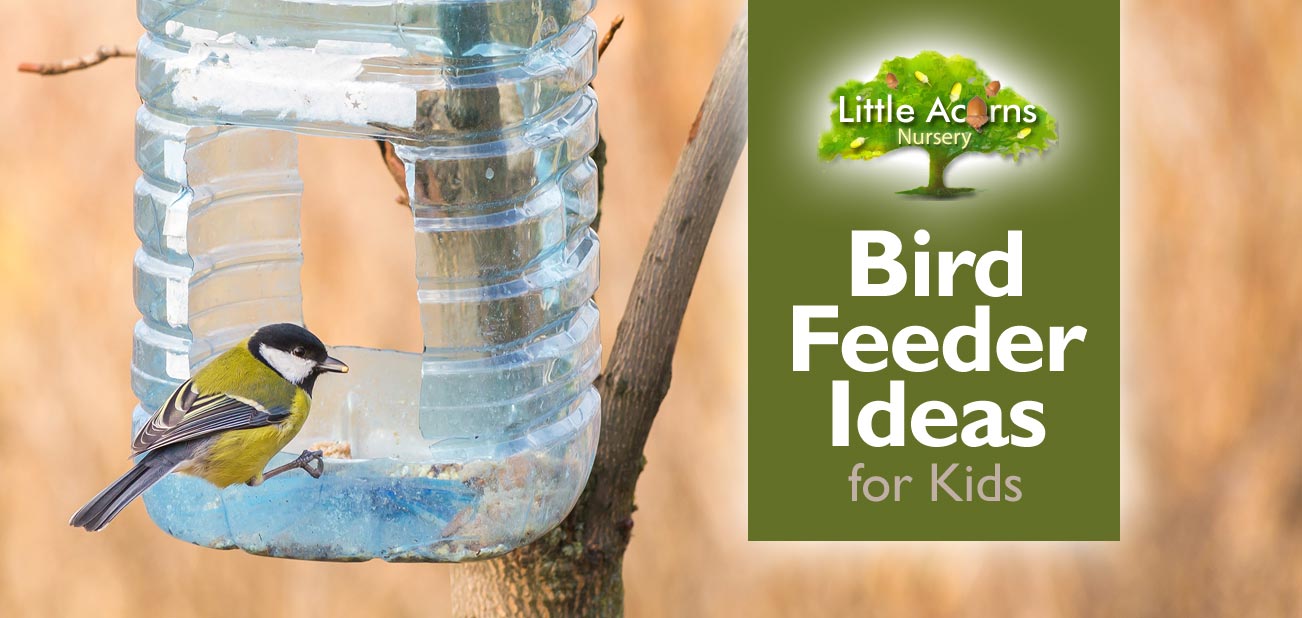
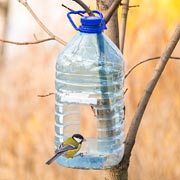 Making bird feeders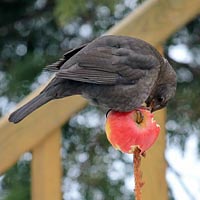
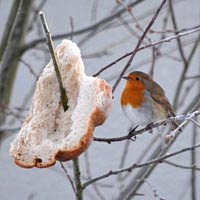
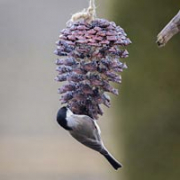
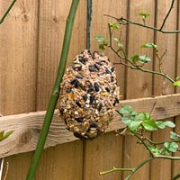 Seeded pine cone bird feeders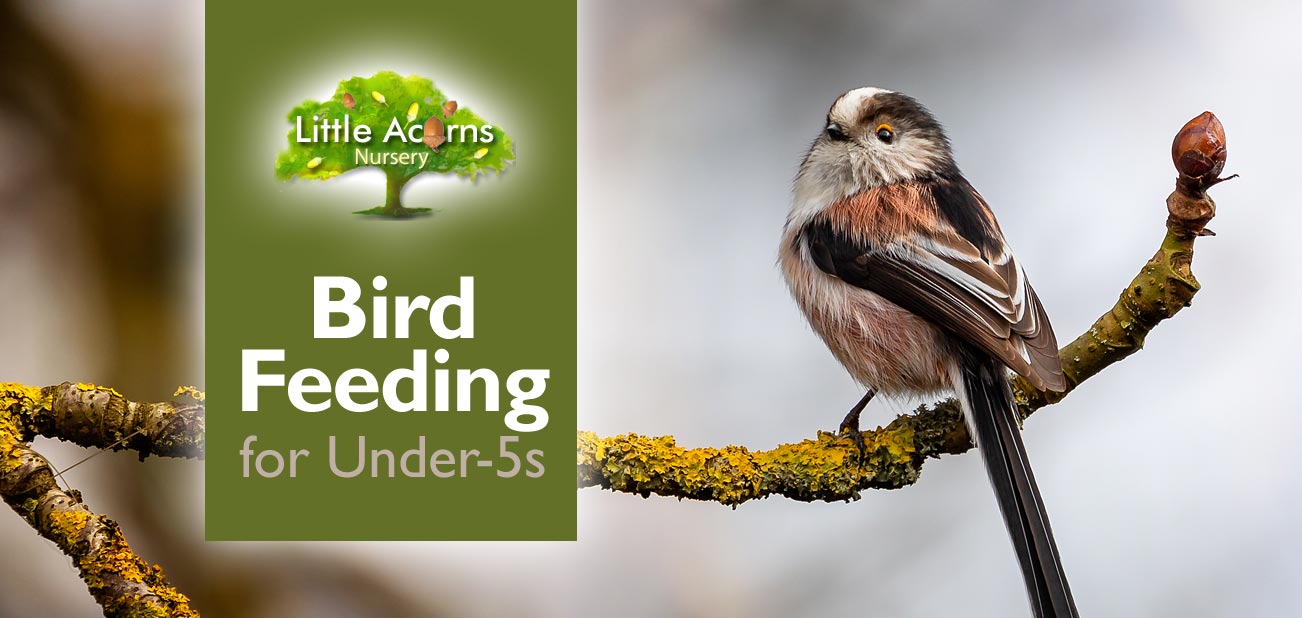
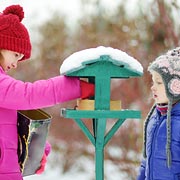
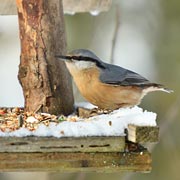 Providing food for birds is a win-win for everyone — humans and birds alike. Birds obviously get to eat much needed food without huge effort and children get to learn more about nature and perhaps individual bird visitors. (We even name our regulars! “Vern” is a tame blackbird, for example, having been named after a character in the famous movie Rain Man). By encouraging birds to visit, children will soon be able to recognise and name the different species of bird too, particularly if given some help from a parent or bird book. Visitors might include robins, blackbirds, blue tits, great tits, long-tailed tits (our favourite), thrushes, starlings and, if they’re lucky, more unusual, colourful birds like nuthatches, woodpeckers, bull finches and gold finches. As it gets colder, some species will travel to warmer countries to overwinter. For those that stay in the UK, however, food from a friendly young nature-lover will be a real lifeline.
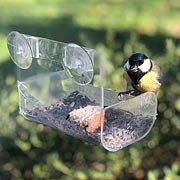 If children do get involved in feeding wild birds, they’ll soon begin to realise how delightful the little beings are. They each have their own character, likes and dislikes. Children will get to appreciate this if they keep up the feeding and the birds will soon realise where to find the food each day. Children will get to understand the importance of nature and learn skills like empathy, understanding and responsibility as they nurture the wellbeing of these beautiful wild visitors. Animals, birds and insects are all individuals and it’s good for children to recognise this. By feeding birds and other animals, they will also be able to continue to appreciate nature and the natural world, just like they do in our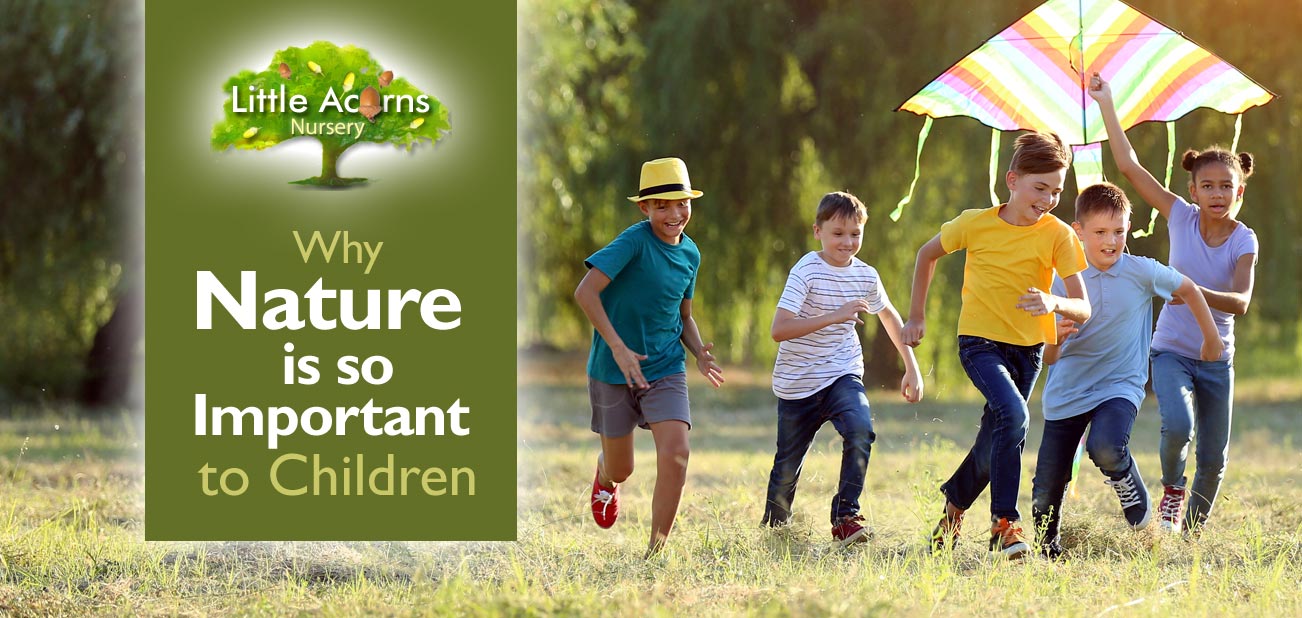
 Today we’ll look at the immense benefits of nature to children. While the long-term benefits of nature are reasonably well-known, it turns out short-term exposure to the natural environment also has1 clear benefits for people of any age. The benefits are even more beneficial, though, for young people during their early years, at school and in higher education.
 One of the wonderful things about nature is that immersing oneself in it need not cost a penny. With so many proven benefits, it just goes to show that the old adage that ‘the best things in life are free’ really is true when it comes to nature. Exposure to the natural environment and green surroundings has been shown to have clear benefits …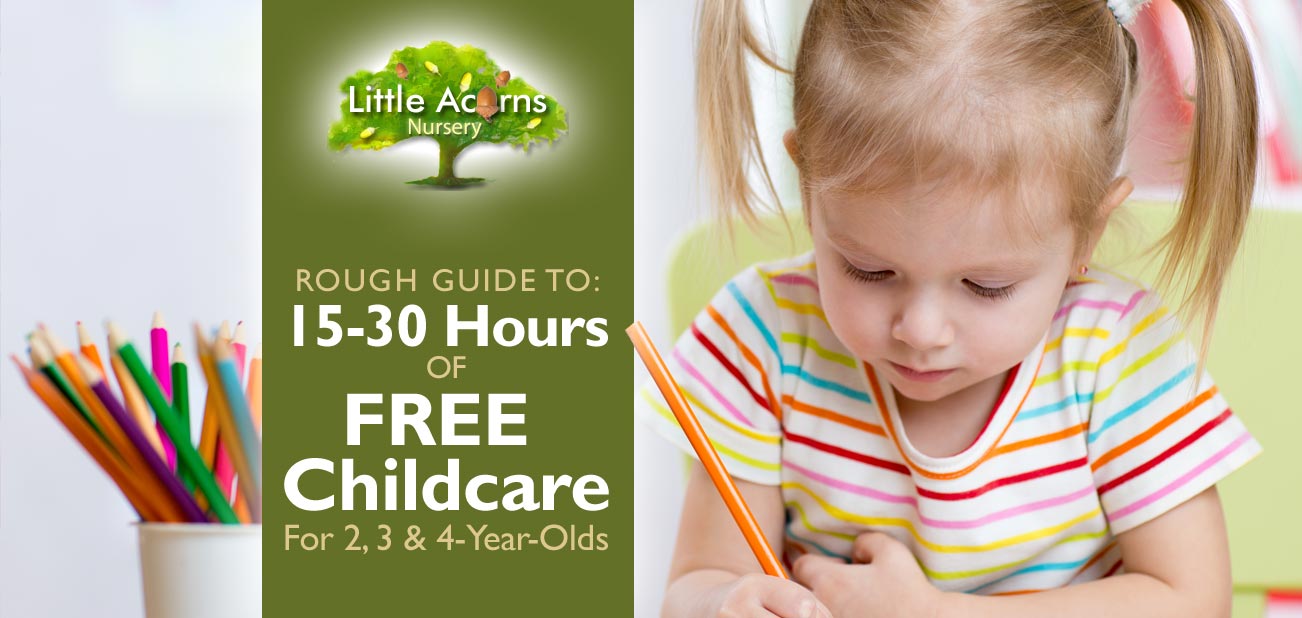
 Children living in England are very fortunate to have their early years childcare supported financially by a variety of Government funding schemes. The 3 most important, popular and widely-available schemes are:
 Let’s look at each of the schemes …