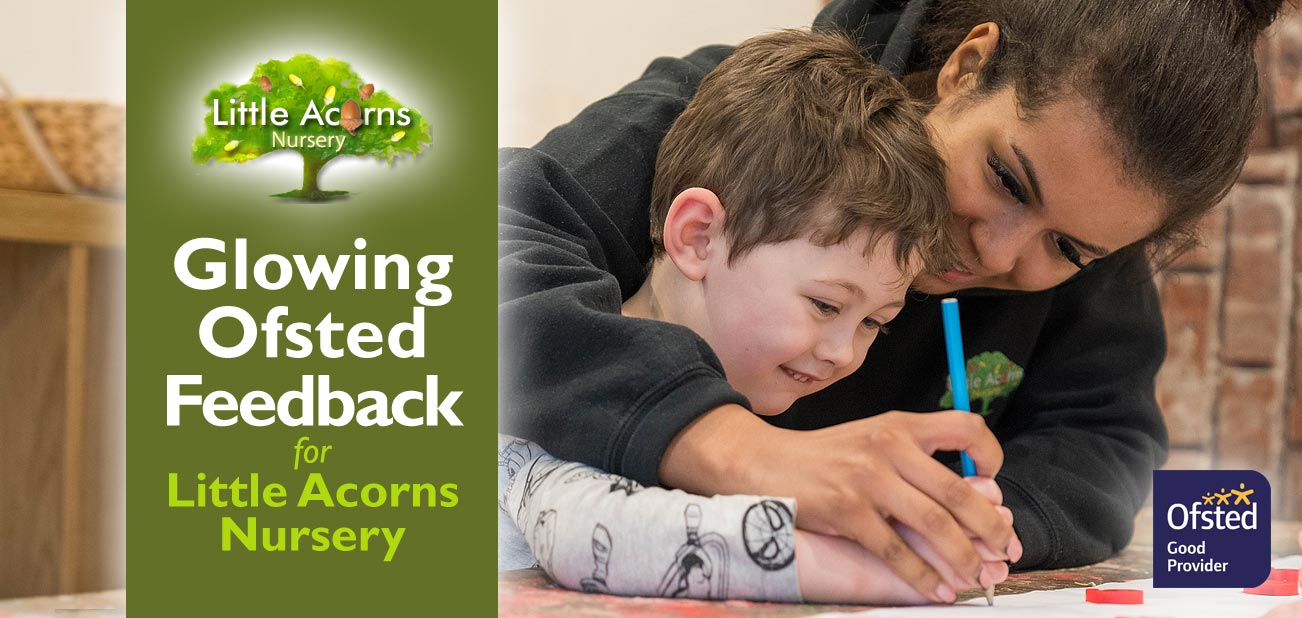
 Today we look at the wonderful Ofsted report published recently for Little Acorns Nursery in Clayton-le-Woods, Chorley. Ofsted is The Office for Standards in Education, Children’s Services and Skills. Their inspector visited this fabulous Lancashire childcare setting in late August and released its official report a month later on 25 September 2024. Our post today spotlights some of the many glowing comments made by the inspector therein, following her visit. It also highlights the reasoning for ‘good provider’ ratings across all areas of the Ofsted report. Take a look and you’ll see why babies, children under five, and those with special educational needs and/or disabilities absolutely thrive at Little Acorns.
How Does Ofsted Rate Little Acorns Nursery, Chorley?
It’s a clean sweep across all sectors of the Ofsted report:
“The provision is good” — Ofsted
 Overall effectiveness: Good
- The quality of education: Good
- Behaviour and attitudes: Good
- Personal development: Good
- Leadership and management: Good
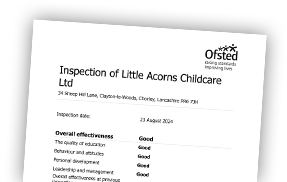 Overall effectiveness: Good
Let’s look at some of the wonderful comments made by the Ofsted inspector in her latest report for the setting:
Children are Happy at Little Acorns Nursery
It’s great to see that the Ofsted inspector picked up on just how happy children are at Little Acorns Nursery, Chorley:
“Children are welcomed warmly by the friendly staff. They arrive happily and are excited to spend time with staff and their peers.” — Ofsted
Little Acorns Children are Confident
We also do everything we can to ensure that children feel confident and valued at Little Acorns and it’s good to see that this was also abundantly clear to the Ofsted inspector:
“Children are confident, and those who need reassurance receive it in abundance from staff. This helps to enhance children’s self-esteem.” — Ofsted
Tailored Learning & Support for Children with Special Needs/Disabilities
Little Acorns Nursery’s support for children with special educational needs and/or disabilities (‘SEND’) was particularly well regarded by the Ofsted Inspector. In her report, she commented:
“All children, including those with special education needs and/or disabilities (SEND), make good progress from their starting points.” — Ofsted
And later …
“Staff are knowledgeable about the individual needs of all children attending the nursery, including those with SEND. They ensure that, if needed, children are referred to other professionals in a timely manner. Staff work collaboratively with a range of outside agencies. This helps to ensure that the curriculum meets children’s individual needs. — Ofsted
Safeguarding — Child Safety at Little Acorns Nursery
The safety and well-being of children is of paramount importance in any setting. Ofsted recognised the good safeguarding policies and measures taken at Little Acorns Nursery, where staff ensure child safety at all times, including mealtimes:
“The arrangements for safeguarding are effective […] There is an open and positive culture around safeguarding that puts children’s interests first.” — Ofsted
“Staff notice and minimise risks to children’s health and safety in the nursery. They complete effective risk assessment and take swift action when they identify hazards. Staff show a good understanding of children’s dietary requirements and allergies. Each mealtime, staff check that children only receive food appropriate for their dietary needs.” — Ofsted
High-Quality Staff
The quality of staff at childcare settings is critically important in so many ways. The Ofsted inspector’s comments demonstrate the quality and suitability of the team at Little Acorns Nursery:
“… staff ensure the smooth running of the setting […] Children are welcomed warmly by the friendly staff.” — Ofsted
“Staff form close bonds with children. Their nurturing interactions help children settle quickly into nursery routines.” — Ofsted
Being a good role model to children is also hugely important, especially in the early years. Little Acorns Nursery staff were recognised in this regard as well as in respect to the high-quality curriculum that’s tailored for each child:
“Staff are positive role models.” — Ofsted
“Staff create an ambitious curriculum for all children.” — Ofsted
Good Behaviour at Little Acorns Nursery
 Any good nursery or childcare provider will ensure that children understand right from wrong and are mindful of the effect their actions have on others, including peers. Nurturing good manners and appropriate behaviour amongst little ones benefits everyone including, of course, the children themselves. Ofsted’s latest report recognised that Little Acorns is very successful in this regard:
“Staff are positive role models. They help children learn how to share the toys and resources […] children behave well, they understand some rules such as having kind hands. ” — Ofsted
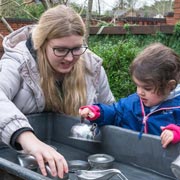 Any good nursery or childcare provider will ensure that children understand right from wrong and are mindful of the effect their actions have on others, including peers. Nurturing good manners and appropriate behaviour amongst little ones benefits everyone including, of course, the children themselves. Ofsted’s latest report recognised that Little Acorns is very successful in this regard:
Good Support for Children’s Emotional Development
Sound emotional development goes hand-in-hand with good behaviour. Staff were recognised by the Ofsted inspector for facilitating good emotional development in the children under their care:
“Staff support children’s emotional development well. Pre-school children […] take turns to discuss what makes them feel happy and why. Children understand about different feelings and they are learning how to regulate their own emotions.” — Ofsted
Encouraging Creativity
Children find messy play hugely rewarding as well as being immense fun. Messy play nurtures children’s imaginations, creativity, dexterity, and self-expression and benefits them in many other ways. It is therefore a crucial part of early years learning and development — and more important than it perhaps sounds. Ofsted picked up on the quality of messy play activities at Little Acorns Nursery within its report:“[Staff] provide plenty of opportunities for children to engage in messy play. For example, babies splash in the raspberry filled water tray and explore the lemon and flowers inside. Pre-school children dip their fingers in paint and create their own colour monster. ” — Ofsted
What’s more, such activities are good for their motor skills and coordination:
“These opportunities help to develop children’s hand muscles in readiness for early writing.” — Ofsted
 Children find messy play hugely rewarding as well as being immense fun. Messy play nurtures children’s imaginations, creativity, dexterity, and self-expression and benefits them in many other ways. It is therefore a crucial part of early years learning and development — and more important than it perhaps sounds. Ofsted picked up on the quality of messy play activities at Little Acorns Nursery within its report:
Nurturing Physical Development in Children
Physical development is a crucially important part of a child’s early years and, as such, staff at Little Acorns Nursery are always keen to nurture it amongst children under their care:
“Babies have plenty of space to crawl and to learn to walk. They beam with joy as they climb up the steps before coming down the indoor slide … Toddlers use spades to scoop up sand and fill their buckets. Pre-school children practise their hand eye coordination as they throw balls through hoops with staff outdoors. This helps to develop children’s larger muscle movements.” — Ofsted
Nurturing Independence
Learning how to be more independent is hugely important for children, particularly in their early years. Not only does it help them learn to be more self-sufficient, but it also boosts confidence and self-esteem and helps to better prepare them for school.
“Staff promote children’s independence well. Toddlers try to put their own superhero costumes and masks on as they dress up. Pre-school children serve their own food at mealtimes. Children are learning how to manage their own personal hygiene. These opportunities help children to feel proud of the tasks they can complete by themselves.” — Ofsted
Well-Promoted Communication & Language Skills
Communication and language are two of the major keystones of child development. Without such skills, children will really struggle. It is therefore heartening to see that the Ofsted inspector recognised the successes of our approach at Little Acorns:
“Children’s communication and language skills are promoted well.” — Ofsted
View or download the full [September 2024] Ofsted Report for Little Acorns Nursery here.
[2025 UPDATE]: A later Ofsted report was released at the end of September 2025. Learn more about the excellent findings here.
Little Acorns Nursery: a Good, Caring Childcare Provider in Clayton-le-Woods
 As you can see from the wonderful Ofsted comments in their latest report, Little Acorns is a high-quality nursery in Clayton-le-Woods, Chorley. Children have a fabulous start at the setting, in a warm, loving, caring and nurturing environment where the best is brought out in each child in readiness for school. If this sounds like something you’d like for your baby or child under five, contact us, register for a place, or request a free guided visit today:
As an award-winning childcare provider located in Clayton-le-Woods, near Chorley, we may also suit those living in Clayton Brook, Clayton Green, Thorpe Green, Pippin Street, Buckshaw Village, Whittle-le-Woods, Farington, Bamber Bridge, Lostock Hall, Euxton, Leyland, Penwortham and Central Lancashire.
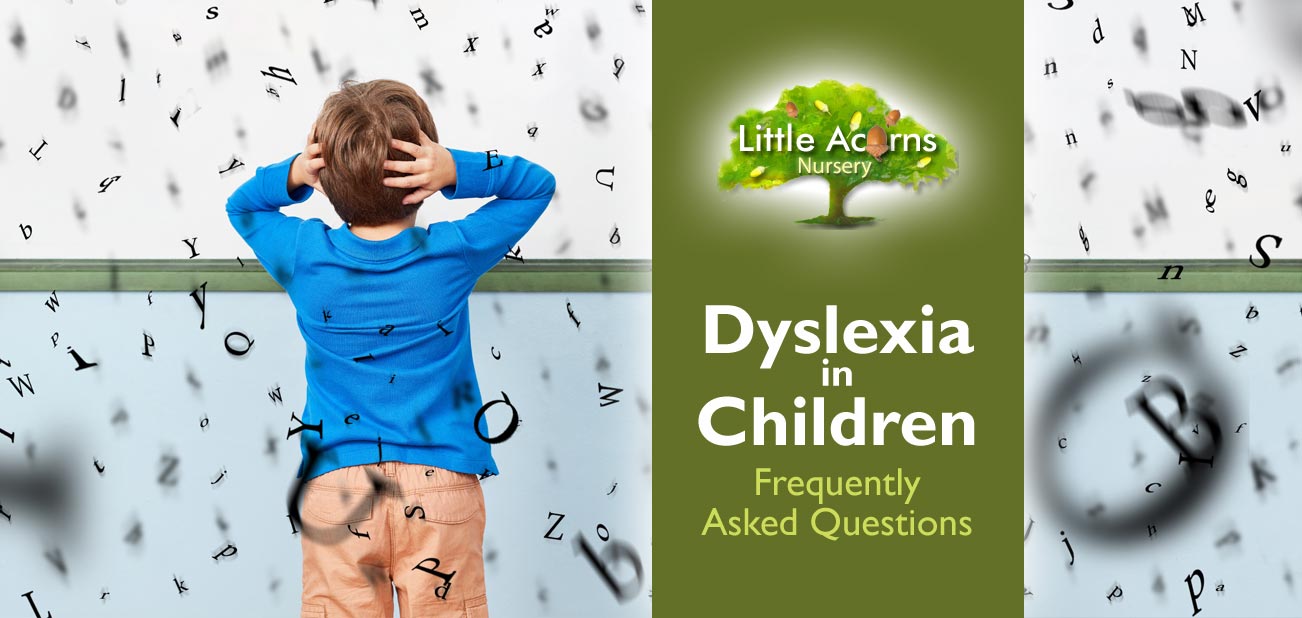
 As a condition that affects children’s reading and writing abilities, Dyslexia is something that can significantly hold little ones back. If not diagnosed and addressed in good time, it can have a knock-on effect that adversely affects the education and potentially whole lives of people affected. It’s therefore important to learn what to look out for so as to recognise the possible signs of dyslexia in children should they occur. With that in mind, today’s article explores the answers to frequently asked questions about dyslexia so as to explain what dyslexia is, how it affects children and adults, what to look out for, and what to do to mitigate its potentially harmful effects.
 Described back in the 19th century as ‘word blindness’, Dyslexia is a lifelong problem that primarily affects the ease with which a person can read (especially) as well as affecting other language-based skills like writing, spelling, and sometimes even pronunciation. As such, it has potential knock-on effects in a wide array of areas of people’s lives and can present daily challenges for those affected.
 Some people with dyslexia have described its effects as causing letters to jump around and words to jumble up. Others say that words blend together and even spaces between them can disappear. Individual letters and numbers can mix up and, for some, characters may seem incomplete. Sometimes, they are perceived in mirror form (so, for example, a “b” becomes a “d”) or are even perceived as being upside down (so, a “6” would be perceived as a “9”). Whatever the specific effect, the result is to make words unintelligible. Immense concentration is required to try to make any sense of them. Clearly, this presents enormous challenges to reading, writing, spelling, reading out loud, and even mathematics. The knock-on effect of all this is that reading and learning from books about any number of topics — including those in the curriculum — can therefore be hugely challenging and profoundly impactful.
 The signs of dyslexia vary from child to child and this, in itself, makes spotting the issue more tricky. That said, the most common signs of possible* dyslexia, specifically in children of pre-school and school age, relate to language-related difficulties. Examples include:
 Dyslexia is a specific learning difficulty. While some children affected have no additional limiting condition, some have additional problems. These can include dyscalculia, dyspraxia, ADHD, short-term memory issues, and issues with time management. We’ll aim to cover some of those topics separately, in future posts.
 Where an issue like dyslexia is suspected, parents/carers should speak with their early years provider or school teacher to voice any concerns — and vice versa. The earlier an issue like dyslexia is spotted, the sooner measures can be implemented to help the child. Such early intervention is really important when reading and language are affected because they have such a snowball effect on other areas of learning. That said, it is more difficult to diagnose dyslexia in the pre-school years, as signs are not so obvious at such an early age. However, a few early signs may sometimes become evident as indicated in the early entries of our list of possible signs of dyslexia earlier in this article.
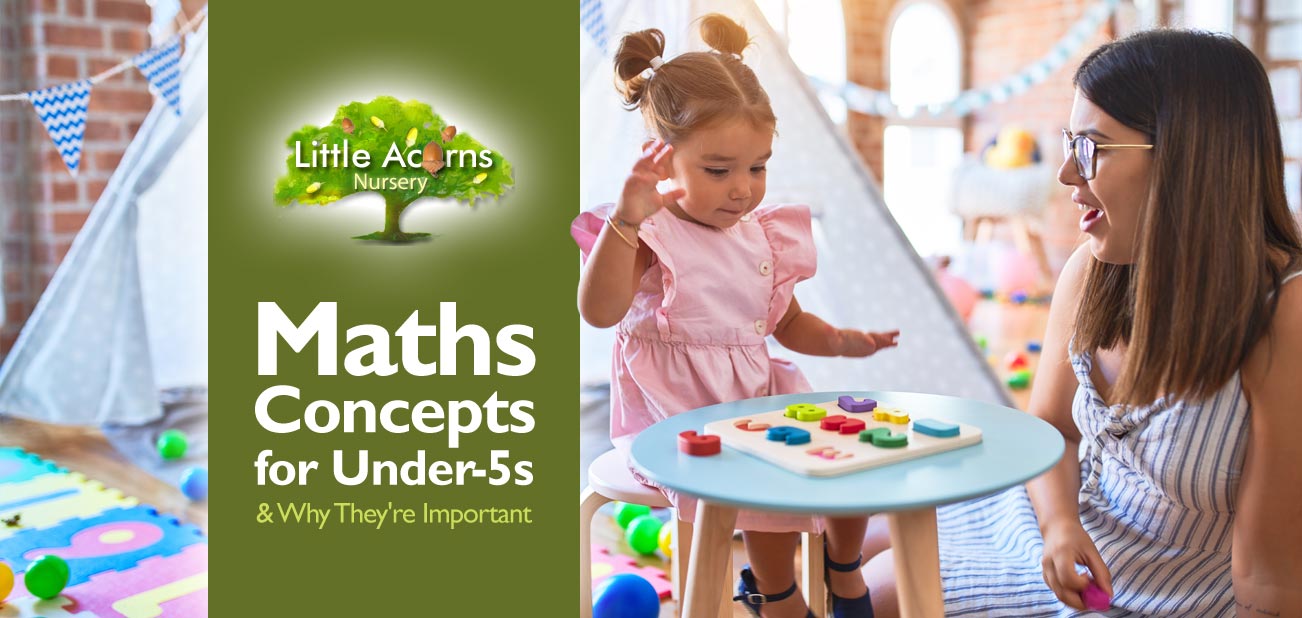
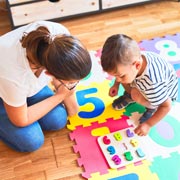 Once babies have transformed into toddlers, it’s never too early to introduce them to maths-based concepts and language. Indeed, introducing under-fives to such concepts in the earliest years will benefit them hugely as it lays the foundations for future learning. That’s one of the main reasons it is a part of
  Familiarity with mathematical terms and concepts also helps to prepare children for formal education, including in many areas other than pure mathematics. Understanding maths concepts from an early age will allow them to confidently engage in number-related exercises and discussions, greatly enhancing their school readiness across multiple topics. Such preparation will allow them to take maths-based challenges in their stride right from the moment they begin Reception Year in primary school. What’s even more striking is that studies show a direct correlation between early mathematical skills and later educational achievement.
 Counting is the most obvious example. Counting can be introduced and practised by your little one in many, many situations, from counting how many more mouthfuls of food a child should eat, to the number of Lego blocks in a tower they’re creating.
 Shapes also have roots in maths, so children should get familiar with 3-sided triangular shapes, 4-sided shapes like squares and rectangles, and so on.
 Creative endeavours can also be vehicles through which supervising adults can highlight elements of mathematics that are built into designs and creations that children may generate. Patterns and shapes are obvious examples of that. Last but not least, parents can involve children in maths facets which are integral to everyday life, for instance, counting items when out shopping, or measuring when putting ingredients together for a meal. Children will love being more involved in such activities and will learn about maths in a fun, natural, and engaging way. Doing so will create the strongest foundations for their future learning.
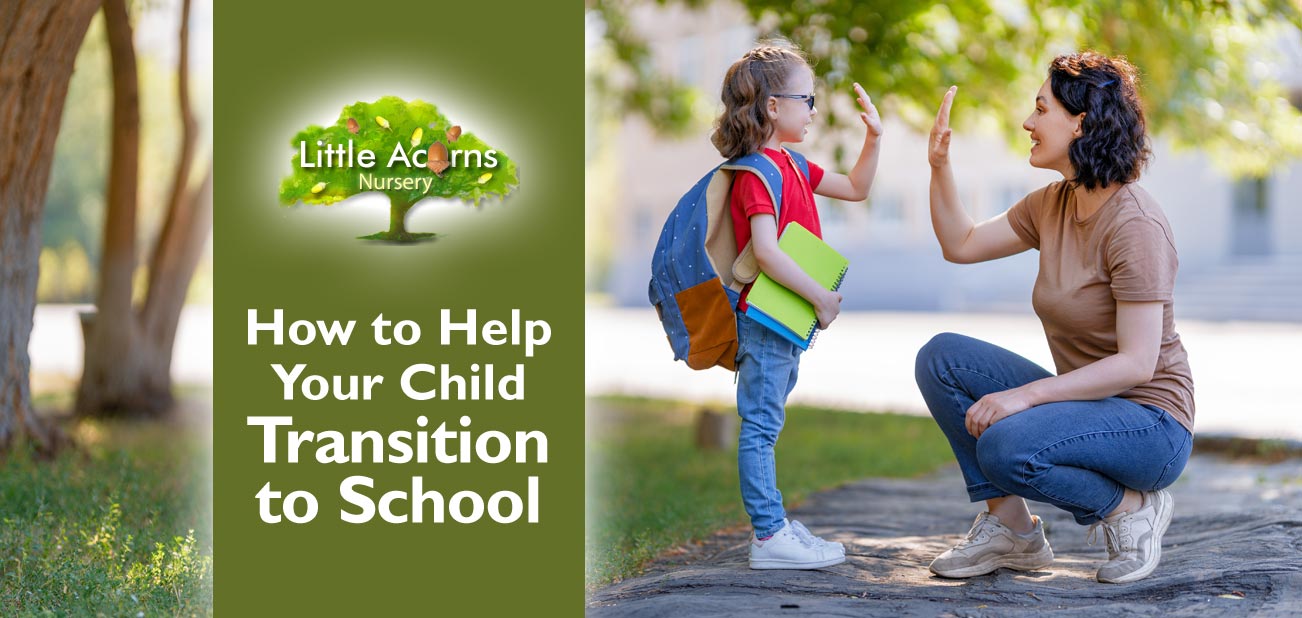
 Beginning school is a huge milestone for any child as well as for the child’s parents or guardians. Whether transitioning from nursery/preschool or straight from home, beginning school can be a daunting step in a child’s life — especially if they’re unprepared. Today’s post therefore aims to help parents/guardians make the transition to school as easy and stress-free as possible for their child, so they are empowered to feel at home and hit the ground running from the moment they begin. Take a look, therefore, at our guide on How to Help Your Child Transition to School. Following the advice should help make this milestone plain sailing for everyone involved.
 One of the most critically important steps for a smooth transition to school is to ensure your child receives a comprehensive early years education. By this we mean they need to have been nurtured between birth and school age in all areas of their learning and development — ideally including the
 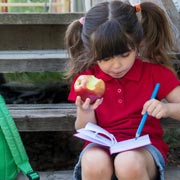 During their journey from birth to school age, it’s also important to nurture children’s independence, social skills and soft skills.
 When starting school is only a few weeks away, there are several small but impactful things you can do to better prepare your child for the transition:
 Pack your child’s backpack and ensure it includes everything they’ll need. For example, perhaps a snack and/or lunch box, any spare clothes, PE kit, stationery if needed, and so on.
 Be on time. Dropping off or picking up late will stress both you and your child out!
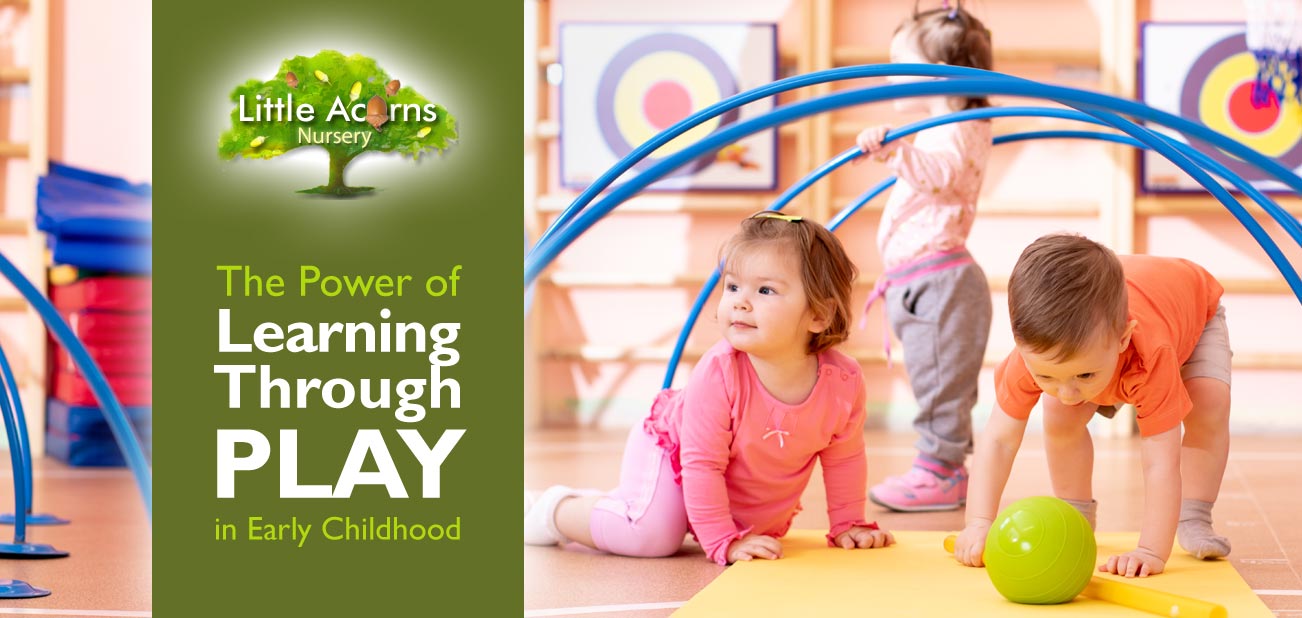
 In the world of child development and early education, there is a simple yet profound truth: children learn best when they are learning through play. Play is the universal language of childhood and, indeed, it transcends both borders and cultures. Whether it’s building sand castles on a sunny beach or arranging blocks on the floor at home, play is the gateway through which children explore, discover, and grow.
 As adults, we often associate learning with classrooms, textbooks, and structured lessons. However, for children, the process of learning is a dynamic and ever-evolving adventure, with play being their very best companion during the journey.
 Do babies benefit from play? Absolutely. Play is the first way through which infants start understanding their world. They use their senses to explore toys, grasp objects, and make sense of the environment around them. Sensory play, such as touching different textures or listening to soothing sounds, stimulates their developing senses and lays the groundwork for future learning.
 During the run-up to the age of 5, play is integral to children’s development. During this phase, children are like little sponges, soaking up information from their surroundings. Play allows them to experiment, make connections, and refine their cognitive and many other skills. Skills enhanced through play include:
 Creating playful environments — we understand the importance of a conducive environment for learning through play. With that in mind, we provide carefully designed play spaces that are rich in stimulating materials and resources. These spaces allow children to engage in various types of play, from imaginative to sensory, in a safe and supportive setting.
 Today, we look at how early years childcare providers like Little Acorns Nursery can help children under five if they have special educational needs and disabilities. This is often referred to as ‘SEND’ or in longer forms like ‘SEN and disabilities’. Let’s explore the topic to get an overview of some of the help available.
 Actually identifying an area of special need or disability is, of course, the first, crucial step in being able to help a child. If an area of special need is suspected, early years providers can work with parents and sometimes other professionals, for example health visitors, speech and language therapists, paediatricians and so on. Involving such professionals will help with any diagnosis.
 This is important. Early years providers can create an inclusive environment that welcomes and supports children of all abilities. Encouraging the inclusion of children in social groups and in the making of friends, for example, is of huge benefit to children’s well-being. Childcare settings can also provide special equipment or adapt the environment to make it more accessible for children with specific physical needs.
 Early years providers like Little Acorns Nursery adapt the individual learning and development plans and activities to suit each child. In this way, they’re custom-designed to meet the needs of every child individually, including those with special needs. This is done as a matter of course as part of
  Later, each child will similarly have an ‘EYFS profile’ completed during the final term of reception year. However, as we’re focusing this article on children under five, we’ll not go into detail about that here.
 It may be useful for parents and carers to note that local authorities have a duty to publish what’s known as a ‘Local Offer’. This outlines the help available in the area for children with SEND, including how to access that support.
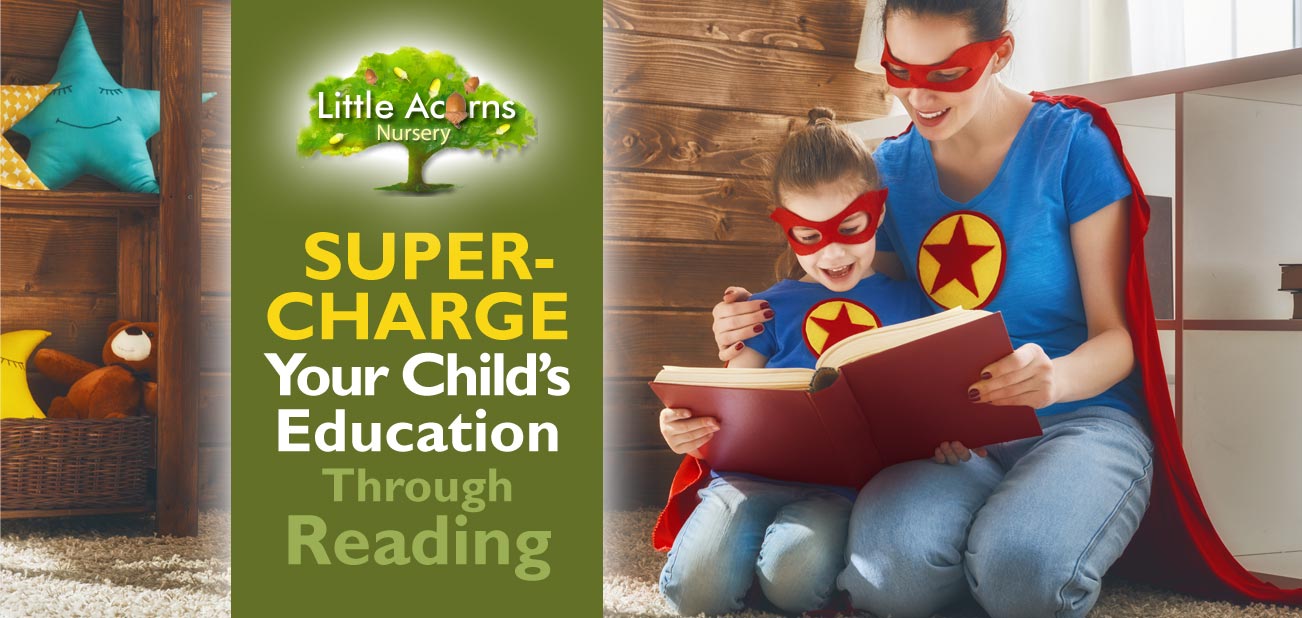
 Last year, we wrote a detailed post outlining
  Interestingly, under-five children who came from disadvantaged backgrounds were shown to benefit even more than those who didn’t. For this reason, reading with parents/carers has been proposed as a possible way to close the performance deficit often seen with children from such backgrounds. It may well represent a perfect solution to even up the playing field.
 Deeper bonds with parents/carers (after all, this is quality time spent together, one-to-one);


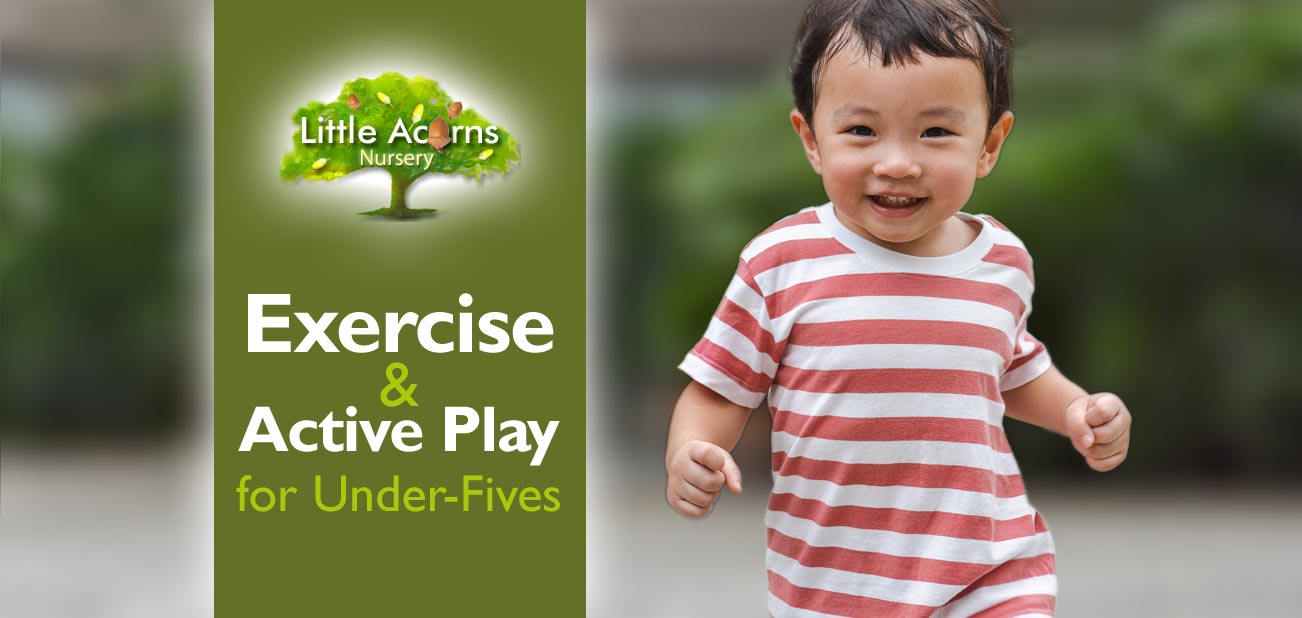
 Generally speaking, under-fives should be encouraged to be active. There are many benefits of this including remaining physically fit, getting to know and enhancing physical abilities, honing motor skills (fine and gross) and improving coordination and balance. In addition, it helps the very young to develop visual and sensory skills. Physical activity is also part and parcel of the development of new neurological pathways in the brain. All these skills and benefits will become increasingly important as children grow, develop and become ever-more active and independent.
 Once they reach the age of 3 to 4 (preschoolers), 3 hours of physical activity is an ideal daily minimum. Now that they’re older and more confident in their physical skills, they can continue with the toddler activities but add more complex and moderately vigorous options to their play. Dancing, swimming, scooting, climbing, chasing, cycling and energetic outdoor activities are good examples.