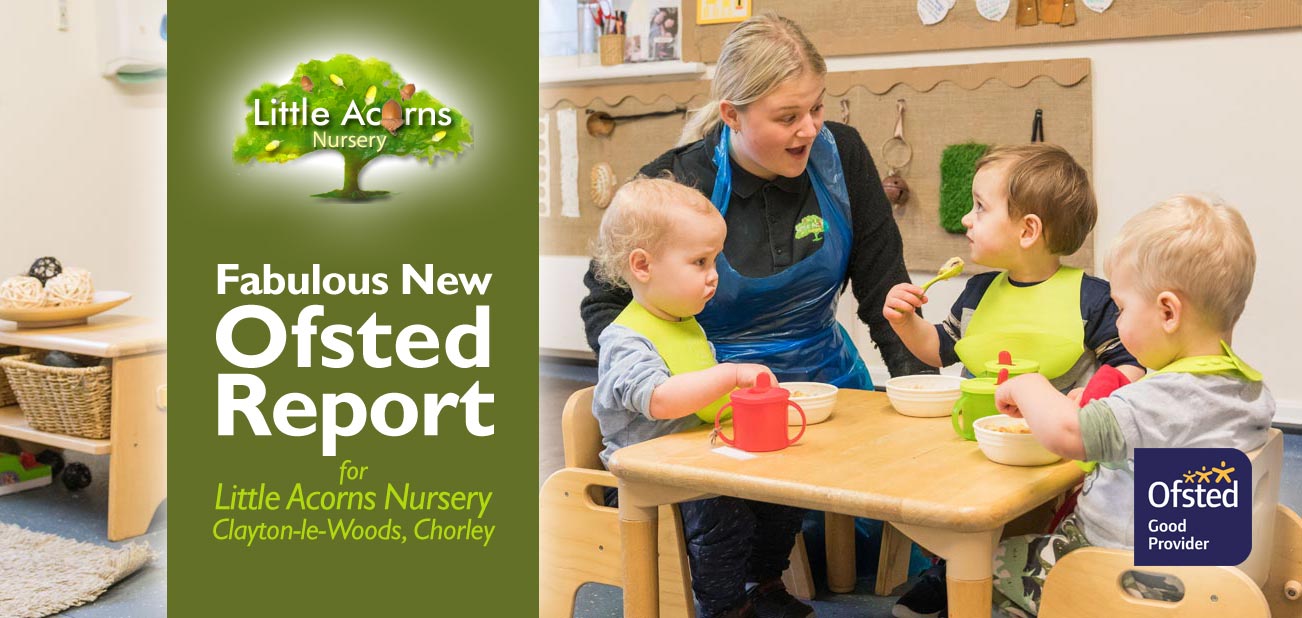
A fabulous new Ofsted report is out for Little Acorns Nursery, Clayton-le-Woods, Chorley. Published on 30 September 2025, it follows an inspection earlier that month. Parents and local families will be delighted to learn that, once again, Little Acorns Nursery was rated as ‘Good’ across all categories. That’s a high rating for overall effectiveness, the quality of education, the behaviour and attitudes of those attending, the personal development of staff, and the quality of leadership and management at the setting. A clean sweep! It’s news that will instil confidence in families that are considering enrolling a child at the nursery, and a clear demonstration that little ones who attend will benefit enormously — and be kept safe.
“What is it like to attend this early years setting?”
“The provision is good” — Ofsted.
 Overall effectiveness: Good
- The quality of education: Good
- Behaviour and attitudes: Good
- Personal development: Good
- Leadership and management: Good
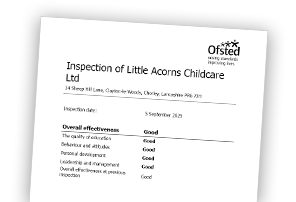 Overall effectiveness: Good
Let’s take a look at some of the positive findings and encouraging comments from the Ofsted Inspector who prepared this latest report.
Children Feel Happy, Settled,
Safe & Secure at the NurseryThe Ofsted Inspector could clearly see that children at Little Acorns are happy and feel at home at the nursery:
“Children are happy and settled at the nursery… Staff help children to learn important language, such as to describe their feelings. This helps children to feel safe and secure at the nursery.” — Ofsted.
She later also remarked that staff “are responsive to children’s needs, feelings and moods” and “encourage children to express and say what they feel,” later concluding in the report that “Children’s well-being is supported effectively.”
A Positive Attitude to Learning
As the Ofsted Inspector said in her report, “Children make good progress in their learning of the nursery’s curriculum”, and she recognised the positive approach to children’s learning at the setting:
“Leaders are ambitious for children’s learning and development. They are clear about the knowledge that they want children to learn and why.” — Ofsted.
And, with that in mind, it was clear to the Inspector that children’s learning and development are nurtured well by thoughtful and attentive staff:
“Staff know the children well. They provide meaningful learning opportunities that build on children’s interests effectively… Children demonstrate a positive attitude to their learning.” — Ofsted.
Children’s Personal Development is Promoted Well
Ofsted’s report also points out that children’s personal development is nurtured very effectively, resulting in them becoming independent and “confident in their own abilities.”
“Leaders make certain that staff promote children’s personal development well. Children benefit from the many opportunities that staff provide to help them to become independent.” — Ofsted.
Help Making Friends
The Ofsted Inspector also recognised the nursery’s positive role in helping babies and children socialise and make friends:
“They develop important knowledge about how to make friends because of staff’s skilful help. Babies show curiosity and are inquisitive about others. Older children are confident when meeting new people.” — Ofsted.
Help Developing Physical Skills
The way the nursery and its practitioners help children develop physical skills was also picked up in the latest Ofsted report. The Inspector sang the praises of the ‘thoughtful’ early years practitioners and the appropriateness of equipment:
“The nursery provides plenty of opportunities for children to develop essential physical skills. For example, staff working with babies provide climbing equipment, such as low-level steps, for babies to explore how they can move their bodies. Staff working with older children provide them with access to large equipment, such as the outdoor slide and wheeled ride-on toys. Children delight in testing out how strong they have become because of the thoughtful help of the nursery.” — Ofsted.
Strong Safeguarding at the Nursery
Ofsted’s inspector applauded the nursery’s “effective” safeguarding arrangements:
“There is an open and positive culture around safeguarding that puts children’s interests first.” — Ofsted.
She also recognised recent safeguarding enhancements. With regard to possible allergens, for example, she remarked:
“The provider ensures that known allergies for children are identified, understood and managed well… It is now a nut-free nursery. Staff have attended relevant training and leaders have strengthened risk assessments.” — Ofsted.
And, with regard to security, she noted the excellent measures in place:
“The provider ensures that the premises are safe and secure […] additional locks and entrance bells have been added to the nursery’s external gate. Staff understand their responsibility to ensure that external doors are locked and that they adhere to the nursery’s risk assessments. Leaders ensure that children are adequately supervised. This ensures the safety of children.” — Ofsted.
Little Acorns Nursery: a High-Quality Childcare Service in Clayton-le-Woods, Chorley
 As the latest Ofsted report testifies, Little Acorns Nursery is a great choice if you’re looking for a high-quality childcare service in Clayton-le-Woods, near Chorley. We’re open virtually all year round, support funded childcare places for children aged 9 months to 4 years (inclusive), and give under-fives the best start in life. Contact us today to arrange a guided visit to the nursery, ask any questions, or enrol your child for a nursery place. We can’t wait to meet you!
Little Acorns is an award-winning nursery in Clayton-le-Woods, near Chorley, Central Lancashire, and may also represent a convenient choice for families living nearby in Clayton Brook, Clayton Green, Thorpe Green, Pippin Street, Buckshaw Village, Whittle-le-Woods, Farington, Bamber Bridge, Lostock Hall, Euxton, Leyland, and Penwortham.



 In September this year (2025), free childcare for eligible working families expands to 30 hours per week for children as young as just 9 months. Little Acorns Nursery in Clayton-le-Woods is supporting the funding scheme too. Taken usually over 38 weeks* of the year, it means a generous 1140 hours of funded childcare will be available to eligible children in Central Lancashire over the course of a year. For the first time, the funding will cover eligible babies aged from only 9 months and children up to 2, the scheme having previously rolled out to eligible 3-and-4-year-olds last year. An urgent factor to be aware of, however, is that the funding application deadline is only weeks away for those wanting to start in the September 2025 term. So, whether you’re thinking of applying at Little Acorns Nursery or elsewhere, don’t delay your application any longer if you want to access the free funding from September. If your child is eligible and you do not apply by the deadline, your child will not be able to access the free funding for the entire September term. Read on to learn more about the new funding for eligible working families, the deadlines for applications, and the rules that apply.
 Helping to make childcare more affordable for working families;
 You can apply for funded childcare for eligible working families as soon as your child reaches the age of 23 weeks (that’s just over 5¼ months). If successful, they’ll be able to start using their free childcare hours the term after they reach the age of 9 months. Depending on when that occurs, they’ll be able to start accessing the funded childcare from either the 1st of September, the 1st of January, or the 1st of April, with application deadlines for each being the day before.
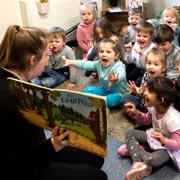 Today we look at the wonderful Ofsted report published recently for Little Acorns Nursery in Clayton-le-Woods, Chorley. Ofsted is The Office for Standards in Education, Children’s Services and Skills. Their inspector visited this fabulous Lancashire childcare setting in late August and released its official report a month later on 25 September 2024. Our post today spotlights some of the many glowing comments made by the inspector therein, following her visit. It also highlights the reasoning for ‘good provider’ ratings across all areas of the Ofsted report. Take a look and you’ll see why babies, children under five, and those with special educational needs and/or disabilities absolutely thrive at Little Acorns.
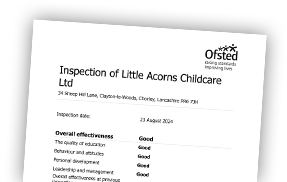 Overall effectiveness: Good
 Any good nursery or childcare provider will ensure that children understand right from wrong and are mindful of the effect their actions have on others, including peers. Nurturing good manners and appropriate behaviour amongst little ones benefits everyone including, of course, the children themselves. Ofsted’s latest report recognised that Little Acorns is very successful in this regard:
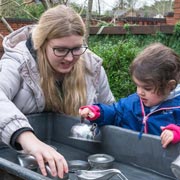
 Children find messy play hugely rewarding as well as being immense fun. Messy play nurtures children’s imaginations, creativity, dexterity, and self-expression and benefits them in many other ways. It is therefore a crucial part of early years learning and development — and more important than it perhaps sounds. Ofsted picked up on the quality of messy play activities at Little Acorns Nursery within its report:
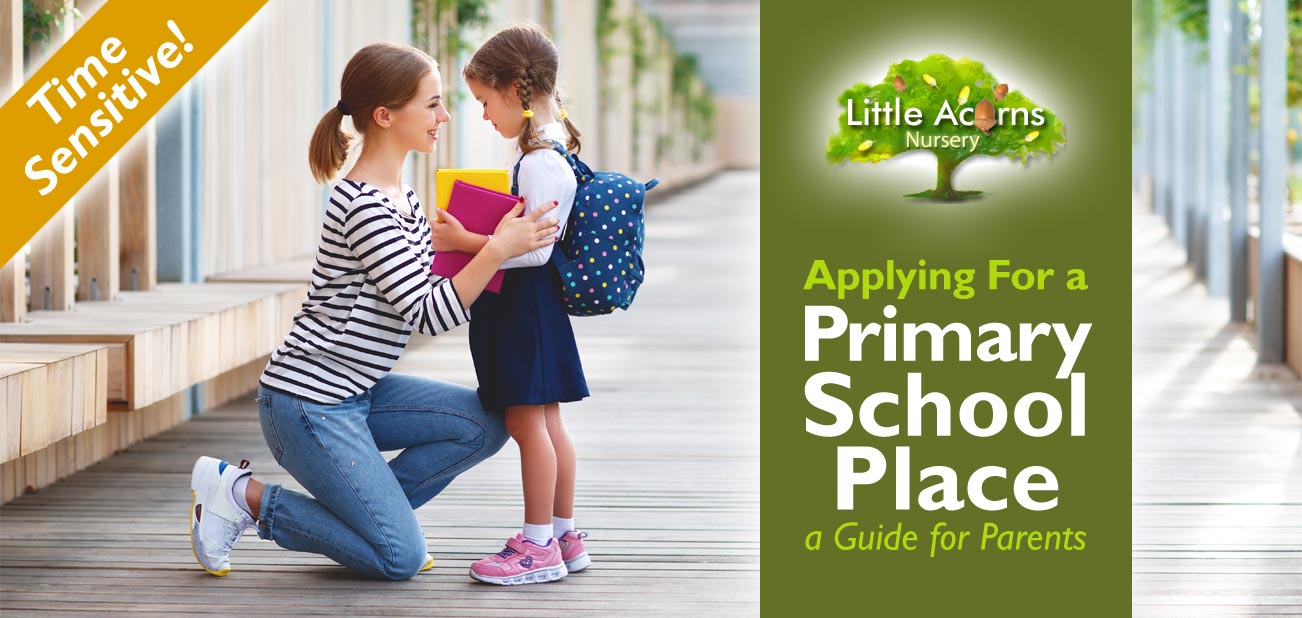
 If your child is 3 or, at the latest, has just turned 4, it’s time for you to apply for their primary school place. What’s more, you only have until about mid-January to do so. That’s all true whether you intend them to start school at 4 or leave it until they’re 5. In today’s guide, we explain the rules around applying for a primary school place, the key dates you need to know, what to expect, and the various options open to you and your child.
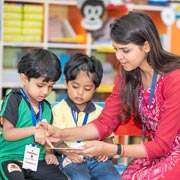 Most children in England start primary or infant school earlier, in ‘Reception’ year. For most, this will be in the September term when they’re still only 4. That’s just one reason why applying for a primary school place is so important while they’re only 3 or, at the very latest, have just turned 4.
 Registering an interest that you’re interested in a particular primary school is sensible and, indeed, may result in the school supplying some useful information. However, it will not guarantee your child a place even if it’s attached to their nursery or preschool. You therefore need to make your official application through
  Research your local primary schools, visit them to get a feel for them, and ask teachers and heads any questions you may have. Schools often have open days or evenings or accept appointments for these purposes.
 The child’s proximity to the school;
 For primary** school places, offers are released around the 16th* of April each year, the exact date depending on whether the 16th otherwise falls on a weekend or public holiday. For 2025, 2026, and 2027, primary school ‘offer day’ will therefore fall right on target on the 16th of April as each is a weekday for each of those years. Those applicants who had applied online, on time, and supplied an email address during the application process, will be the first to receive offers via email. Later the same day, others who supplied an email address will also receive offers via email. Those who applied without supplying an email address will have their offers posted via 2nd Class post, meaning they may find out what school their child has been offered a day or two later than the 16th of April. That said, some local authority portals allow all parents to log in to view school offers online.
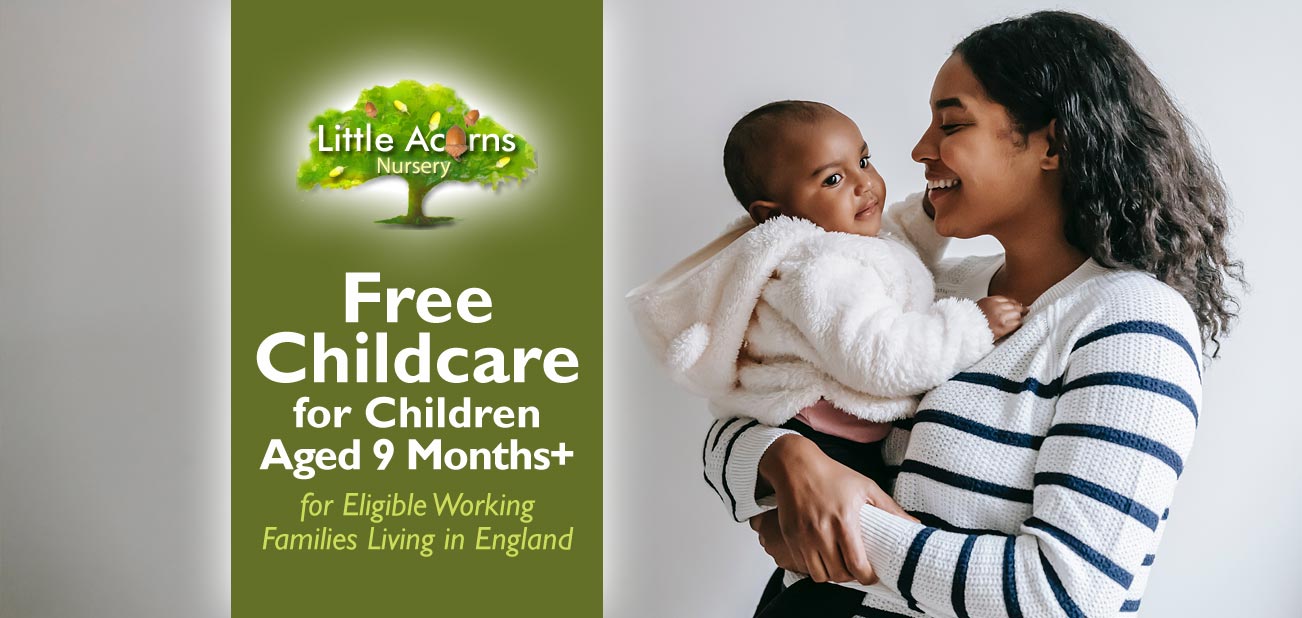
 With September 2024 arriving, eligible children aged as young as 9 months can now access free childcare in England. The new childcare ‘hours’ are available where working families are eligible for the support and, in tandem, where local childcare providers are set up with appropriate staffing ratios and capacity. The good news, however, is that Little Acorns Nursery, in Clayton-le-Woods, supports the new scheme. It’s therefore with great pleasure that we’re now beginning to welcome children as young as just 9 months of age for free childcare hours at the Chorley setting.
 From September 2024 (so already active), eligible children aged from 9 months to 3 years of age can access 570 hours and eligible children aged 3 and 4 can access 1140 hours of free childcare support per year. The free hours are usually taken over the course of 38 weeks (equating to 15 and 30 hours per week respectively). However, some childcare providers may allow the hours to be spread over more weeks of the year by reducing the number of hours per week. Speak directly to your specific childcare provider about the availability of this more flexible option.
 Must not have an
  Little Acorns is a wonderful
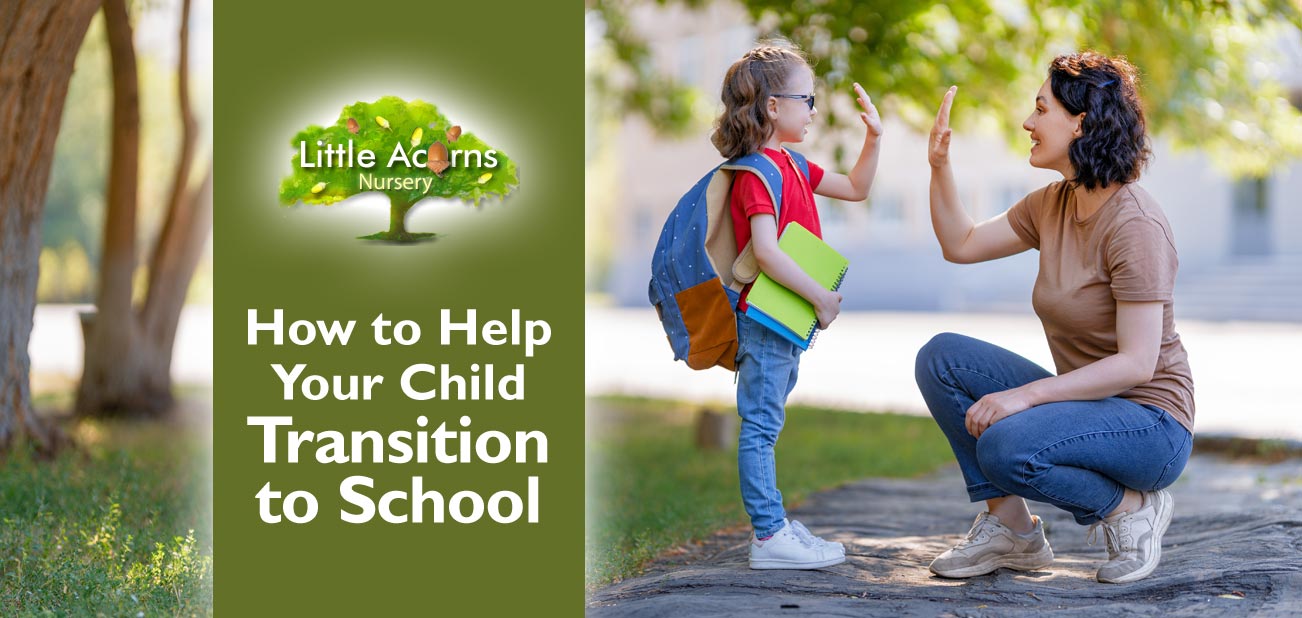
 Beginning school is a huge milestone for any child as well as for the child’s parents or guardians. Whether transitioning from nursery/preschool or straight from home, beginning school can be a daunting step in a child’s life — especially if they’re unprepared. Today’s post therefore aims to help parents/guardians make the transition to school as easy and stress-free as possible for their child, so they are empowered to feel at home and hit the ground running from the moment they begin. Take a look, therefore, at our guide on How to Help Your Child Transition to School. Following the advice should help make this milestone plain sailing for everyone involved.
 One of the most critically important steps for a smooth transition to school is to ensure your child receives a comprehensive early years education. By this we mean they need to have been nurtured between birth and school age in all areas of their learning and development — ideally including the
  During their journey from birth to school age, it’s also important to nurture children’s independence, social skills and soft skills.
 When starting school is only a few weeks away, there are several small but impactful things you can do to better prepare your child for the transition:
 Pack your child’s backpack and ensure it includes everything they’ll need. For example, perhaps a snack and/or lunch box, any spare clothes, PE kit, stationery if needed, and so on.
 Be on time. Dropping off or picking up late will stress both you and your child out!

 Children and childcare staff at Little Acorns Nursery love nature. So, with World Wildlife Day coming earlier this month and Spring now upon us, it’s the perfect opportunity to release our free Wild Mammals poster. Shown in full colour and printable in high resolution at A3 or A4, it features 20 British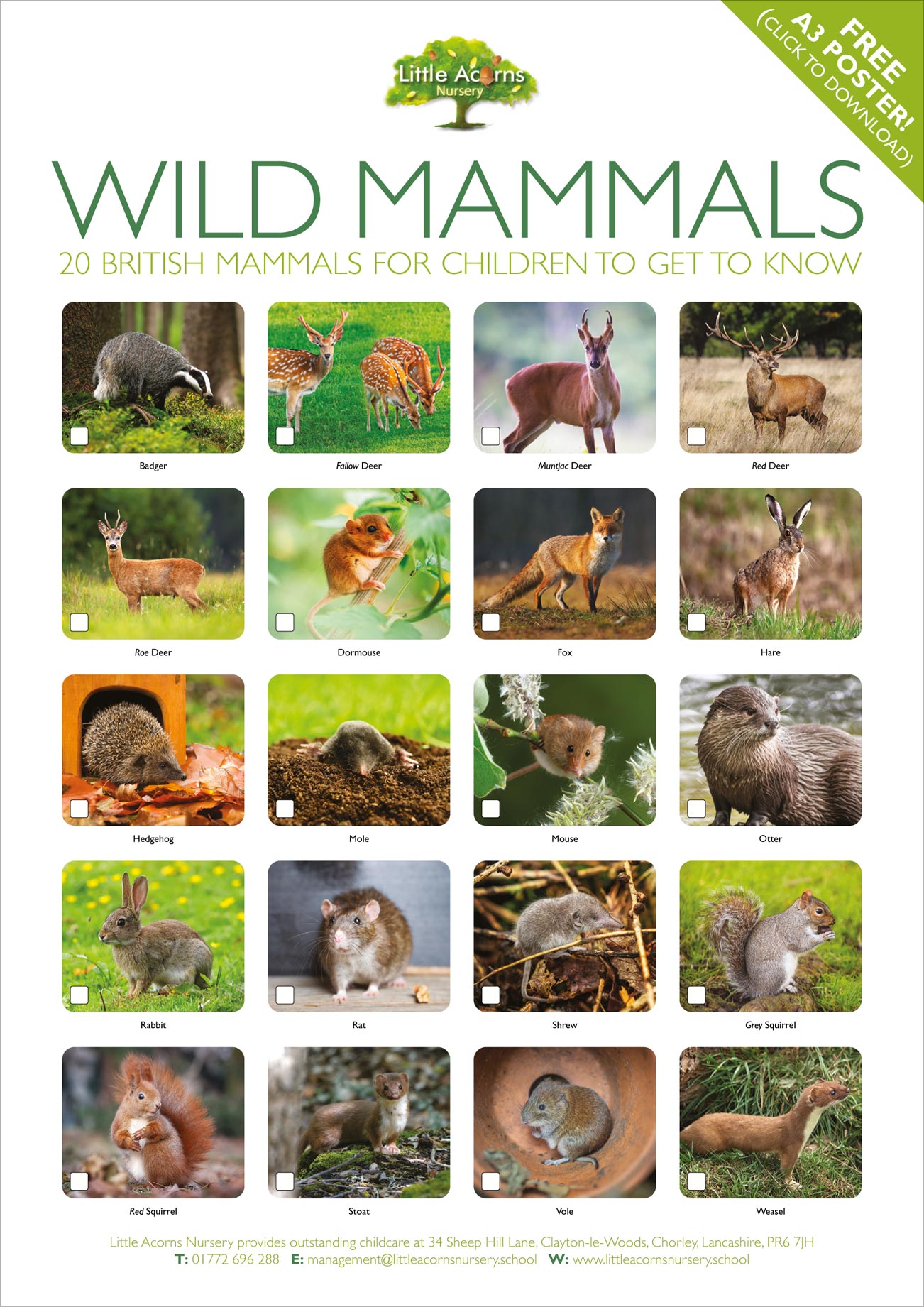



 With Chorley Football Club being only 4.8 miles and a 14-minute drive from
  Participation in sports benefits children in many different – and often profound – ways. That’s especially true for children in their early years, being a stage when they learn fundamental skills like jumping, running, throwing and catching balls, etc.
 Sports and active hobbies will also help little ones hone balance, agility, coordination and motor skills. That’s incredibly important during early childhood as these key skills are still developing and, as the old proverb goes, “practice makes perfect.”
 Sport is a great socialiser too. Through sport, they’ll get used to interacting with other children as well as coaches, teachers, or childcare professionals. Moreover, children not only make new and deeper friendships through sport, but also learn social skills before, during and after such play. These skills and benefits will stay with them for the long term and will help to enrich their lives in profound ways.
 As we discussed in our recent post
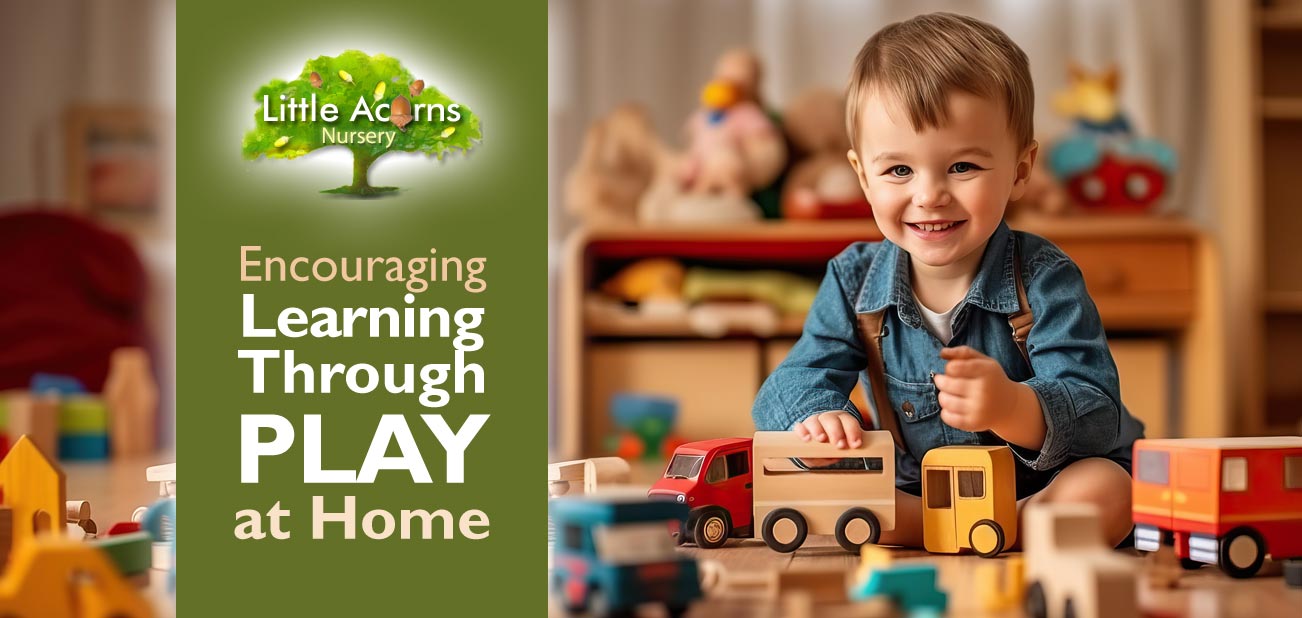
  Designate an area in your home for play. It doesn’t need to be elaborate — even a corner with a few age-appropriate toys, books, and art supplies may be sufficient. Ensure, of course, that the space is safe and free from hazards before your child embarks on their play activities.
 Outdoor play also offers a wealth of learning opportunities. It promotes physical health, stimulates the senses, and allows for unstructured exploration, which all contribute to holistic development. Take your child to the park, explore nature, or simply play with them in the back garden if you have one. Outdoor activities will also foster an appreciation for the natural world. Indeed, we wrote a whole post about
  Reading is a wonderful way to support learning through play. Choose age-appropriate books, of course, and be sure to engage in interactive storytelling. Ask and encourage questions about the story, encourage your child to predict what might happen next, and ask them what they might do if it were them in the story. Books and reading teach children so many things and, like pretend play above, truly encourage their imaginations and get their creative juices flowing.
  Arrange play dates with other children or involve siblings in play activities at home. Social play helps children learn essential social skills like cooperation, sharing, and conflict resolution. It’s also a great way to make new friendships, learn from each other, and become a closer member of friendship circles.