Tag Archive for: ofsted

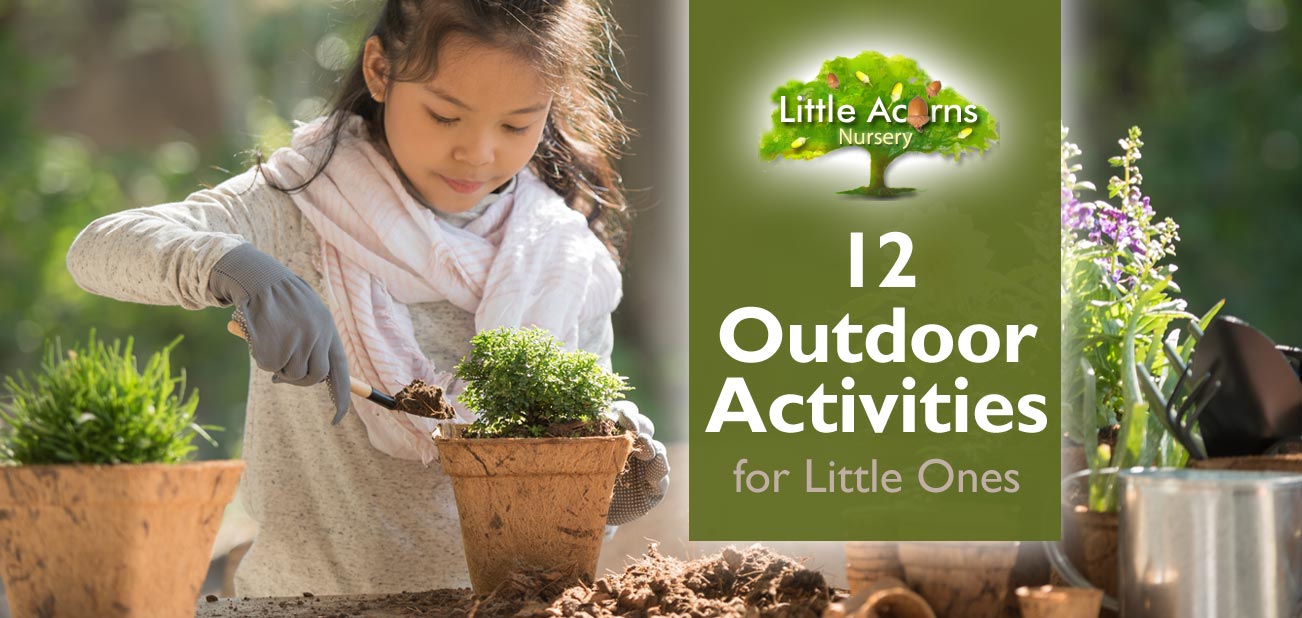
12 Outdoor Activities for Little Ones

Our last post described the huge number of benefits of outdoor play for children in their early years. With that in mind, today’s post highlights twelve excellent outdoor play activities that young children can enjoy. With spring all but upon us at time of writing, children will be able to get outdoors more and more in the coming weeks and months. Our activity suggestions are fun, educational, will teach children new skills and will get them out into the healthy fresh air too. Our ideas below are mostly of the more natural variety too, so need not cost anything. Take a look …

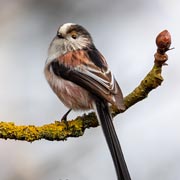
Bird spotting is a wonderful activity for young children and helps introduce them to an appreciation of wild creatures.1. Bird spotting

Teaching children to spot birds will really help them to appreciate wild creatures. They can simply watch for them in the park, on the balcony, in the garden or out in the country. Putting out some bird food and waiting patiently and quietly out of sight will help, of course. If children have made home-made bird feeders — even better! It’s more educational if they can view a UK bird book or app so they can identify the types of birds that they see. Maybe make them a list if they can read, or a pictorial reference sheet that they can tick off. Robins, sparrows, blackbirds, pigeons, doves and various types of tit are common in the UK, but there are many other types too. Here’s a handy list of the 19 most common British birds.

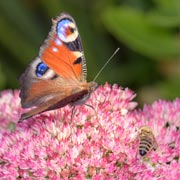
2. BBee and butterfly spotting is a wonderful activity for young children.ee & Butterfly Spotting

Similarly, bee and butterfly spotting is a wonderful activity for young children, although it relies more on there being an abundance of the right kind of flowers and plants growing nearby. Butterflies, bees and gentle hover flies will flock to plants like Buddleia, for example. They all generally like any flowering plants that are rich in nectar, scented and colourful. As we suggested for birds, perhaps parents or carers can print out pictorial reference for the different types that children may discover. Here’s a great reference for the different types of bee found in the UK and here’s a guide for UK butterflies.

Another educational and interesting outdoor activity for little ones is to see if they can find animal tracks.3. Search for Animal Tracks

Continuing with our wildlife activity theme, another educational and interesting activity for little ones is to see if they can find animal tracks. This is best done when there is suitable habitat for paw prints and suchlike, for instance where there is soft earth, mud or sand nearby. It might be a good activity to do whilst out rambling (see #6 below). Perhaps search near a lake or river as many birds and animals will visit the water’s edge — or in snow if it’s winter. (N.B. such activities should be done under adult supervision for safety, of course).

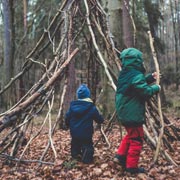
Children love building dens to 'camp' in.4. Make a Den

Once in the outdoors, whether in a garden, courtyard, park or countryside, children love building dens to ‘camp’ in. Building them is all part of the fun and they can be made with long sticks and foliage, a sheet draped over string tied between trees, or simply using a low-cost children’s tent or similar. Once erected, children will love using the den to use as a base, like their own ‘home in the wild’. Their imaginations can run riot and all manner of games, role-play and adventure can ensue.


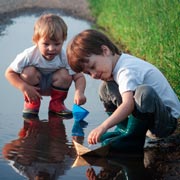
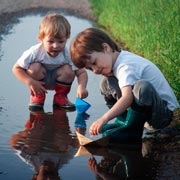
Little ones will love floating little boats on water.5. Float a Boat

Little ones will love floating little boats on water (with supervision of a responsible adult for safety, of course). They’ll enjoy it even more if they have made the little boat or raft themselves. Boats can be made simply from folded paper (as in the photograph) or using little sticks, string and perhaps a little bit of a cloth for a sail. If there’s a stream, then even better — they can race their boats! Even a puddle, pond or paddling pool will do, though.

Rambling is a wonderful chance for adventure, discovery, varied play — and fun!6. Go on a Ramble

A walk to around the local park, beside a local river, woods or countryside is one of life’s great free pleasures. The benefits of being out in nature are significant and numerous for children and adults alike. A ramble with Mum or Dad or another responsible adult will do wonders for a child’s physical and mental wellbeing. It’s also a wonderful chance for adventure, discovery, varied play — and fun!

Children will love seeing the results when they take photos of flowers, insects, landscapes, trees and sunsets.7. Get into Photography

With cameras being a part of mobile phones and tablets these days, photography is easily accessible to little ones. It’s easy too … just preview, check the subject is in view and in focus, and press the button. And, if children get more interested, perhaps they could ask for a camera, whether new, second-hand or passed down when a relative upgrades. Children will love seeing the results when they take photos of flowers, insects, landscapes, trees, sunsets and anything that triggers their imagination in the outdoors. Who knows — it could even lead to a creative career!

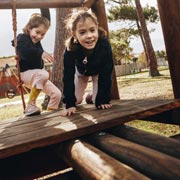
Children will love running and climbing around an assault course.8. Obstacle Course

The opportunities for playing are infinite outdoors. Children will love running and climbing around an assault course. This could be formal (like in a playground) or using more rustic obstacles like trees, logs, inclines and suchlike. Obstacles courses outdoors are a great way to challenge children’s imaginations, skills like problem-solving and, of course, fitness, motor skills, balance and coordination. They could even do it in teams. It’s all great fun!

Little ones love picnics!9. Have a Picnic

Little ones love picnics! So, next time the sun is out and you’re taking your child(ren) out to the park, the countryside or even perhaps just to a garden, consider taking a picnic. Children can even be involved in preparing for one and will enjoy the sense of responsibility that goes with gathering everything that’s needed. Then, once outdoors, they’ll enjoy sitting on the picnic mat with the food, drink, fresh air and immersing themselves in the very ‘civilised’ thing that is the picnic!

Planting seedlings, vegetables, plants or herbs in the garden is one of life's simple pleasures for children and adults alike.

10. Plant a Mini Garden

Planting seedlings, vegetables, plants or herbs in the garden is one of life’s simple pleasures for children and adults alike. It’s a relaxing and educational activity for children to enjoy outdoors. While a garden is ideal, containers or pots on a balcony, courtyard, patio or windowsill will suffice as plants need only be small. Supervising adults can help children to care for the plants and, in time, harvest flowers, herbs or vegetables from them. They will learn so many lessons by growing plants and food, including patience and empathy, and will get a great sense of achievement when they see the results. They will also have witnessed the magic of nature.

Children love discovering mini beasts.11. Hunt for Mini Beasts

Children can also search outdoors for mini beasts like woodlice, ants, beetles, ladybirds, centipedes, caterpillars, slow-worms and even earth worms. They need to be respectful of them and be gentle, however. After all, each is a living being with its own needs and feelings. So caring, adult supervision is always best around little creatures, particularly when children first learn about them. They will love getting to discover their tiny neighbours and perhaps even get to rescue any that occasionally get themselves into trouble, for example a bug that’s landed in a puddle or butterfly that’s in danger of getting caught in a web. A sense of empathy will naturally come from such activities.

It's surprising how creative children can be with pebbles and rocks!12. Get Creative with Rocks & Stones

Pebble sculptures are easy!Whether on the beach or in the garden, it’s surprising how creative children can be with stones and rocks! Stones can be painted with lovely patterns or images, perhaps combined with simple words or as part of a ‘stone story’. Bigger rocks can be piled one on top of the other to form sculptures — these look magical. Children will love these and other creative activities that they can take part in outdoors, with simple stones and rocks.

Safety First

Safety is paramount. When playing, particularly outdoors or near hazards, children should always be supervised by a parent or responsible adult.

Outdoor Play at Little Acorns Nursery & Forest School (Clayton-le-Woods, Chorley)
Little Acorns Nursery, Clayton-le-Woods, ChorleyWe have outstanding outdoor play areas at Little Acorns Nursery in Clayton-le-Woods, Chorley, Central Lancashire. We also have a wonderful Forest School for our under-fives. We have an Excellent Ofsted rating and an outstanding National-level nursery award. We’re near Clayton Green and Clayton Brook too, so will be perfect for you if you live or work in any of those areas and need the very best childcare for your child. Arrange a visit with your child or baby, so you can all look around. Alternatively, get in touch to ask any questions or simply apply for a nursery place if you’re ready to. We look forward to meeting you!
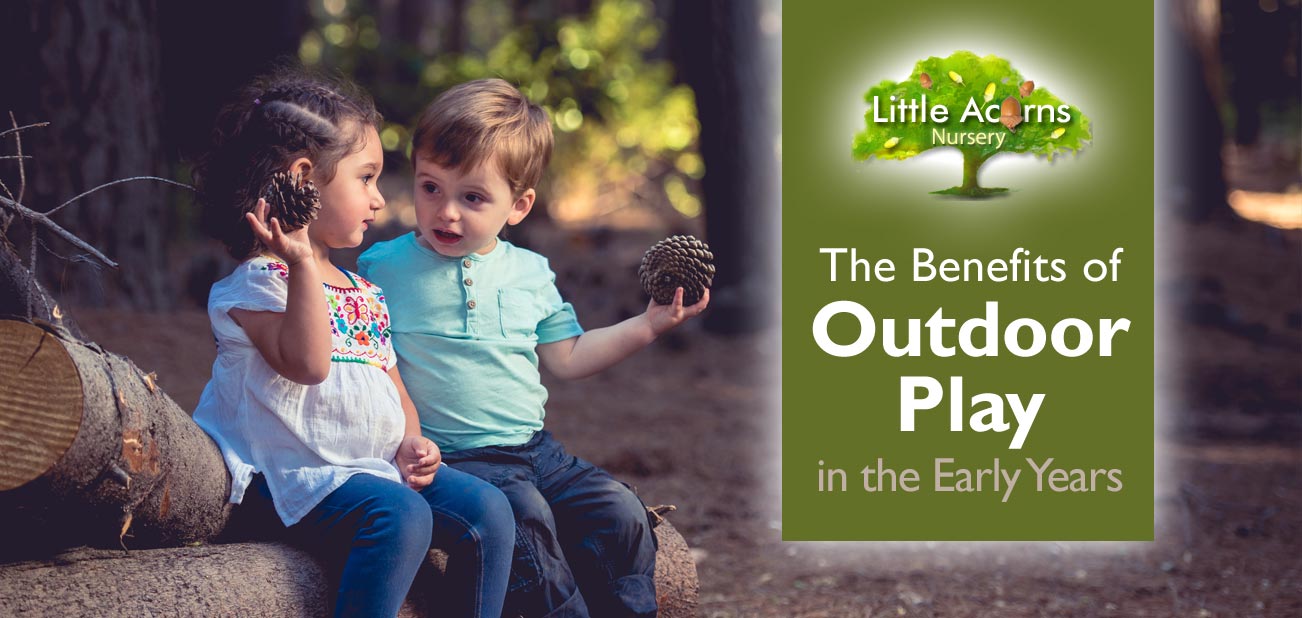
The Benefits of Outdoor Play in the Early Years

Outdoor play is great fun for children but also has a huge number of benefits.In today’s post, we take a look at the importance of outdoor play for children in their early years. Indeed, there are many benefits, as we’ll see …

Outdoor play is great fun for children — of course — and that should not be overlooked as a benefit. After all, any healthy childhood should be about adventurous play and fun just as much as it should be about learning. However, as we all know, playing and learning are very closely interlinked. That is why outstanding childcare settings like Little Acorns Nursery firmly believe in learning through play.

Having fun anywhere, but particularly outdoors in the fresh air, will help children’s wellbeing in terms of mental and spiritual health too. Playing outdoors will lift the spirits and give children a myriad of opportunities for fun, learning, self-improvement and physical wellbeing. Such activity releases the hormone cortisol in the brain and that helps to naturally reduce stress and anxiety.

Children benefit from the simple act of being outdoors.

Playing outside is a healthy release from things like TV, electronic screens and, potentially, from an otherwise more sedentary lifestyle.Playing outside is also a healthy release from things like TV, electronic screens and, potentially, from an otherwise more sedentary lifestyle. Away from the confines of the indoors, outdoor play allows children the freedom to move about more freely. Outside, they’ll learn to navigate spaces, obstacles and play equipment, all the time improving spatial awareness, coordination, balance and gross motor skills. These include running, jumping, climbing and so on. Their fitness levels will naturally improve too, as they build stamina, muscle and strength. This is all incredibly good for them.

Outdoor play is also a feast for the senses. During the early years, sensory experiences are very important, not least for their brain development. Playing outdoors will give them many sensory opportunities, for example in terms of what they hear, see, feel, touch and smell.

Outdoor play teaches children to be creative, inventing adventures and challenges with their friends, all the time stimulating their brains and minds just as much as their bodies. They benefit socially too, of course, growing closer bonds with their peers (and supervising adults), learning social skills like communication, understanding right from wrong, cooperation, and so on.

Outdoor Play at Little Acorns Nursery

Physical activity is vital in children’s all-round development, enabling them to pursue happy, healthy and active livesAt Little Acorns, we understand the importance of outdoor play. Little ones, from the age of two have access to our outdoor gardens and play areas — all under close supervision, of course. We have invested heavily in a whole range of exciting, stimulating and educational outdoor facilities for the children to explore, play with and learn from. As they do, they will not only learn but they’ll also hone fine and gross motor skills, improve coordination and balance, improve physical fitness, enhance social skills and build friendships. They will also soon become better at recognising and balancing risk, they’ll become more independent as they move around freely. They’ll also learn from mistakes. Their self-confidence and self-esteem will also naturally grow. These are all incredibly important skills that will stand them in good stead as they gradually approach the age where they’ll leave us to move on to school.
“Physical activity is vital in children’s all-round development, enabling them to pursue happy, healthy and active lives” (DfE — Statutory Framework for the Early Years Foundation Stage)

Forest School

Children enjoying a Forest School session at Little Acorns NurseryTaking outdoor experiences for little ones even further, Little Acorns regularly takes children on outings, including to local parks. More importantly, though, it was one of the first nurseries/pre-schools to introduce Forest School to Central Lancashire. This is the ultimate outdoor experience for under-fives and teaches them so much about the natural world — and also about themselves. As well as learning a huge amount about nature, flora, fauna, the seasons and about playing and learning in the Great Outdoors, Forest School helps them learn additional skills like problem-solving, working in teams, leadership, resilience, empathy, caring for the environment, personal responsibility and so much more. Learn more in our Ultimate Guide to Forest School here.
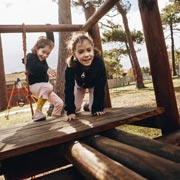
A recent UK study found that just 5 minutes of outdoor exercise per day, in a natural environment, improves the wellbeing, mental health and self-esteem of youngsters.

Outdoor Play Supports the EYFS Curriculum

Outdoor playing and learning covers many areas of the Early Years Foundation Stage ('EYFS') framework, including Physical Development.All these outdoor activities also support the early years curriculum. Outdoor playing and learning covers many of the areas outlined in the Early Years Foundation Stage (‘EYFS’) learning and development framework, which is prescribed for all childcare settings in England. Specifically, outdoor play helps children in at least four of the seven key areas of the EYFS including:
  • helping immensely with ‘Physical Development‘, one of the ‘prime’ areas of focus within the EYFS;
  • helping with ‘Communication & Language Development’, another prime area in the EYFS;
  • supporting ‘Personal, Social and Emotional Development‘ (PSED), the third of the three prime areas of the EYFS;
  • contributing greatly to ‘Understanding the World‘, one of the specific areas within the EYFS framework.
  • Outdoor play can even help children with ‘Mathematics‘ (another specific area of the EYFS) in some situations.
    (Learn more about the Early Years Foundation Stage framework and curriculum here).

Clearly, outdoor play is hugely beneficial to children— in a multitude of ways — so, we encourage parents, carers or guardians to take the benefits of outdoor play into consideration for children under their care.

Safety Considerations

Children’s safety and wellbeing is paramount, of course. Therefore, any outdoor play, particularly when it involves young children, should be undertaken only under the close supervision of a responsible adult. It’s even more crucial when children are playing outdoors, as there are many extra hazards too look out for.

Outdoor Play at our Nursery & Forest School in Clayton-le-Woods, Chorley

Little Acorns Nursery, Clayton-le-Woods, ChorleyOur outstanding Nursery in Clayton-le-Woods is also a Forest School, giving under-five children the very best start in life. Childcare in the Chorley, Central Lancashire region simply doesn’t get any better than at Little Acorns, as recognised independently by an Excellent Ofsted rating and an incredible nursery award. We’re also near Clayton Green and Clayton Brook, so if you are looking for the best nursery and pre-school in any of these areas, please get in touch. We’d love to show you and your child around, so you can see the setting in action for yourselves.

15-30 Hours of Free Childcare for 2, 3 & 4-Year-Olds (A Rough Guide)

Parents are wise to research & choose the best setting for their childChildren living in England are very fortunate to have their early years childcare supported financially by a variety of Government funding schemes. The 3 most important, popular and widely-available schemes are:
  • 15 hours per week of free childcare for eligible 3 & 4-year-olds;
  • 30 hours per week of free childcare for eligible 3 & 4-year-olds;
  • 15 hours per week of free childcare for eligible 2-year-olds.

Little Acorns Nursery School supports all three schemes for families who have been successful with their funding applications.

This free childcare can really help families, especially parents who wish to return to work and those wishing to improve their standard of living. With more people working, it also benefits the economy, of course.

Perhaps most importantly, Government funding of early years childcare greatly helps children. Studies have shown that children who receive a good early years education, for example at nursery or pre-school, really do benefit. That’s in both the short term and the long term. A Department for Education study showed that children attending high quality early years education settings benefit socially, behaviourally, cognitively and, of course, educationally. Indeed it’s abundantly clear that early years education gives children a very healthy head-start so they can really hit the ground running by the time they start school around the age of 5. Many of the benefits of early years education are, as we said before, much longer-lasting, even into adulthood. Perhaps we’ll cover more detail on that in a future post. Either way, though, it’s clear that this financial support from the Government is incredibly important.

A high quality early years education has many short and long-term benefits for childrenLet’s look at each of the schemes …

Please note: in all funding cases discussed here, the Government funding is paid direct to the setting (not the family) and strict rules apply to settings in order to be eligible for the funding. Little Acorns Nursery School qualifies on all counts and welcomes families whose childcare is funded in this way.

Free Childcare for 3 to 4-Year-Olds

15 Funded Hours for Children Aged 3-4

The great news is that all children aged 3 to 4 living in England are eligible to receive a total of 570 free hours of childcare per year. Simple! And there are no tricky hoops to jump through. The 570 hours are usually taken as 15 hours per week spread over 38 weeks, although it’s sometimes possible to spread it out in a different way if the childcare setting agrees. One of the great things about this Government scheme is that it is not means tested. Whether parents are employed, self-employed or unemployed does not matter. Similar schemes are also available in Scotland, Wales and Northern Ireland, by the way.

Children using the scheme can begin at an approved childcare setting in the term that follows their third birthday. Terms usually start in early January, April or September. They can continue benefiting from the free funded hours when they become four years of age. It only ceases once they reach “compulsory school age” and begin full-time education at school in Reception year. Compulsory school age is effectively the first day of the January, April or September term following their 5th birthday (whichever falls soonest after that birthday).

30 Funded Hours for Children Aged 3-4

Eligible children aged 3-4 can benefit from 15 to 30 hours of free childcare funding each weekTaking the above scheme a step further, eligible families are able to top up the standard 15 hours per week with an additional 15 hours of free childcare in specific circumstances. In effect, this can double the child’s free childcare hours from the standard 570 hours to 1140 per annum. These are usually taken as 30 hours per week over 38 weeks although, again, some childcare settings may be able to be flexible and to spread the hours out in a different way.
Eligibility for the extra hours depends on a few factors, although they are not so restrictive that they disallow most families — far from it. The factors include things like whether the child lives with the parent who is claiming (i.e. they must), whether the parent/their partner is working (they should be) and whether they are earning the equivalent of at least 16 hours per week at the National Living (or Minimum) Wage, while at the same time not earning above £100k in the current tax year. These are just a few examples of the eligibility criteria and it’s surprisingly easy, for many, to qualify for the extra funded hours. Check if you’re eligible for 30 hours of free childcare for 3-4-year-olds here.

Free Childcare for 2-Year-Olds

15 Funded Hours for 2-Year-Olds

Eligible children aged 2 can benefit from 15 hours of free childcare funding each weekUnder certain circumstances, children aged just two can have some of their childcare funded by the Government too. However, it’s much more restrictive for this age group. If successful, though, the Government will fund up to 570 hours of childcare for a two-year-old over the course of a year — that’s significant and could really help mothers or stay-at-home fathers get back to work sooner. As with the 3 & 4-year-olds, the 570 hours is usually taken as 15 hours per week over the course of 38 weeks, but some parents may wish to ask their childcare provider if it’s possible to spread it out in a different way.

The funding is available for eligible children to begin their childcare in the term after they reach the age of two. In other words, their birth date governs whether they will start in the January, April or September term.

In order to qualify for the 570 funded childcare hours, the two-year-old must fall into an ‘additional needs’ category, or their parent(s) must be receiving one or more qualifying benefits from the Government. Check your eligibility for free childcare funding for 2-year-olds here.

Apply For Free, Funded Childcare Hours Here

After checking eligibility for any of these childcare funding schemes, you simply need to contact your local authority to apply.

Apply for an Outstanding, Award-Winning Chorley Nursery

An outstanding childcare providerLittle Acorns Nursery, Clayton-le-Woods, ChorleyIf you live or work in the Chorley or Clayton area of Central Lancashire, Little Acorns Nursery School would be a natural first choice for your weekday childcare. Ofsted rate the nursery as outstanding and the setting was the outright winner of a major National nursery award. High quality childcare doesn’t get any better than this, so please do consider us for childcare of if you have a baby and child aged up to five and want to give them the very best start. The nursery and pre-school is in Clayton-le-Woods, close to Clayton Green, Clayton Brook and Chorley. It is also a Forest School setting, so children get to enjoy and learn from everything that nature has to offer. If you are looking for childcare excellence in a warm, inviting and nurturing environment, please get in touch. We look forward to hearing from you …

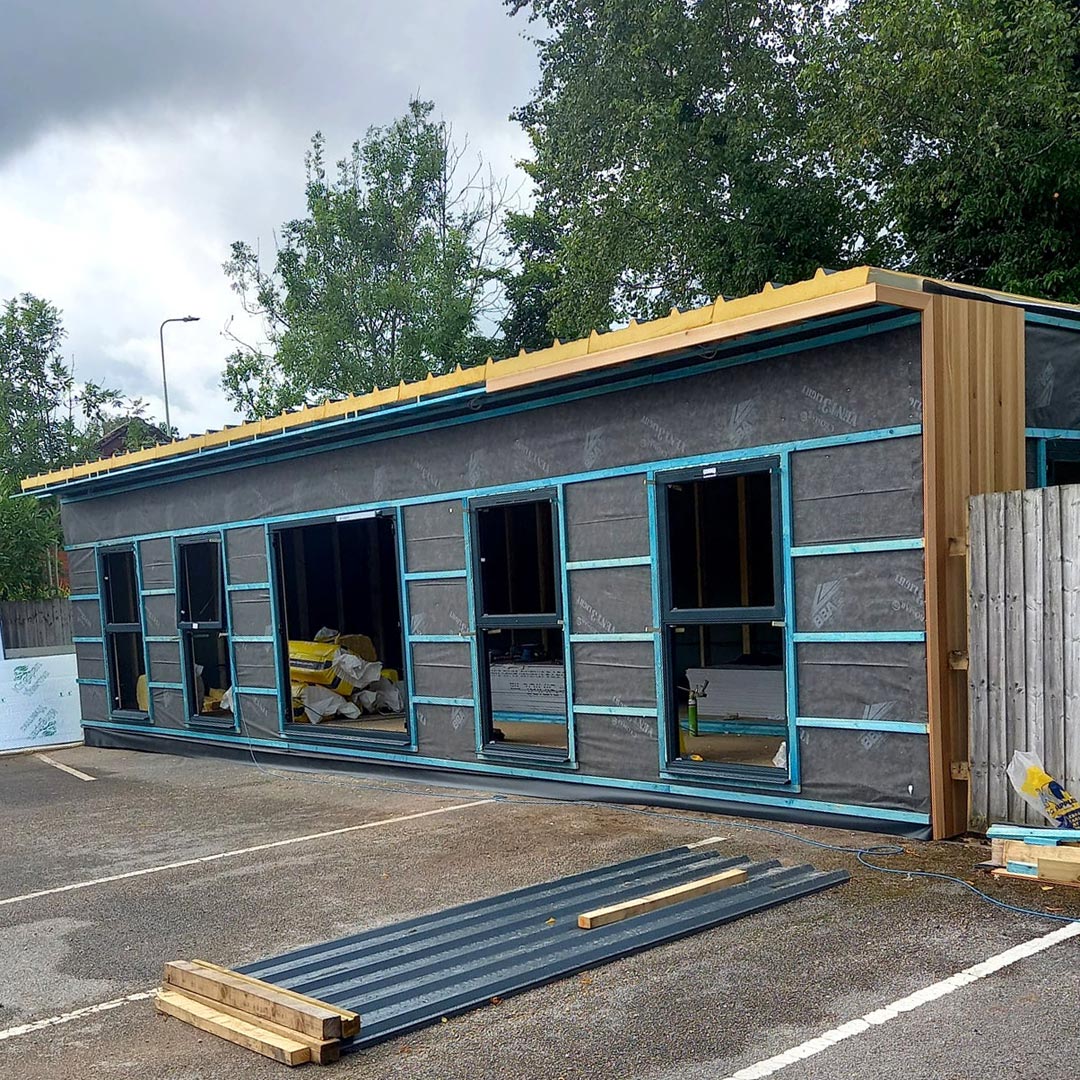
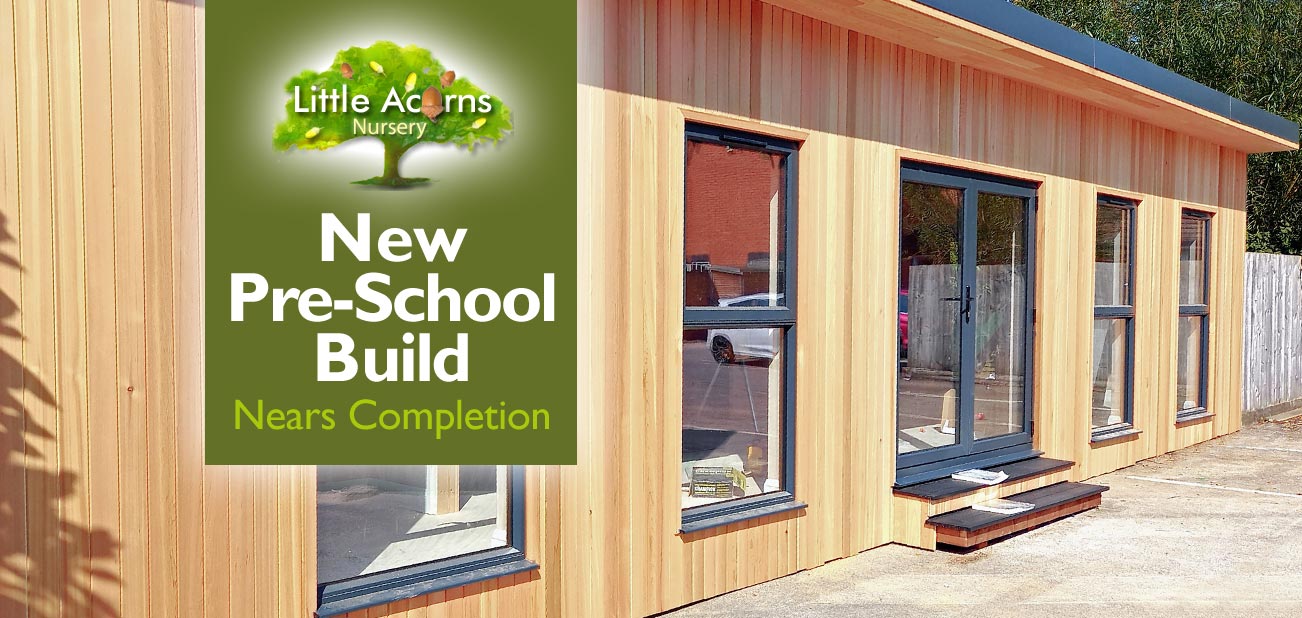
New Pre-School Build Nears Completion

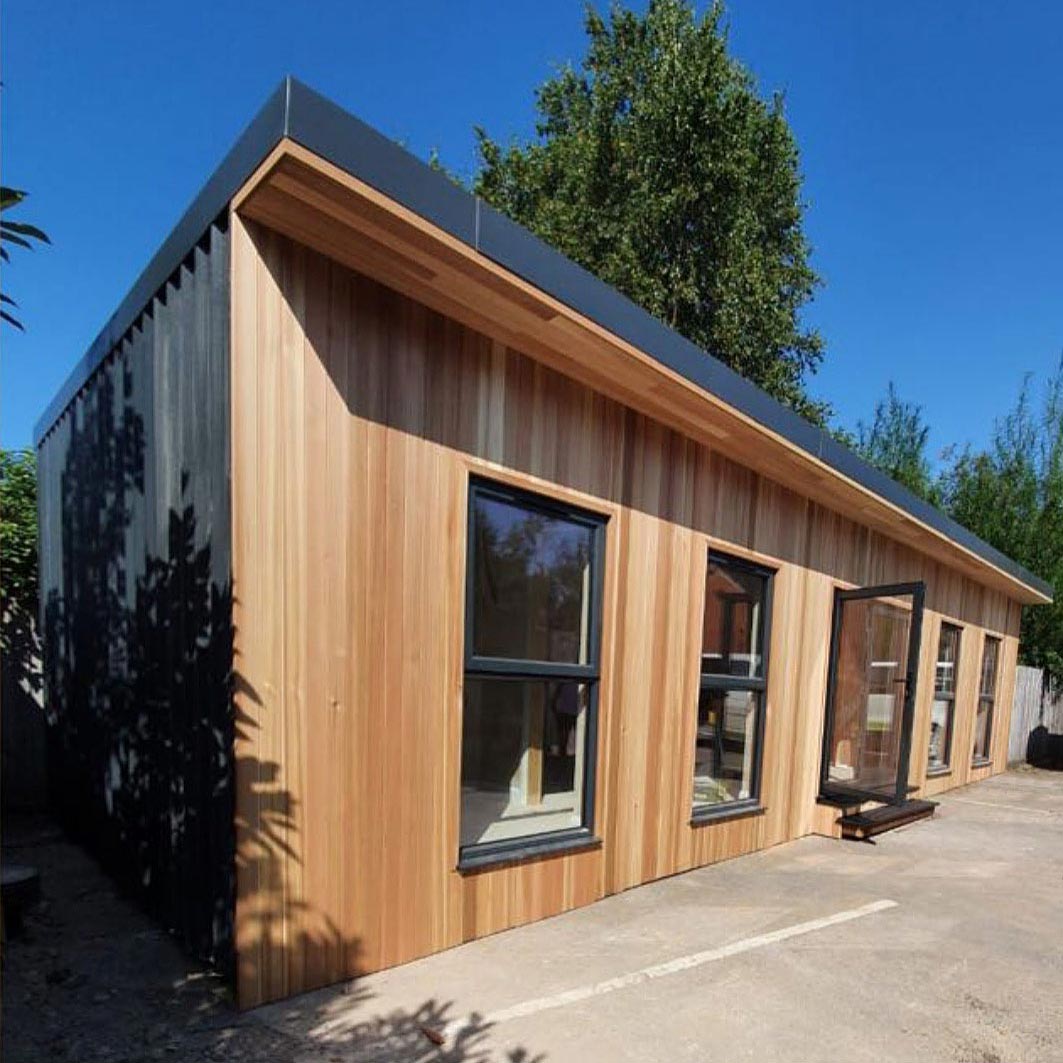
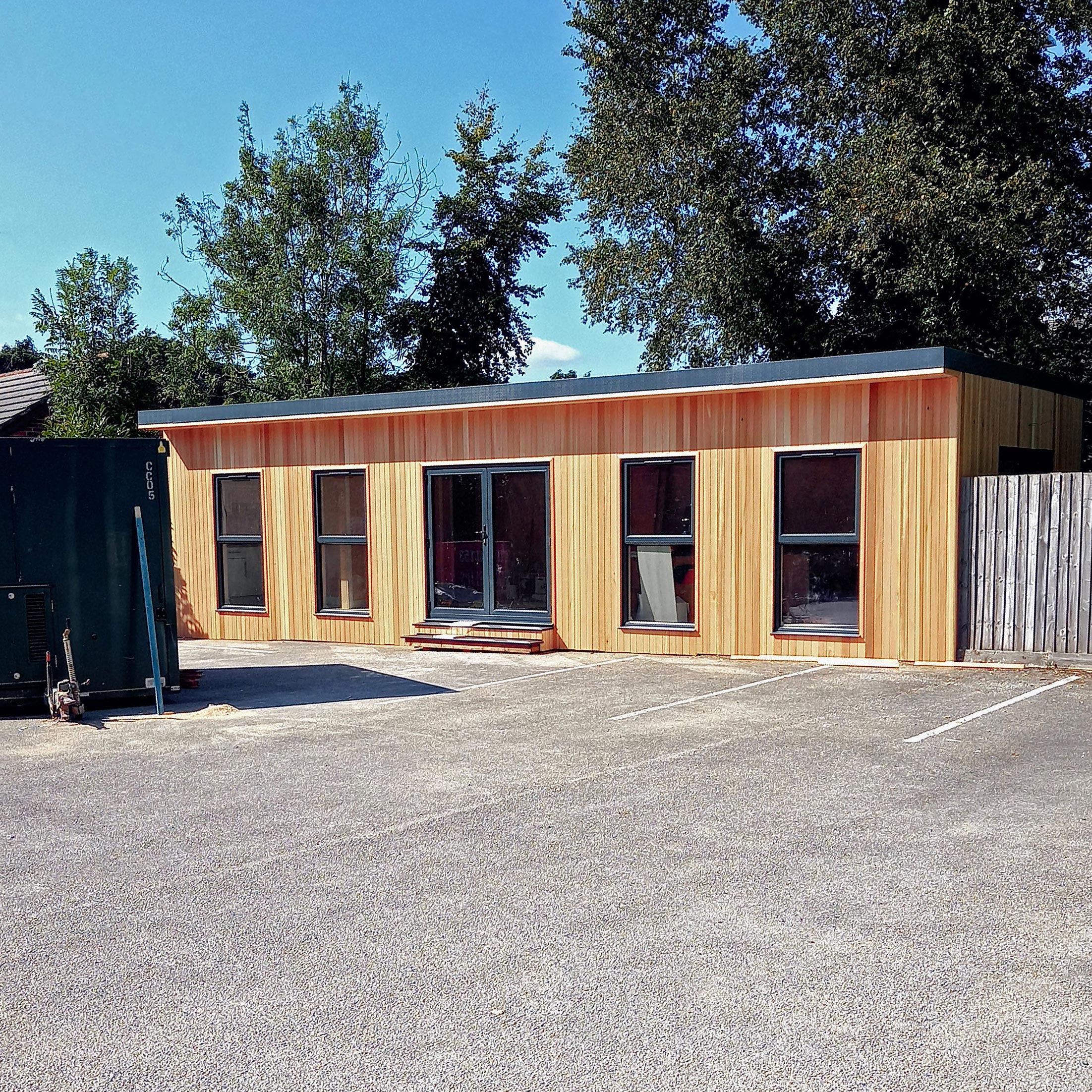
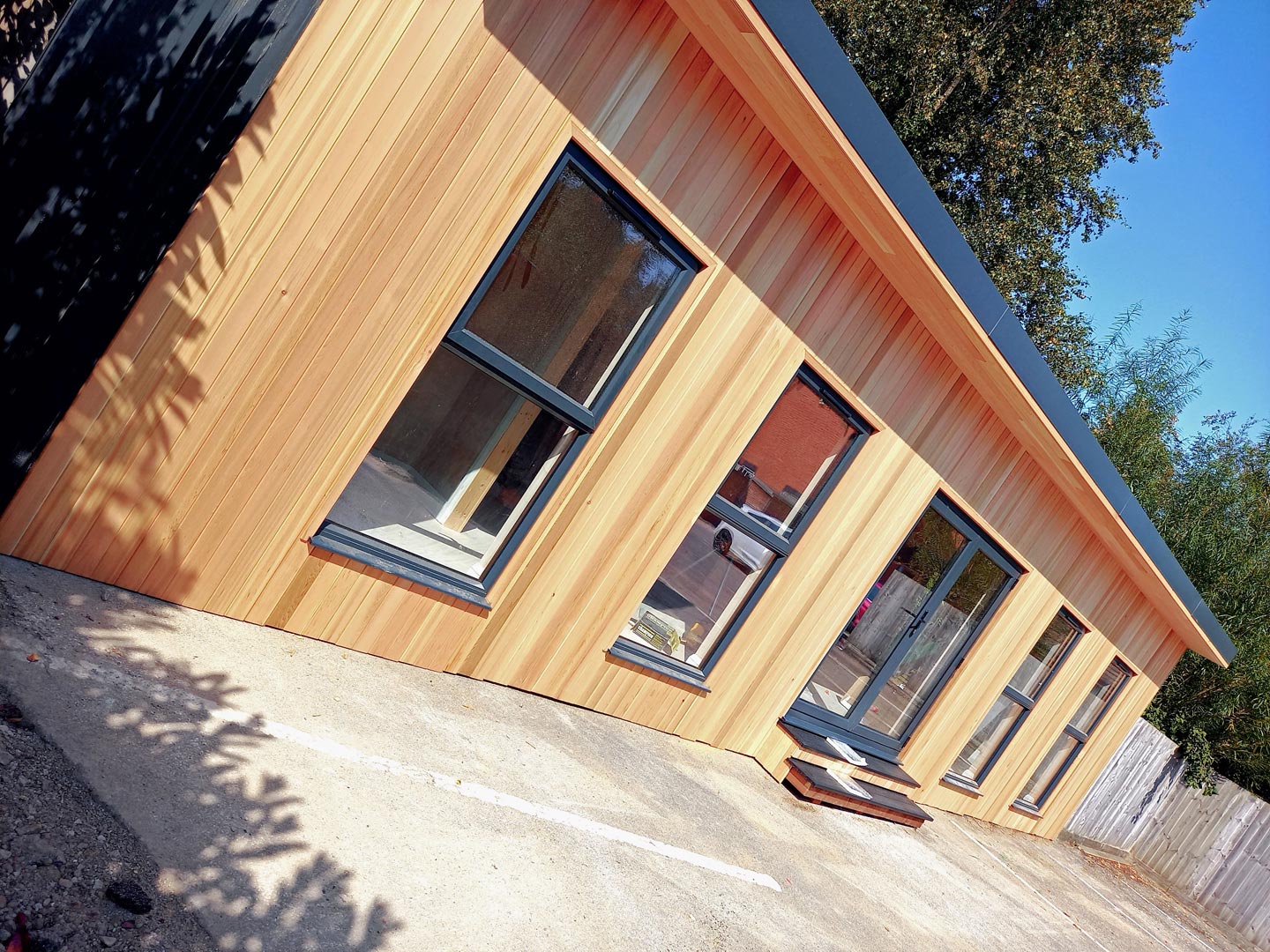
Our lovely new pre-school build with timber finishThe nursery owners and staff are very excited to show you the new pre-school build, which is making great progress. Take a look at the photographs to see just how good it’s beginning to look, especially now that the high quality timber cladding is almost complete. This is going to be such a lovely new space for the children play and learn in.

A New Home for Our Pre-School & Forest School

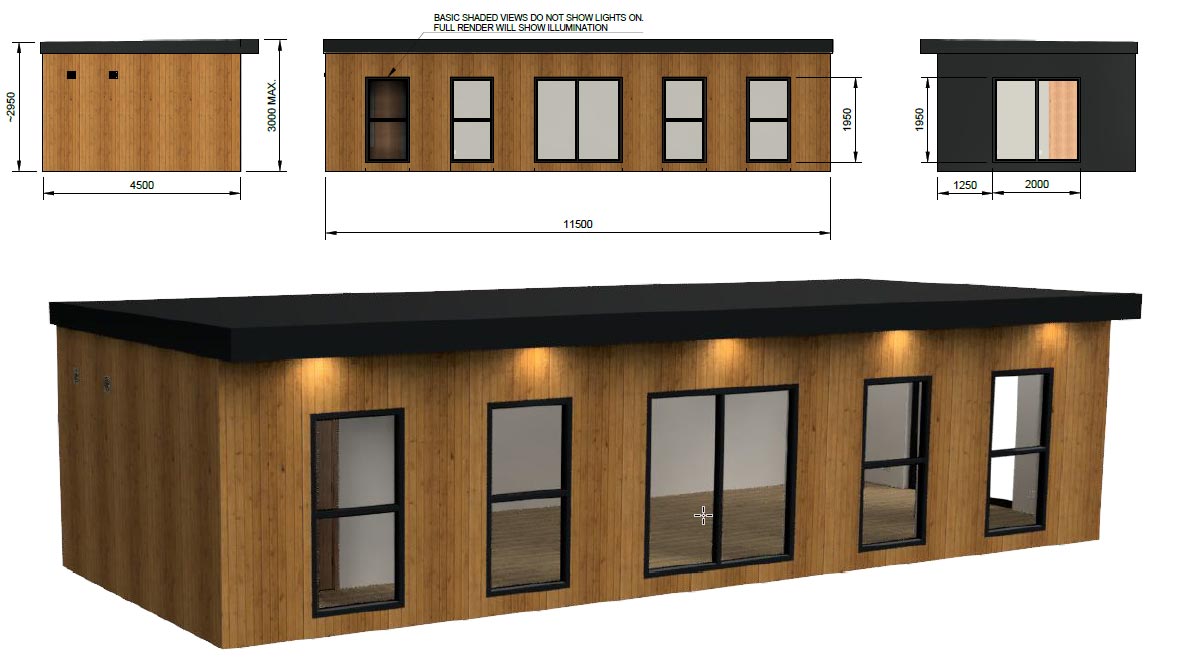
The new build is going to be used as our pre-school area and also as our Forest School unit. So, a lovely timber finish is rather apt when you think about it. Our children will also find its attractive design and finish very appealing and much more exciting than a standard, brick-built unit. The building even has its own kitchen area and toilet facilities, so will be very self-contained. However, it has lots of large windows and doors to let the natural light in and will allow easy, free-flowing access for outdoor play when appropriate.

The pre-fabricated, modular building under constructionElevations and CGI view of the new pre-schoolBeing a modular, timber-framed construction means this new pre-school build has been far faster to build than a traditional approach. That, together with the fact that most of it was pre-fabricated in modules off-site, means that there has been minimal disruption, noise or safety concerns during construction. Indeed, we’d like to say a huge ‘thank you’ to the team at Smart Modular who have done such a wonderful job so far. We love it and can’t wait to see how the inside looks when it’s finished.

One of the UK’s Most Outstanding Nurseries & Forest Schools (Clayton-le-Woods, Chorley)

Front view of the new pre-school buildingAt Little Acorns, we cater to children’s abilities. Our high quality staff focus on those rather than what’s expected for their particular age. With a dedicated learning and development plan customised to the abilities and strengths of each individual child, they’re able to become the very best version of themselves during their time with Little Acorns. With the arrival of the new pre-school building, they’ll be even more likely to achieve personal bests in each area. And they’ll be even more ‘school ready’ by the time they complete their time with us, to move It will also be our new Forest School unitsmoothly on to reception year at school.

As the outright winner of a major National nursery award and with a glowing Ofsted report that confirms that our childcare provision is as good as it gets, Little Acorns Nursery is clearly one of the UK’s most outstanding nurseries. The nursery is based in Clayton-le-Woods, near Clayton Green, Clayton Brook and Chorley and the new pre-school building will soon allow room for some additional nursery places for under-fives. Little Acorns Nursery, Clayton-le-Woods, ChorleyThat’s great news for Chorley and Central Lancashire parents who want the very best start for their children and who also like the idea of their child benefiting from a Forest School setting. If our unrivalled quality of childcare sounds appealing, please get in touch as soon as possible to avoid possible disappointment:


Exercise & Active Play for Under-Fives
A healthy lifestyle is crucially important for health and wellbeing at any age, but it’s even more important in the early years. At this age, children are still at a critical time in their physical and mental development. We wrote last month about the need for healthy eating for toddlers and preschoolers and now follow this up by exploring the importance of exercise and active play for under fives.

The Importance of Exercise for Under-Fives

Active play has many benefits to under-fivesGenerally speaking, under-fives should be encouraged to be active. There are many benefits of this including remaining physically fit, getting to know and enhancing physical abilities, honing motor skills (fine and gross) and improving coordination and balance. In addition, it helps the very young to develop visual and sensory skills. Physical activity is also part and parcel of the development of new neurological pathways in the brain. All these skills and benefits will become increasingly important as children grow, develop and become ever-more active and independent.
Exercise for Babies — Tummy Time

Exercise for babies comes in the form of light, active play. At this early age, even starting as newborns, they can begin via floor activities known commonly as Tummy Time. Here, the supervising adult places them on their stomach on a suitably comfy, safe and soft area of the floor and encourages them to move their head, arms and legs.

Close supervision is essential for your baby’s safety and, of course, the baby must always be awake when they’re in this ‘prone’ position

Allowing babies to move on their tummies will help to strengthen limbs, neck, shoulder and back muscles and also help the infant to develop their motor, coordination and visual skills. It’s also believed to help babies avoid ‘positional conditions’, including the development of skull deformations and neck problems. As we mentioned before, it even helps babies’ brains to form new neural pathways.

Tummy time should last only 3 to 5 minutes when they first start as young babies, with the infants attempting it only 2 to 3 times over the course of each day initially. As they grow towards the age of 12 months, this can be slowly increased to suit the baby’s increasing strength and physical abilities. Eventually, the baby will be able to roll over sideways in both directions, be able to sit and self-direct — and may indeed be crawling by the time they’re around 7 to 9 months of age.

Exercise for Toddlers

By the time they are toddlers (1-2 years old), they will usually have mastered all of the above and be adept at self-directing, grasping, pulling, pushing and moving around unaided. Indeed, toddlers should now be active each day for around 3 hours in total (split across a few sessions). Now they’re this age, toddlers’ active play and exercise can include light activities such as standing up, playing actively, rolling and moving around. It should also include more energetic activities (safely – so supervision and a safe environment are needed) like running, hopping, skipping and jumping. Activities like ball games are also great at this age, as are use of appropriate climbing frames and even riding tricycles if they’re able to do so safely.

Exercise for Preschoolers

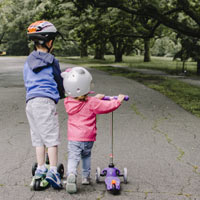
Dancing, swimming, scooting, climbing, chasing, cycling and energetic outdoor activities are great activities for preschoolers.Once they reach the age of 3 to 4 (preschoolers), 3 hours of physical activity is an ideal daily minimum. Now that they’re older and more confident in their physical skills, they can continue with the toddler activities but add more complex and moderately vigorous options to their play. Dancing, swimming, scooting, climbing, chasing, cycling and energetic outdoor activities are good examples.


Avoiding Too Much Inactivity (… & TV!)

What’s equally important is to avoid letting children remain inactive for long periods of time. Hours each day spent in front of screens like tablets, mobiles, games consoles and TVs is not good for them. Moreover, doing so for long periods when they’re at such formative ages sets up a dangerous pattern of behaviour that might be hard to break. It could also lead to health and wellbeing issues like becoming overweight or even obese. In fact, a staggering 20% of children are overweight or obese before they even start school, according to NHS data. What’s more, they say that 9 out of 10 children aged between two and four are not doing sufficient levels of physical activity to meet recommendations from the UK’s Chief Medical Officers. Worrying statistics!

Exercise & Active Play at Little Acorns Nursery, Chorley

Babies, toddlers and preschoolers learn through play at Little Acorns Nursery. This means that physical activity comes naturally, forming a key part in keeping children active and adequately exercised as they develop. Indeed, it’s all embedded as part of the nursery’s EYFS curriculum, particularly in the Physical Development module. As such, children use the huge variety of physical activities on offer at the nursery to improve mobility, coordination, balance, physical fitness, hand-eye coordination, agility, physical strength and so on. This is all done through a learning and development plan that’s tailored to the strengths, weaknesses and preferences of each individual child. The Key Person is a member of staff assigned to oversee the progress of each child and goals are set and milestones recorded. In this way, every child will achieve personal bests during their time with Little Acorns, becoming well-rounded, ‘school-ready’ individuals by the time they’re five.

Nursery Places Available in Clayton-le-Woods, Chorley

Little Acorns Nursery, Clayton-le-Woods, ChorleyWe sometimes have a few places available at our nursery in Clayton-le-Woods, near Clayton Green and Clayton Brook, Chorley. Do get in touch if you’d potentially like a place for your son or daughter. As well as being the outright winner of a stunning National award, it’s one of only a few Lancashire nurseries recognised by Ofsted as Outstanding and is also a Forest School. This allows your child to also enjoy and learn from everything that nature and the outdoors have to offer. Register with us if you are interested, or contact us while nursery places are available — we’d love to hear from you. See the following options:

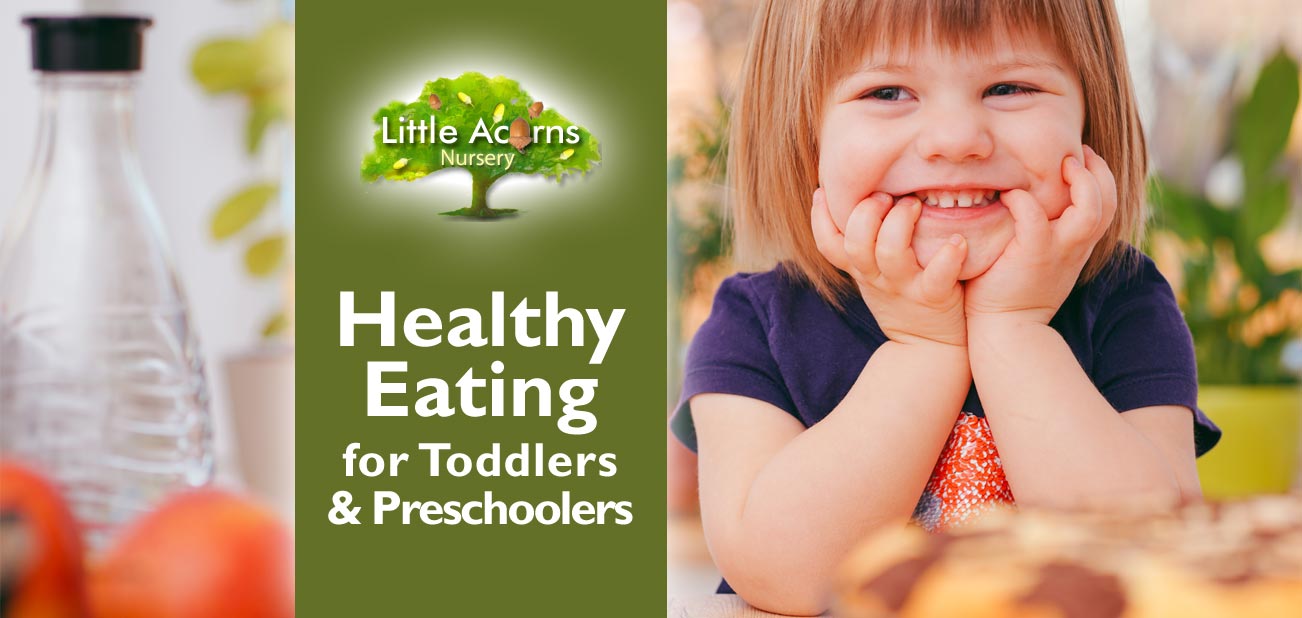
Healthy Eating for Toddlers & Preschoolers

Eating a healthy, balanced diet is incredibly important for under-fives as they're still growing & developing.Eating a healthy, balanced diet is important at any age. However, during their formative years when they’re still growing, it’s even more important for under-fives. Their young bodies and brains are still developing, so getting the right balance of food types, vitamins and nutrients is essential in order to maintain optimum health, cognitive function and even sufficient energy levels. (Regular exercise is also essential, of course – however, we’ll cover that separately in a future post).

The Benefits of a Healthy Diet

The benefits of maintaining a healthy eating regime are far-reaching and important, especially for young children. At this age, it’s important for them to get into good eating habits rather than bad ones. So, setting them on the right path at an early age is essential. As well as feeding their bodies and brains with everything they need to properly develop, some of the significant benefits of healthy eating include:

  • Improved cognitive function and attention, with all the leaning benefits that these will bring;
  • Sufficient energy levels to undertake all their daily tasks;
  • A greater chance of avoiding certain diseases in later life, potentially including high blood pressure, diabetes, heart problems and even cancer;
  • Maintaining more even moods;
  • Maintaining a more healthy body weight and, through so doing, avoiding potential obesity. Avoiding becoming obese also leaves them less prone to bullying;
  • A greater sense of self-image and self-esteem, leading to greater self-confidence;
  • Overall, improved mental and physical wellbeing.

Children who stay a healthy weight tend to be fitter, healthier, better able to learn, and more self-confident.That’s a huge and important list of benefits. Advice from Public Health England also suggests that exposing children to a wide variety of different foods from an early age not only gives them access to greater diversity in what they eat, but is also likely to make children more accepting of new foods as they grow older. And, of course, that greater diversity in food types means a more diverse range of nutrients, vitamins and minerals will be consumed.

“Children who stay a healthy weight tend to be fitter, healthier, better able to learn, and more self-confident.” (NHS)

What Should Under-Fives Eat & Drink?

A good rule of thumb for under-fives is to consume three meals, 2-3 healthy snacks and 6-8 drinks every day. It all needs to be part of a balanced diet, though, using high quality and ideally fresh ingredients if possible.

Drinks

Aside from young babies who will, of course, be drinking milk (we’ll write separate posts about milk and weaning in due course), under-fives and preschoolers should be drinking water and sometimes milk, 6-8 times each day. Drinks rich in added sugar should be avoided and even natural fruit juice, if given, is better when significantly diluted. That’s primarily so as to avoid tooth decay that can otherwise be caused by the natural sugars and acids within the fruit juice.

Food

Children should try to eat something from each of the four main food groups every day.As part of a healthy diet, children should try to eat something from each of the four main food groups every day. These are:

  1. Fruit & vegetables, which contain many beneficial nutrients, for example Vitamin C. Aim for 5 portions per day, each about the size of the child’s cupped hand or fist. If your child is still hungry after eating their set meals, giving them additional vegetables is a great way to satiate their hunger without loading them up with unnecessary calories or sugar.
  2. Protein, which contains not only essential protein but also iron, zinc and many other nutrients. Sources of protein include fish (N.B. include oily fish occasionally), meat, eggs, nuts, pulses, tofu and soya. Aim at 2 protein portions per day, with each portion being about the size of the palm of the child’s hand.
  3. Starch, which is available from potatoes, pasta, bread and rice cereals. Where wholegrain versions of some of these are preferred, they should be introduced only gradually. One portion of these starchy foods is about the size of the child’s cupped hand. Starch gives growing children energy along with essential nutrients like calcium and Vitamin B.
  4. At Little Acorns we are serious about playing our part and serve up healthy, balanced meals each day to our children along with suitable drinks and healthy snack options.Dairy products, which give children much-needed calcium, Vitamins A and B, potassium and more. Aim for 3 portions of dairy products per day. Examples include milk, yoghurt and cheese. Use full-fat options for toddlers and then, from the age of 2, switch to semi-skimmed varieties.

The NHS also recommends that children aged 6 months to 5 years should also take suitable vitamin supplements to boost Vitamin A, C and D in particular. Children with vegan diets would also benefit from a Vitamin B12 supplement.

Healthy Eating at Little Acorns Nursery, Clayton-le-Woods, Chorley

With almost a third of UK children aged 2 to 15 now being overweight, eating a healthy, balanced diet is becoming more and more important. Parents, carers, schools, childcare professionals and nurseries all need to play their part in keeping children on track, with healthy eating habits and lifestyles.

Little Acorns has received a Recipe 4 Health Award in recognition of the healthy food options offered at the settingAt Little Acorns we are serious about playing our part and serve up healthy, balanced meals each day to our children along with suitable drinks and healthy snack options. Breakfast, lunch, afternoon and teatime snacks are all provided and included in our standard nursery fees. Food is prepared each day by Judy, our wonderful in-house chef, using the highest quality, fresh ingredients, sourced from local suppliers. Food allergens are extremely carefully monitored and managed. Any special diets, e.g. vegan or vegetarian, are also catered for as needed — simply forewarn us about any specific requirements and we’ll be happy to accommodate them.
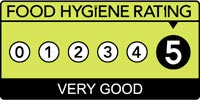
Our nursery has a 5 Star food hygiene ratingLittle Acorns Nursery has a 5 Star Food Hygiene rating and also recently received a Recipe 4 Health Award in recognition of the healthy food options that we offer at the setting. That’s in addition to our amazing NMT Individual Nursery Award.

A Nursery Place in Clayton-le-Woods, Chorley, Lancashire

Little Acorns Nursery, Clayton-le-Woods, ChorleyIf you’d like a nursery place for your child in a multi award-winning nursery in Clayton-le-Woods, near Clayton Green and Clayton Brook, Chorley, do get in touch. Little Acorns is an Outstanding Nursery and is also a wonderful Forest School. So, if you’d like your little one to attend the very best nursery in Central Lancashire, register your interest while nursery places are available. Select an option below:

Days out near Clayton-le-Woods, Chorley

Little Acorns Nursery School is located in Clayton-le-Woods, Chorley. This is a wonderful location with great amenities, attractions, outdoor spaces and leisure facilities all within a short distance. In today’s guide, we explore some of the more interesting places that local families can visit nearby, perhaps for a day out. There are some great ideas below and every one of them receives top reviews from previous visitors:

Cuerden Valley Park

Cuerden Valley ParkRight alongside Clayton is the lovely Cuerden Valley Park, an award-winning natural open space. Just over a mile away from the nursery, it covers 650 acres. Its wonderful beauty includes parkland, farmland, natural open spaces, flower meadows, lakes, woodlands, the River Lostock, a huge variety of wildlife and even orienteering trails. The park also boasts its own modern visitor centre with a lovely café offering indoor and outdoor seating with hot and cold food and refreshments. Cuerden Valley Park is well worth a visit!

Kem Mill Ruins

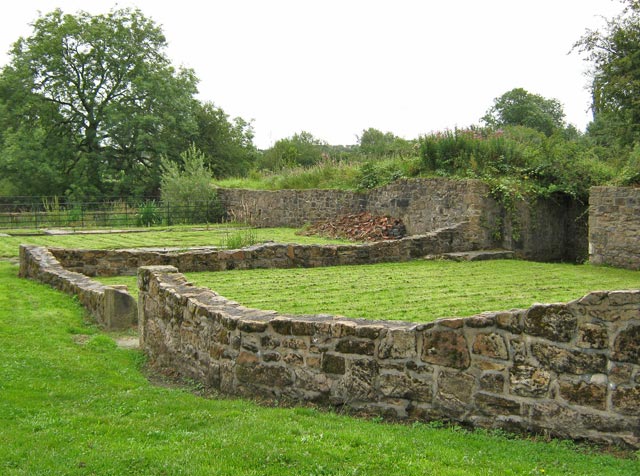
Kem Mill RuinsJust 1.4 miles to the South of Clayton and our nursery, also along the edge of River Lostock, are the ruins of Kem Mill. These are just North of Whittle-le-Woods. These are well worth a visit if you like walking in the natural world, enjoy local history or are a dog-walker. The old mill’s footprints are still clearly visible and the history of it can be learned via information signs.

The British Commercial Vehicle Museum

The British Commercial Vehicle MuseumThe British Commercial Vehicle Museum is another high quality place to visit if you live near Clayton-le-Woods or the Chorley area. It’s located just 2.3 miles from Little Acorns Nursery over at Leyland. As one recent visitor explained in a review, it’s a “fascinating museum with lots of informative display material and immaculately maintained vehicles.” These include early fire engines and vintage commercial vehicles, buses, lorries and suchlike. There are interactive displays and games, including an area for younger children and helpful, knowledgeable staff. The museum has a nice little gift shop and also a café. It gets great reviews, so is well worth a visit.

Worden Park

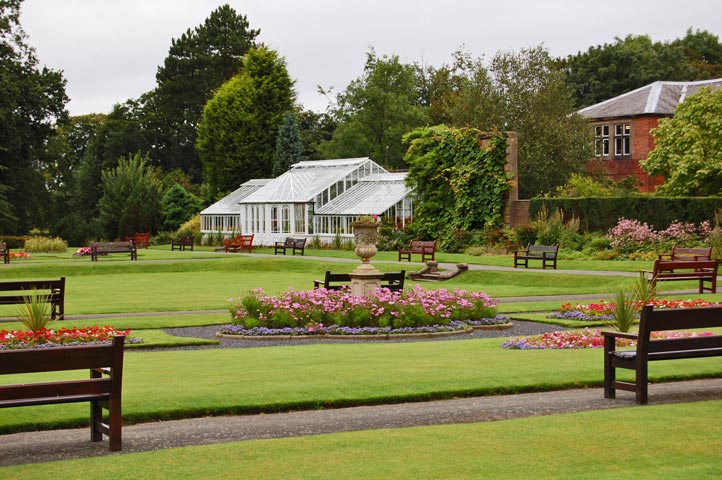
Worden Park is 3.4 miles west of our nursery in Clayton-le-Woods, in the southern outskirts of LeylandWorden Park is 3.4 miles west of our nursery in Clayton-le-Woods, in the southern outskirts of Leyland. It’s an attractive, natural, parkland space and includes bluebell woods, huge grassy areas and a wonderful children’s play area that features its own sensory area, zip lines, swings, climbing frames, slides and more. It’s a great park where children can enjoy the outdoors, ride bikes, play football and burn off energy. There’s a maze, a miniature railway, a walled garden and a crazy golf area. With lovely woods and streams too, it’s perfect for family outings, picnics and dog walks.

South Ribble Museum & Exhibition Centre

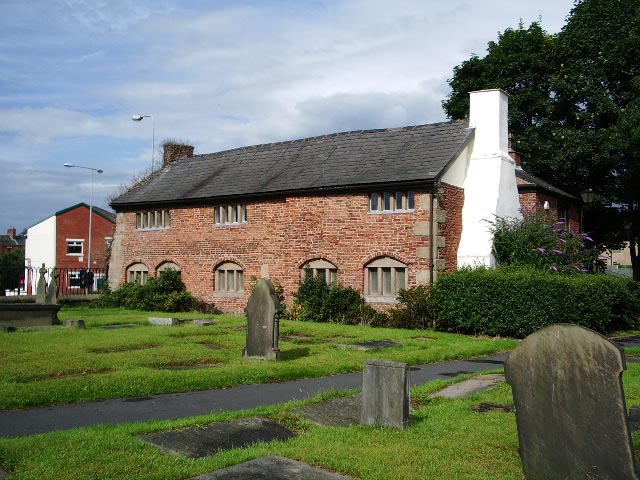
South Ribble Museum & Exhibition CentreThe South Ribble Museum & Exhibition Centre is another popular destination that also scores well in reviews. Located 2.8 miles from the nursery in Leyland, near Worden Park, and just a stone’s throw from Clayton-le-Woods, it’s housed in a restored, timber-framed, Tudor school house. It’s home to all manner of local historical information including photographs, graphics and and even Viking coins. Hopefully this will soon be open again, with monthly exhibitions reinstated, following temporary closure during the lock-down. Entry is free or by voluntary donation.

Turbary Woods Owl & Bird of Prey Sanctuary

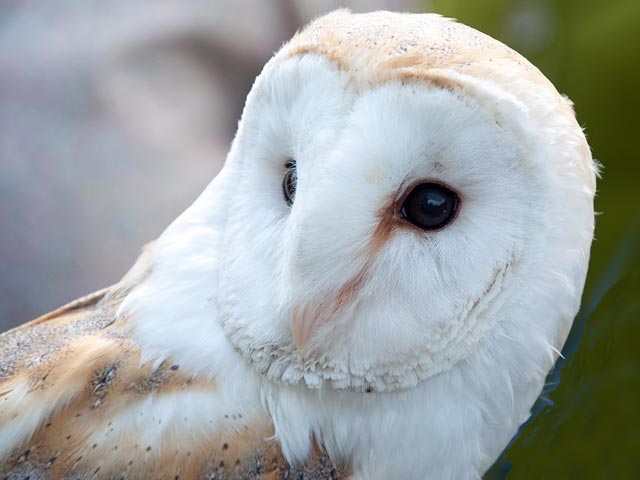
Turbary Woods Owl & Bird of Prey Sanctuary Turbary Woods Owl & Bird of Prey Sanctuary is 5 miles from the nursery, just north west of Clayton at Whitestake, Lostock Hall, near Prestonis 5 miles from the nursery, just north west of Clayton at Whitestake, Lostock Hall, near Preston. It is another excellent local attraction as well as being a great cause. Sheltered in a woodland setting, nearly 100 birds of prey live at this sanctuary and rehabilitation centre at any one time. Species include owls, falcons, hawks, eagles and even vultures, amongst others. The centre is a non-profit enterprise and is run by volunteers. It is open all year to the public, with flying displays (weather permitting) on most days at 12:30pm. As with all of the hand-picked places featured in this article, the sanctuary scores ‘excellent’ in visitor reviews.

Pike Stones

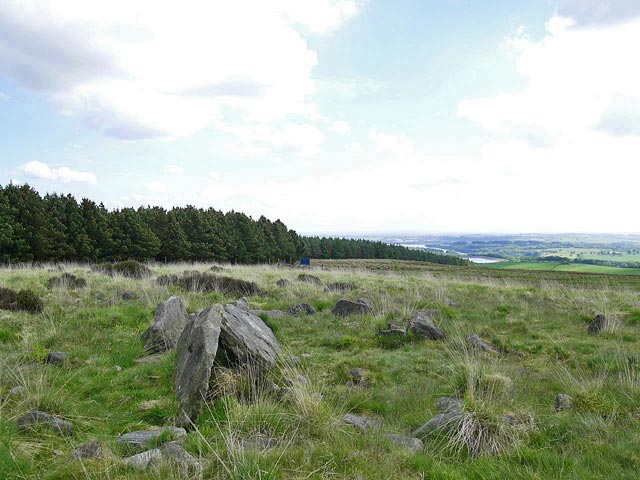
For those who are looking for the most ancient local history, Pike Stones is a Neolithic burial cairn located on Anglezarke Moor, Chorley, just 7 miles south east of Clayton-le-Woods. It’s the oldest man-made structure in the area and one of only two chambered burial tombs in the whole of Lancashire. Visitors can still see the five upright gritstone slabs which originally formed the burial chamber.

Excellent Transport Links

Transport links are fantastic for getting to and from the Clayton area. The A6 an M61 run North/South just a stone’s throw to the East, the M6 runs similarly to the West and the M65 runs East/West just to the North of Clayton-le-Woods. So, Clayton sits right in the middle of these major routes, making it incredibly easy to get to, from and around. Several train stations are also within just a couple of miles or so (Bamber Bridge, Leyland, Lostock Hall and Buckshaw Parkway stations).

An Outstanding, Award-Winning Clayton Nursery

Little Acorns Nursery, Clayton-le-Woods, ChorleyLittle Acorns is an award-winning daycare nursery for babies and under-fives in Clayton-le-Woods, very close to Clayton Green and Clayton Brook, Chorley. It’s also graded as An Outstanding Nursery by Ofsted and even has its own Forest School. Nurseries and pre-schools simply don’t get any better than Little Acorns Nursery so, if you’d like your baby, toddler or under-five child to attend the best nursery and pre-school in Clayton-le-Woods, Chorley and Central Lancashire, please get in touch to register your interest — while nursery places are still available. Please choose an option below:

Our EYFS Nursery Curriculum

The curriculum at our Clayton-le-Woods nursery adheres to what’s known as the Early Years Foundation Stage (‘EYFS’) framework. This educational framework is specified by the UK Government and its implementation is overseen and appraised by Ofsted. It’s down to individual nurseries like Little Acorns to implement the framework and we strive to do so in the optimum way. This is all achieved in a stress-free, relaxed way, almost entirely through active play. This approach makes learning natural — and immense fun!

“Children learn by leading their own play, and by taking part in play which is guided by adults.” (Department for Education).

The EYFS curriculum covers all the critically important areas of learning and development for babies (from birth) up to children aged 5. As such, it’s a perfect fit for children at Little Acorns Nursery.

The 3 Prime Areas of the Curriculum

There are 7 key areas within the early years curriculum. These include 3 ‘prime’ areas which, in turn, interconnect and enhance the remaining four — each helping to improve the other.

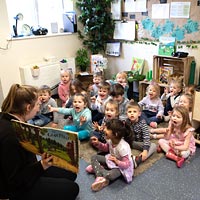
  • Communication & Language is the first of the three prime areas of our EYFS-based curriculumCommunication & Language is the first of the three prime areas of our EYFS-based curriculum. Without good communication and language skills, all other areas of learning could suffer, so these are critically important skills for children to master in their early years. Staff at the nursery therefore encourage rich communications between staff and children — and from peer to peer — from the very first day they join the nursery. Language and communication skills grow naturally to children through engaging, fun activities like role-play, story-telling and question-and-answer games. High quality books and other rich reading materials are also employed by staff to read with children in an interactive way. Using these kind of approaches helps children to learn new vocabulary and grammar, to improve reading and comprehension and to almost effortlessly broaden their language and communication skills as they grow.
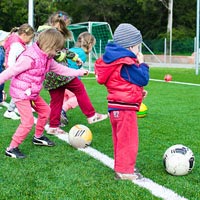
  • Physical Development is the second of the prime areas of the nursery’s EYFS-based curriculum. At this formative age, the young children are growing and developing rapidly, so their physical development pace is significant. That’s why nursery staff at Little Acorns will do everything they can to ensure optimal health, wellbeing, strength, Physical Development is the second of the prime areas of the nursery's EYFS-based curriculumcoordination and fitness among the children at every stage. This is all done incrementally through a physical development programme that’s custom-designed for each individual child. This tailored programme takes consideration of their natural abilities, preferences and, of course, any disabilities or limitations. As they grow, the programme of fun, physical activities will help every child to reach their own personal bests for traits like fitness, balance, coordination, hand-eye coordination, agility and spatial awareness. In turn these physical improvements will help with their general wellbeing and happiness. And, at all times, the children will have been having immense fun, making friends and improving social skills, self-confidence and more along the way.

  • Personal, Social & Emotional Development (‘PSED’) is the third of the three prime areas of our curriculum. The personal part of it aims to ensure that children can look after aspects of their lives themselves, independently managing personal needs like cleanliness, toilet training, healthy eating and so on. Personal, Social & Emotional Development (‘PSED’) is another prime area of our curriculumThe social and emotional aspects of it aim to help children fit in with adults and peers around them, support one another, themselves feel supported by others and together learn to manage emotions and behave in acceptable, appropriate ways. As they learn to do all of this, they will become more confident, feel rightly valued, more easily resolve any conflicts and form closer friendships with peers and create stronger bonds with staff. All of this will act as a social and emotional foundation to build everything else upon.

The 4 Additional ‘Specific Areas’ of the Curriculum

Running in parallel with the 3 prime areas, there are 4 additional areas of focus for nurseries like Little Acorns, which adhere to the excellent EYFS framework for their early years curriculum.

  • Literacy is key area of focus in our curriculumLiteracy is the first of the remaining four areas of focus. A curriculum would be sadly lacking if children didn’t end up literate at the end of study. Literacy is absolutely fundamental and will give each young child the very best start when they leave early years settings to start school. On the face of it, it’s all about reading and writing. However, getting these right will help with many other areas of learning. At Little Acorns, we encourage nursery children to take enjoyment from reading. After all, once they can read they will understand so much more about the world from non-fiction material and so much more about the possibilities of the imagination and creativity from fiction books. So, they have access to a wide, rich variety of reading materials. Grammar, spelling, punctuation, phonetics and overall comprehension of a huge variety of topics will all go hand-in-hand with active and regular reading. In a similar way, writing will benefit too, as the children learn to recognise the correct spelling, composition and sentence structure and so on. Exposure to our rich variety of books will feed their imaginations and help them to be more creative themselves. We also encourage our children to verbalise, for example by reading out loud to themselves and others in an interactive way. By so doing, speech, pronunciation and articulation also benefit, as does their confidence to speak up.

  • Mathematics is our fifth area of study within the core EYFS curriculum at Little Acorns NurseryMathematics is our fifth area of study within the core EYFS curriculum at Little Acorns Nursery. It’s another fundamental skill that children need to learn but, as with everything at Little Acorns, we make it fun. Through play and interactive sessions, children will learn the concepts behind mathematics, soon learning to distinguish things like odd and even numbers, number patterns and sequences, concepts like larger or smaller, wider or taller and more or less. Counting will first be mastered from one to ten, then in reverse, then extended to 20 or more. Concepts like volume, shape, measuring and space will also be included. So, by the time they leave our early years setting, they’ll have learnt the requisite maths skills and concepts that they’ll need in order to hit the ground running when they start school.
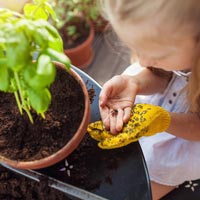
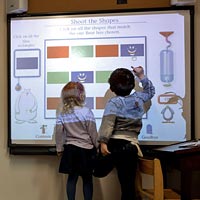
  • Understanding the World is our sixth key area of focus within the curriculum at Little Acorns Nursery in Clayton-le-Woods, Chorley. It’s a very broad but important area of study for the young children at the nursery and one that’ll stand them in good stead going forwards. Understanding the World is our sixth key area of focus within the nursery curriculumAfter all, there is so much around them and they need to understand it and to give everything they see context. With that in mind, we’ll help them to recognise, understand, describe and even sometimes draw what’s immediately around them. They will also learn about the technology they see and use around them. Our excellent Forest School also gives children ample opportunity to learn about the natural world and the flora and fauna nearby. The children will also learn about the more distant world through things like museum visits, local parks and visiting professionals from the emergency services and suchlike. They will also learn about other communities, both in the UK and abroad, including aspects like culture, beliefs and religions. Once again, having an excellent grounding, at such an early age, in the comprehension of the world will stand them in great stead going forwards.

  • Expressive Arts & Design is the final area of focus within our EYFS led curriculum at Little Acorns Nursery. It’s also one of the areas that children find most fun as it gives them the freedom to express themselves, be imaginative and creative, and even to get messy from time to time. Expressive Arts & Design is the seventh area of focus within our EYFS led curriculumA wide variety of media, equipment and tools are available to them at the nursery and activities encourage the children to get involved and to create. It’s not just art, though; the children can involve themselves in role-play activities, they can sing, dance, tell stories and perform. Their imaginations can run riot and be free as they can express themselves and their creativity in a rich variety of ways.

There will be some changes to the Early Years Foundation Stage guidelines starting in September 2021. In essence, the seven key areas remain the same but more emphasis will be put on early years language and vocabulary within those key areas. Full guidance can be downloaded here.

The Impact of the Curriculum for Children at Little Acorns Nursery

Little Acorns Nursery, Clayton-le-Woods, ChorleyThe EYFS led curriculum at Little Acorns nursery is in large part about helping them to be ‘school-ready’ by the time they reach the age of five. However, it also gives children the very best start in life generally. Every support is given to them to fulfil their own personal bests, reaching their optimum potential in every area of study, through personalised goal-setting, a ‘Key Person’ allocated to every child, continual test-free assessment and an important Progress Check between the ages of two and three. Getting it right in this way during their early, most formative years, is proven to vastly improve outcomes and life chances. So, it’s an incredibly powerful and important approach to their early years education. In a nutshell, it helps every child at Little Acorns Nursery to absolutely thrive.

A Nursery Place for your Child in Clayton-le-Woods, Chorley, Lancashire

If you are looking for a nursery or pre-school place for your baby or child in Clayton-le-Woods, or near Chorley in Lancashire, you really should consider Little Acorns Nursery. It is officially an ‘outstanding’ nursery according to Ofsted. We also have our own Forest School, so children can benefit hugely from everything nature and the outdoors has to offer. We were also the sole winner of best ‘Individual Nursery Award’ in the NMT Nursery Awards 2020 — so it would be extremely hard to find a better nursery or pre-school. If you’d like discuss a possible place for your baby or child at Little Acorns, we’ll be happy to help (N.B. spaces are limited, so please don’t delay). Select an appropriate button below to take the first step …


Why *Every Parent* Should Be Involved in Their Child's Education
Compelling evidence shows that there are enormous benefits for children when parents are closely and proactively involved in their education. Research shows that parents are the key to children's successIndeed, parents can be thought of as key to their children’s success, if they support children’s education in the right ways. We’ll go through exactly what that means, along with some of the many benefits, in this article.
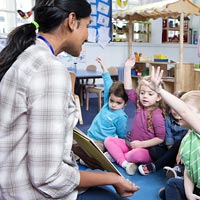
During the earliest years of schooling … students with active parents are almost twice as likely to succeed. (Pinantoan)

Additional research also concluded that children are statistically far more successful in school when their parents “invest time and place value on their children’s education.”

So, How Can Parents Help?

Children will benefit in a multitude of ways when parents involve themselves in the child’s education. That involvement can take many forms …

Parents should proactively research & choose the best setting for their childChoose the Right Setting

Researching and choosing a high quality nursery, pre-school, school and higher education setting, rather than simply accepting the ‘default’ choices, is incredibly important in its own right. Parents should be proactive when selecting educational and developmental settings for their children. Education settings need to be a good fit, of course. Also, though, they need to have good reputations, great feedback from previous and existing students and parents, an excellent track record and so on. If choosing a nursery, for example, is it rated as ‘outstanding’ by Ofsted? Does it have its own ‘Forest School’ where children can benefit from the natural world as well as having great facilities indoors? Are staff high quality, engaging and proactive when it comes to helping children to absolutely flourish, in every way? Parents of successful children will have checked all these things out in fine detail before making a choice.

Engaging With Staff

It's important for parents to liaise with education staff to monitor & help progressParents of successful, grade A students, will generally also have engaged with staff at nursery/pre-school and school. That includes at parents’ evenings, of course, but parents should also be fully abreast of their child’s progress at every point in between. Parents and staff need to talk and feed back to each other about each child under their care and, indeed, that’s exactly what we do at Little Acorns Nursery. This, and a personal development progress folder for every child, is all part of the EYFS curriculum at the nursery in fact. In this way, parents and staff can each see the bigger picture and identify where successes are happening for the child, or where more work is needed — including at home.
Help at Home

Armed with detailed knowledge of their child’s progress, strengths and weaknesses at pre-school, nursery or school, parents are then in a position to really help children at home. Where there is a weakness, the parent can help with extra guidance, knowledge and encouragement. The child in question can then more easily strengthen their skills and knowledge, making strong subjects even stronger whilst allowing weaker subjects and skills to catch up. In this way, and in tandem with education staff, every child can achieve personal bests in every single area. That’s amazing when you think about it.

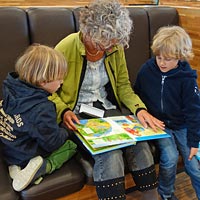
Parents can read with children (that’s a crucial area and will be the topic of a future post). That’s like gold dust in itself and has been shown to boost language skills by a staggering 20% all on its own.

Parents and even grandparents can help children understand homeworkParents can help children with homework too, of course. They can explain things that the child is perhaps confused or unclear about, in an unrushed, relaxed home environment. Parents can work through their approach to finding answers to questions and explain how they arrived at those answers. This, too, is like gold dust to an otherwise struggling child. It’s one of the reasons why the human race itself has come such a long way — through shared information.
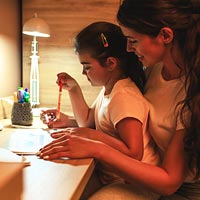
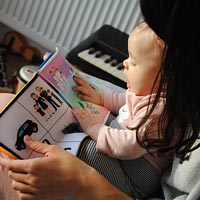
Parents can also help children to understand things like spelling, grammar, punctuation, pronunciation, phonetics and suchlike. With an adult available, many things can be clarified for the child. Parents can also, of course, spot test children in an informal way, to check that new information is being taken in and understood. Sometimes, of course, a child will need to read, or be told something, several times before it ‘sticks’ in their memory — and that’s fine.

Children who are given moral support and encouragement at home will be happier as well as being higher achievers. So, it’s not about being strict; it’s about support. The staff, children and parents are all part of a team that is working towards a shared goal.

In this way, every child can achieve personal bests in every area.

Give children a suitable environment for study at home

Parents should set aside an area in the house for the child to study in. It could be a quiet room somewhere, or an area of the child’s bedroom perhaps. Wherever it is, it should be peaceful, with no distractions, and contain everything the child needs to accomplish their studies, with somewhere for the parent to sit too. Somewhere safe and comfortable to sit, perhaps a desk when they’re older, some child-safe stationery items, paper and suitable light source, for example. Children will become used to using such an area to study in, with all the tools they need at their disposal so, in time, will find working easier and natural there.

The Benefits of Parental Support in Education

“Students with … parents operating in supportive roles are 52% more likely to enjoy school and get straight A’s than students whose parents are disengaged with what’s going on at school.”
(Pinantoan)

So, studies and data all point to children being higher achievers when parents are actively involved in their education. What else, though? What other benefits are there?

• The extra help they receive in core topics like English and Mathematics has a knock-on effect of helping them in every other topic.
• Learning topics and skills more thoroughly also helps to better prepare them for tests and to achieve better grades.
• With their better grades and higher achievement rates, children are likely to go on to better schools and universities, with a wider choice of courses available to them.
There are a huge number of life-changing benefits when parents proactively involve themselves in a child's education• In turn, that ultimately leads to better careers as adults, with higher rates of pay.
• Children with parental support in education are less likely to be stressed or anxious.
• They are often more confident individuals, with higher self-esteem.
• In turn, they are often happier individuals and therefore have a better quality of life.
• Everything they learn through this more rounded approach to education helps to improve other soft skills like critical thinking and problem-solving. It can also give them a good insight into the benefits of teamwork and cooperation with others.
• It’s also a great way for parents and children to form closer bonds and a feeling of mutual support. Indeed, that’s all a key part of a healthy family life.

So, it’s clear to see that close parental involvement in children’s education leads to a myriad of benefits for the child, with far-reaching and profound consequences. Improved outcomes is the really big hitter, of course. And those improved outcomes range across a huge swathe of the child’s life stretching from education and development right into adulthood, careers, wealth and quality of life. It’s nothing short of life-changing. Not many things in life can boast that kind of enormous impact, when you think about it.

At Little Acorns Nursery in Chorley

Little Acorns Nursery, Clayton-le-Woods, ChorleyAs mentioned earlier in this article, Little Acorns Nursery adheres to the Early Years Foundation Stage (EYFS) curriculum for babies and children aged up to five. In recognition of the importance of parental involvement in children’s education, a key part of that is regular liaison between staff and parents, so each is kept up-to-date on progress in every area of the child’s learning and development. A Personal Development folder is maintained for every child and both staff and parents have access to records therein. Indeed, parents are encouraged to add their own notes about their child’s progress at home. All this builds a bigger picture and ultimately means the child will receive a more rounded education, with all the benefits that will bring them.

Little Acorns Nursery is rated ‘outstanding’ by Ofsted, is a Forest School and was also the sole winner of best ‘Individual Nursery Award’ in the NMT Nursery Awards 2020 — an incredible win out of all the nurseries in the UK. If you would like to discuss the possibility of your baby or child attending the very best nursery or pre-school, we’d love to hear from you. Our nursery is based in Sheep Hill Lane in Clayton-le-Woods, Chorley in central Lancashire (PR6 7JH). Spaces are limited, so do get in touch while some are still available (choose a button below; many thanks).

Ofsted Report: “Outstanding Childcare Provision” from Little Acorns Nursery

An outstanding childcare provider in Clayton-le-Woods, Chorley, Central Lancashire

Last month we reported on Little Acorns Nursery winning best ‘Individual Nursery’ award at the National NMT Nursery Awards. When you consider that the nursery was selected from all the other possible nurseries from across the entire UK, that’s an incredible feat! It should now come as no surprise, then, to learn that Ofsted’s most recent report also scored the nursery as ‘Outstanding‘ — in every category.

In this post, we’ll go through Ofsted’s report to see what they said about the nursery and why they were so impressed during their inspection.

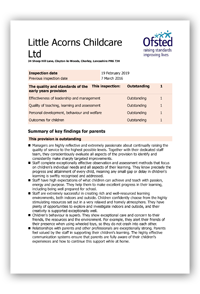
Ofsted Report for Little Acorns Nursery, ChorleyThe Ofsted Report Concludes that Little Acorns Nursery Provides …

So, “Outstanding” — right across the board! Click the report image to download/view it in full (Acrobat PDF format) or read the highlights below.

We’ll cover each of those areas in more detail below. First, though, we’ll highlight some general comments received in the Ofsted Report. Every one of them is extremely positive; indeed Ofsted had literally nothing negative to say about this outstanding Chorley nursery anywhere in their report …

Continuous Improvement “to the Highest Possible Levels”

In the Ofsted Report, the inspector recognised the culture of continuous improvement at the nursery, saying:

“Managers are highly reflective and extremely passionate about continually raising the quality of service to the highest possible levels. Together with their dedicated staff team, they conscientiously evaluate all aspects of the provision to identify and consistently make sharply targeted improvements.”

Exceptionally effective observation & assessment of children“Exceptionally Effective Observation & Assessment” of Children

The Ofsted Report also highlighted how exceptional the staff are in their approach to children’s learning, saying:

“Staff complete exceptionally effective observation and assessment methods that focus on children’s individual needs and all aspects of their learning. They know precisely the progress and attainment of every child, meaning any small gap or delay in children’s learning is swiftly recognised and addressed.”

On Preparing Children for School …

In regard for the nursery’s expertise in preparing children well for school, the Inspector’s report said:

“Staff have high expectations of what children can achieve and teach with passion, energy and purpose. They help them to make excellent progress in their learning, including being well prepared for school.”

At Little Acorns, literally everything we do has a purpose behind it, so it’s great to see this recognised by Ofsted.

“Rich & Well-Resourced Learning Environments”

We have rich and well-resourced learning environments, both indoors and outside

Ofsted also recognised the outstanding learning environment at Little Acorns, commenting:

“Staff are extremely successful in creating rich and well-resourced learning environments, both indoors and outside. Children confidently choose from the highly stimulating resources set out in a very relaxed and homely atmosphere. They have plenty of opportunities to explore and investigate indoors and outside, and their creativity is supported exceptionally well.”

Learn more about our learning environment, resources and activities here.

“Superb” Behaviour

The Ofsted Inspection also highlighted the incredible behaviour, care and consideration demonstrated by the children. They reported:

“Children’s behaviour is superb. They show exceptional care and concern to their friends, the resources and the environment. For example, they alert their friends of their presence when using wheeled toys, so they do not crash into each other.”

This is wonderful feedback and shows that we teach children good manners, encourage exceptional behaviour along with respect and consideration for others  – and for the world around them.

“Exceptionally Strong” Parent-Teacher Relationships

Another critically important element of successful learning and development is the relationship between parents and the setting. In regard to this, Ofsted were incredibly impressed, saying:

“Relationships with parents and other professionals are exceptionally strong. Parents feel valued by the staff in supporting their children’s learning. The highly effective communication systems ensure that parents are fully aware of their children’s experiences and how to continue this support while at home.”


In due course we will cover more detail about why parent support for children’s learning and development is so crucial — and impactful — whilst children are at home. That is a huge topic, which will merit its own, separate, post in due course, so watch this space.

We’ll now take a closer look at the more specific areas of the Ofsted report for Little Acorns Nursery.

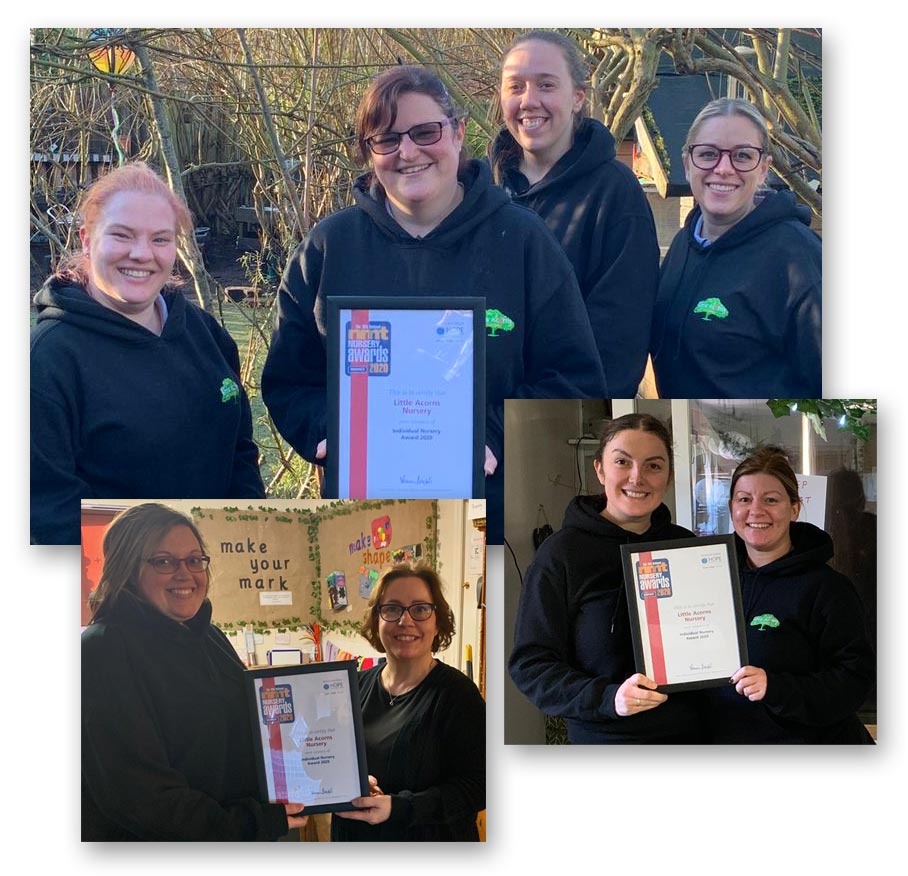
The Little Acorns Nursery team celebrate their award winOutstanding Effectiveness of Leadership & Management

The Ofsted Inspector was evidently extremely impressed with quality of leadership and management at the nursery:

“The managers are highly experienced and qualified leaders. They offer staff targeted support and training to expand further their knowledge of high-quality early years practice.”

They continued: “For example, following training, staff redesigned the environment to successfully enable children to develop their own ideas, inspire their curiosity and imagination and explore the world. Safeguarding is effective. Staff are extremely well trained in child protection issues and are highly confident about what to do should they have any concerns about any child in their care. Managers follow rigorous procedures to ensure staff’s suitability. They thoroughly evaluate every aspect of the provision to continuously improve outcomes for children. Action plans show targeted improvements, such as continuing to nurture children’s love of outdoor adventure, sensory play and unique experiences in the natural environment.”

Outstanding Quality of Teaching, Learning & Assessment

The quality of teaching, learning and assessment at the nursery was also strongly praised by Ofsted. As part of this, their report recognised how well the approach to continual assessment works at the nursery and how the planning of tasks and learning activities is tailored to each individual child. They highlighted the following:

“Well-qualified and experienced staff carry out regular assessments of children’s learning and development. This provides them with an exceptionally clear understanding of children’s interests and their next steps in learning.”

They went on to explain this in more detail: “Children’s interests and areas of development are consistently used to plan the environment and activities. For example, in the baby room, there is a strong focus on enhancing speaking skills and in the toddler room staff focus on mathematical learning. Staff nurture children’s imagination, creativity and curiosity while handling and exploring natural and real-life objects. Staff nurture children’s enjoyment of books while reading stories aloud with them and they sing nursery songs using props. Staff enable children to take the lead in their play, to ‘have a go’, interact and build on their strong desire to learn. For example, children confidently name colours, enjoy counting objects and recognise numerals they find submerged in water.”

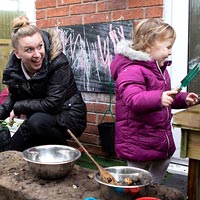
A child enjoying the outdoor nursery facilities with a staff memberOutstanding Personal Development, Behaviour & Welfare
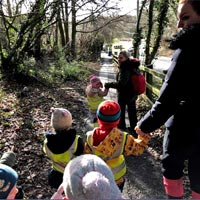
The Ofsted Inspector also praised how well staff approach the personal development, behaviour and welfare of babies and children at the nursery. Importantly, they also recognised how this approach positively benefits those children:

“Staff constantly praise children’s achievements. This contributes to the high level of confidence and independence children display.”

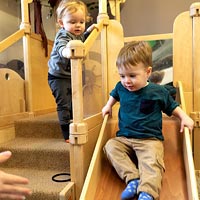
The Ofsted Inspector further explained: “They learn to listen to others and join in routine activities, such as sweeping the floor and setting the table” also adding: “Children’s physical development is well supported. For example, young children develop good control of their movements as they clamber up steps and ramps. Children access well-organised outdoor play areas and use a wide range of resources.”

In regard to healthy, hygiene, welfare and well-being, the report says:

“Staff place the utmost priority on children’s health, hygiene, welfare and well-being. Babies are relaxed, settled and secure in the care of nurturing staff. ”

They went on to say: “Children enjoy regular walks and outings outside of the nursery, and staff use these opportunities to further broaden children’s experiences of people and communities.”

Outstanding Outcomes for Children

Awards and glowing Ofsted reports would mean nothing if they didn’t improve outcomes and life choices for children. Here again, though, Ofsted recognised the huge positive impact that Little Acorns Nursery has on children and babies under its care, commenting:

“All children make excellent progress given their starting points. They develop many important skills that help prepare them for their future learning, and they are exceptionally well motivated and eager to learn. Children are extremely successful at learning to do things for themselves …”

An Outstanding Nursery for Your Child in Clayton-le-Woods, Chorley, Central Lancashire

Children enjoying a Forest School session with Little Acorns Nursery, Chorley, PR6Are you looking for the best nurseries or pre-schools for your baby or child? Then consider Little Acorns Nursery in Clayton-le-Woods, Chorley, in Central Lancashire. Officially rated as “Outstanding” by Ofsted and picking up the best Individual Nursery Award in the National NMT Nursery Awards, nurseries and pre-schools simply don’t get any better than Little Acorns. We have a few spaces available at time of writing so, if this is of interest, please get in touch very soon to avoid disappointment:

Please note: the above relates to the then current Ofsted Report from early 2019 and was correct at the time of posting. For the latest Ofsted Report, please click the Ofsted logo in the footer of this website.