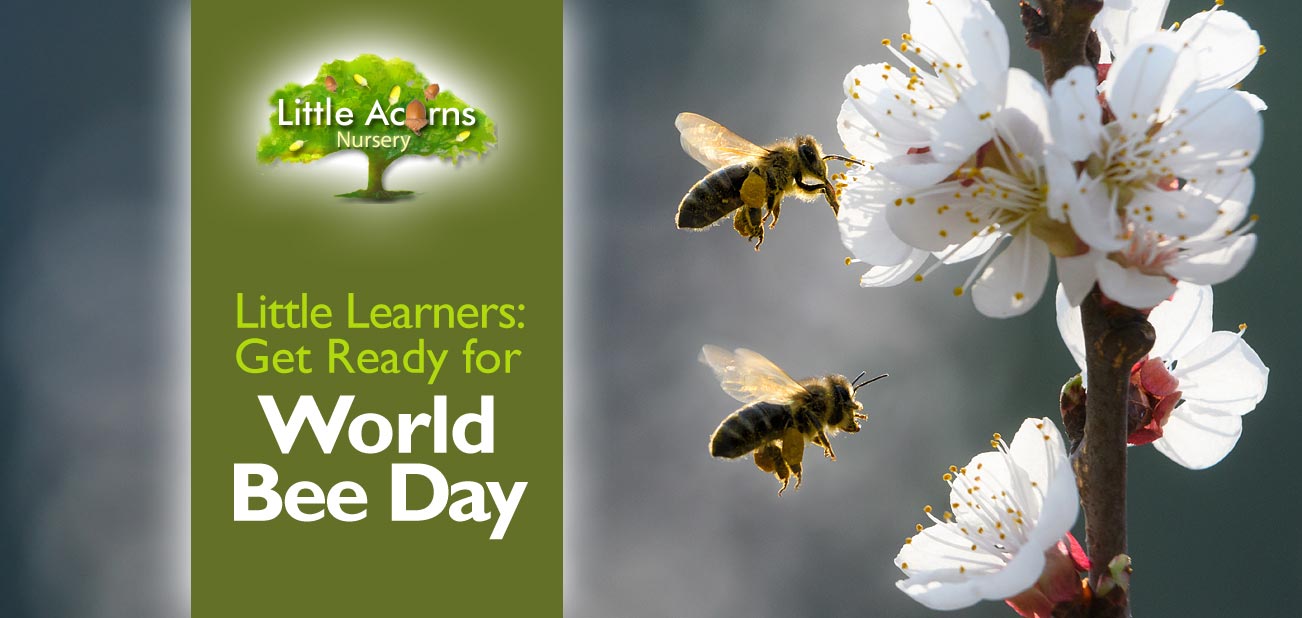
 Little learners, get ready – it’s almost time to buzz into action for World Bee Day! The annual event arrives in May and it’s a brilliant opportunity for children and families to get involved in something meaningful, fun, and full of learning opportunities.
Bees are amazing little helpers, whether in gardens, parks or the countryside — but they need our help too! World Bee Day is a chance for children to discover the magic of these fascinating creatures, learn more about the natural world, and start to build early environmental awareness. They can get proactive too. Whether by planting wildflowers, spotting bees in the garden, or creating bee-inspired arts and crafts, even our tiniest learners can join in the buzz. Read on to learn more about this fun, educational, and hugely worthwhile event, which takes place each May.
World Bee Day
 World Bee Day is celebrated every year on 20th May to raise awareness of the vital role that bees and other pollinators play in our world. From helping plants grow and supporting the food we eat every day, bees are some of nature’s hardest workers – and they need our help to survive and thrive.
People around the world mark the day by learning more about bees, planting flowers, protecting wild habitats, and sharing ways to care for the environment. Under appropriate supervision, there are lots of ways even the youngest children can join in too!
2025’s World Bee Day Theme:
“Bee inspired by nature to nourish us all”
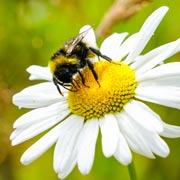 “Bee inspired by nature to nourish us all”
2025’s theme is all about how bees help feed the world, and how we can look after them by taking inspiration from nature. Without bees and pollinators, there would be no fruit, vegetables, crops, and nuts to keep us healthy. The message is simple: if we care for bees and their habitats, they’ll continue to care for us too by helping our plants grow and keeping the planet blooming.
Learn more about World Bee Day, its background and its aims here.
How World Bee Day Supports Early Years Learning
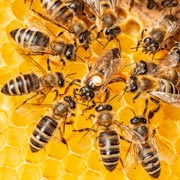 Getting involved in World Bee Day isn’t just fun — it also supports many areas of the Early Years Foundation Stage (EYFS), helping children learn and grow in meaningful, hands-on ways. Here are just a few ways bee-related activities can support early development:
- Understanding the World: Through bee-related activities, children will learn about living things, the environment, and how everything in nature is connected. Exploring bees and their role in pollination helps little learners begin to understand the world around them — and how they can help look after it.
- Communication and Language: Talking about bees, asking questions, listening to stories and learning new words (like ‘pollination’, ‘nectar’ and ‘hive’) builds vocabulary and encourages curiosity.
 Expressive Arts and Design: Making bee crafts, drawing flowers, role-playing as working bees, or moving like insects in a dance — all help develop creativity and imagination.
- Personal, Social and Emotional Development: Caring for nature supports empathy and kindness. Group activities like planting or creating a bee garden also build teamwork and a sense of shared responsibility.
- Physical Development: Activities like planting seeds, cutting out bee shapes, or painting flower petals develop fine and gross motor skills through playful, purposeful movement.
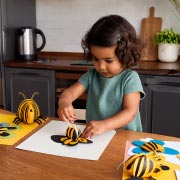 Expressive Arts and Design: Making bee crafts, drawing flowers, role-playing as working bees, or moving like insects in a dance — all help develop creativity and imagination.
In short, World Bee Day is a brilliant opportunity for young children to explore the wonders of the natural world in a way that supports their learning across multiple areas, is fun, and makes a difference!
Bee-Themed Activities for Under-Fives
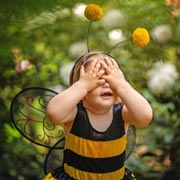 There are so many fun and simple ways for little learners to join in with World Bee Day! Here are a few activities that are perfect for children under five — each one encourages creativity, curiosity, and care for nature while also supporting the EYFS.
Plant a Pollinator Patch
Children can help plant bee-friendly flowers such as lavender, sunflowers, or wildflowers in a pot, bed or border. This not only encourages responsibility and care as they water and watch the plants grow but also supports the EYFS’s Understanding the World, Personal, Social & Emotional Development, and Physical Development goals.
Make Buzzy Bee Crafts
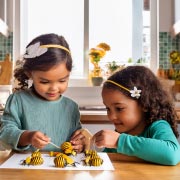 Using paper plates, cardboard tubes, egg cartons or recycled materials, children can create their own bees! Add wings, stripes, googly eyes and antennae for a hands-on creative session. These are wonderfully creative activities that will boost several areas of the EYFS including Expressive Arts & Design and Physical Development.
Bee-Themed Storytime
Snuggle up with stories that introduce bees in a child-friendly way. Great choices include The Very Greedy Bee by Steve Smallman and Jack Tickle, Bee: Nature’s Tiny Miracle by Patricia Hegarty, and What if There Were No Bees? by Suzanne Slade. Even better, encourage children to create their own stories involving bees! After storytime, don’t forget to talk about what bees do with your child and ensure they understand why they’re important. These are great activities to boost the EYFS’s Communication & Language, Literacy and Understanding the World focus areas.
Sing and Dance Like a Bee
 Do you or your child know about the bee Waggle Dance? It’s a real dance that honey bees do to communicate the direction, distance, and quality of a food source to the rest of the bee colony. Click the video thumbnail to learn more — it’s absolutely fascinating! It’s also a great piece of knowledge to inspire children to buzz around the room with bee-themed songs, dances, and movement games. What’s more, it will help children in their EYFS goals including Physical Development and Expressive Arts & Design.
Go Bee-Spotting
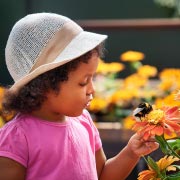
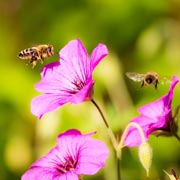 Explore the garden or outdoor space and, without disturbing them, see what pollinators your child can spot. Can they see any bees? What colours and flowers do they seem to like best? Are they collecting nectar? What type of bees are they? Bumblebees are super cute. Honey bees are super-hard workers and do so much for the world. A bee-spotting activity is a great opportunity to explore areas of the EYFS that include Understanding the World and Communication & Language.
Honey Tasting and Talk
If age-appropriate (never feed to babies under 12 months) and there is no allergy to it, let children try a small taste of honey. Then talk about how bees make it, and discuss where it comes from. You could even take this a step further by helping your child make a simple honey-based snack. For example, honey drizzled over pancakes or porridge oats — delicious! Such activities can help children focus on EYFS areas including Understanding the World, Communication & Language, and Physical Development.
These activities are designed to feel like play but, underneath, they’re packed with learning opportunities. What’s more, they help children build positive associations with the natural world and start to understand that even small actions can make a big difference.
Let’s Celebrate Bees on World Bee Day
World Bee Day is a chance to slow down and take a closer look at the tiny creatures that do such big jobs for our planet. It’s also a fantastic opportunity to help young children connect with nature, ask questions, and start to develop a sense of care for the world around them. Through simple, enjoyable activities, families can help raise awareness of the challenges bees and other pollinators face — from habitat loss to climate change. It’ll show children that even small actions, like planting flowers or spotting bees in the garden, can make a difference. So, get them buzzing while they explore nature, grow in confidence and curiosity, and learn that they too can help protect bees along with the wonderful world they’re a part of.
Nursery Places in Clayton-le-Woods, Chorley
 With our own gardens and outdoor spaces close by, children have lots of opportunities to explore and learn from nature at Little Acorns Nursery in Clayton-le-Woods. We know just how important nature is to children and it’s one of the many reasons we love introducing them to nature-based events, themes, and activities like those suggested in today’s post.
At Little Acorns Nursery, children have a wonderful start in life in a warm, caring, home-from-home environment where they feel safe, nurtured, and valued. Free childcare is available for eligible children from just 9 months of age. If you’d like to explore the possibility of sending your baby, toddler, or preschool child under five to this wonderful nursery and preschool in Clayton-le-Woods, Chorley, get in touch today. We’d love to answer any questions, tell you more, and show you and your child around the setting.
Contact Little Acorns Nursery
Families living nearby in Clayton Brook, Clayton Green, Thorpe Green, Pippin Street, Buckshaw Village, Whittle-le-Woods, Farington, Bamber Bridge, Lostock Hall, Euxton, Leyland and Penwortham may also find our nursery conveniently close.
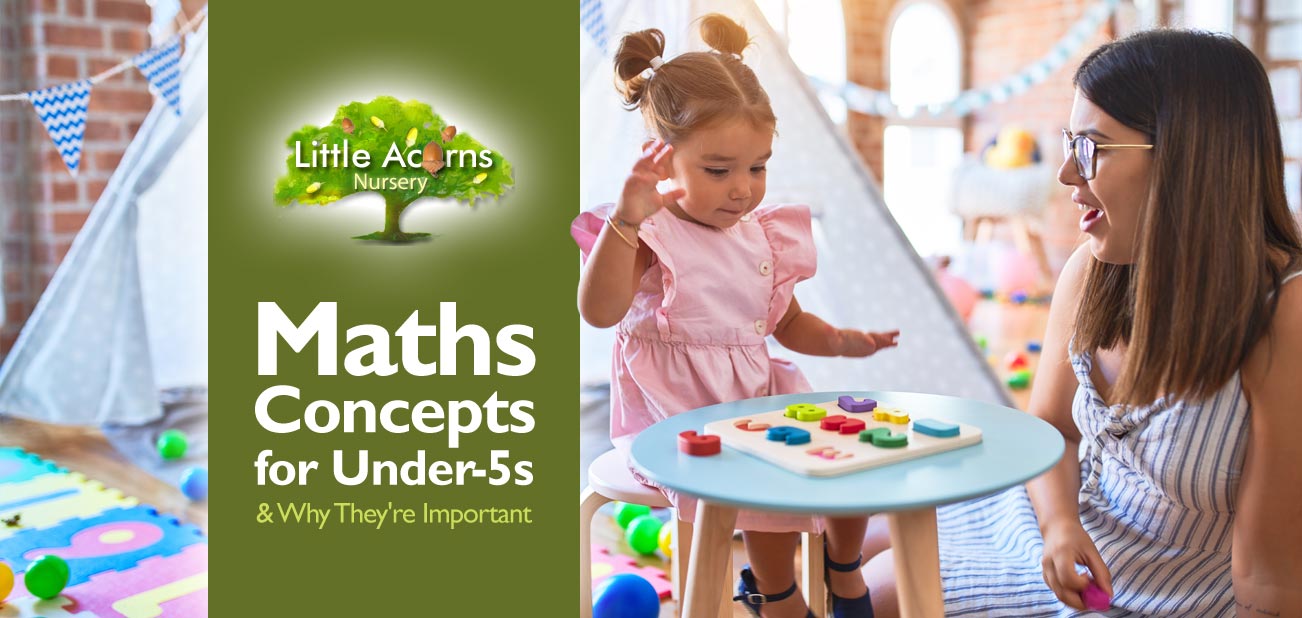
 Once babies have transformed into toddlers, it’s never too early to introduce them to maths-based concepts and language. Indeed, introducing under-fives to such concepts in the earliest years will benefit them hugely as it lays the foundations for future learning. That’s one of the main reasons it is a part of
  Familiarity with mathematical terms and concepts also helps to prepare children for formal education, including in many areas other than pure mathematics. Understanding maths concepts from an early age will allow them to confidently engage in number-related exercises and discussions, greatly enhancing their school readiness across multiple topics. Such preparation will allow them to take maths-based challenges in their stride right from the moment they begin Reception Year in primary school. What’s even more striking is that studies show a direct correlation between early mathematical skills and later educational achievement.
 Counting is the most obvious example. Counting can be introduced and practised by your little one in many, many situations, from counting how many more mouthfuls of food a child should eat, to the number of Lego blocks in a tower they’re creating.
 Shapes also have roots in maths, so children should get familiar with 3-sided triangular shapes, 4-sided shapes like squares and rectangles, and so on.
 Creative endeavours can also be vehicles through which supervising adults can highlight elements of mathematics that are built into designs and creations that children may generate. Patterns and shapes are obvious examples of that. Last but not least, parents can involve children in maths facets which are integral to everyday life, for instance, counting items when out shopping, or measuring when putting ingredients together for a meal. Children will love being more involved in such activities and will learn about maths in a fun, natural, and engaging way. Doing so will create the strongest foundations for their future learning.
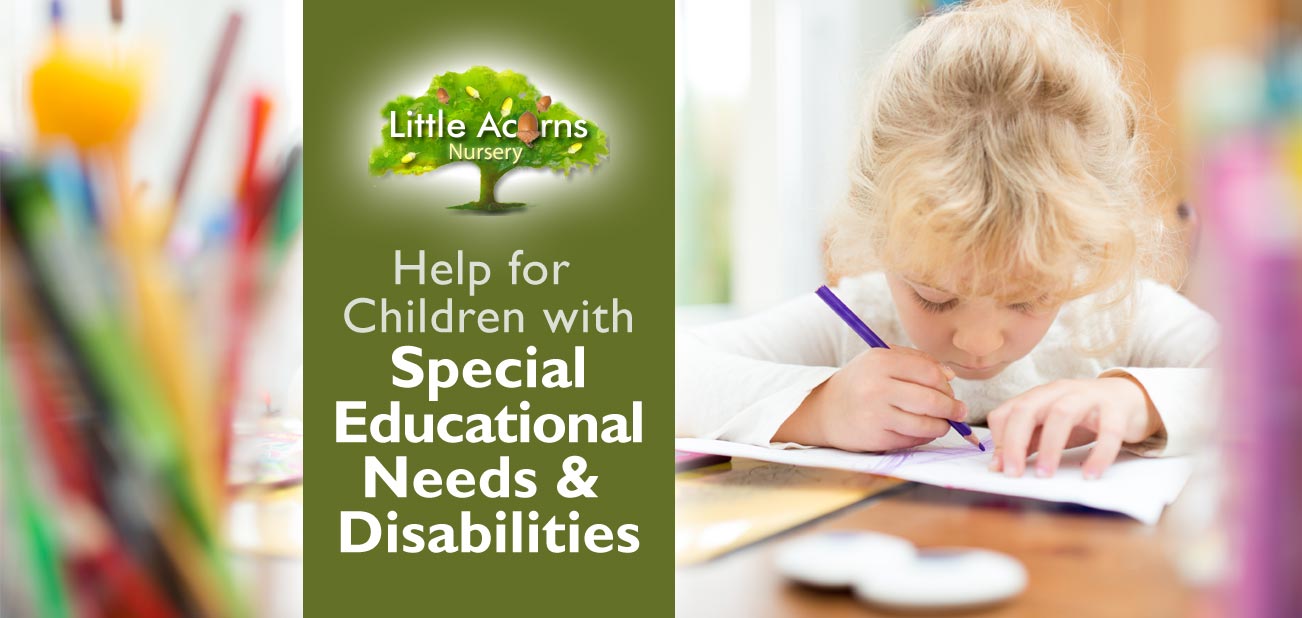
 Today, we look at how early years childcare providers like Little Acorns Nursery can help children under five if they have special educational needs and disabilities. This is often referred to as ‘SEND’ or in longer forms like ‘SEN and disabilities’. Let’s explore the topic to get an overview of some of the help available.
 Actually identifying an area of special need or disability is, of course, the first, crucial step in being able to help a child. If an area of special need is suspected, early years providers can work with parents and sometimes other professionals, for example health visitors, speech and language therapists, paediatricians and so on. Involving such professionals will help with any diagnosis.
 This is important. Early years providers can create an inclusive environment that welcomes and supports children of all abilities. Encouraging the inclusion of children in social groups and in the making of friends, for example, is of huge benefit to children’s well-being. Childcare settings can also provide special equipment or adapt the environment to make it more accessible for children with specific physical needs.
 Early years providers like Little Acorns Nursery adapt the individual learning and development plans and activities to suit each child. In this way, they’re custom-designed to meet the needs of every child individually, including those with special needs. This is done as a matter of course as part of
  Later, each child will similarly have an ‘EYFS profile’ completed during the final term of reception year. However, as we’re focusing this article on children under five, we’ll not go into detail about that here.
 It may be useful for parents and carers to note that local authorities have a duty to publish what’s known as a ‘Local Offer’. This outlines the help available in the area for children with SEND, including how to access that support.
 Every 2-year-old attending registered childcare settings in England is subject to what’s known as a ‘Progress Check at 2’. Today we explain what it entails, who is involved and how it benefits little ones. Here’s our rough guide to the Progress Check at 2:
 The Progress Check at 2 should not be confused with the Healthy Child Programme’s 2-Year Review that 2-year-olds also undergo around the same age. While the ‘Progress Check at 2’ looks at the child’s learning and development progress and is the topic of today’s guide, the separate ‘2 Year Review’ is more about the child’s health and wellbeing and is undertaken by healthcare professionals like health visitors. They will look at things like overall health, immunisation uptake, physical and mental health and development, overall wellbeing and support levels from parents, carers or guardians.
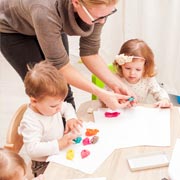 The three ‘prime’ areas of the Early Years Foundation Stage (EYFS) curriculum are also the core focus areas of the Progress Check at 2. Hence, the checks will look to see how well the child is progressing primarily in their:
 The core idea behind the Progress Check at 2 is to discover whether progress is at expected levels for the child’s age and development.
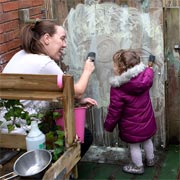
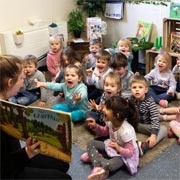 If you are looking for the very best childcare provision for your child in Central Lancashire, there are a multitude of reasons why you should choose Little Acorns Nursery. Put simply, Little Acorns offers the very best possible childcare service for under-fives — but you don’t need to take our word for it. This is independently verified, as you’ll see below. Take a look at our top 20 reasons to choose Little Acorns Nursery and you’ll soon see why it’s virtually impossible to beat when it comes to outstanding childcare provision.
 The quality of teaching, learning and assessment at the nursery was also found to be simply outstanding when Ofsted appraised us. It doesn’t get any better than that.
 Little Acorns Nursery has received a number of awards for it’s healthy eating policy. These include a Recipe 4 Health Award and accreditation via the Smiling For Life Award. Each recognises the healthy meals and snacks that we provide to children under our care.
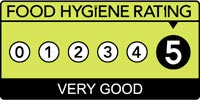 It almost goes without saying that, of course, Little Acorns Nursery has a 5-star food hygiene rating. Once again, that’s the topmost rating. Quality and professionalism are, after all, at the heart of everything we do.
 Everything we do at the nursery has a purpose, whether it’s a customised approach to learning for a specific child, the choice of a particular activity or game for another, the purchase of a piece of new equipment, or the way we keep parents informed about their child’s progress each day — there is a reason for everything we do. Ultimately, our goal is to give every child the very best start in life and to equip them to achieve their personal best in every area. In this way, they are given the tools to achieve the very best outcomes in their lives.
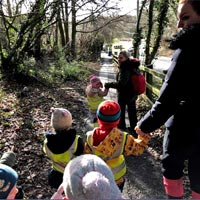 Our Forest School should be open from Autumn 2022. Children love Forest School and it teaches them so much about nature, the natural world and ultimately about themselves.
 Last year, we wrote a detailed post outlining
  Interestingly, under-five children who came from disadvantaged backgrounds were shown to benefit even more than those who didn’t. For this reason, reading with parents/carers has been proposed as a possible way to close the performance deficit often seen with children from such backgrounds. It may well represent a perfect solution to even up the playing field.
 Deeper bonds with parents/carers (after all, this is quality time spent together, one-to-one);
 Communication & Language is the first of the three prime areas of our EYFS-based curriculum. Without good communication and language skills, all other areas of learning could suffer, so these are critically important skills for children to master in their early years. Staff at the nursery therefore encourage rich communications between staff and children — and from peer to peer — from the very first day they join the nursery. Language and communication skills grow naturally to children through engaging, fun activities like role-play, story-telling and question-and-answer games. High quality books and other rich reading materials are also employed by staff to read with children in an interactive way. Using these kind of approaches helps children to learn new vocabulary and grammar, to improve reading and comprehension and to almost effortlessly broaden their language and communication skills as they grow.
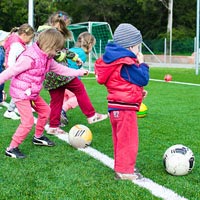 coordination and fitness among the children at every stage. This is all done incrementally through a physical development programme that’s custom-designed for each individual child. This tailored programme takes consideration of their natural abilities, preferences and, of course, any disabilities or limitations. As they grow, the programme of fun, physical activities will help every child to reach their own personal bests for traits like fitness, balance, coordination, hand-eye coordination, agility and spatial awareness. In turn these physical improvements will help with their general wellbeing and happiness. And, at all times, the children will have been having immense fun, making friends and improving social skills, self-confidence and more along the way.
 The social and emotional aspects of it aim to help children fit in with adults and peers around them, support one another, themselves feel supported by others and together learn to manage emotions and behave in acceptable, appropriate ways. As they learn to do all of this, they will become more confident, feel rightly valued, more easily resolve any conflicts and form closer friendships with peers and create stronger bonds with staff. All of this will act as a social and emotional foundation to build everything else upon.
 Literacy is the first of the remaining four areas of focus. A curriculum would be sadly lacking if children didn’t end up literate at the end of study. Literacy is absolutely fundamental and will give each young child the very best start when they leave early years settings to start school. On the face of it, it’s all about reading and writing. However, getting these right will help with many other areas of learning. At Little Acorns, we encourage nursery children to take enjoyment from reading. After all, once they can read they will understand so much more about the world from non-fiction material and so much more about the possibilities of the imagination and creativity from fiction books. So, they have access to a wide, rich variety of reading materials. Grammar, spelling, punctuation, phonetics and overall comprehension of a huge variety of topics will all go hand-in-hand with active and regular reading. In a similar way, writing will benefit too, as the children learn to recognise the correct spelling, composition and sentence structure and so on. Exposure to our rich variety of books will feed their imaginations and help them to be more creative themselves. We also encourage our children to verbalise, for example by reading out loud to themselves and others in an interactive way. By so doing, speech, pronunciation and articulation also benefit, as does their confidence to speak up.
 Mathematics is our fifth area of study within the core EYFS curriculum at Little Acorns Nursery. It’s another fundamental skill that children need to learn but, as with everything at Little Acorns, we make it fun. Through play and interactive sessions, children will learn the concepts behind mathematics, soon learning to distinguish things like odd and even numbers, number patterns and sequences, concepts like larger or smaller, wider or taller and more or less. Counting will first be mastered from one to ten, then in reverse, then extended to 20 or more. Concepts like volume, shape, measuring and space will also be included. So, by the time they leave our early years setting, they’ll have learnt the requisite maths skills and concepts that they’ll need in order to hit the ground running when they start school.
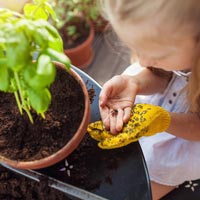 After all, there is so much around them and they need to understand it and to give everything they see context. With that in mind, we’ll help them to recognise, understand, describe and even sometimes draw what’s immediately around them. They will also learn about the technology they see and use around them. Our excellent
 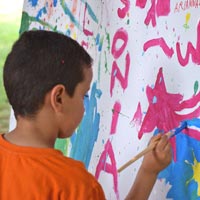 A wide variety of media, equipment and tools are available to them at the nursery and activities encourage the children to get involved and to create. It’s not just art, though; the children can involve themselves in role-play activities, they can sing, dance, tell stories and perform. Their imaginations can run riot and be free as they can express themselves and their creativity in a rich variety of ways.
 Indeed, parents can be thought of as key to their children’s success, if they support children’s education in the right ways. We’ll go through exactly what that means, along with some of the many benefits, in this article.
 Choose the Right Setting
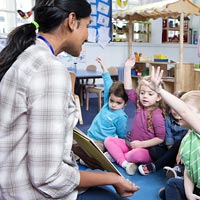 Parents of successful, grade A students, will generally also have engaged with staff at nursery/pre-school and school. That includes at parents’ evenings, of course, but parents should also be fully abreast of their child’s progress at every point in between. Parents and staff need to talk and feed back to each other about each child under their care and, indeed, that’s exactly what we do at Little Acorns Nursery. This, and a personal development progress folder for every child, is all part of the EYFS curriculum at the nursery in fact. In this way, parents and staff can each see the bigger picture and identify where successes are happening for the child, or where more work is needed — including at home.
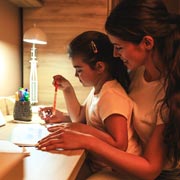
 Parents can help children with homework too, of course. They can explain things that the child is perhaps confused or unclear about, in an unrushed, relaxed home environment. Parents can work through their approach to finding answers to questions and explain how they arrived at those answers. This, too, is like gold dust to an otherwise struggling child. It’s one of the reasons why the human race itself has come such a long way — through shared information.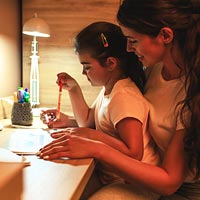
 • In turn, that ultimately leads to better careers as adults, with higher rates of pay.