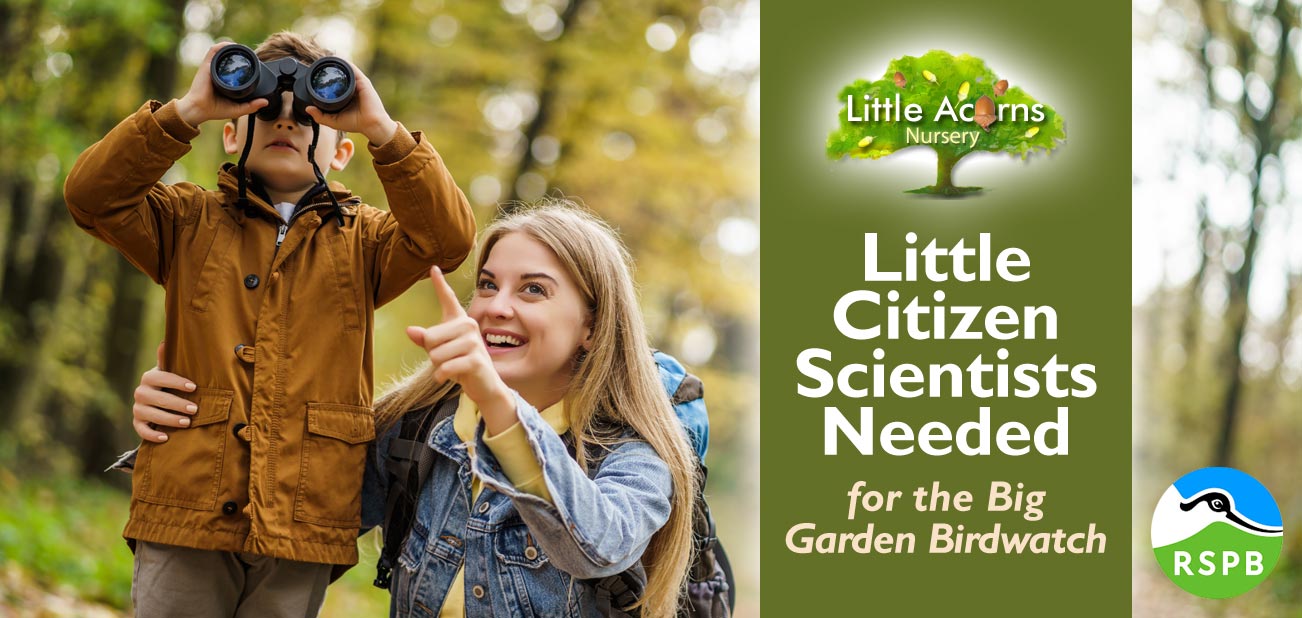
 January’s Big Garden Birdwatch is a perfect home learning opportunity where children can find out about wild birds and get a better understanding of nature itself. What’s more, it’s a hugely worthwhile event that will benefit birds, conservation efforts, and children themselves. The activity also demonstrates how easy it is for little ones to become citizen scientists. With that in mind, let’s explore today the Big Garden Birdwatch, explain what it is, how to take part, and why it’s important for families to get involved.
What Is the Big Garden Birdwatch?
The Big Garden Birdwatch is the world’s biggest garden wildlife survey and is organised by the Royal Society for the Protection of Birds (RSPB). It’s an annual survey of garden birds and is undertaken in late January each year by individuals, families and children right across the UK. Taking part is free and typically takes just one hour.
What’s the Goal?
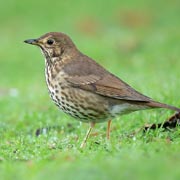 The idea of the Big Garden Birdwatch is to understand how garden birds are faring in the UK. Sadly, many bird populations are in decline, with some species facing huge declines over recent decades. Some 38 million fewer birds are now seen compared to 60 years ago. Song Thrush populations, for example, are down by 80% since the survey started in 1979. Even House Sparrow numbers have more than halved during that time. By studying the bird populations each year, trends can be identified including whether any bird species are in danger. Then the RSPB and other conservation organisations can work out what the problems are and how we might go about rescuing the situation as a nation. It also follows that, if there is a problem with bird populations, then there is likely to be a wider problem in nature too. This could be, for example, due to disease, over-intensive farming methods, habitat loss, invasive species, climate change, use of chemicals in gardens and farmland, and so on. Gathering data across the UK each January will help guide the nation to improve things — and children can help by getting involved in the Big Garden Birdwatch each January.
How Children & Families Can Take Part
Taking part is easy and takes just 4 steps:
- Register here to take part
 — it’s quick, easy and free to do so. Once registered you’ll receive detailed instructions in your free guide to the event, which includes your free bird identification reference sheet. This will be useful to you and your children so each bird species can be recognised more easily.
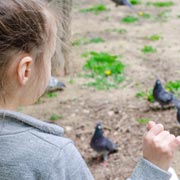
 - Next, choose an outdoor spot to monitor. This will be your ‘patch’ and it could be your garden, balcony or perhaps even a local park. Optionally before the event begins (late January – see below), you may wish to start putting out bird food to attract more birds to the patch in the run-up to the event.
- Sometime during the period 24-26 January 2025, spend an hour noting down how many birds of each species you see actually land at any one time on your patch. So, for example, if you see four blackbirds during the hour but only 3 land on the patch at the same time, you’d count that as 3. That’s simply to avoid counting the same bird more than once.
- Once complete, fill in and submit your survey results to the RSPB. This can be done online any time from 26 January to 23 February 2025 (if sending a paper survey by post the deadline for receipt is 18 February). You can submit more than one survey if you like, so long as each submission is for a different location/patch. The RSPB will then analyse all the submissions from across the UK and be able to see how each bird species is faring.
 — it’s quick, easy and free to do so. Once registered you’ll receive detailed instructions in your free guide to the event, which includes your free bird identification reference sheet. This will be useful to you and your children so each bird species can be recognised more easily.
Can’t get outdoors?
If you can’t get outdoors for any reason, don’t feel left out. Children and families can undertake the January birdwatching event from a window or balcony too, so long as they can view an outdoor patch where birds are likely to land.
The Huge Benefits of Nature to Children
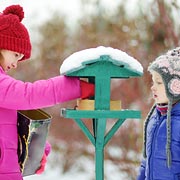 This wonderful activity is a great way to encourage families outdoors, where children benefit from nature in a myriad of ways. From lower stress and increased well-being to improved academic performance, stimulated imaginations, and better sleep, the benefits of nature to children are profound. Studies show that even a view of nature will benefit children — it’s incredible! Click the bold green link for more details.
The survey is also a great opportunity for children to practise counting and enhance numeracy skills. It’s also a good excuse to get creative, for instance by building a cardboard or stick bird-spotting ‘hide’ — the perfect den from which to watch the birds when the time comes.
Involvement in the Big Garden Birdwatch also allows children to get a better understanding of conservation issues and the need to protect nature and the planet. That’s incredibly important, not least because today’s children will be tomorrow’s caretakers of our precious Earth.
Reference & Bird Identification
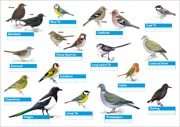 Together with the RSPB, we also have bird identification covered for children. The first option is the RSPB’s free bird reference sheet, which families will receive when they register for the event. Their digital version is best because it’s more environmentally friendly, is quicker to access, and usually shows a larger list than is shown on their printed version.
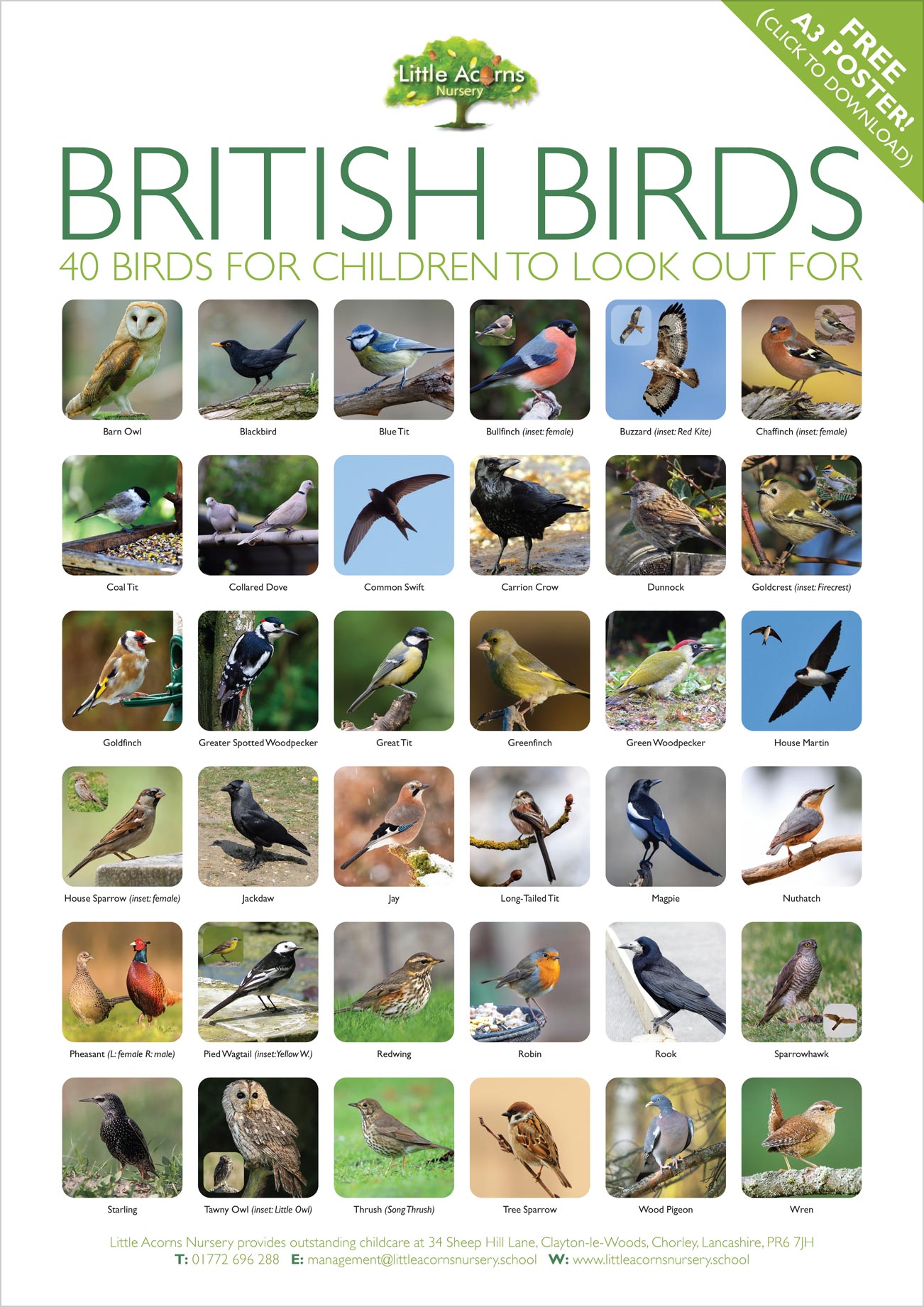
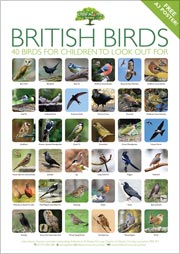 However, don’t forget that Little Acorns Nursery also published our own bird identification poster for children last year. That is also free to download (follow that bold green link) and shows many more species of birds than the RSPB’s option — perfect if children are really interested in bird spotting and want to continue after the January event.
 How to Encourage Birds to Visit Your Garden
 How to Encourage Birds to Visit Your Garden
If children and families want to make a real success of the Big Garden Birdwatch event, a few preparation measures will help attract more birds to their patch. We have that covered too with our separate post all about how to make home-made bird feeders and another explaining a number of excellent tips on bird feeding for under-fives. In addition, the RSPB offers a discount on bird food, purchased via their website, to anyone that registers for the event.
Outstanding Childcare in Clayton-le-Woods, Chorley
Looking for the Best Nursery or Preschool in Clayton-le-Woods, Chorley, or Central Lancashire?

Today’s article was brought to you by Little Acorns Nursery in Clayton-le-Woods, Chorley, an outstanding provider of childcare and early years education. Our outstanding nursery status is backed up by Ofsted and an important National Nursery Award too. So, if you want the very best start for your baby or child under five and live in the area, consider Little Acorns Day Nursery for your weekday childcare provision. We’ll bring out the best in your child, help them achieve personal bests, and give them the tools to absolutely thrive. We support many different Government-funded free childcare schemes too, making childcare more affordable for those who are eligible.
Get in touch today to request a nursery place, arrange a free tour of the setting, or ask us any questions — we’re here to help!
As well as being perfectly located for families in Clayton-le-Woods and Chorley, we may also suit those living nearby in Clayton Brook, Clayton Green, Thorpe Green, Pippin Street, Buckshaw Village, Whittle-le-Woods, Farington, Bamber Bridge, Lostock Hall, Euxton, Leyland or Penwortham.
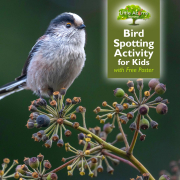
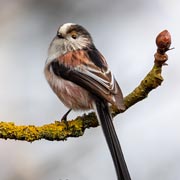 1. Bird spotting
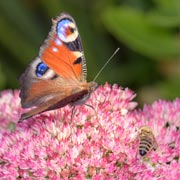 ee & Butterfly Spotting
 3. Search for Animal Tracks
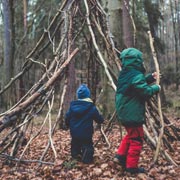 4. Make a Den
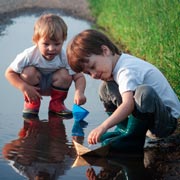 5. Float a Boat
 6. Go on a Ramble
 7. Get into Photography
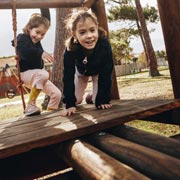 8. Obstacle Course
 9. Have a Picnic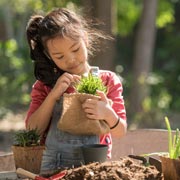
 11. Hunt for Mini Beasts
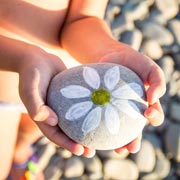 12. Get Creative with Rocks & Stones
 Whether on the beach or in the garden, it’s surprising how creative children can be with stones and rocks! Stones can be painted with lovely patterns or images, perhaps combined with simple words or as part of a ‘stone story’. Bigger rocks can be piled one on top of the other to form sculptures — these look magical. Children will love these and other creative activities that they can take part in outdoors, with simple stones and rocks.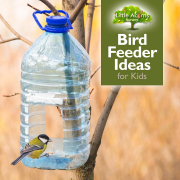
 Making bird feeders
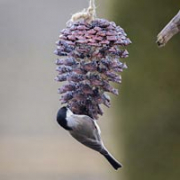
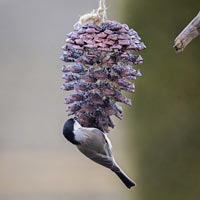
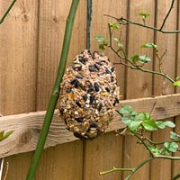 Seeded pine cone bird feeders
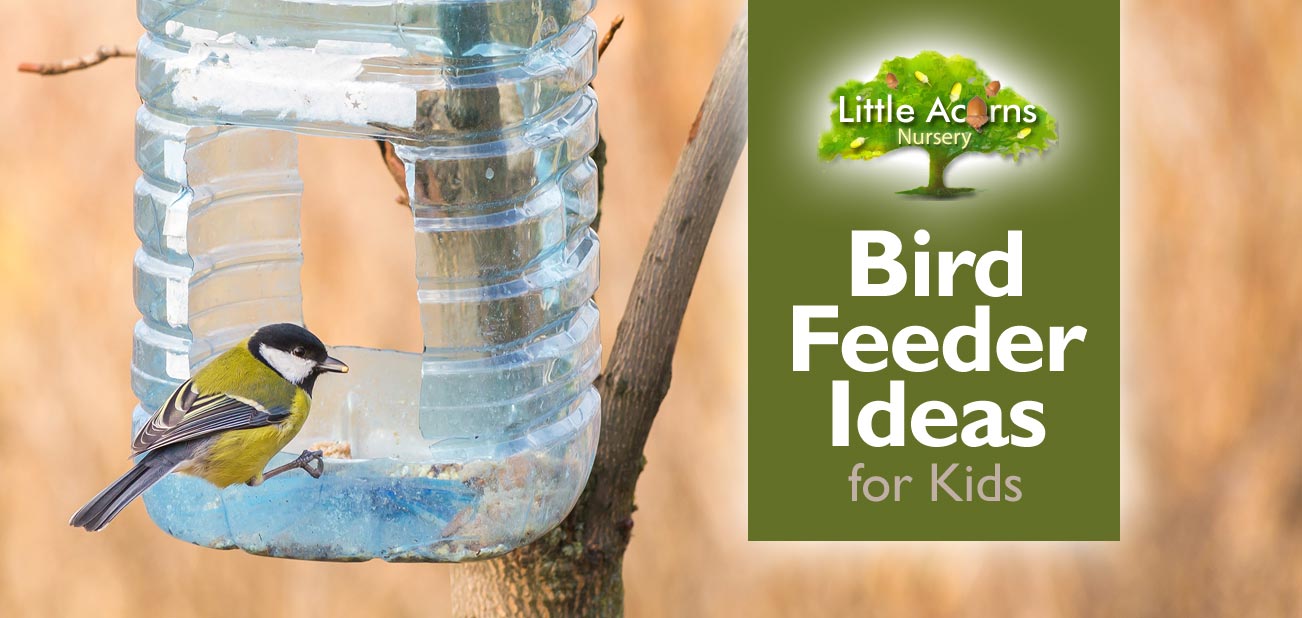
 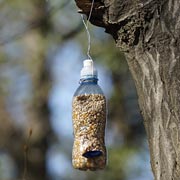 Water bottle bird feeders.
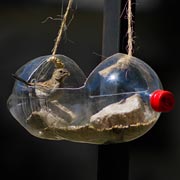 Then, they can be partly filled with bird seed, or perhaps grated Cheddar cheese. Alternatively you can see that some of the designs could be used for drinking water, for example the one shown immediately on the left or at the very top of this article. Another variation even has a plastic spoon pushed into it, forming a convenient perch for the birds to land on and to feed from (see right).
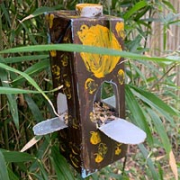 Carton bird feeders
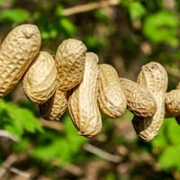 Monkey Nut Bird Feeders
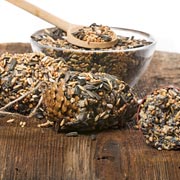 If using peanut butter in your home-made bird feeders, ensure it is fresh, has no salt or sugar added and is not ‘flavoured’. Smooth or crunchy peanut butter is great for bird-feeders, though, and you can even stick extra bird seed to it once it’s been spread on your feeder e.g. pine cone or apple. There are also some peanut butter brands made specifically for wild birds, by the way.
 Why Nature is So Important for Children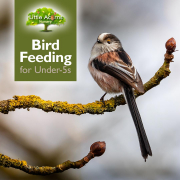
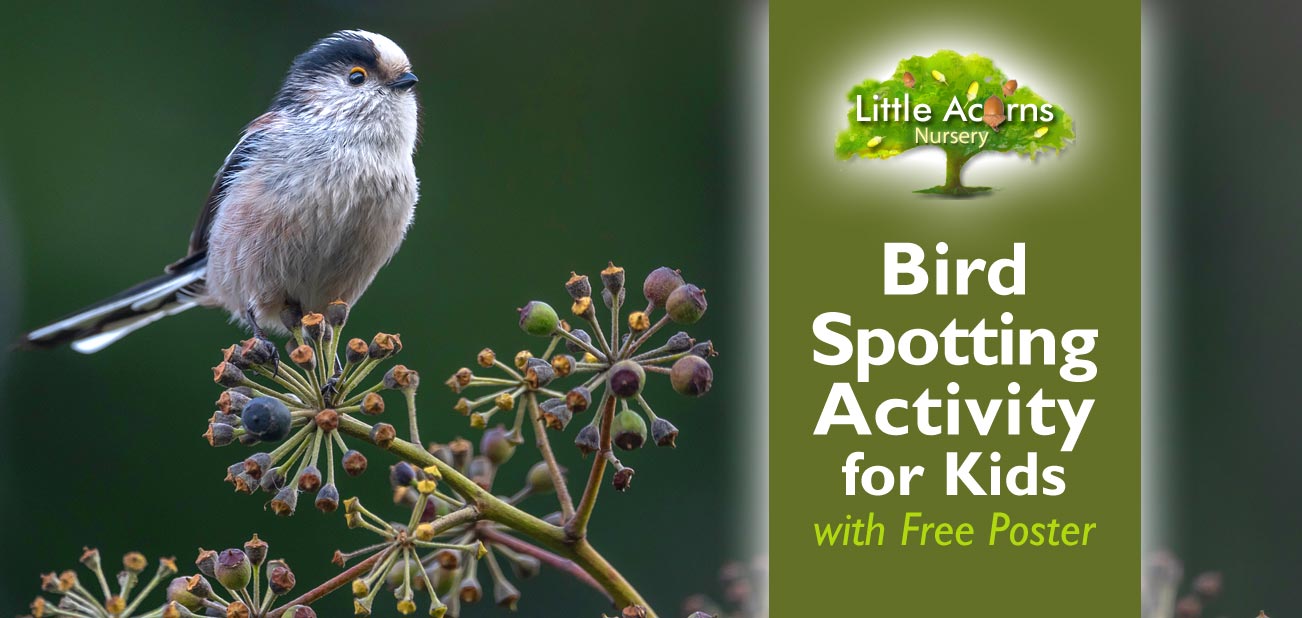
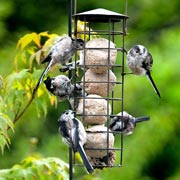
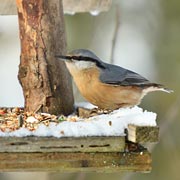 Providing food for birds is a win-win for everyone — humans and birds alike. Birds obviously get to eat much needed food without huge effort and children get to learn more about nature and perhaps individual bird visitors. (We even name our regulars! “Vern” is a tame blackbird, for example, having been named after a character in the famous movie Rain Man). By encouraging birds to visit, children will soon be able to recognise and name the different species of bird too, particularly if given some help from a parent or bird book. Visitors might include robins, blackbirds, blue tits, great tits, long-tailed tits (our favourite), thrushes, starlings and, if they’re lucky, more unusual, colourful birds like nuthatches, woodpeckers, bull finches and gold finches. As it gets colder, some species will travel to warmer countries to overwinter. For those that stay in the UK, however, food from a friendly young nature-lover will be a real lifeline.
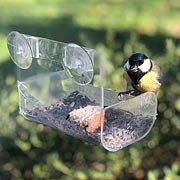 If children do get involved in feeding wild birds, they’ll soon begin to realise how delightful the little beings are. They each have their own character, likes and dislikes. Children will get to appreciate this if they keep up the feeding and the birds will soon realise where to find the food each day. Children will get to understand the importance of nature and learn skills like empathy, understanding and responsibility as they nurture the wellbeing of these beautiful wild visitors. Animals, birds and insects are all individuals and it’s good for children to recognise this. By feeding birds and other animals, they will also be able to continue to appreciate nature and the natural world, just like they do in our
 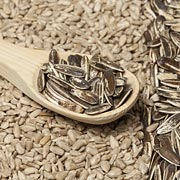 There are many bird feeders available to purchase in supermarkets and local shops, although we simply buy ours as part of our weekly online supermarket shop. Many are quite inexpensive. From fat balls and filled coconut shells, to seed cakes, hanging dispensers and pre-filled seed feeders, the variety available gives parents and children a huge choice. In our own garden, we have found that
 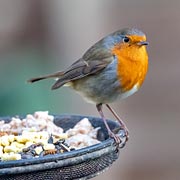 Grated Cheddar cheese (mild and in moderation) will be very popular. Robins, blackbirds, sparrows, starlings, pigeons and doves adore it! Mouldy or ‘blue’ cheese should be totally avoided, though, as the mould could harm or even kill birds. Meanwhile, bread will fill birds up but it doesn’t hold much nutritional value for them, so only feed bread to birds in moderation. It’s incredibly important not to feed them mouldy bread too, or for it to be left to go mouldy once outside. Mould can greatly harm or even kill birds.
 The RSPB provides
  Window recesses, higher windowsills and balconies will usually offer some kind of suitable site for feeding birds. Careful choosing of the site for your bird feeders is an important consideration, however, which could make or break your feeder’s success and the wellbeing of the birds you are trying to help.
 A Word About Hygiene for Your Family & the Birds