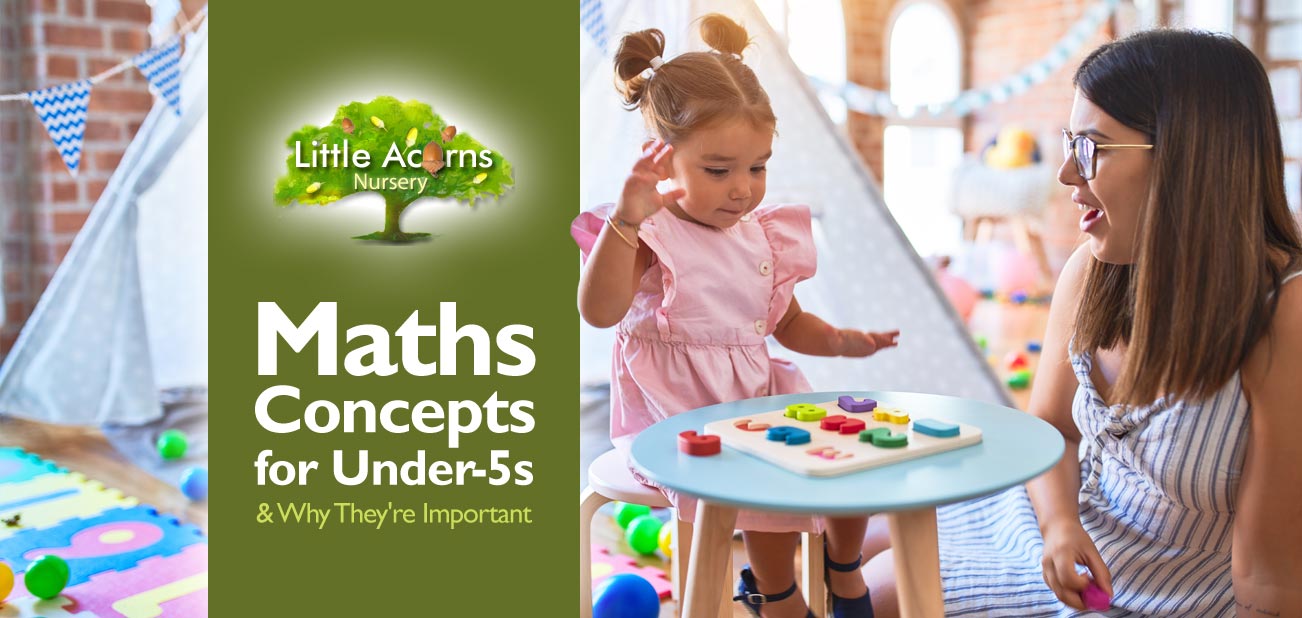
 Once babies have transformed into toddlers, it’s never too early to introduce them to maths-based concepts and language. Indeed, introducing under-fives to such concepts in the earliest years will benefit them hugely as it lays the foundations for future learning. That’s one of the main reasons it is a part of the EYFS curriculum. Continuing this learning at home will also help them instinctively understand that mathematics is a normal and integral part of everyday life. As such, there is no need for it to be perceived as a daunting topic. With all that in mind, today’s guide explores why the early introduction of mathematics is so beneficial to under-fives and how parents and caregivers play a vital role in encouraging their mathematical curiosity, knowledge, and confidence.
The Benefits of Understanding Maths Concepts in the Early Years
As well as the obvious advantage of improving numeracy skills, learning mathematical language and concepts at an early age has several key benefits for under-fives.
Enhanced Vocabulary Development & Language Skills
Children exposed to rich mathematical language will naturally have stronger vocabularies. This, in turn, will facilitate enhanced communication skills, for example, through the mastering of such things as descriptive, comparative, and positional words.
Improved Cognitive Skills
Learning numeracy skills is like a subtle workout for the mind. Such activity is known to stimulate brain development and improve memory, attention, and critical thinking skills. Each of these benefits will allow children to make connections and solve problems more easily.
Stimulated Creativity & Imagination
Mathematics isn’t just about numbers; it also involves creativity. For example, children can explore patterns, shapes, and spatial relationships, each of which has maths at their heart. Indeed, maths is integral to design, art, music, dance, and many other creative areas that children can immerse themselves in.
“Studies show a direct correlation between early mathematical skills and later educational achievement.”
A Foundation for School Success
 Familiarity with mathematical terms and concepts also helps to prepare children for formal education, including in many areas other than pure mathematics. Understanding maths concepts from an early age will allow them to confidently engage in number-related exercises and discussions, greatly enhancing their school readiness across multiple topics. Such preparation will allow them to take maths-based challenges in their stride right from the moment they begin Reception Year in primary school. What’s even more striking is that studies show a direct correlation between early mathematical skills and later educational achievement.
What Kind of Maths Concepts Can Parents Teach Tots?
As you’ll see below, there are many different types of maths-related words and concepts that parents can help children grasp. As we said before, maths is all around us, so there are many opportunities to help little ones master mathematical concepts and language — even from an early age. Aside from learning the actual numbers, some examples include the following:
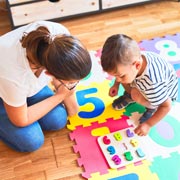
 Counting is the most obvious example. Counting can be introduced and practised by your little one in many, many situations, from counting how many more mouthfuls of food a child should eat, to the number of Lego blocks in a tower they’re creating.
- Size is another maths-based concept where, given some parental guidance, little ones can soon begin to understand whether something is tiny, medium-sized, big, gigantic, tall, short, thin, or wide.
- Measurement is another maths-related concept for children to grasp, so encouraging them to learn when something is full, empty, long, heavy, light, etc., will stand them in good stead both linguistically and in terms of mathematics.
- Similarly, comparatives will be useful for children to understand. It’s essential for them to grasp concepts and language like more, less, equal, different, the same, identical, and so on.
- Shapes also have roots in maths, so children should get familiar with 3-sided triangular shapes, 4-sided shapes like squares and rectangles, and so on.
- Positions are also founded in mathematics, so children should be encouraged to recognise when something is on, off, inside, outside, up, down, and suchlike.
- Finally, time also has its roots in numbers and mathematics. Therefore, it will help children to not only tell the time eventually but also understand the meaning behind words like early, late, now, later, soon, etc.
 Counting is the most obvious example. Counting can be introduced and practised by your little one in many, many situations, from counting how many more mouthfuls of food a child should eat, to the number of Lego blocks in a tower they’re creating.
 Shapes also have roots in maths, so children should get familiar with 3-sided triangular shapes, 4-sided shapes like squares and rectangles, and so on.
How to Go About It
Parents, caregivers and relatives can help children under five learn about these mathematical concepts and the language that surrounds them. Games, books, and even songs, for example, often include facets of maths and maths language that adults can draw children’s attention to and get them involved in. Counting fingers, toes, and objects like building blocks is another obvious example and one which can be extended to include much of the maths-related vocabulary that we mentioned earlier (numbers, comparatives, positions, shapes, etc.).  Creative endeavours can also be vehicles through which supervising adults can highlight elements of mathematics that are built into designs and creations that children may generate. Patterns and shapes are obvious examples of that. Last but not least, parents can involve children in maths facets which are integral to everyday life, for instance, counting items when out shopping, or measuring when putting ingredients together for a meal. Children will love being more involved in such activities and will learn about maths in a fun, natural, and engaging way. Doing so will create the strongest foundations for their future learning.
We may follow up at a later date with some in-depth activity ideas that will help children learn more about maths and the language surrounding it, so watch this space!
Little Acorns: an Outstanding Nursery in Clayton-le-Woods, Chorley
Award-Winning Childcare in Central Lancashire

Little Acorns gives babies, toddlers and preschoolers the very best start in life at their Clayton-le-Woods nursery near Chorley. That’s backed up by being rated an Outstanding Provider by Ofsted and a prestigious National Nursery Award too. So, if you want the very best for your child, choose Little Acorns Day Nursery for their weekday childcare and we’ll ensure they absolutely thrive and are prepared for success.
Get in touch today to register your child for a nursery place, set a date for a guided tour of the setting, or ask any questions:
Little Acorns is an outstanding nursery and preschool located in Clayton-le-Woods, Chorley, near Clayton Brook, Clayton Green, Thorpe Green, Pippin Street, Buckshaw Village, Whittle-le-Woods, Farington, Bamber Bridge, Lostock Hall, Euxton, Leyland and Penwortham.
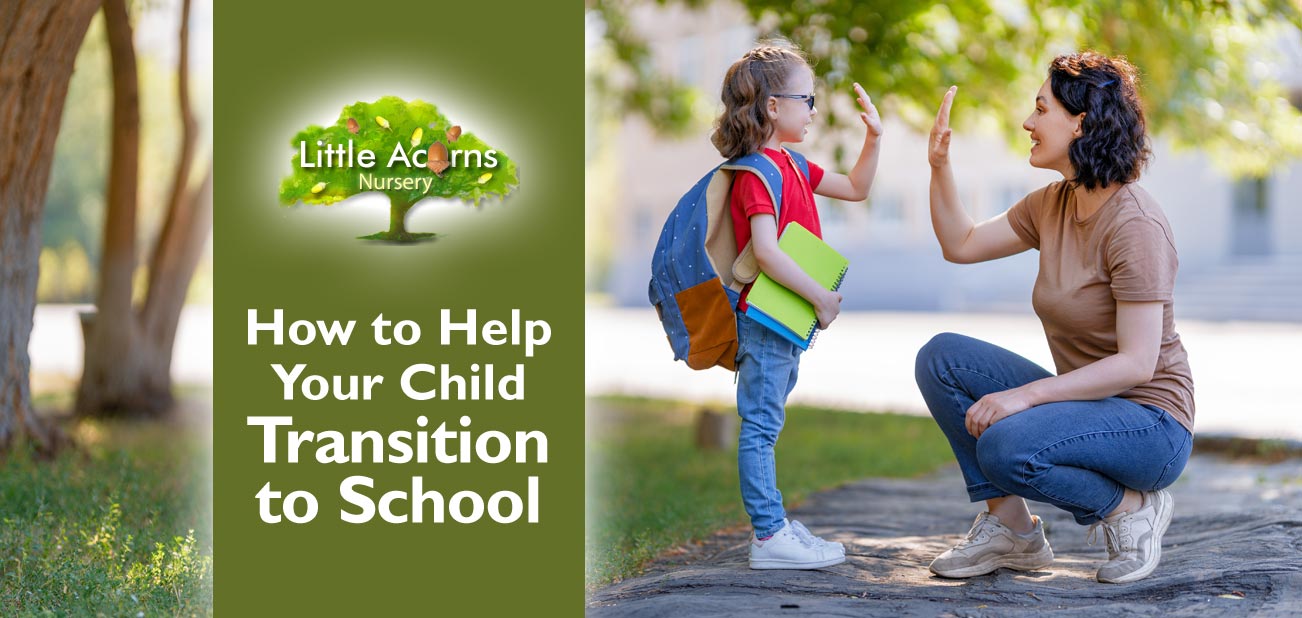
 Beginning school is a huge milestone for any child as well as for the child’s parents or guardians. Whether transitioning from nursery/preschool or straight from home, beginning school can be a daunting step in a child’s life — especially if they’re unprepared. Today’s post therefore aims to help parents/guardians make the transition to school as easy and stress-free as possible for their child, so they are empowered to feel at home and hit the ground running from the moment they begin. Take a look, therefore, at our guide on How to Help Your Child Transition to School. Following the advice should help make this milestone plain sailing for everyone involved.
 One of the most critically important steps for a smooth transition to school is to ensure your child receives a comprehensive early years education. By this we mean they need to have been nurtured between birth and school age in all areas of their learning and development — ideally including the
  During their journey from birth to school age, it’s also important to nurture children’s independence, social skills and soft skills.
 When starting school is only a few weeks away, there are several small but impactful things you can do to better prepare your child for the transition:
 Pack your child’s backpack and ensure it includes everything they’ll need. For example, perhaps a snack and/or lunch box, any spare clothes, PE kit, stationery if needed, and so on.
 Be on time. Dropping off or picking up late will stress both you and your child out!
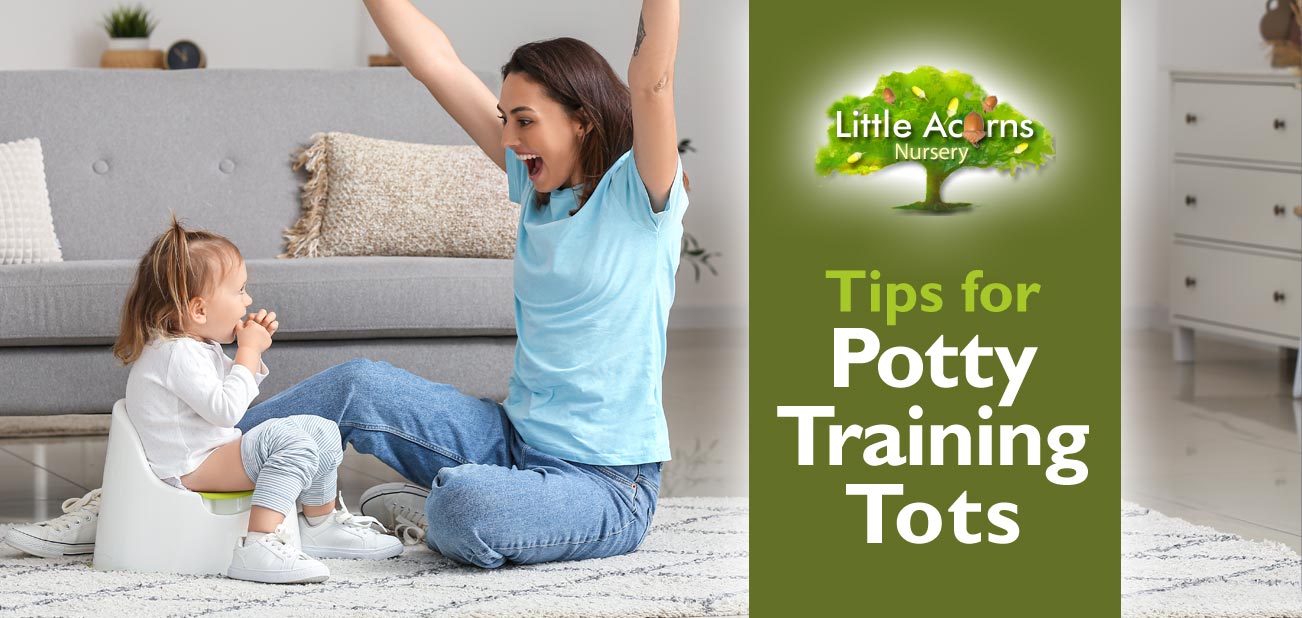
 One of the key tasks all tots must face, in tandem with parents, is potty training. It’s something we all had to master as toddlers and therefore we know it’s 100% achievable — despite it sometimes seeming to be rather a challenge. Achieving success, though, will improve the quality of life for the child, the parent, and other guardians involved in the child’s care. Learning to master the use of the potty and later the toilet will also be a major boost to self-confidence and independence when the child is at nursery, preschool, and later school. With that in mind, today’s guide outlines our top tips for successful potty training.
 Children become ready for potty training at different times — every child is different in that respect, with some starting as early as 18 months and others not training until the age of 3. That said, the majority of little ones begin potty training between the ages of 2 and 3. There are some signs to look out for that will help parents decide when the time is right and we’ll look at those below.
 Ensuring children understand the language around toileting is helpful, of course. So, it’s healthy to help children learn the various terms involved, whether talking about a potty, wee-wees, or anything else. Learning appropriate words will empower children to ask for what they need, at appropriate times.
 Potties with designs that are attractive to toddlers e.g. dinosaurs, licensed TV characters etc.
 Only start potty training when your child shows signs that they’re ready. (See the When Should You Begin Potty Training? section above for details).
 As we discussed in our recent post
 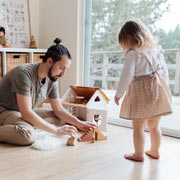 Designate an area in your home for play. It doesn’t need to be elaborate — even a corner with a few age-appropriate toys, books, and art supplies may be sufficient. Ensure, of course, that the space is safe and free from hazards before your child embarks on their play activities.
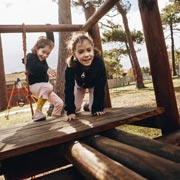 Outdoor play also offers a wealth of learning opportunities. It promotes physical health, stimulates the senses, and allows for unstructured exploration, which all contribute to holistic development. Take your child to the park, explore nature, or simply play with them in the back garden if you have one. Outdoor activities will also foster an appreciation for the natural world. Indeed, we wrote a whole post about
  Reading is a wonderful way to support learning through play. Choose age-appropriate books, of course, and be sure to engage in interactive storytelling. Ask and encourage questions about the story, encourage your child to predict what might happen next, and ask them what they might do if it were them in the story. Books and reading teach children so many things and, like pretend play above, truly encourage their imaginations and get their creative juices flowing.
 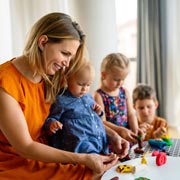 Arrange play dates with other children or involve siblings in play activities at home. Social play helps children learn essential social skills like cooperation, sharing, and conflict resolution. It’s also a great way to make new friendships, learn from each other, and become a closer member of friendship circles.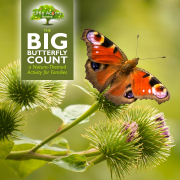
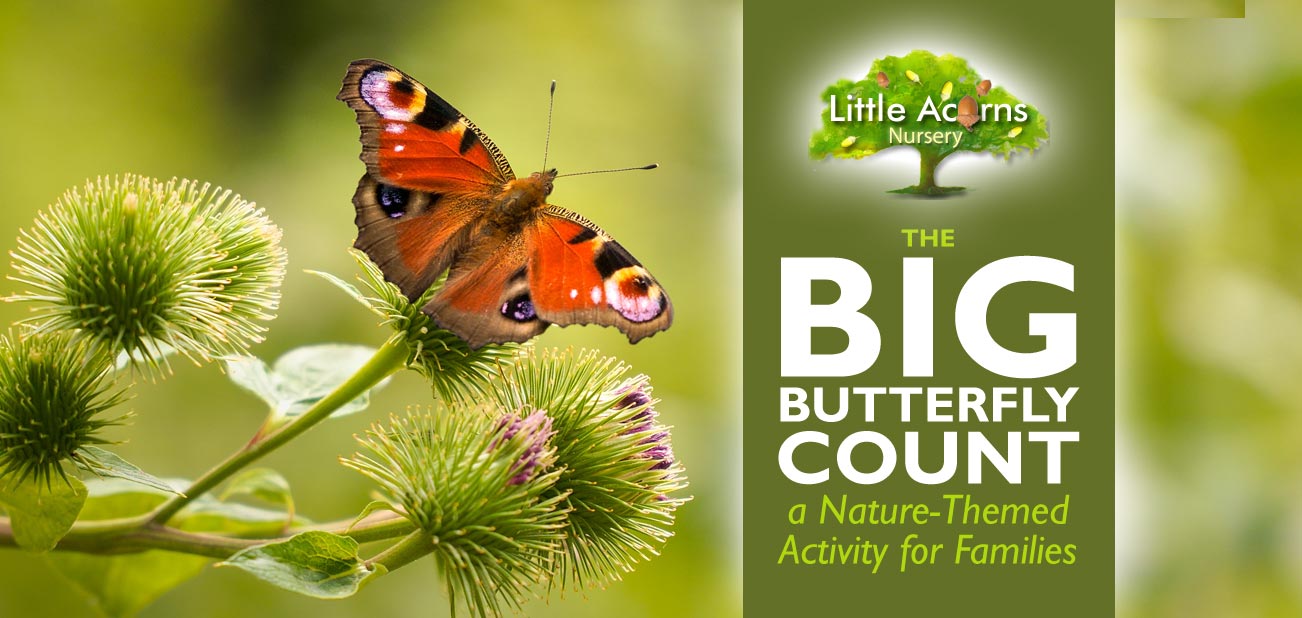
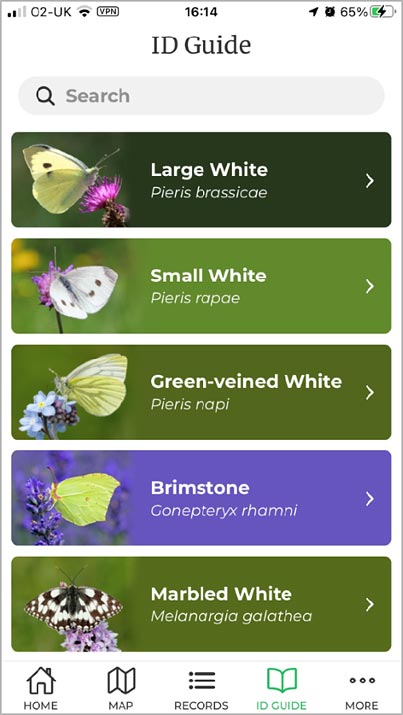
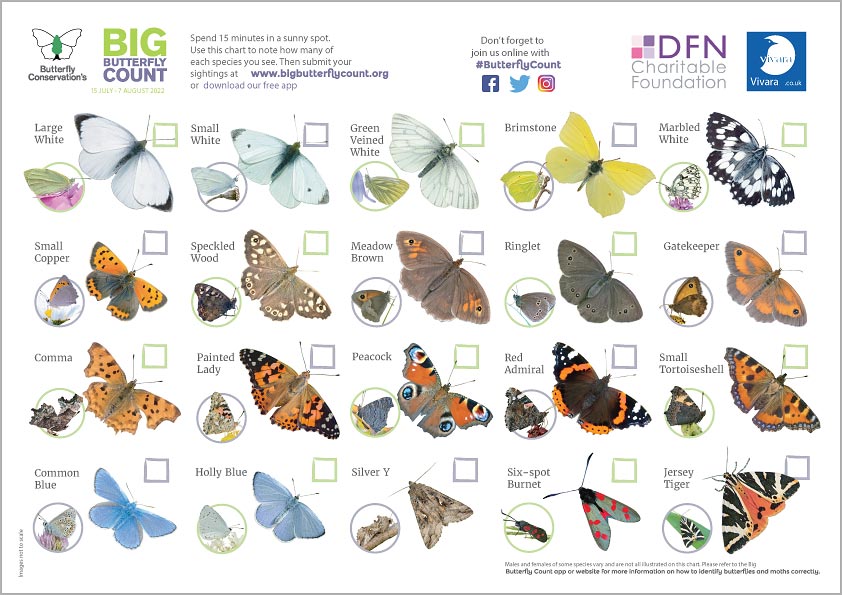
 Many will have heard of the Big Garden Birdwatch that takes place every year in January. However, fewer are aware of a similar activity called The Big Butterfly Count that takes place in July and early August. As well as being extremely worthwhile, it’s a wonderful activity for both children and adults to get involved in as citizen scientists. The activity helps with butterfly conservation, is educational for those taking part, and encourages families to get outdoors, closer to nature. And, as we know,



 parents to return to the workplace sooner after the birth of their child if they so choose;
 children aged 2 from eligible working families will be able to claim 570 hours of free childcare each year. This is typically taken as 15 hours of free childcare each week over 38 weeks, although exactly how it’s taken may be agreed otherwise between the family and the childcare provider.
 Until now, 87% of those eligible to claim childcare support through Universal Credit were not doing so. One of the main reasons for this was that it’s geared towards low-income families yet required them to pay childcare fees in advance — and later claim them back. Paying in advance is not so easy when household income is low, as is typically the case for households that would otherwise be eligible. For this reason, another of the Chancellor’s initiatives announced in the Spring Budget 2023 is to roll out the following improvements:
 The final childcare-related initiative in the Chancellor’s Spring Budget aims to fix another key problem for parents: how to juggle their own longer working hours with their child’s shorter school hours. When a child attends school, they often finish their school day several hours before their parent is finished at work, for example. There is therefore a childcare requirement to bridge the gap and this may be required both at the start and end of the child’s school day. In view of this, the Chancellor announced the piloting of a new Wraparound Pathfinder Scheme, which would fund childcare hours from 8 am until the start of the school morning and, later in the day, fund childcare for the mismatched afternoon hours up to 6 pm. The pilot will test the scheme to see how well it works. If successful, the Chancellor aims to roll it out to the whole of the UK from September 2024.