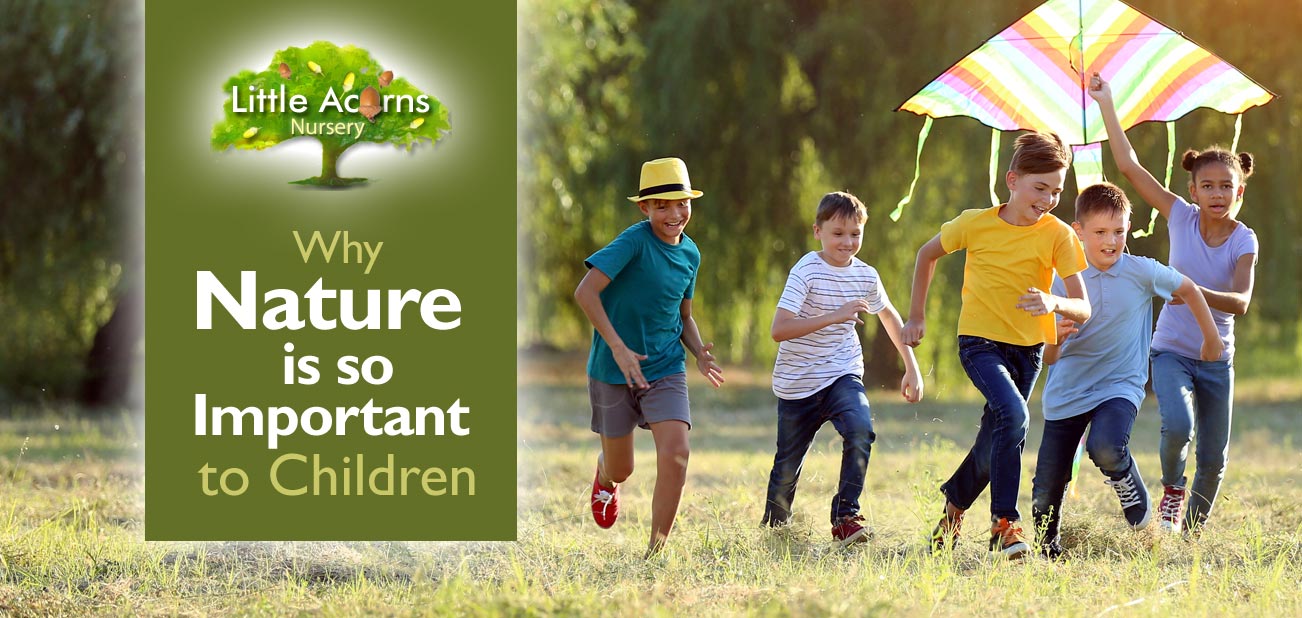
 Today we’ll look at the immense benefits of nature to children. While the long-term benefits of nature are reasonably well-known, it turns out short-term exposure to the natural environment also has1 clear benefits for people of any age. The benefits are even more beneficial, though, for young people during their early years, at school and in higher education.
The greatest benefits come when children and young adults are able to spend time actually in the outdoors, surrounded by natural things like trees, flowers, grass and wildlife. Even a short break spent in such an environment will help to restore attention, cognitive function and mental resilience — and this is backed up by many studies. Incredibly, some3 have demonstrated that there are cognitive and performance benefits even when there is just a view of the natural environment, for example sight of green grass and trees through an open window in the classroom. That’s remarkable when you think about it.
The Benefits of Nature to Children
 One of the wonderful things about nature is that immersing oneself in it need not cost a penny. With so many proven benefits, it just goes to show that the old adage that ‘the best things in life are free’ really is true when it comes to nature. Exposure to the natural environment and green surroundings has been shown to have clear benefits …
Attention Restoration
Nature is a great healer; time spent in the natural environment helps to counteract the depletion of mental resources, particularly after periods of perhaps intense mental work, for example following a series of lessons or tasks. The fascinating quality of nature is also key to this as it requires a kind of ‘softer’ attention, with the brain working on an almost involuntary basis. This is part of what’s known as Attention Restoration Theory (‘ART’). It is thought to work in such a way as to allow cognitive function to recover more easily while fascinating beautiful, natural things are being observed, without the need for a heavy voluntary effort on the part of the onlooker.
 The benefits of restored attention skills in themselves should not, of course, be overlooked. Interestingly, research6 involving cognitive tests on school children found that children who had undergone the tests after walking in a natural wooded environment were quicker to answer – and significantly more accurate in their answers – than those who had instead practised mindfulness in the classroom or who had spent time in the school playground during the break.
Stress Reduction
Exposure to, or immersion in nature is also proven to reduce stress, which may otherwise manifest itself emotionally as anxiety, anger, sadness and also fatigue as our bodies and minds try to fight whatever is threatening our wellbeing. Research into this has led to Stress Reduction Theory (‘SRT’), which has shown that, indeed, nature helps us to recover from stress, even causing a physical reduction in stress hormones and blood pressure. It also helps the body to ‘refuel’ the energy depleted during the period of stress. Research findings even went on to suggest5 that the psychological wellbeing of students increased when their school grounds were simply made ‘greener’, i.e. more natural.
Both theories prove that even short-term exposure to nature will help restore attention and cognitive function if depleted through prior activities. This has profound implications for possible use in education settings. As such, exposure to nature, even for short periods, is a wonderful and natural way for children to “recharge their batteries”.
 Almost Endless Benefits to Children
 Almost Endless Benefits to Children
As well as improving attention, cognitive function and mental resilience, there are many additional benefits of nature to children:
- Improved wellbeing through reduced anxiety, psychophysiological stress4 and negative emotions;
- Improved academic performance, including in core subjects like reading, writing and arithmetic;
- Better engagement during lessons;
- Improved fitness through outdoor play and movement;
- Stimulation of imaginations, leading to increased creativity;
- Deeper, more profound thinking and analysis;
- Improved self-confidence,
- Increased freedom leading to greater independence;
- Greater empathy e.g. taking more care of other living things, plants, etc.;
- A greater understanding of risk and risk assessment;
- Exposure to the huge variety of sensory opportunities the natural world provides;
- An often greater understanding of living a healthy lifestyle — and even a greener one;
- Deeper understanding around keeping things in perspective (what’s truly important and what’s not);
- Better sleep;
- Better social skills and the building of friendships through shared adventures and discovery;
- A profound appreciation for the Great Outdoors and everything that it has to offer.
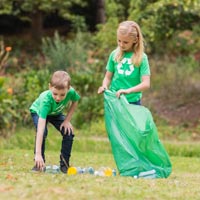 Greater empathy e.g. taking more care of other living things, plants, etc.;
Incredibly, one U.S. study2 even found evidence for improved earnings potential in later life, equating to a lifetime gain of nearly $30,000, when children grow up in areas with greater natural surroundings.
Forest School is So Important
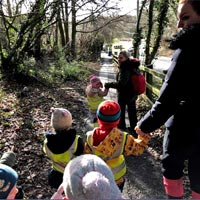
 Just imagine, then, how much children benefit from nature when attending a Forest School setting such as that available at Little Acorns Nursery, Chorley. At Forest School, little ones will spend significant time in local green and wooded spaces, so these findings show just how important Forest School is for youngsters. Why send your child to an ordinary nursery, then, when you can send them to a nursery with a Forest School!
At Forest School, children are able to explore and discover in local natural spaces including woodland and other natural habitats. Not only do they discover and learn about the world and all the wonderful living things in it, but Forest School also teaches them about themselves. Forest School is about so much more than a way to teach children about plants, trees, insects, animals, the seasons and so on. With the freedom to make choices about outdoor activities in a more natural way, children build on their social skills, learn about teamwork, leadership, critical thinking and risk assessment as well as honing physical abilities like coordination and motor skills. And, as the research shows, it helps children to excel in other, seemingly unrelated, areas. Forest School represents the opportunity for enormous discovery in every sense of the word.
As well as all that, at Forest School, children are having immense fun! They’re playing and learning while developing physically and mentally — all at the same time. And, as the research shows, exposure to nature is incredibly good for them, even helping them to perform better once they return to the indoor environment.
 If you’d like to learn more about Forest School, try our Ultimate Guide to Forest School here. You can also learn more about our own particular Forest School in Clayton-le-Woods, Chorley, here. Our nursery and pre-school is located in Clayton-le-Woods, near Clayton Green, Clayton Brook and Chorley. If you’re looking for outstanding childcare for your baby or under-five, we look forward to hearing from you …
Citations — 1: Mason, L., Ronconi, A., Scrimin, S. et al. Short-Term Exposure to Nature and Benefits for Students’ Cognitive Performance: a Review. Educ Psychol Rev (2021). | 2: Browning & Rigolon (2019). | 3: Matsuoka (2010), Benfield et al. (2015), Sajady et al. (2020). | 4: Ulrich et al. (1991). | 5: Kelz et al. (2015). | 6: Cornoldi et al. (1996).


 Children living in England are very fortunate to have their early years childcare supported financially by a variety of Government funding schemes. The 3 most important, popular and widely-available schemes are:
 Let’s look at each of the schemes …
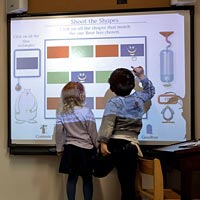 Taking the above scheme a step further, eligible families are able to top up the standard 15 hours per week with an additional 15 hours of free childcare in specific circumstances. In effect, this can double the child’s free childcare hours from the standard 570 hours to 1140 per annum. These are usually taken as 30 hours per week over 38 weeks although, again, some childcare settings may be able to be flexible and to spread the hours out in a different way.
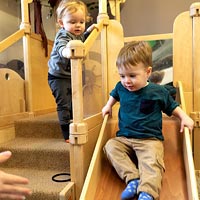 Under certain circumstances, children aged just two can have some of their childcare funded by the Government too. However, it’s much more restrictive for this age group. If successful, though, the Government will fund up to 570 hours of childcare for a two-year-old over the course of a year — that’s significant and could really help mothers or stay-at-home fathers get back to work sooner. As with the 3 & 4-year-olds, the 570 hours is usually taken as 15 hours per week over the course of 38 weeks, but some parents may wish to ask their childcare provider if it’s possible to spread it out in a different way.







 Generally speaking, under-fives should be encouraged to be active. There are many benefits of this including remaining physically fit, getting to know and enhancing physical abilities, honing motor skills (fine and gross) and improving coordination and balance. In addition, it helps the very young to develop visual and sensory skills. Physical activity is also part and parcel of the development of new neurological pathways in the brain. All these skills and benefits will become increasingly important as children grow, develop and become ever-more active and independent.
 Once they reach the age of 3 to 4 (preschoolers), 3 hours of physical activity is an ideal daily minimum. Now that they’re older and more confident in their physical skills, they can continue with the toddler activities but add more complex and moderately vigorous options to their play. Dancing, swimming, scooting, climbing, chasing, cycling and energetic outdoor activities are good examples.

 Eating a healthy, balanced diet is important at any age. However, during their formative years when they’re still growing, it’s even more important for under-fives. Their young bodies and brains are still developing, so getting the right balance of food types, vitamins and nutrients is essential in order to maintain optimum health, cognitive function and even sufficient energy levels. (Regular exercise is also essential, of course – however, we’ll cover that separately in a future post).
 That’s a huge and important list of benefits. Advice from Public Health England also suggests that exposing children to a wide variety of different foods from an early age not only gives them access to greater diversity in what they eat, but is also likely to make children more accepting of new foods as they grow older. And, of course, that greater diversity in food types means a more diverse range of nutrients, vitamins and minerals will be consumed.
 As part of a healthy diet, children should try to eat something from each of the four main food groups every day. These are:
 Dairy products, which give children much-needed calcium, Vitamins A and B, potassium and more. Aim for 3 portions of dairy products per day. Examples include milk, yoghurt and cheese. Use full-fat options for toddlers and then, from the age of 2, switch to semi-skimmed varieties.
 At Little Acorns we are serious about playing our part and serve up healthy, balanced meals each day to our children along with suitable drinks and healthy snack options. Breakfast, lunch, afternoon and teatime snacks are all provided and included in our standard nursery fees. Food is prepared each day by Judy, our wonderful in-house chef, using the highest quality, fresh ingredients, sourced from local suppliers. Food allergens are extremely carefully monitored and managed. Any special diets, e.g. vegan or vegetarian, are also catered for as needed — simply forewarn us about any specific requirements and we’ll be happy to accommodate them.
 Little Acorns Nursery has a


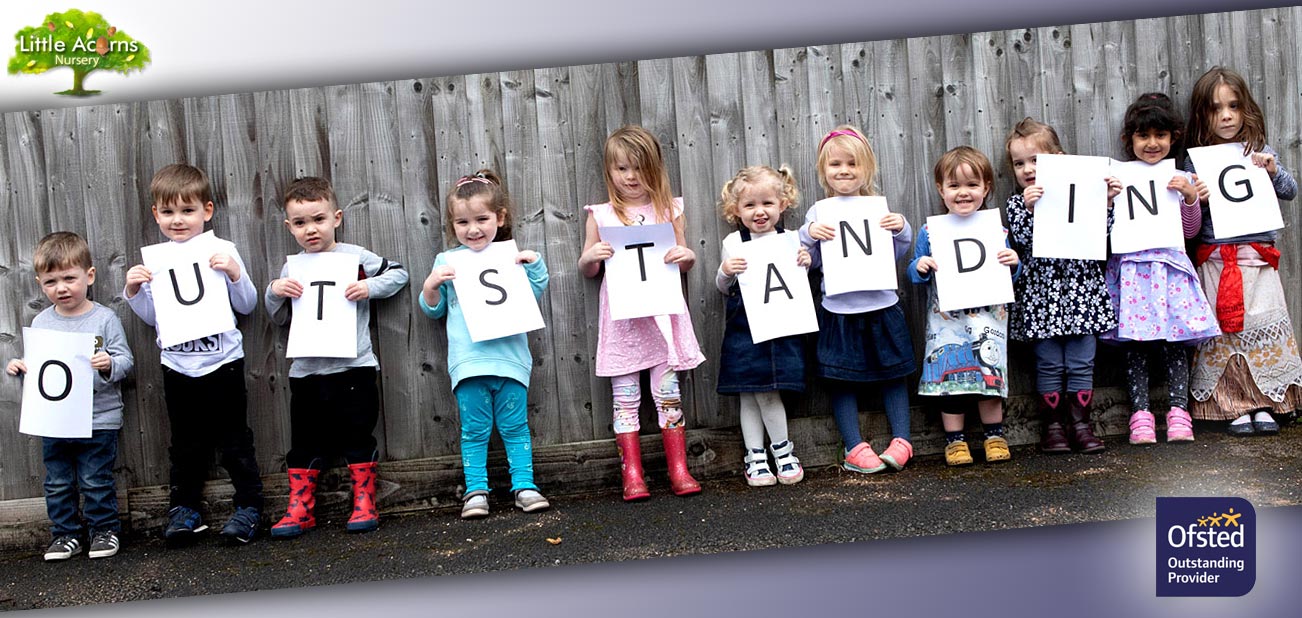
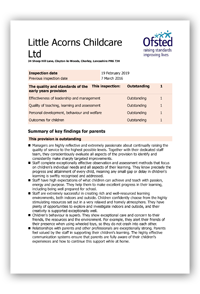
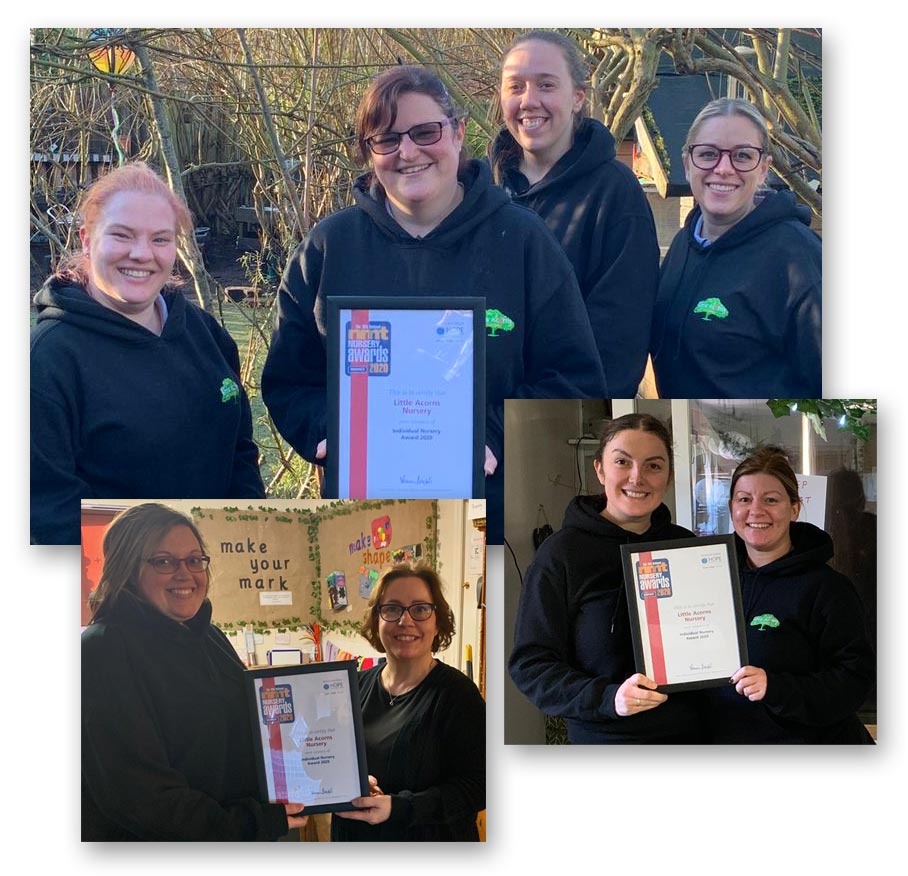
 Outstanding Personal Development, Behaviour & Welfare
 Are you looking for the best nurseries or pre-schools for your baby or child? Then consider