


 Toddlers and under-fives are naturally drawn to electronic screens. From TVs and game consoles to tablets and smartphones, these amazingly powerful, colourful devices hold such wonder! After all, they’re rather magical to young minds and can entertain and captivate children in so many ways. However, there have been loud voices of concern lately over how potentially detrimental watching electronic screens may be for our little ones. Indeed, the UK Government has recently published new guidance around the topic, which we’ll explore in today’s post.
There are, of course, pros and cons to children watching electronic screens and a few examples spring to mind:
- Without proper safety measures and oversight in place, screens may lead children to unsafe places, whether on TV, tablets, or smartphones.
- What’s more, many parents also want to keep little ones away from social media as long as possible to keep them safe.
- Other parents, however, like children to have mobiles as a way to track them, for safety purposes, when not in their direct care. This is also understandable.
- The use of electronic screens can also be helpful for children with SEND (special educational needs or disabilities). For example, they may benefit from screen-based assistive technology, an invaluable tool that may help with communication, mobility, and so on.
- Children are naturally captivated by brightly-coloured, moving screen images and stimulating audio. They can therefore be invaluable as a distraction tool when a parent simply needs a few minutes’ peace.
- Older children may not want to miss out on chats, social media, and all the online goings-on that their friends and peers may be up to. FOMO (Fear of Missing Out) is real for kids. That said, it’s less likely to affect under-fives, who usually have far less, if any, access to it.
- And, to quote the findings of a recent report by Government advisors:
“Some evidence has linked large amounts of screen time with negative effects on children’s health and development, including on social, emotional, language and brain development, sleep, eyesight and healthy weight.” — Findings from the EYSTAG Report
Now, the UK Government has become proactively involved and has made a series of official recommendations. So, let’s take a look today at some recent new guidance for smartphone use by children that was issued in March 2026 by the Government.
What is the New Government Guidance for Screen Time for Children Under Five?
“We’ve created this evidence‑informed guidance to support parents and carers in shaping healthy screen time habits for little brains.” — Gov.uk
In March 2026, the UK Government issued the following recommendations* for electronic screen use by children under five:
- Parents and carers should proactively “Limit total screen time for young children, wherever possible”, they say.
- For children under 2, they recommend that screen time be avoided completely, except where it’s part of a shared family activity that encourages conversations, interactions, and closer bonding. Examples given include activities like viewing photograph albums together, group family/friends video calls, or reading e-books together.
- For children between 2 and 5, they recommend that children should spend no more than 1 hour per day viewing electronic screens — ideally less, and in short chunks of no more than 30 minutes at a time that’s not close to bedtimes or mealtimes. Solo viewing should be minimal.
Such guidelines may not apply to children with SEND, who often use screen-based assistive technologies to help improve quality of life, for example, facilitating enhanced communication with others, mobility, etc. Such children will therefore require a more tailored approach, and parents/carers will need to balance both the potential risks and benefits of screen use for such children.
* (Source)
“Screen use becomes particularly problematic when it crowds out sleep, physical activity, parent-child interaction, creative play, household routines, real-world exploration or learning.” — EYSTAG Report
What is the New Guidance Based On?
 The Government guidance for under-fives follows findings and recommendations made by the independent Early Years Screen Time Advisory Group (EYSTAG), whose full report is available here. They took into account the views of a wide range of stakeholders, including parents, early years professionals, and children themselves, as well as findings from the latest research around the topic. The new Government guidance is therefore evidence-based. It also spans all kinds of screen use for under-fives, including TVs, mobiles/smartphones, tablets and computers.
“The new Government guidance is evidence-based.”
What Else Does the EYSTAG Report Recommend for Families with Children Under Five?
As well as the key recommendations, the EYSTAG report made the following additional recommendations for parents/carers of under-fives, suggesting they should:
- Interact when the child is using an electronic screen. Ask questions, comment on what’s happening there, and so on, just like you might if you were reading a book to them.
- Ensure that children’s use of screens is balanced with activities that are inherently more healthy, for example, creative play, interactions with family and friends, and so on.
- Ensure that little ones achieve the appropriate amount of sleep each night. They cite the World Health Organisation (WHO)’s recommendations of a minimum of 11-14 hours for children aged 1 to 2, and 10 to 13 hours per night for those aged 3 and 4.
- Ensure, as part of that, that children’s bedrooms are screen-free and that no screens are used in the hour before bedtime.
- Ensure children get sufficient physical activity, including screen-free play, each day. The UK’s Chief Medical Officers suggest at least 3 hours per day for under-fives.
“Who uses screens with children, and how they use them, matters. Responsive interaction between parents and children when using screens can prevent harms and promote development for young children.” — EYSTAG Report
Electronic Screen Content Matters
The report also highlighted important conclusions about the type of content being watched on screens by children.
They suggest that “Well-designed content and interactive activities that are appropriate for the child’s age can support young children’s language development, problem solving, memory, and early literacy” and that’s especially so when the content is viewed along with a responsible, supervising, supportive adult or older sibling.
In stark contrast to this, they concluded: “Fast-paced short-form videos raise particular concerns, with suggestions that rapidly changing, highly stimulating content may affect children’s attention and excitement.”
“What children are viewing also matters in determining whether screen use brings harms or benefits” — EYSTAG Report
So, if screens are watched by under-fives, parents should ensure that content is slower-paced, has limited movement, has a decent level of focus on faces, has backgrounds that are simple, and includes some repetition to make it easier for the youngest to understand it more fully. That said, long periods of repeated viewing of the same clips over and over again should be avoided. Content should also avoid speech that is too fast, too many characters speaking at the same time, and images and audio that change constantly. Screens like TVs should also not be on in the background as they could be detrimental to and a distraction from children’s more natural play and learning activities.
Online Safety
 The EYSTAG recommendations, against which the new Government guidance has been made, also states some common sense suggestions for parents and carers around the topic of online safety. As one might expect, they include recommendations like using parental controls to limit access to potentially harmful content, ensuring that young children can’t access social media, avoiding access to AI tools, AI-enabled devices, and chatbots, and ensuring that children don’t see potentially harmful content on the phones of parents and carers. Should a parent or carer allow a young child to use their smartphone for a short while, then the EYSTAG recommendation is that they should watch the content with the child at all times to ensure suitability.
Parental Use of Smartphones in Front of Children
As the EYSTAG report states, children are heavily influenced by the behaviour of parents, and therefore if a parent spends significant time ‘doomscrolling’ on a smartphone, children will naturally want to copy. The report goes further to state that “there is growing evidence that parental use in front of young children could negatively impact upon their development or health.”
The main message there is therefore to think about how and how often you use an electronic screen/device in front of young children — as it does impact.
Final Thoughts
Much of this is common sense, of course. Moreover, in its report, EYSTAG recognised that parents always know their child best and the vast majority, of course, have their best interests at heart. Therefore, in tandem to taking on board the Government’s advice, they should therefore trust their instincts.
“Parents should trust their instincts as they make decisions about what is best for their child and for their particular circumstances. However, we recognise that in an ever-changing technological world, trusted and evidence-based information can help parents make informed choices that reflect both their values and their child’s needs” — EYSTAG Report
Little Acorns Nursery, Clayton-le-Woods
A High-Quality Childcare Nursery With its Own Forest School
 The staff at Little Acorns Nursery fully understand how important it is to safeguard the wellbeing of children and under-fives around their use of screens. As part of that, children at the nursery regularly attend Forest School sessions, which get them outside, close to nature, which is so good for them. There, they learn about the world as well as hone a vast array of new skills as they play, explore, and discover. It’s a wonderful antidote to electronic screens! Learn more about Forest School in our ultimate guide.
Nursery Places in Clayton-le-Woods, Near Chorley
Are you looking for a nursery place for your child in the Clayton or Chorley area? If so, we would welcome your application. We are  Little Acorns Nursery (Clayton-le-Woods, Chorley), are a good childcare provider according to Ofsted, and support funded places for eligible children. The nursery day also supports working parents by opening at 7:30 am and closing at 6:00 pm. If that sounds of interest to you for your child, please get in touch — we’d love to hear from you.
To explore a possible nursery place for your child at Little Acorns, please select an option below to get started:
Little Acorns is a high-quality childcare nursery in Clayton-le-Woods and may be convenient for those living or working nearby in such places as Clayton Brook, Clayton Green, Chorley, Penwortham, Farington, Bamber Bridge, Leyland, Thorpe Green, Whittle-le-Woods, Lostock Hall, Pippin Street, Buckshaw Village, and Euxton.


 For most families, electronic screens are everywhere. Across the country, there are TVs in living rooms, with many households also having them in kitchens, dining rooms, and even bedrooms. Smartphone use is also prolific. Additionally, we have tablets, computers, game consoles, e-readers, and even wearable smartwatches that have screens. So, rather like the movie title, “Everything Everywhere All at Once,” electronic screens are nothing short of ubiquitous. But what effect does watching such screens have on people, particularly children? And is there an argument for taking a significant break from them once in a while? Today’s post explores the topic and explains Why Every Family Should Try a Digital Detox, whether for a day, a week, or significantly longer. Let’s dive in.
 Common sense alone would dictate that spending hours watching electronic screens is, at the very least, unnatural for children. When you think about it logically, time spent staring at one spot, remaining physically inactive, cannot be good for young – or even old – brains and bodies. Indeed, studies have revealed some unsurprising findings relating to excessive screen use, especially for children, whose young brains and bodies are still in their infancy. Those under five are undergoing rapid brain development, so it’s a particularly crucial time for them. Indeed,
  A decrease in levels of stress, anxiety, and other emotional difficulties;
 Unplugging from electronic screens has been shown to benefit families as a whole. Days and evenings together seem more relaxed and often feel significantly longer when screens are switched off. Then, families are soon likely to increase levels of connection and presence. Away from screens, there is likely to be more spontaneity and creativity too, with more talking, reading, playing, drawing, and making. Children will often display excitement about beginning each new activity, too. The overall family mood is often also improved, leading to a healthy and congenial atmosphere, with noticeably more laughter. What’s more, everyone becomes more aware of each other, engaging in group or sibling activities more readily, and being overall more attentive to one another. Then, when it’s time for bed, everyone feels more rested, and children will generally fall asleep more easily than ever before. Incredibly, all such benefits and this newfound quality time are achieved simply by stepping away from electronic screens.
 When children and families unplug from electronic screens, it becomes natural for them to spend more time outdoors, closer to nature. That’s important because both outdoor play and a closer proximity to nature have incredibly significant benefits all of their own. To demonstrate that using just one example, studies showed that a mere 20 minutes spent closer to nature will improve a child’s happiness. In fact, nature boosts mental health so significantly that even just a view of nature through a window has been shown to boost academic grades, test results, and overall academic focus — incredible!

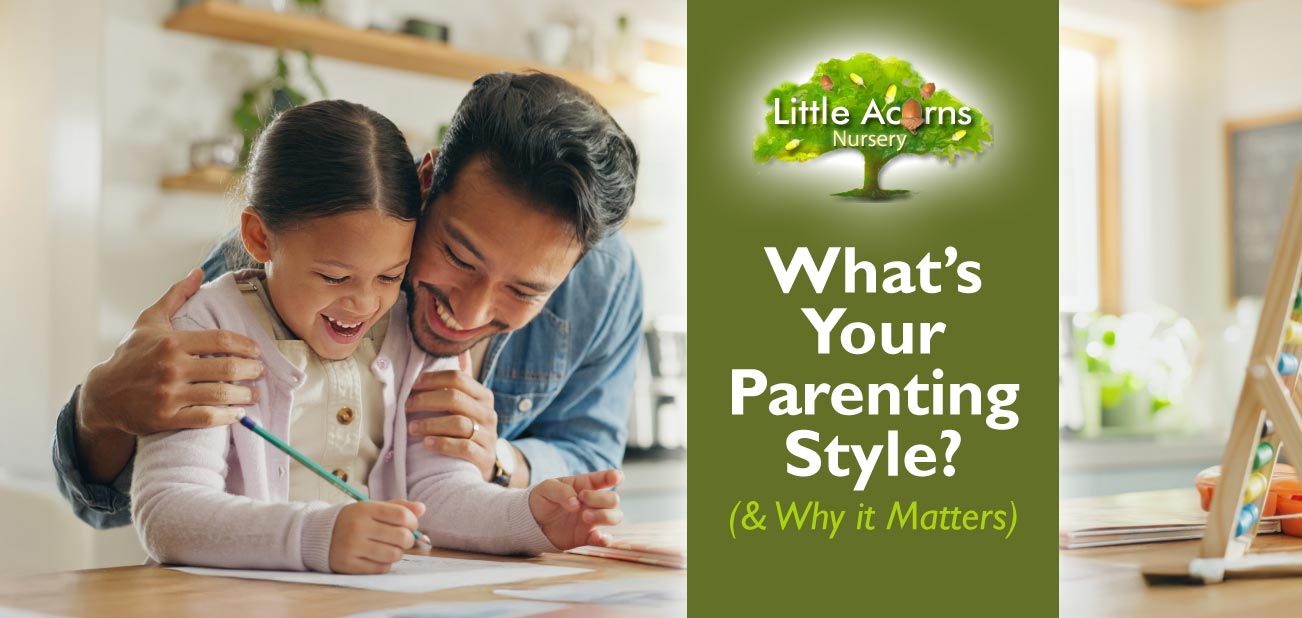
 There is an incredible array of names for parenting styles. You may have heard, for example, of names like helicopter parenting, velcro parenting, indulgent parenting, parent-led parenting, and mindful parenting, along with a myriad of other descriptions. Some styles are quite distinct, others are subtle variations of each other, and several have more than one name. No wonder it’s confusing!
 Let’s start with a style that’s often referred to as the ‘gold standard’ of parenting styles — authoritative parenting. For many years, experts have suggested that this particular parenting style has possibly the best overall balance in its approach. However, it’s important not to confuse authoritative parenting, which is fairly gentle, with authoritarian parenting, a far more strict style. Authoritative parenting is thought by experts to have a well-balanced mix of elements in its approach, resulting in good outcomes for children raised under its style. The style typically has the following elements in its make-up:
 Gentle parenting is a style that’s been very prominent on social media in recent years. Many may not realise, however, that it’s simply a soft variant of Authoritative parenting. That said, though, it still retains clear rules and boundaries for the child to follow. It’s crucially important, however, not to confuse gentle parenting with permissive parenting (also known as indulgent parenting), which, as the name suggests, has far fewer boundaries — very few in fact. Not so, though, with gentle parenting if approached correctly.
 Permissive (a.k.a. Indulgent) parenting is a style that prioritises a child’s happiness over virtually everything else. As such, it’s a warm, empathetic, and loving parenting style. However, rules, structure, and discipline are extremely thin on the ground. Parents and children prioritise fun and their close relationship. When under-fives go through emotional periods in their development, it’s true that this permissiveness can counteract some of their emotional turmoil, but it does come at a cost.
 Authoritarian parenting (not to be confused with Authoritative parenting explained earlier) is the harshest of today’s parenting styles. As the name suggests, parents who use this parenting approach tend to be rather like dictators, whose rules must be followed … or else! With this parenting style, children must do what they’re told, often without understanding why, and the parent dominates them. There is no warmth or empathy for the child with this style. What the parent says goes. High standards are usually demanded, with stern discipline and punishments if children do not comply or achieve such standards. There is also no debate, so children’s views are not listened to or taken into account.
 Also known as neglectful parenting, uninvolved parenting “does what it says on the tin” i.e. children are very much left to their own devices with this style. They receive no love, affection, or empathy from parents. There are no rules or structure to their daily lives. They receive no guidance, and parents are certainly not role models. Children just have do make to as best they can, unsupported by parents. There may be different reasons for this, of course (not all ‘neglectful’ parents are uninvolved by choice — for example, they may be physically or mentally unwell or be working three jobs just to survive).

 Whether you’re planning a family, are already pregnant, or have recently given birth, it’s beneficial to obtain as much knowledge and information as you can so that you are fully prepared. So, when we spotted a comprehensive antenatal course that allows free* access to UK families, we naturally wanted to share the opportunity with parents, expectant parents, and our readers. With that in mind, today’s post introduces you to a Complete Antenatal Course. It’s a free, 8-hour online course, led by midwives, that you can access today. We have already investigated it for you and thought it was fabulous! Read on to learn more about the course contents, highlights, and easy access details to get started — all at zero cost!
 Yes — the Complete Antenatal Course is currently free (correct at the time of writing, mid-February 2026). That assumes, of course, that you don’t choose to upgrade to premium options or sign up to other courses etc. We found it quick and easy to sign up without such add-ons — achieving virtually instant access to the course, without cost. That said, some families may consider paid upgrades if they so wish, for example, if they would like access to speak with midwives during the course, or get involved in Q&A sessions. It’s also worth pointing out that the main course is free because it’s funded through a commercial partnership — apparently saving £175! You may therefore see some short commercial clips during the course, but we found them minimal and unobtrusive.
 You can currently

 In their earliest years, children’s brains are doing a phenomenal amount of developing. At this stage, little ones understand far more than they can express, and they’re learning to handle powerful emotions without the calm reasoning skills adults (mostly) have. The part of the brain responsible for emotional control is still under construction, so when they’re hungry, tired, frustrated, or simply want something right now, they can easily become overwhelmed. In short, they’re not trying to give you a hard time. They’re having a hard time.
 It’s not always easy as a parent, but your own composure is key. A calm, even tone and steady body language tell your child that you’re in control, even if you feel anything but. Also, try avoiding lengthy explanations in the heat of the moment — too many words can overwhelm an emotional toddler.
 The nightmare scenario: You’re halfway down the biscuit aisle when your toddler takes an unhealthy shine to a chocolate-covered, sugar-filled snack that’s really not going to be good for them. So, you say no. They flop to the floor, wail at a volume that seems to fill the entire supermarket, and protest in a dramatic fashion that catches the attention of every shopper in the vicinity. Not only is your child in full, public, tantrum mode, but you’re also going to feel judged!
 Scenario: At home, your child sees their sibling or a friend playing with the toy they absolutely must have right now. They shout, try to grab the toy, and then the sobbing begins.
 Scenario: Dinner is served, and your child takes one look at the plate and decides it’s the worst thing that’s ever happened to them. Cue gesticulating arms, shouting and, in all probability, some dramatic sliding under the table.
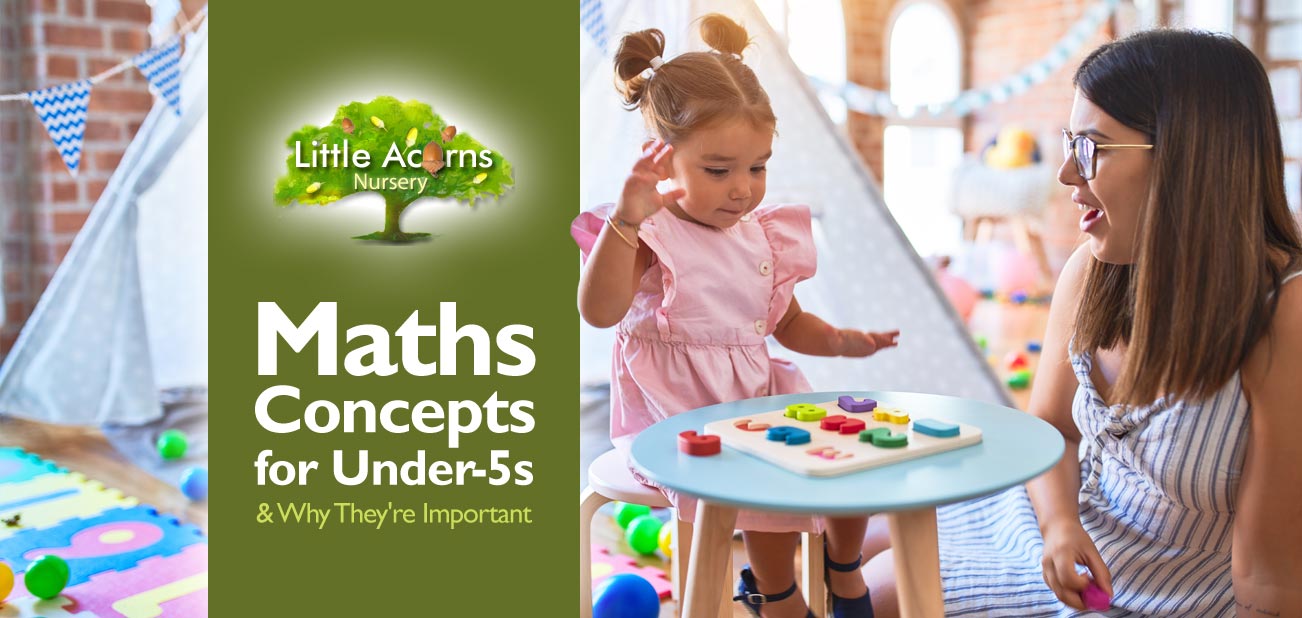
 Once babies have transformed into toddlers, it’s never too early to introduce them to maths-based concepts and language. Indeed, introducing under-fives to such concepts in the earliest years will benefit them hugely as it lays the foundations for future learning. That’s one of the main reasons it is a part of
  Familiarity with mathematical terms and concepts also helps to prepare children for formal education, including in many areas other than pure mathematics. Understanding maths concepts from an early age will allow them to confidently engage in number-related exercises and discussions, greatly enhancing their school readiness across multiple topics. Such preparation will allow them to take maths-based challenges in their stride right from the moment they begin Reception Year in primary school. What’s even more striking is that studies show a direct correlation between early mathematical skills and later educational achievement.
 Counting is the most obvious example. Counting can be introduced and practised by your little one in many, many situations, from counting how many more mouthfuls of food a child should eat, to the number of Lego blocks in a tower they’re creating.
 Shapes also have roots in maths, so children should get familiar with 3-sided triangular shapes, 4-sided shapes like squares and rectangles, and so on.
 Creative endeavours can also be vehicles through which supervising adults can highlight elements of mathematics that are built into designs and creations that children may generate. Patterns and shapes are obvious examples of that. Last but not least, parents can involve children in maths facets which are integral to everyday life, for instance, counting items when out shopping, or measuring when putting ingredients together for a meal. Children will love being more involved in such activities and will learn about maths in a fun, natural, and engaging way. Doing so will create the strongest foundations for their future learning.

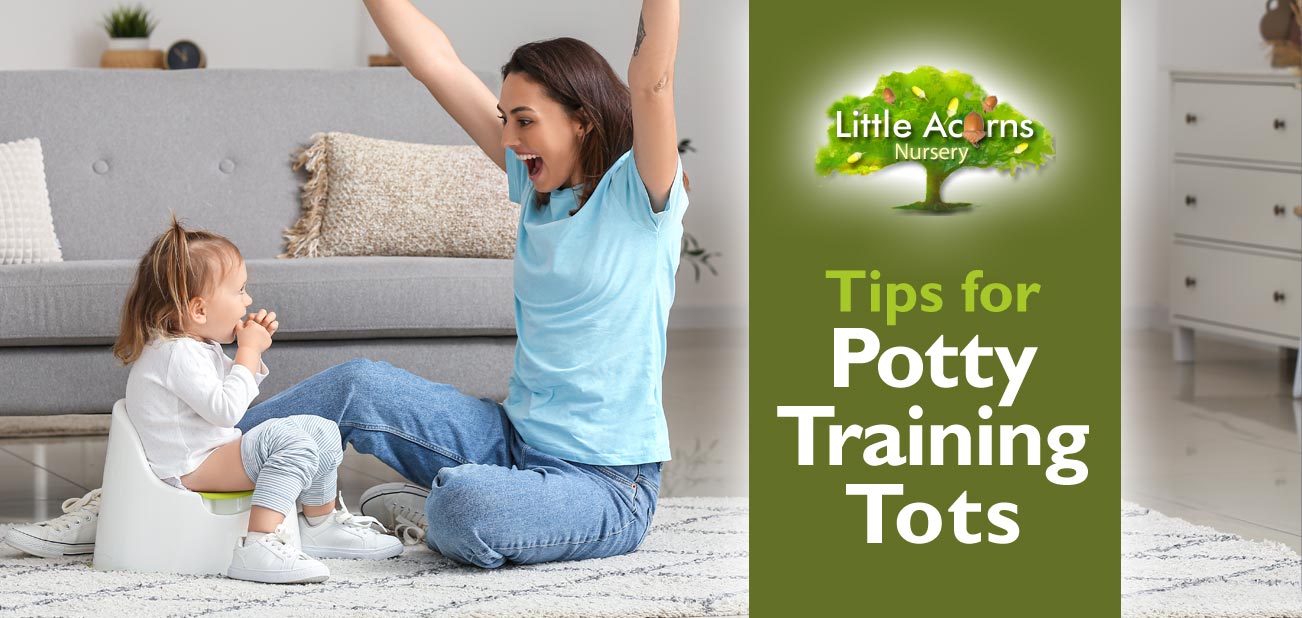
 One of the key tasks all tots must face, in tandem with parents, is potty training. It’s something we all had to master as toddlers and therefore we know it’s 100% achievable — despite it sometimes seeming to be rather a challenge. Achieving success, though, will improve the quality of life for the child, the parent, and other guardians involved in the child’s care. Learning to master the use of the potty and later the toilet will also be a major boost to self-confidence and independence when the child is at nursery, preschool, and later school. With that in mind, today’s guide outlines our top tips for successful potty training.
 Children become ready for potty training at different times — every child is different in that respect, with some starting as early as 18 months and others not training until the age of 3. That said, the majority of little ones begin potty training between the ages of 2 and 3. There are some signs to look out for that will help parents decide when the time is right and we’ll look at those below.
 Ensuring children understand the language around toileting is helpful, of course. So, it’s healthy to help children learn the various terms involved, whether talking about a potty, wee-wees, or anything else. Learning appropriate words will empower children to ask for what they need, at appropriate times.
 Potties with designs that are attractive to toddlers e.g. dinosaurs, licensed TV characters etc.
 Only start potty training when your child shows signs that they’re ready. (See the When Should You Begin Potty Training? section above for details).
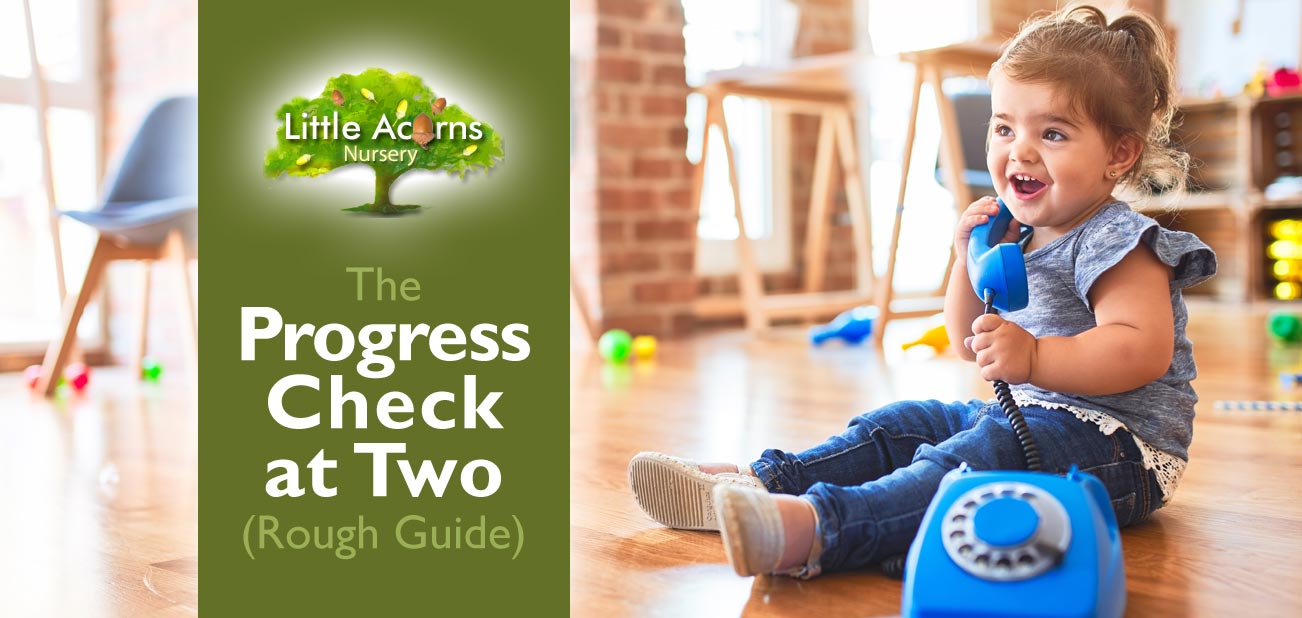
 Every 2-year-old attending registered childcare settings in England is subject to what’s known as a ‘Progress Check at 2’. Today we explain what it entails, who is involved and how it benefits little ones. Here’s our rough guide to the Progress Check at 2:
 The Progress Check at 2 should not be confused with the Healthy Child Programme’s 2-Year Review that 2-year-olds also undergo around the same age. While the ‘Progress Check at 2’ looks at the child’s learning and development progress and is the topic of today’s guide, the separate ‘2 Year Review’ is more about the child’s health and wellbeing and is undertaken by healthcare professionals like health visitors. They will look at things like overall health, immunisation uptake, physical and mental health and development, overall wellbeing and support levels from parents, carers or guardians.
 The three ‘prime’ areas of the Early Years Foundation Stage (EYFS) curriculum are also the core focus areas of the Progress Check at 2. Hence, the checks will look to see how well the child is progressing primarily in their:
 The core idea behind the Progress Check at 2 is to discover whether progress is at expected levels for the child’s age and development.

 Last year, we wrote a detailed post outlining
  Interestingly, under-five children who came from disadvantaged backgrounds were shown to benefit even more than those who didn’t. For this reason, reading with parents/carers has been proposed as a possible way to close the performance deficit often seen with children from such backgrounds. It may well represent a perfect solution to even up the playing field.
 Deeper bonds with parents/carers (after all, this is quality time spent together, one-to-one);
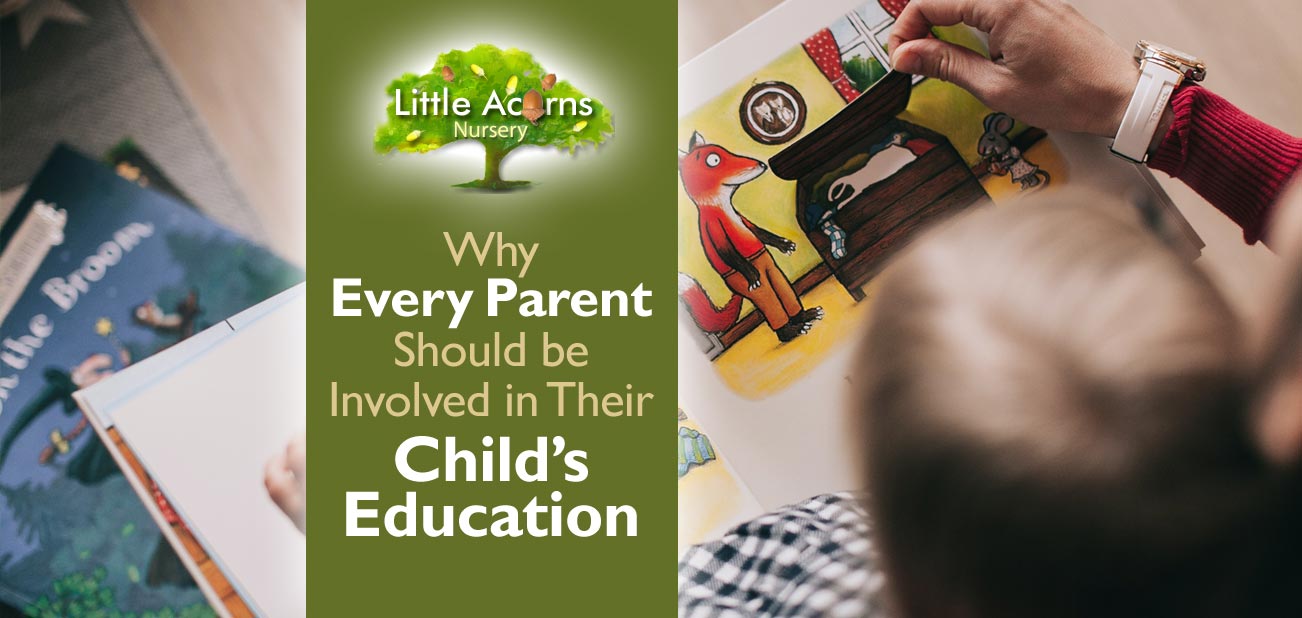
 Indeed, parents can be thought of as key to their children’s success, if they support children’s education in the right ways. We’ll go through exactly what that means, along with some of the many benefits, in this article.
 Choose the Right Setting
 Parents of successful, grade A students, will generally also have engaged with staff at nursery/pre-school and school. That includes at parents’ evenings, of course, but parents should also be fully abreast of their child’s progress at every point in between. Parents and staff need to talk and feed back to each other about each child under their care and, indeed, that’s exactly what we do at Little Acorns Nursery. This, and a personal development progress folder for every child, is all part of the EYFS curriculum at the nursery in fact. In this way, parents and staff can each see the bigger picture and identify where successes are happening for the child, or where more work is needed — including at home.
 Parents can help children with homework too, of course. They can explain things that the child is perhaps confused or unclear about, in an unrushed, relaxed home environment. Parents can work through their approach to finding answers to questions and explain how they arrived at those answers. This, too, is like gold dust to an otherwise struggling child. It’s one of the reasons why the human race itself has come such a long way — through shared information.
 • In turn, that ultimately leads to better careers as adults, with higher rates of pay.