

A Simple, Nature-Based Activity for Kids — with a Free Poster!

 Summer and autumn are particularly good seasons for children to get outdoors, breathe in fresh air, and enjoy all the benefits of the natural world. Nature is incredibly important to children, and it’s one reason why Little Acorns Nursery runs Forest School sessions as part of its childcare provision. With all that in mind, today’s suggested activity is a leaf scavenger hunt for little ones — and it comes with a free ‘leaves’ poster for families to download. Featuring 16 different types of tree leaves commonly found in England, the poster will serve as an excellent visual reference to inspire children in their search. It also presents children and families with a challenge — how many can they find and identify? Such an activity will encourage children to get outside, closer to nature, and learn about Britain’s trees as they go. Take a look and grab your free poster below.
Download Your Child’s Free ‘Leaves’ Poster
Shown below is a preview of the free poster that we’ve put together for children and families to get them started on their leaf hunt. Simply click the image to open/save the poster in Acrobat PDF format. Then, choose your printer’s highest-quality settings and paper. Print the poster in full colour for the best results. Choose high resolution printing and select A3, A4 or A5 scaling as desired. A3 and A4 are great for displaying on children’s bedroom walls, while A5 may be best suited for children to take with them on their leaf hunt. They can use the little tick boxes provided to tick off each type of leaf as they discover them. See how many of the 16 you and your child can find — enjoy the outdoor adventure together!
Enjoy the outdoor adventure together!

Types of Leaves for Children to Look Out For
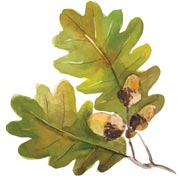 Children may already be familiar with some of the leaves featured on the poster. They may be able to identify oak leaves, for example, especially when acorns are growing amongst them. They may also be able to identify ‘conker tree’ leaves from horse chestnut trees, and perhaps even those from their close relatives, sweet chestnuts — but ensure they’re careful of the spikey sweet chestnut cases! Sycamore leaves, ivy leaves, and hawthorn leaves may also be fairly easy for children to recognise — or soon get to know.
This activity is a great way to teach children to look more closely at the natural world, learn to name different types of trees, and to discover things they’d never taken time to notice before. Nature is full of incredible things and is immensely varied, and today’s activity will help open their eyes to more of its magic!
This activity will help to open children’s eyes to more of nature’s magic!
How Many Different Leaves Can Your Child Find?
 Some types of leaves may be more challenging for children to differentiate between than others. However, that’s all part of the fun and the educational challenge. Hazel and Lime leaves are similar to each other, for example, although unlike hazel leaves, lime leaves have a sheen and the incredibly beautiful seed fronds that you can see on the poster in the third row. Elder and Ash leaves are also similar to one another, although the quite different number of leaves per stem will help children identify which is which (see the first row). Acers (a.k.a. Maples) are often found growing in gardens and parks. Their leaves are very pretty and come in a variety of colours, from deep burgundy or bright green to golden yellow depending on the variety and time of year. Our acer example in the first row should give children a good idea of what kind of shape to look out for in the main, although some acers are even more fancy!
Nature is Hugely Beneficial to Children
 Nature is incredibly important to human beings. Both children and adults experience an incredible array of benefits through spending time in and around the natural world — which is why we have Forest School at Little Acorns Nursery in Clayton-le-Woods. The benefits of nature are holistic and hugely impactful. Just a few examples of nature’s benefits include improving mental well-being, reducing stress, helping to improve sleep, boosting Vitamin D production, enhancing creativity, improving social skills, encouraging creativity, boosting knowledge about the world, and even improving academic grades. Time spent outdoors close to nature also encourages outdoor play and exercise, and thereby helps improve fitness, coordination, and motor skills. That’s all so important for little ones. Learn more about the importance of nature to little ones here.
It’s Why We Have Forest School at Little Acorns Nursery, Chorley
Coming Soon: Creative Activities Using Leaves
 In a follow-up to today’s leaf scavenger hunt, and in view of autumn being just around the corner at the time of writing, we’ll soon publish a new post that outlines some fun, highly creative activities that use leaves. From leaf painting and leaf rubbing to leaf collages, leaf pressing, and more, visit again soon for some wonderful activity ideas for your child using leaves. They’ll get your child’s creative juices flowing and, once the leaves have been gathered, it’ll be something different for them to do indoors, yet still involving nature.
More Free Stuff for Children & Families
Today’s leaf scavenger hunt poster is just one in a series of free posters that children and families can download here on the Little Acorns Nursery website. Other free posters involving nature-inspired activities include a summer nature hunt, an autumn scavenger hunt, a winter nature hunt, a spring nature hunt, mammal spotting, bird spotting, minibeast spotting, and butterfly spotting. They’re all great activities as well as coming with interesting and informative posters that are free to download for children. Follow the bold links to learn more and to access the posters.

Nursery Places in Clayton-le-Woods, Chorley
High-Quality, Convenient Childcare for Under-Fives

 Do you live in the Chorley area and have a baby or child under five? If so, Little Acorns Nursery in Clayton-le-Woods would be a fabulous setting for their weekday childcare. With excellent facilities for babies and under-fives, a self-contained preschool unit, regular Forest School sessions, a ‘Good’ Ofsted rating, and support for funded childcare places for eligible families, the setting represents a wonderful choice. The nursery is open early too, from 7:30 a.m., also closing later than many at 6:00 p.m., making it even more convenient for working parents, particularly those seeking wraparound childcare.
Get in touch today to book a guided visit, register your child for a place, or to ask any questions. Please choose a button below to get started:
Little Acorns Nursery is located in Clayton-le-Woods, Chorley, so may suit families living nearby in Clayton Brook, Clayton Green, Penwortham, Farington, Bamber Bridge, Whittle-le-Woods, Lostock Hall, Leyland, Pippin Street, Buckshaw Village, Thorpe Green and Euxton.
Safety Note: A responsible and vigilant adult should always accompany children, particularly the very youngest, when they’re exploring outdoors. There are many potential dangers out there, including physical hazards, choking hazards, poisonous or toxic plants, stranger danger, and more. So, always accompany little ones and ensure they learn what to do, what not to do, and the potential dangers to look out for and avoid. Supervising them outdoors and teaching them about safety is also a proactive way to help them learn to assess risk and ultimately learn to keep themselves more safe.
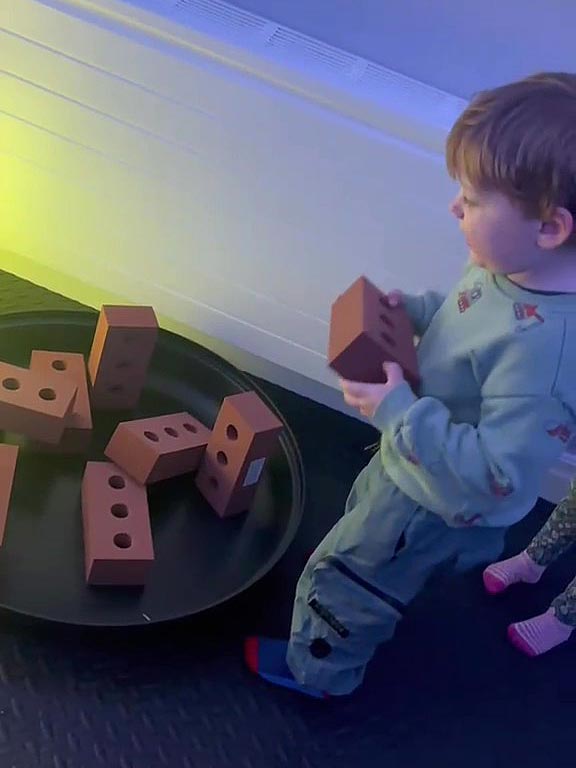

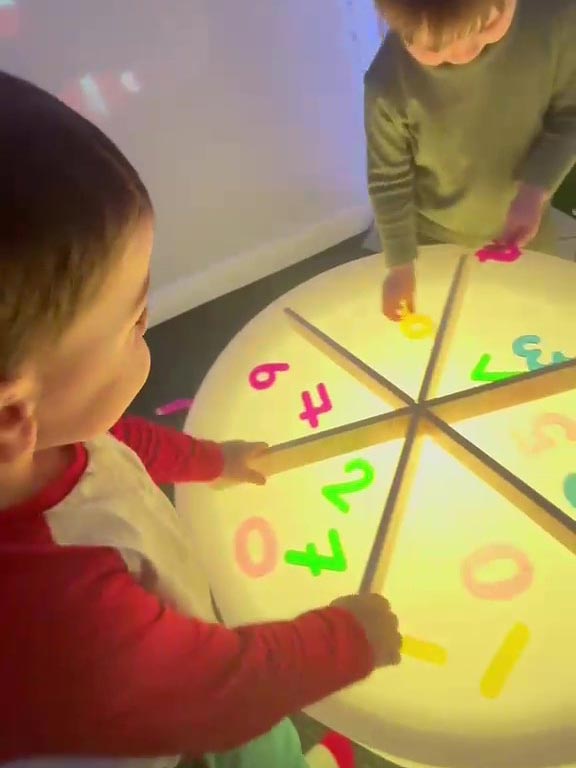



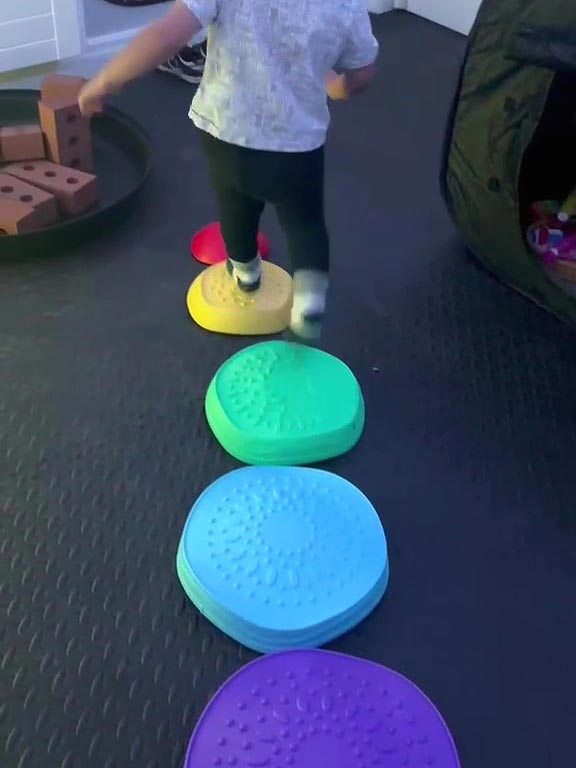



 For most families, electronic screens are everywhere. Across the country, there are TVs in living rooms, with many households also having them in kitchens, dining rooms, and even bedrooms. Smartphone use is also prolific. Additionally, we have tablets, computers, game consoles, e-readers, and even wearable smartwatches that have screens. So, rather like the movie title, “Everything Everywhere All at Once,” electronic screens are nothing short of ubiquitous. But what effect does watching such screens have on people, particularly children? And is there an argument for taking a significant break from them once in a while? Today’s post explores the topic and explains Why Every Family Should Try a Digital Detox, whether for a day, a week, or significantly longer. Let’s dive in.
 Common sense alone would dictate that spending hours watching electronic screens is, at the very least, unnatural for children. When you think about it logically, time spent staring at one spot, remaining physically inactive, cannot be good for young – or even old – brains and bodies. Indeed, studies have revealed some unsurprising findings relating to excessive screen use, especially for children, whose young brains and bodies are still in their infancy. Those under five are undergoing rapid brain development, so it’s a particularly crucial time for them. Indeed,
  A decrease in levels of stress, anxiety, and other emotional difficulties;
 Unplugging from electronic screens has been shown to benefit families as a whole. Days and evenings together seem more relaxed and often feel significantly longer when screens are switched off. Then, families are soon likely to increase levels of connection and presence. Away from screens, there is likely to be more spontaneity and creativity too, with more talking, reading, playing, drawing, and making. Children will often display excitement about beginning each new activity, too. The overall family mood is often also improved, leading to a healthy and congenial atmosphere, with noticeably more laughter. What’s more, everyone becomes more aware of each other, engaging in group or sibling activities more readily, and being overall more attentive to one another. Then, when it’s time for bed, everyone feels more rested, and children will generally fall asleep more easily than ever before. Incredibly, all such benefits and this newfound quality time are achieved simply by stepping away from electronic screens.
 When children and families unplug from electronic screens, it becomes natural for them to spend more time outdoors, closer to nature. That’s important because both outdoor play and a closer proximity to nature have incredibly significant benefits all of their own. To demonstrate that using just one example, studies showed that a mere 20 minutes spent closer to nature will improve a child’s happiness. In fact, nature boosts mental health so significantly that even just a view of nature through a window has been shown to boost academic grades, test results, and overall academic focus — incredible!



 With Chorley Football Club being only 4.8 miles and a 14-minute drive from
  Participation in sports benefits children in many different – and often profound – ways. That’s especially true for children in their early years, being a stage when they learn fundamental skills like jumping, running, throwing and catching balls, etc.
 Sports and active hobbies will also help little ones hone balance, agility, coordination and motor skills. That’s incredibly important during early childhood as these key skills are still developing and, as the old proverb goes, “practice makes perfect.”
 Sport is a great socialiser too. Through sport, they’ll get used to interacting with other children as well as coaches, teachers, or childcare professionals. Moreover, children not only make new and deeper friendships through sport, but also learn social skills before, during and after such play. These skills and benefits will stay with them for the long term and will help to enrich their lives in profound ways.

 As we discussed in our recent post
  Designate an area in your home for play. It doesn’t need to be elaborate — even a corner with a few age-appropriate toys, books, and art supplies may be sufficient. Ensure, of course, that the space is safe and free from hazards before your child embarks on their play activities.
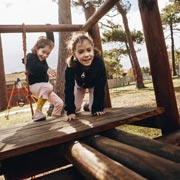 Outdoor play also offers a wealth of learning opportunities. It promotes physical health, stimulates the senses, and allows for unstructured exploration, which all contribute to holistic development. Take your child to the park, explore nature, or simply play with them in the back garden if you have one. Outdoor activities will also foster an appreciation for the natural world. Indeed, we wrote a whole post about
  Reading is a wonderful way to support learning through play. Choose age-appropriate books, of course, and be sure to engage in interactive storytelling. Ask and encourage questions about the story, encourage your child to predict what might happen next, and ask them what they might do if it were them in the story. Books and reading teach children so many things and, like pretend play above, truly encourage their imaginations and get their creative juices flowing.
  Arrange play dates with other children or involve siblings in play activities at home. Social play helps children learn essential social skills like cooperation, sharing, and conflict resolution. It’s also a great way to make new friendships, learn from each other, and become a closer member of friendship circles.
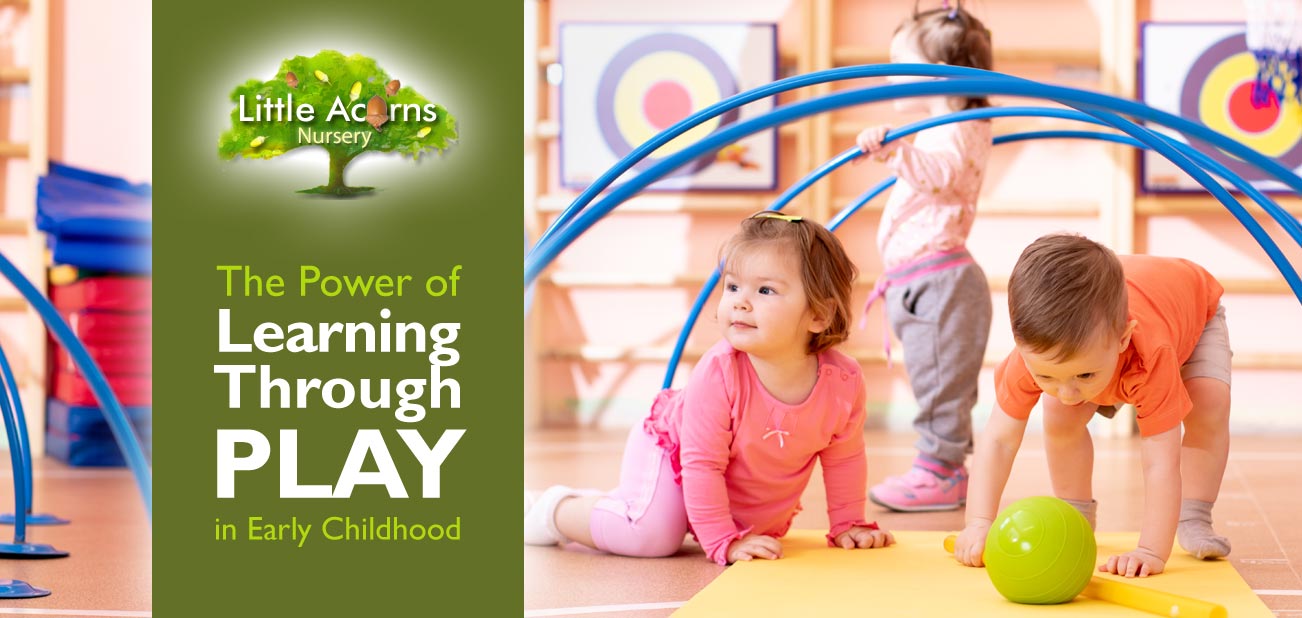
 In the world of child development and early education, there is a simple yet profound truth: children learn best when they are learning through play. Play is the universal language of childhood and, indeed, it transcends both borders and cultures. Whether it’s building sand castles on a sunny beach or arranging blocks on the floor at home, play is the gateway through which children explore, discover, and grow.
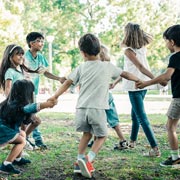 As adults, we often associate learning with classrooms, textbooks, and structured lessons. However, for children, the process of learning is a dynamic and ever-evolving adventure, with play being their very best companion during the journey.
 Do babies benefit from play? Absolutely. Play is the first way through which infants start understanding their world. They use their senses to explore toys, grasp objects, and make sense of the environment around them. Sensory play, such as touching different textures or listening to soothing sounds, stimulates their developing senses and lays the groundwork for future learning.
 During the run-up to the age of 5, play is integral to children’s development. During this phase, children are like little sponges, soaking up information from their surroundings. Play allows them to experiment, make connections, and refine their cognitive and many other skills. Skills enhanced through play include:
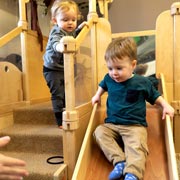 Creating playful environments — we understand the importance of a conducive environment for learning through play. With that in mind, we provide carefully designed play spaces that are rich in stimulating materials and resources. These spaces allow children to engage in various types of play, from imaginative to sensory, in a safe and supportive setting.