
 With September 2024 arriving, eligible children aged as young as 9 months can now access free childcare in England. The new childcare ‘hours’ are available where working families are eligible for the support and, in tandem, where local childcare providers are set up with appropriate staffing ratios and capacity. The good news, however, is that Little Acorns Nursery, in Clayton-le-Woods, supports the new scheme. It’s therefore with great pleasure that we’re now beginning to welcome children as young as just 9 months of age for free childcare hours at the Chorley setting.
In today’s guide, we’ll explain who is eligible and how much free childcare they can access right now — and in a year’s time when the scheme expands further.
When Does the New Childcare Support Start?
The new childcare support began at the start of September 2024, so it is already available for eligible children. It will expand yet further in September 2025 and we clarify what that means below.
What Free Childcare Can Babies (9m +) & Children of Eligible Working Families Access?
 From September 2024 (so already active), eligible children aged from 9 months to 3 years of age can access 570 hours and eligible children aged 3 and 4 can access 1140 hours of free childcare support per year. The free hours are usually taken over the course of 38 weeks (equating to 15 and 30 hours per week respectively). However, some childcare providers may allow the hours to be spread over more weeks of the year by reducing the number of hours per week. Speak directly to your specific childcare provider about the availability of this more flexible option.
- From September 2025, eligible children aged from 9 months to 3 years will also be able to take 1140 hours of free childcare per year, again usually taken as 30 hours per week. As before, it may be possible to spread the hours out over a greater number of weeks of the year by reducing the number of hours taken per week. Again, speak with your specific childcare provider to see if that option is available if it’s of interest.
 From September 2024 (so already active), eligible children aged from 9 months to 3 years of age can access 570 hours and eligible children aged 3 and 4 can access 1140 hours of free childcare support per year. The free hours are usually taken over the course of 38 weeks (equating to 15 and 30 hours per week respectively). However, some childcare providers may allow the hours to be spread over more weeks of the year by reducing the number of hours per week. Speak directly to your specific childcare provider about the availability of this more flexible option.
Summary:
| Available Now | Available From Sept ’25 | |
|---|---|---|
| Eligible* children 9 months – 3 years | 570 hours (usually 15 per week) | 1140 hours (usually 30 per week) |
| All children 3-4 living in England (‘Universal Entitlement’) | 570 hours (usually 15 per week) | 570 hours (usually 15 per week) |
| Eligible* children 3 to 4 years | 1140 hours (usually 30 per week) | 1140 hours (usually 30 per week) |
* Subject to eligibility criteria outlined below. Additional charges may apply (e.g. for food/nappies – ask your provider if these cost extra).
Note that some 2 and 3-year-olds are also eligible for 570 hours of childcare funding under a different scheme where they fall into certain ‘additional needs’ categories or their parents receive qualifying government benefits. Today’s guide, however, focuses primarily on the more widely available scheme for eligible working families.
*Eligibility Criteria for Working Families
The free childcare scheme for children aged from 9 months to 4 years (inclusive) applies to children of eligible working families. But what constitutes an eligible working family? The following rough guide explains:
As a rough guide, to be eligible, both you and your partner (if you have one):
 Must not have an adjusted net income above £100k in the current tax year;
- Must each expect to earn at least the equivalent of the National Minimum Wage or Living Wage for 16 or more hours on average per week, over the next 3 months;
– for those aged 21 or over, this currently equates to £183 per week and £2,380 over 3 months;
– for those aged 18-20, it currently equates to £137 per week and £1,788 over 3 months;
– for those either under 18 or in an apprenticeship, it currently equates to £102 per week and £1,331 over 3 months;
Figures are before tax and are correct at the time of writing (September 2024) - Must have a National Insurance number;
- Must be applying, of course, for a child of the appropriate age for the scheme.
 Must not have an
 There are additional rules around specific scenarios, for example, for foster carers, those starting a new job, those whose earnings do not form a regular pattern, the self-employed, and those receiving one or more government benefits. Immigration status is also a factor. Learn more about the eligibility rules here.
“Some children from working families can now receive free childcare from just 9 months old until they begin school.”
Get Started!
Learn more about when and how to apply and when you can start using the free childcare hours here. Staff at Little Acorns Nursery in Clayton-le-Woods, Chorley, are also happy to discuss the childcare needs of local parents, including the various funding options available to those who are eligible.
High-Quality Childcare Services in Clayton-le-Woods, Chorley
Little Acorns Nursery, Clayton-le-Woods, Chorley, Central Lancashire
 Little Acorns is a wonderful childcare nursery in Clayton-le-Woods, Chorley, Lancashire. We provide a high-quality childcare and ‘early years’ education service for babies and children aged up to five, giving them the very best start in a home-from-home environment. As well as being perfectly located for local families in Clayton-le-Woods, we may also suit families living nearby in Clayton Brook, Clayton Green, Thorpe Green, Pippin Street, Buckshaw Village, Whittle-le-Woods, Farington, Bamber Bridge, Lostock Hall, Euxton, Leyland and Penwortham.
Register your child for a nursery place today, arrange a guided tour, or ask us any questions — we’ll be happy to help:
 parents to return to the workplace sooner after the birth of their child if they so choose;
 children aged 2 from eligible working families will be able to claim 570 hours of free childcare each year. This is typically taken as 15 hours of free childcare each week over 38 weeks, although exactly how it’s taken may be agreed otherwise between the family and the childcare provider.
 Until now, 87% of those eligible to claim childcare support through Universal Credit were not doing so. One of the main reasons for this was that it’s geared towards low-income families yet required them to pay childcare fees in advance — and later claim them back. Paying in advance is not so easy when household income is low, as is typically the case for households that would otherwise be eligible. For this reason, another of the Chancellor’s initiatives announced in the Spring Budget 2023 is to roll out the following improvements:
 The final childcare-related initiative in the Chancellor’s Spring Budget aims to fix another key problem for parents: how to juggle their own longer working hours with their child’s shorter school hours. When a child attends school, they often finish their school day several hours before their parent is finished at work, for example. There is therefore a childcare requirement to bridge the gap and this may be required both at the start and end of the child’s school day. In view of this, the Chancellor announced the piloting of a new Wraparound Pathfinder Scheme, which would fund childcare hours from 8 am until the start of the school morning and, later in the day, fund childcare for the mismatched afternoon hours up to 6 pm. The pilot will test the scheme to see how well it works. If successful, the Chancellor aims to roll it out to the whole of the UK from September 2024.
 One of the first challenges when considering childcare for your little one is how to fund it. If you’re an affluent family, then great. However, if childcare costs will be a more significant hurdle to overcome, the good news is that there are lots of options available. Either way, it will help to be well-informed about the various childcare funding schemes on offer from the Government. There are quite a few of them and some are extremely generous and surprisingly easy to obtain. Today’s Quick Guide to Childcare Funding Options in England will give you an at-a-glance overview of what’s available, the key eligibility criteria and how to apply. Note, though, that they generally fund in-person childcare only from approved providers (like Little Acorns). Take a look at the many options …
 You’ve no doubt heard of, or read about, childcare ‘vouchers’. They sound great, but what are they and how do you get them?
 Tax-Free Childcare is a great scheme which, in contrast to childcare vouchers, is widely available to working families — even for those with relatively high earnings.
 Certain 2-year-olds are eligible for 15 hours of free childcare each week, through another Government scheme. This one is to help primarily those families on benefits.
 3 and 4-year-olds in England are very well catered for when it comes to free childcare funding. This is aimed to help them receive that all-important early years education and to help those parents wishing to return to the workplace.
 Tax Credits specifically for childcare are only available to existing claimants under the scheme, through ‘Working Tax Credits’. New claimants should instead refer to the ‘Childcare Funding through Universal Credit’ section below.
 For those who are eligible, this is quite a generous scheme that allows them to reclaim* as much as 85% of their childcare costs. The maximum available, however, is £646.35* each month for one child, or it’s £1108.04* for more than one.
 This is a grant that does not need to be repaid and is in addition to any undergraduate Student Finance.
 Learner Support is a type of financial support designed for students who are suffering financial hardship. It can be used to fund childcare for eligible students who are also parents.
 Care to Learn may suit if you are a parent who is not yet 20 and are studying on a publicly-funded course, although see caveats below.

 Children living in England are very fortunate to have their early years childcare supported financially by a variety of Government funding schemes. The 3 most important, popular and widely-available schemes are:
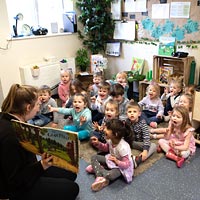 Let’s look at each of the schemes …
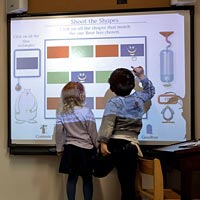 Taking the above scheme a step further, eligible families are able to top up the standard 15 hours per week with an additional 15 hours of free childcare in specific circumstances. In effect, this can double the child’s free childcare hours from the standard 570 hours to 1140 per annum. These are usually taken as 30 hours per week over 38 weeks although, again, some childcare settings may be able to be flexible and to spread the hours out in a different way.
 Under certain circumstances, children aged just two can have some of their childcare funded by the Government too. However, it’s much more restrictive for this age group. If successful, though, the Government will fund up to 570 hours of childcare for a two-year-old over the course of a year — that’s significant and could really help mothers or stay-at-home fathers get back to work sooner. As with the 3 & 4-year-olds, the 570 hours is usually taken as 15 hours per week over the course of 38 weeks, but some parents may wish to ask their childcare provider if it’s possible to spread it out in a different way.