Latest News
 Leaf Art for Little Ones25th September 2026 - 3:23 pm
- Let’s Go on a Leaf Hunt!26th August 2026 - 3:25 pm
- New Sensory Room at Little Acorns Nursery, Clayton-le-Woods31st July 2026 - 8:41 am

At Little Acorns nursery we want all families to be informed as much as possible…
At Little Acorns nursery we want all families to be informed as much as possible…
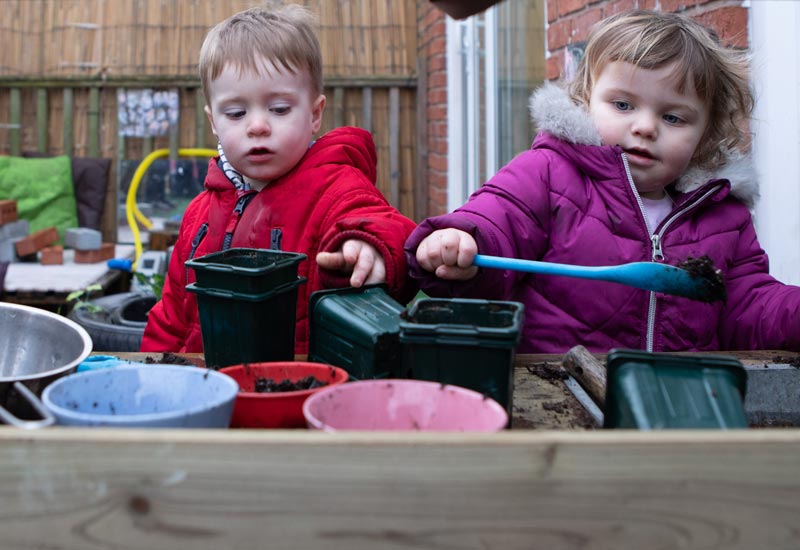


Little Acorns is an excellent nursery in Clayton-le-Woods, Chorley, Lancashire (PR6), near Clayton Green & Clayton Brook. It provides high quality childcare for babies (3 months +) & children of pre-school age.
34 Sheep Hill Lane,
Clayton-le-Woods,
Chorley,
Lancashire
PR6 7JH
Opening Hours
Open 7:30 am – 6 pm Mon-Fri
This site uses cookies. By continuing to browse the site, you are agreeing to our use of cookies.
OKCookie InfoWe may request cookies to be set on your device. We use cookies to let us know when you visit our websites, how you interact with us, to enrich your user experience, and to customize your relationship with our website.
Click on the different category headings to find out more. You can also change some of your preferences. Note that blocking some types of cookies may impact your experience on our websites and the services we are able to offer.
These cookies are strictly necessary to provide you with services available through our website and to use some of its features.
Because these cookies are strictly necessary to deliver the website, refusing them will have impact how our site functions. You always can block or delete cookies by changing your browser settings and force blocking all cookies on this website. But this will always prompt you to accept/refuse cookies when revisiting our site.
We fully respect if you want to refuse cookies but to avoid asking you again and again kindly allow us to store a cookie for that. You are free to opt out any time or opt in for other cookies to get a better experience. If you refuse cookies we will remove all set cookies in our domain.
We provide you with a list of stored cookies on your computer in our domain so you can check what we stored. Due to security reasons we are not able to show or modify cookies from other domains. You can check these in your browser security settings.
We also use different external services like Google Webfonts, Google Maps, and external Video providers. Since these providers may collect personal data like your IP address we allow you to block them here. Please be aware that this might heavily reduce the functionality and appearance of our site. Changes will take effect once you reload the page.
Google Webfont Settings:
Google Map Settings:
Google reCaptcha Settings:
Vimeo and Youtube video embeds:
Are You Due £2,000 in Help for Childcare? Rough Guide to Tax-Free Childcare
In today’s guide, we take a look at Tax-Free Childcare, which could effectively contribute anywhere from £2,000 to £4,000 per child, per year, towards childcare costs for eligible families. Those are significant sums, which could really help families, especially with the rising cost of living. The funding is there for for the taking if you’re eligible So, don’t miss out!
Let’s take a look.
What is Tax-Free Childcare?
In effect, the Tax-Free Childcare scheme subsidises childcare costs by utilising the tax that eligible families would ordinarily have pre-paid on the taxed income they use to pay for childcare. Specifically, the Government will add an extra £2 for every £8 that eligible families pay into a special account used childcare costs — even more if the child has disabilities. We’ll explain more about the childcare account later, but the good news is that you can get as much as £2,000 per child per annum if you’re eligible, or up to twice that if your child has disabilities. That’s a lot of money!
Who is Eligible for Tax-Free Childcare?
The above list represents the key rules governing eligibility for most families. However, there are some additional rules around eligibility — and some welcome exceptions to the above. For example …
20 Reasons to Choose Little Acorns Nursery for Your Childcare
1. Winner of THE Top National Nursery Award
We’re award-winning — and not just any award. Out of all the nurseries in the UK, Little Acorns won the award for the best Independent Nursery in the National NMT Nursery Awards. That says it all, really, and such a unique award recognises our passion, professionalism and the unparalleled quality of childcare provision.
2. We’re Officially an Outstanding Childcare Provider
3. Outstanding Leadership & Management
The effectiveness of our nursery’s leadership and management is also outstanding and, again, Ofsted independently verify this.
4. Outstanding Teaching, Learning & Assessment
5. Outstanding Personal Development, Behaviour & Welfare
Ofsted also found the quality of personal development, behaviour and welfare to be outstanding at the nursery, so you know your child is in the best place if they go to Little Acorns Nursery in Clayton-le-Woods, Chorley.
6. Outstanding Outcomes for Our Children
What’s even more important about Little Acorns Nursery is that Ofsted found children’s outcomes to be outstanding if they attend the nursery. An outstanding outcome for your child is simply priceless.
7. Exceptional Feedback from Parents
Parents give us exceptionally good feedback about the nursery/pre-school. Take a look at the lovely comments in …
SUPER-CHARGE Your Child’s Education Through Reading
A 40 year study1 of pre-school children found enormous positive benefits when children regularly read with a parent or carer. Preschoolers were seen to gain a boost, incredibly, of the equivalent of 8 months. That’s remarkable given that the average age in the study was just 3¼. Particular benefits were clear to see in several areas, including:
Receptive language skills were seen to benefit the most and that’s important — after all, understanding and comprehension of words and meanings are keys to potentially huge growth in many other areas a child’s early years education. Indeed, lacking such abilities has also been shown to really hold children back in terms of later social and educational ability, with poorer outcomes when they’re older.
A Special Boost for Children from Lower Socio-Economic Backgrounds
Read With Children, Not Just To Them
That’s an important factor. Reading to children is all very well and will have benefits, for sure. However, reading with children takes the potential benefits to a whole new level and that’s why it’s the kind of approach we use at Little Acorns Nursery. Parents and carers should also …
THIS is Why Your Child Should Go to Nursery & Pre-school
While some parent/guardians simply have to send their little ones to nursery or pre-school, others may be fortunate enough to have a choice. If you are one of them, you may be wondering whether to send your child to nursery or pre-school anyway — even if you don’t need to go to work from a practical or financial perspective. Typical questions parents may ask themselves include:
Well, this article is here precisely to answer those kinds of questions. The overall consensus from experts, though, is that children will benefit enormously by regularly attending a high quality early years setting. Let’s take a closer look.
The Benefits of Nursery/Pre-school to Under-5s
Studies show that the benefits of nursery and/or pre-school to children are most pronounced when they attend a good early years setting. So the choice of provider is an important one and, indeed, one that makes all the difference to the outcomes for a child.
Multiple Studies Show Benefits From as Young as 2 Right Into Adulthood
According to a 2020 study by the Department of Education (DfE):
A 2002 study1 found that the benefits of a good early years education showed benefits as early as the age of two.
Later, in 2011, another study2 showed that children aged 15 were still benefiting if they’d received a good early years education at nursery, pre-school or other early years setting. The benefits were seen to be so significant that, by the time they reached the age of 15, they were the equivalent of …
12 Outdoor Activities for Little Ones
Our last post described the huge number of benefits of outdoor play for children in their early years. With that in mind, today’s post highlights twelve excellent outdoor play activities that young children can enjoy. With spring all but upon us at time of writing, children will be able to get outdoors more and more in the coming weeks and months. Our activity suggestions are fun, educational, will teach children new skills and will get them out into the healthy fresh air too. Our ideas below are mostly of the more natural variety too, so need not cost anything. Take a look …
Teaching children to spot birds will really help them to appreciate wild creatures. They can simply watch for them in the park, on the balcony, in the garden or out in the country. Putting out some bird food and waiting patiently and quietly out of sight will help, of course. If children have made home-made bird feeders — even better! It’s more educational if they can view a UK bird book or app so they can identify the types of birds that they see. Maybe make them a list if they can read, or a pictorial reference sheet that they can tick off. Robins, sparrows, blackbirds, pigeons, doves and various types of tit are common in the UK, but there are many other types too. Here’s a handy list of the 19 most common British birds.
2. B ee & Butterfly Spotting
Similarly, bee and butterfly spotting is a wonderful activity for young children, although it relies more on there being an abundance of the right kind of flowers and plants growing nearby. Butterflies, bees and gentle hover flies will flock to plants like Buddleia, for example. They all generally like any flowering plants that are rich in nectar, scented and colourful. As we suggested for birds, perhaps parents or carers can print out pictorial reference for the different types that children may discover. Here’s a great reference for the different types of bee found in the UK and here’s a guide for UK butterflies.
Continuing with our wildlife activity theme, another educational and interesting activity for little ones is to see if they can find animal tracks. This is best done when there is suitable habitat for paw prints and suchlike, for instance where there is soft earth, mud or sand nearby. It might be a good activity to do whilst out rambling (see #6 below). Perhaps search near a lake or river as many birds and animals will visit the water’s edge — or in snow if it’s winter. (N.B. such activities should be done under adult supervision for safety, of course).
Once in the outdoors, whether in a garden, courtyard, park or countryside, children love building dens to ‘camp’ in. Building them is all part of the fun and they can be made with long sticks and foliage, a sheet draped over string tied between trees, or simply using a low-cost children’s tent or similar. Once erected, children will love using the den to use as a base, like their own ‘home in the wild’. Their imaginations can run riot and all manner of games, role-play and adventure can ensue.
5. Float a Boat
Little ones will love floating little boats on water (with supervision of a responsible adult for safety, of course). They’ll enjoy it even more if they have made the little boat or raft themselves. Boats can be made simply from …
The Benefits of Outdoor Play in the Early Years
Outdoor play is great fun for children — of course — and that should not be overlooked as a benefit. After all, any healthy childhood should be about adventurous play and fun just as much as it should be about learning. However, as we all know, playing and learning are very closely interlinked. That is why outstanding childcare settings like Little Acorns Nursery firmly believe in learning through play.
Having fun anywhere, but particularly outdoors in the fresh air, will help children’s wellbeing in terms of mental and spiritual health too. Playing outdoors will lift the spirits and give children a myriad of opportunities for fun, learning, self-improvement and physical wellbeing. Such activity releases the hormone cortisol in the brain and that helps to naturally reduce stress and anxiety.
Outdoor play is also a feast for the senses. During the early years, sensory experiences are very important, not least for their brain development. Playing outdoors will give them many sensory opportunities, for example in terms of what they hear, see, feel, touch and smell.
Outdoor play teaches children to be creative, inventing adventures and challenges with their friends, all the time stimulating their brains and minds just as much as their bodies. They benefit socially too, of course, growing closer bonds with their peers (and supervising adults), learning social skills like communication, understanding right from wrong, cooperation, and so on.
Outdoor Play at Little Acorns Nursery
Bird Feeder Ideas for Kids
In last month’s article about bird feeding for under-fives, we promised to follow up with a post showing ideas for bird feeders that children can make at home. So, that’s what we’ll look at today.
Making bird feeders is a fun activity for children, it’s creative, educational, teaches children new skills and gets children more in tune with nature. What’s more, making home-made bird feeders is pretty easy. It’s an inexpensive activity. It’s also great for the local birds, who get to eat much-needed extra food and that’s especially important during Winter. That’s a time when most other natural food sources for wild birds are in very short supply and the birds are burning calories just to stay warm. All in all, making home-made bird feeders and feeding birds during the colder months is an excellent activity for young children — and indeed for everyone!
So, take a look at a few easy-to-accomplish home-made bird feeder ideas below. However, young children should be supervised by a responsible adult at all times during both the making and locating of the bird feeders — health and safety comes first! There are also some guidelines included for the safety and wellbeing of the birds.
Apple Bird Feeder – Simple!
We’ll start with one of the most simple bird feeders: with adult supervision, children can be shown how quick and easy it can be to attract birds to the garden just by threading a nice apple onto a strong twig on a tree or onto the tip of a bamboo stake, or alternatively dangling it from a branch using a loop of string. Perhaps start the apple off by removing some of the skin in one or two sections, so birds can see the ‘flesh’. Before long, species like blackbirds, in particular, are likely to show an interest and be amongst the first to start nibbling them.
Children need to be patient; birds and wild animals instinctively wait a while before trusting new things that have appeared in the garden or anywhere outside. Patience is a great skill for them to develop, though, so this is another great lesson for them.
Or Use Bread – But With a Warning
Children can alternatively use a chunk of bread (ideally wholemeal, seeded and non-stale) but first read our warning below if going this route:
Warning: although bread is a popular choice for feeding birds, it’s actually not that great for them, particularly if it’s white bread and lacking in any visible seeds. It’s also dangerous for birds if it goes mouldy, which is why we say above that only small amounts that will be eaten within a day should ever be put out for the wild birds. So, in truth, any of the other food types mentioned in this article are far better for birds than bread.
These are fun and simple for children to make. The pine cones can be foraged from local woods and the best ones will be ‘open’ rather than ‘closed’, so that there’s somewhere that bird food can be pressed into. Children can simply spread peanut butter2, suet or lard1 all over the pine cone, pressing it in between the many seed scales that protrude from the open cone. Once covered, the entire thing can be rolled in bird seed and this will stick. The seed-covered pine cone can then be hung outside for the birds using some string, somewhere suitable (we wrote about …
Bird Feeding for Under-Fives
As autumn fades and winter begins in late December, wild birds struggle more to find food. Natural foods like insects, fruit, nectar, caterpillars and grubs are nowhere to be found. Even recently-abundant seeds have now dropped to the ground and are either buried or already eaten. With the colder temperatures, birds also need more food because they burn calories trying to stay warm. With all that in mind, we’ve been feeding our wild birds each day to keep them from going hungry. Today’s post explains how children and under-fives can also get involved in the rewarding activity of feeding wild birds.
Children Love Feeding Birds!
Feeding wild birds is something that children can definitely get involved in. It’s not only great for the birds, assuming it’s done properly of course, but it’s also a wonderful thing for children. If they keep it up, they’ll soon get to recognise the ‘regulars’ who will turn up each day. If they get used to a particular feeding time and place, some birds may even start to wait nearby once they begin to trust you and your child. That can take significant time, though, so children must learn to be patient (a great skill to have) and remain calm and quiet when wild animals and birds are nearby.
Good for Birds & Great for Children
Learning to Appreciate Nature & Other Creatures
Why Nature is So Important to Children
The greatest benefits come when children and young adults are able to spend time actually in the outdoors, surrounded by natural things like trees, flowers, grass and wildlife. Even a short break spent in such an environment will help to restore attention, cognitive function and mental resilience — and this is backed up by many studies. Incredibly, some3 have demonstrated that there are cognitive and performance benefits even when there is just a view of the natural environment, for example sight of green grass and trees through an open window in the classroom. That’s remarkable when you think about it.
The Benefits of Nature to Children
Attention Restoration
Nature is a great healer; time spent in the natural environment helps to counteract the depletion of mental resources, particularly after periods of perhaps intense mental work, for example following a series of lessons or tasks. The fascinating quality of nature is also key to this as it requires a kind of ‘softer’ attention, with the brain working on an almost involuntary basis. This is part of what’s known as Attention Restoration Theory (‘ART’). It is thought to work in such a way as to allow cognitive function to …
15-30 Hours of Free Childcare for 2, 3 & 4-Year-Olds
Little Acorns Nursery School supports all three schemes for families who have been successful with their funding applications.
This free childcare can really help families, especially parents who wish to return to work and those wishing to improve their standard of living. With more people working, it also benefits the economy, of course.
Perhaps most importantly, Government funding of early years childcare greatly helps children. Studies have shown that children who receive a good early years education, for example at nursery or pre-school, really do benefit. That’s in both the short term and the long term. A Department for Education study showed that children attending high quality early years education settings benefit socially, behaviourally, cognitively and, of course, educationally. Indeed it’s abundantly clear that early years education gives children a very healthy head-start so they can really hit the ground running by the time they start school around the age of 5. Many of the benefits of early years education are, as we said before, much longer-lasting, even into adulthood. Perhaps we’ll cover more detail on that in a future post. Either way, though, it’s clear that this financial support from the Government is incredibly important.
Free Childcare for 3 to 4-Year-Olds
15 Funded Hours for Children Aged 3-4
The great news is that all children aged 3 to 4 living in England are eligible to receive …