— A Fun & Educational Activity for Children (with Free Reference Poster!)
 It’s wonderful for families when spring arrives: the coldest weather is behind us, the sun is out more often, and there is so much beauty to see outdoors. As spring progresses, more and more flowers appear, providing colourful displays, and all kinds of plants and leaves are sprouting forth. Following spring’s arrival, we’ll see more animals, birds and insects too. They’re likely to include delightful bumblebees attracted by newly-blossoming flowers, adorable snails and minibeasts on the look-out for food, and swifts flying acrobatically through the air, having returned to the UK after wintering overseas. Everywhere we look, nature is teaming with life once again.
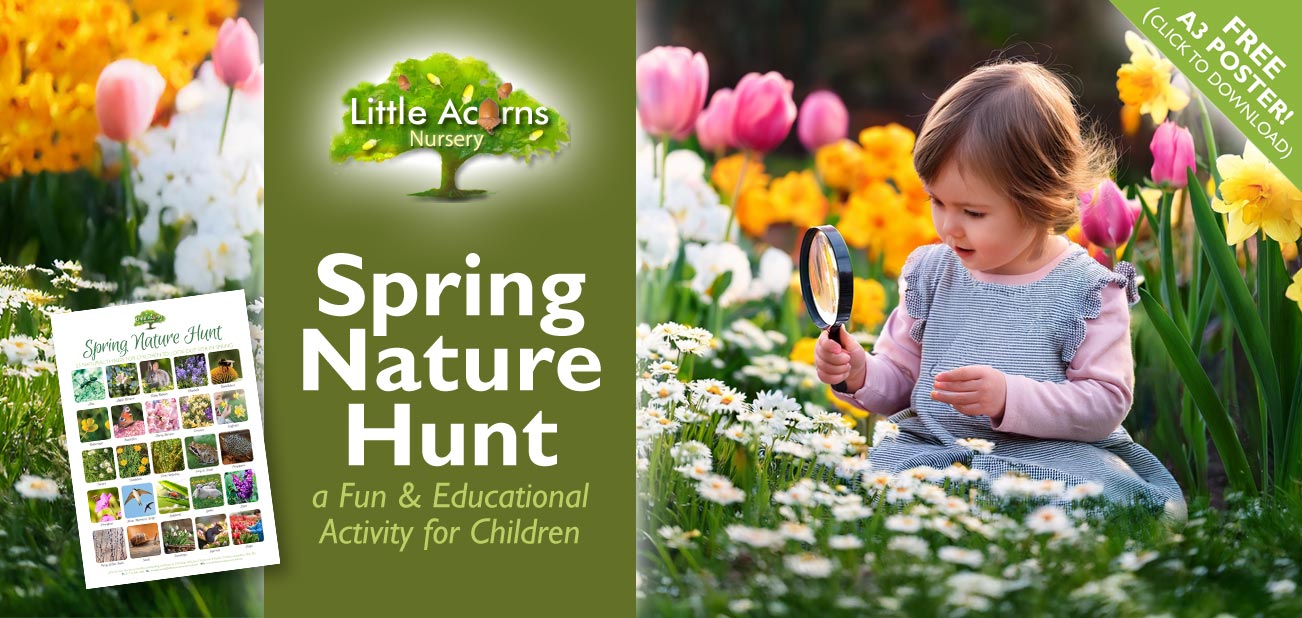
 With this in mind, it’s a wonderful opportunity to encourage children to get outside once more, enjoy nature and the fresh air, and embark on a Spring Nature Hunt. The activity is both fun and educational for little ones. Spending time in nature is also very good for children’s health and well-being. And the icing on the cake? Today’s activity comes with an attractive reference poster depicting 25 natural things for children to look out for — and it’s free for families to download.
Download Your Free Spring Nature Hunt Reference Poster
Click the poster preview image below to save the poster in high-resolution Acrobat PDF format. Whether you left- or right-click will depend on your device’s settings. Print it out, and give it to children as reference for some of the many natural things they can discover in this wonderful season.
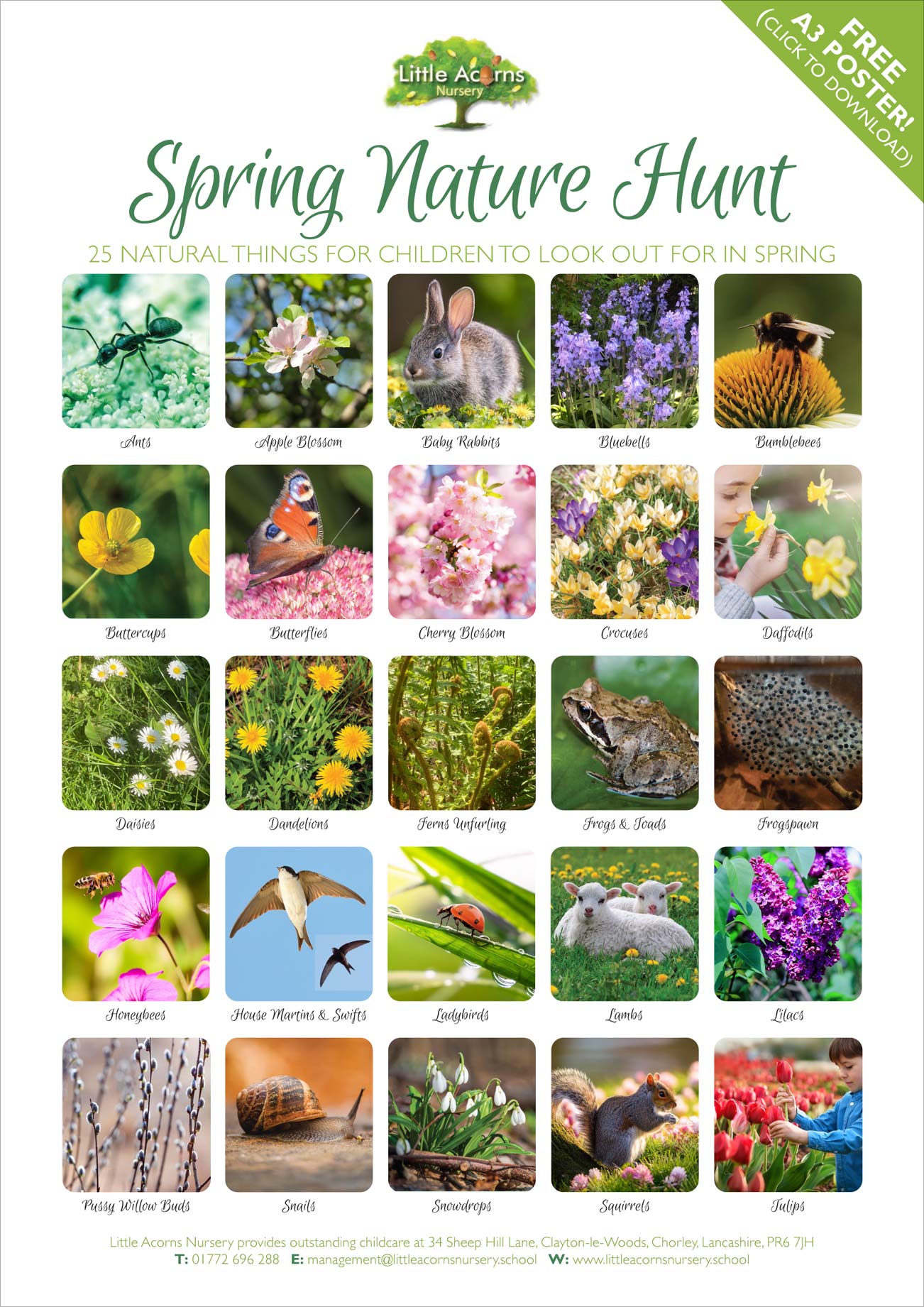
How Many of the Wonderful Spring Things Can Your Child Spot?
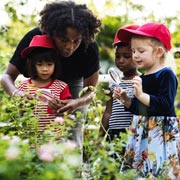
After printing out the poster as reference for you and your child, challenge them to go into the garden, local open space, or on a walk with you and see how many of the wonderful spring things they can discover. They can perhaps tick each one off as they are spotted.
Some of the easiest things to find are flowers like daisies, dandelions, and buttercups, which can be found throughout most of the spring season. Other flowers, like crocuses and snowdrops, and things like pussy willow, bloom very early in spring and may not be visible later in the season. Butterflies, bumblebees, honeybees, and ladybirds, however, should be amongst the insects that are abundant all spring and beyond. The fact that some items will be more challenging to find than others is, however, all part of the fun!
Teach Kindness – Nurture Empathy
It’s best to teach children to simply spot them, not try to collect them. Doing so is more kind and will help them understand their responsibility towards the environment and encourage empathy towards living things.
Nature is Important to Children & Adults Alike
Nature is incredibly important for the world and to us, as humans. Spending time in the natural world is also hugely beneficial to children, including those under five. That’s one of the many reasons why we love Forest School at the Little Acorns Nursery in Clayton-le-Woods, which provides regular Forest School sessions and follows its approach. Learn why nature is so important to children here and discover more about Forest School here.
Enjoy!
Today’s Spring Nature Hunt activity will get children outdoors, away from electronic screens, and give them valuable insights into our incredible flora and fauna. Through such an activity, they’ll learn through exploration, discovery, and play, while also benefiting from fresh air, exercise, and close proximity to nature. Discovering some of the beautiful things in the natural world will also give children a better sense of their place within it and open their eyes to the natural riches that are available when they venture outdoors. Spending time in nature will teach them valuable knowledge and skills, stimulate their senses, benefit their mental and physical health, and so much more.
Your High-Quality Childcare Nursery in Clayton-le-Woods
With its Own Forest School!
 Little Acorns Nursery is located in Clayton-le-Woods, near Chorley. We are an award-winning childcare setting and provide high-quality childcare from Monday to Friday, virtually all year round. We support funded childcare hours for eligible children, provide Forest School sessions, and are graded by Ofsted as a good childcare provider. We also open early each day at 7:30 am and remain open until 6:00 pm, which will be particularly convenient to working parents. And, for our little ones, we provide the very best start, in a well-equipped, warm, loving and stimulating environment that brings out the best in them.
If you’re looking for high-quality childcare with Forest School sessions near Clayton or Chorley, we’d love to hear from you. Select an option below to start your child’s nursery journey with Little Acorns Nursery today:
Little Acorns Nursery is located in Clayton-le-Woods, Clayton Brook, Clayton Green, and Chorley. As such, we may also suit families living nearby in towns and villages like Thorpe Green, Pippin Street, Buckshaw Village, Whittle-le-Woods, Farington, Bamber Bridge, Lostock Hall, Euxton, Leyland, and Penwortham.
Important Safety Note:
Appropriate adult supervision is essential when children, especially the very young, are playing and exploring outdoors. There are many dangers out there, including hazards like ponds, lakes, water, traffic, stranger danger, steep inclines, and so on. So, please remain vigilant at all times when supervising little ones outside. Teach them to recognise and become aware of the dangers, hazards, and potential risks associated with all aspects of the outdoors.
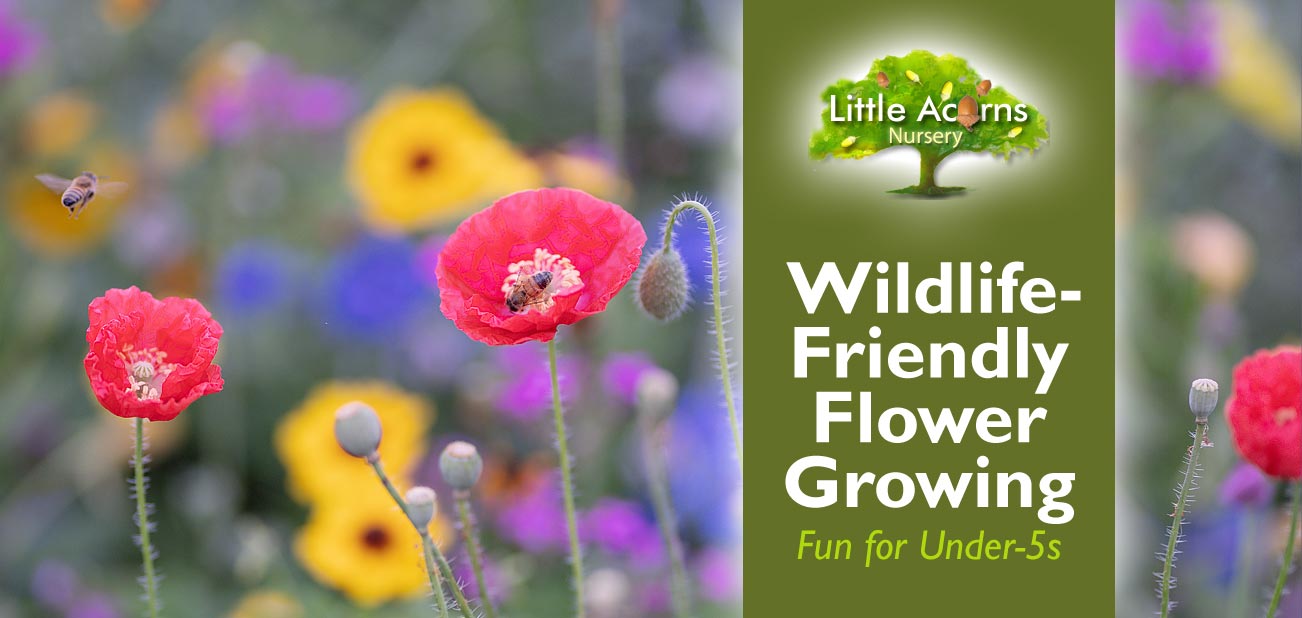
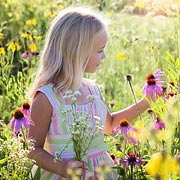 Today’s flower-growing children’s activity follows on nicely from last month’s
 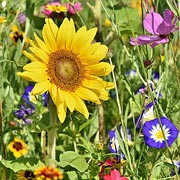 It’s possible to sow wildflower seeds from March right through to mid-October or, at a push, early November so long as snow or frost is not forecast. Those sown closer to March and April will generally flower in late spring/early summer. Those sown very late in the year will flower the following year, from spring onwards. Any sown up to and including the middle period, for example during July, should still flower in the same year — wildflowers usually bloom some 60 to 80 or so days later if they’re timed to grow in the same year as they’re sown.
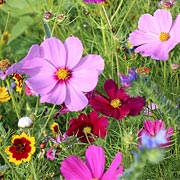 There are several ways for children and families to source wildflower seeds. The most obvious way is to buy them commercially, in seed packets. These are available from any number of different outlets including nurseries, supermarkets,
 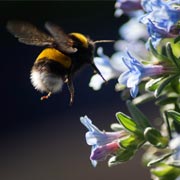 If you buy your child commercially-available wildflower seeds, the information on the packet will often say if the resulting flowers are bee-friendly, butterfly-friendly, good for pollinators, and so on. So, if you’re sourcing seeds that way, much of the decision-making criteria around which actual flowers to grow is made clear and therefore the choice is easy.
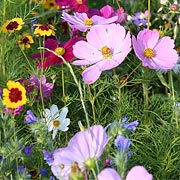 By their very nature, wildflowers are generally not very picky in regard to the type of soil they are happy to grow in. Therefore you/your child will have a greater choice of where to sow the wildflower seeds. A fairly clear sunny area is good, whether that’s garden beds, flower pots, window boxes, grow bags on a balcony, or even the lawn itself if you want a wild ‘meadow’ type lawn. Whatever the choice, it’s best if it’s somewhere that won’t be disturbed by you/the family though, as you wouldn’t want the wildflowers trampled once they do arrive.
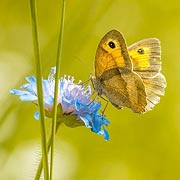 With regard to sowing the seeds, follow any seed-specific instructions on packets in relation to timing and spacing. If you’re using self-harvested seeds or there are no instructions, simply sprinkle the seeds so they’re spaced, fairly evenly, i.e. not too densely sown. This will avoid the wildflower plants having to compete with one another once they start growing. A tip is to sprinkle from a height as this will naturally scatter them more widely. Once scattered, your child can help* to pat the soil surface down, either by hand or using the back of a tool like a spade or a trowel, so that the seeds are secured in the soil. Children can even ‘walk’ them in if they prefer. Once complete, ensure that you/your child keep the soil damp over the coming weeks. The preparation stage really is as simple as that!