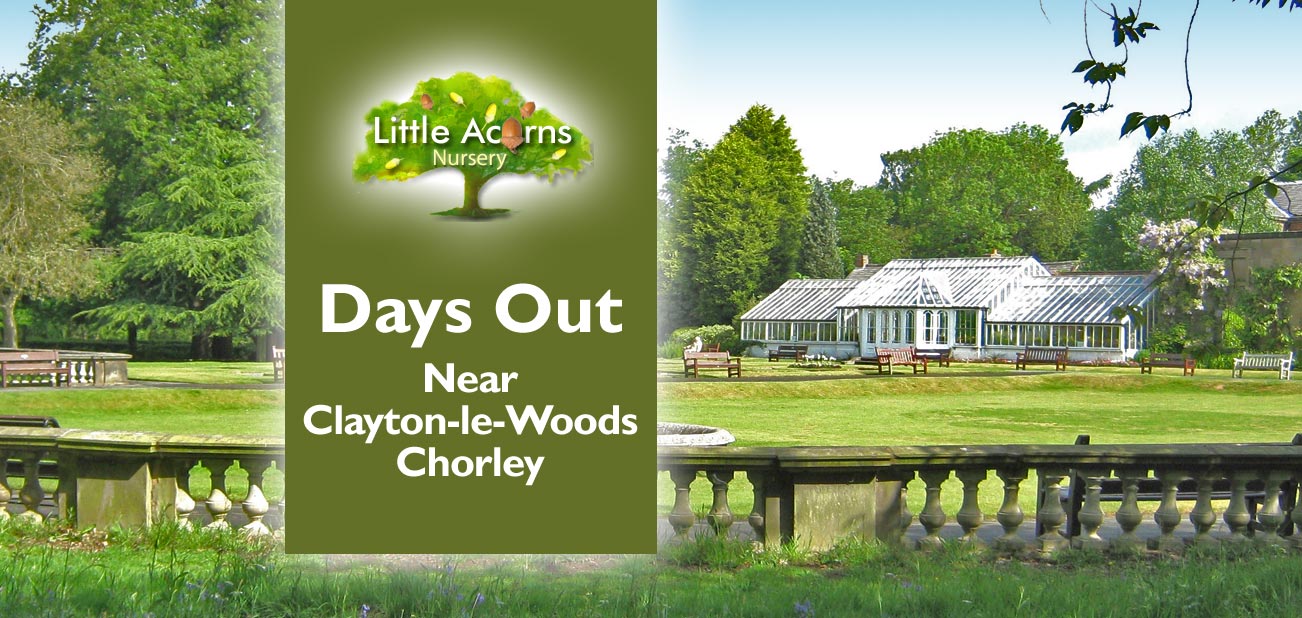
Little Acorns Nursery School is located in Clayton-le-Woods, Chorley. This is a wonderful location with great amenities, attractions, outdoor spaces and leisure facilities all within a short distance. In today’s guide, we explore some of the more interesting places that local families can visit nearby, perhaps for a day out. There are some great ideas below and every one of them receives top reviews from previous visitors:
Cuerden Valley Park
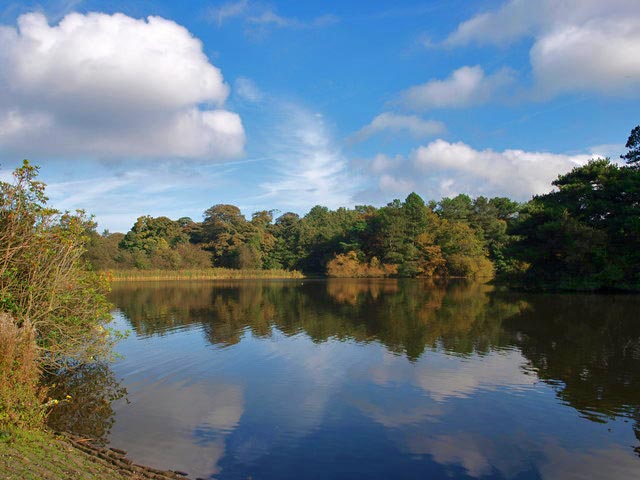 Right alongside Clayton is the lovely Cuerden Valley Park, an award-winning natural open space. Just over a mile away from the nursery, it covers 650 acres. Its wonderful beauty includes parkland, farmland, natural open spaces, flower meadows, lakes, woodlands, the River Lostock, a huge variety of wildlife and even orienteering trails. The park also boasts its own modern visitor centre with a lovely café offering indoor and outdoor seating with hot and cold food and refreshments. Cuerden Valley Park is well worth a visit!
Kem Mill Ruins
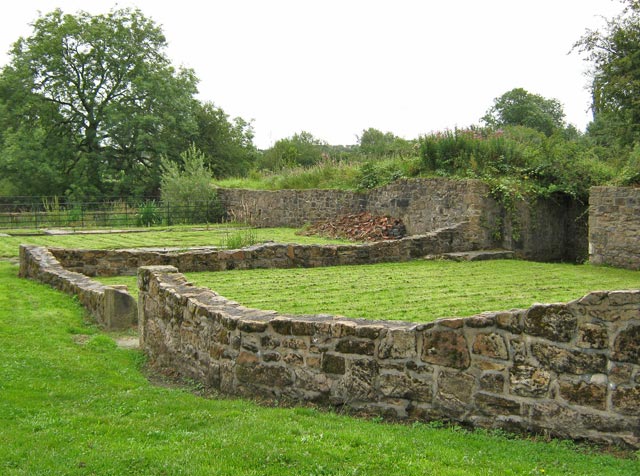 Just 1.4 miles to the South of Clayton and our nursery, also along the edge of River Lostock, are the ruins of Kem Mill. These are just North of Whittle-le-Woods. These are well worth a visit if you like walking in the natural world, enjoy local history or are a dog-walker. The old mill’s footprints are still clearly visible and the history of it can be learned via information signs.
The British Commercial Vehicle Museum
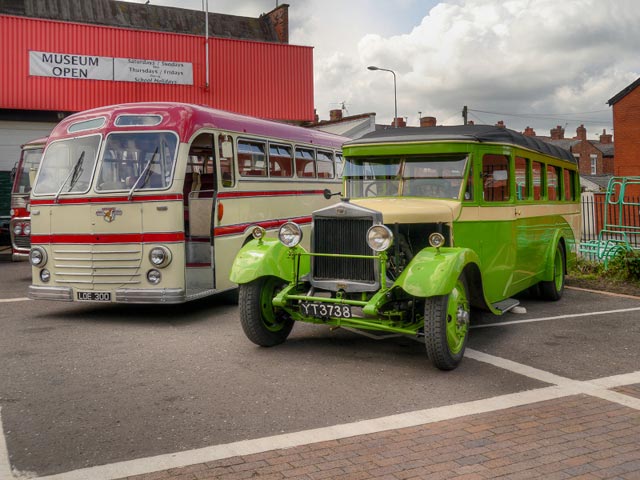 The British Commercial Vehicle Museum is another high quality place to visit if you live near Clayton-le-Woods or the Chorley area. It’s located just 2.3 miles from Little Acorns Nursery over at Leyland. As one recent visitor explained in a review, it’s a “fascinating museum with lots of informative display material and immaculately maintained vehicles.” These include early fire engines and vintage commercial vehicles, buses, lorries and suchlike. There are interactive displays and games, including an area for younger children and helpful, knowledgeable staff. The museum has a nice little gift shop and also a café. It gets great reviews, so is well worth a visit.
Worden Park
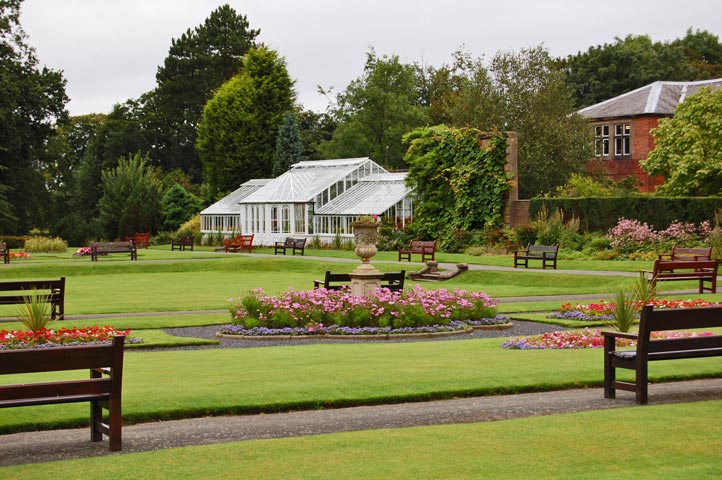 Worden Park is 3.4 miles west of our nursery in Clayton-le-Woods, in the southern outskirts of Leyland. It’s an attractive, natural, parkland space and includes bluebell woods, huge grassy areas and a wonderful children’s play area that features its own sensory area, zip lines, swings, climbing frames, slides and more. It’s a great park where children can enjoy the outdoors, ride bikes, play football and burn off energy. There’s a maze, a miniature railway, a walled garden and a crazy golf area. With lovely woods and streams too, it’s perfect for family outings, picnics and dog walks.
South Ribble Museum & Exhibition Centre
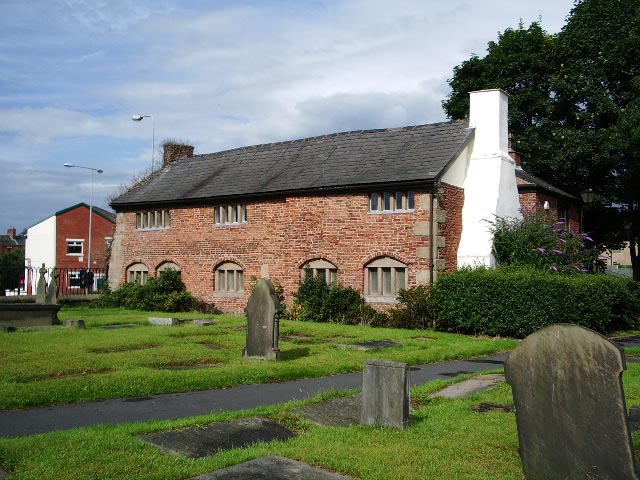 The South Ribble Museum & Exhibition Centre is another popular destination that also scores well in reviews. Located 2.8 miles from the nursery in Leyland, near Worden Park, and just a stone’s throw from Clayton-le-Woods, it’s housed in a restored, timber-framed, Tudor school house. It’s home to all manner of local historical information including photographs, graphics and and even Viking coins. Hopefully this will soon be open again, with monthly exhibitions reinstated, following temporary closure during the lock-down. Entry is free or by voluntary donation.
Turbary Woods Owl & Bird of Prey Sanctuary
Turbary Woods Owl & Bird of Prey Sanctuary 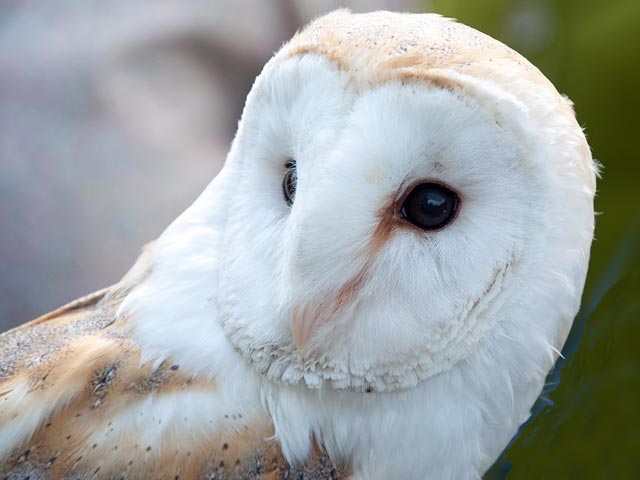 is 5 miles from the nursery, just north west of Clayton at Whitestake, Lostock Hall, near Preston. It is another excellent local attraction as well as being a great cause. Sheltered in a woodland setting, nearly 100 birds of prey live at this sanctuary and rehabilitation centre at any one time. Species include owls, falcons, hawks, eagles and even vultures, amongst others. The centre is a non-profit enterprise and is run by volunteers. It is open all year to the public, with flying displays (weather permitting) on most days at 12:30pm. As with all of the hand-picked places featured in this article, the sanctuary scores ‘excellent’ in visitor reviews.
Pike Stones
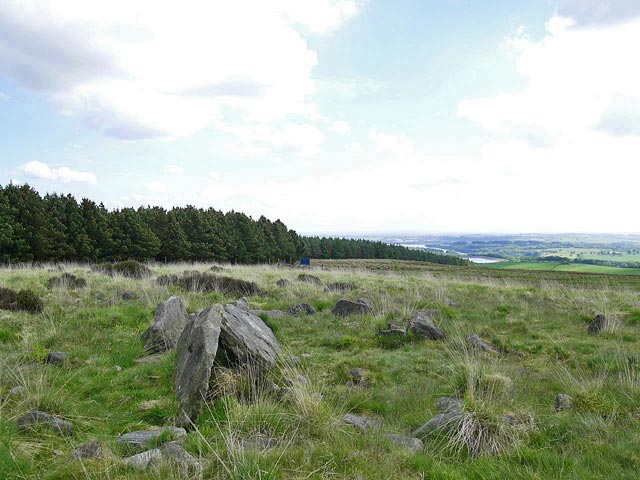 For those who are looking for the most ancient local history, Pike Stones is a Neolithic burial cairn located on Anglezarke Moor, Chorley, just 7 miles south east of Clayton-le-Woods. It’s the oldest man-made structure in the area and one of only two chambered burial tombs in the whole of Lancashire. Visitors can still see the five upright gritstone slabs which originally formed the burial chamber.
Excellent Transport Links
Transport links are fantastic for getting to and from the Clayton area. The A6 an M61 run North/South just a stone’s throw to the East, the M6 runs similarly to the West and the M65 runs East/West just to the North of Clayton-le-Woods. So, Clayton sits right in the middle of these major routes, making it incredibly easy to get to, from and around. Several train stations are also within just a couple of miles or so (Bamber Bridge, Leyland, Lostock Hall and Buckshaw Parkway stations).
An Outstanding, Award-Winning Clayton Nursery
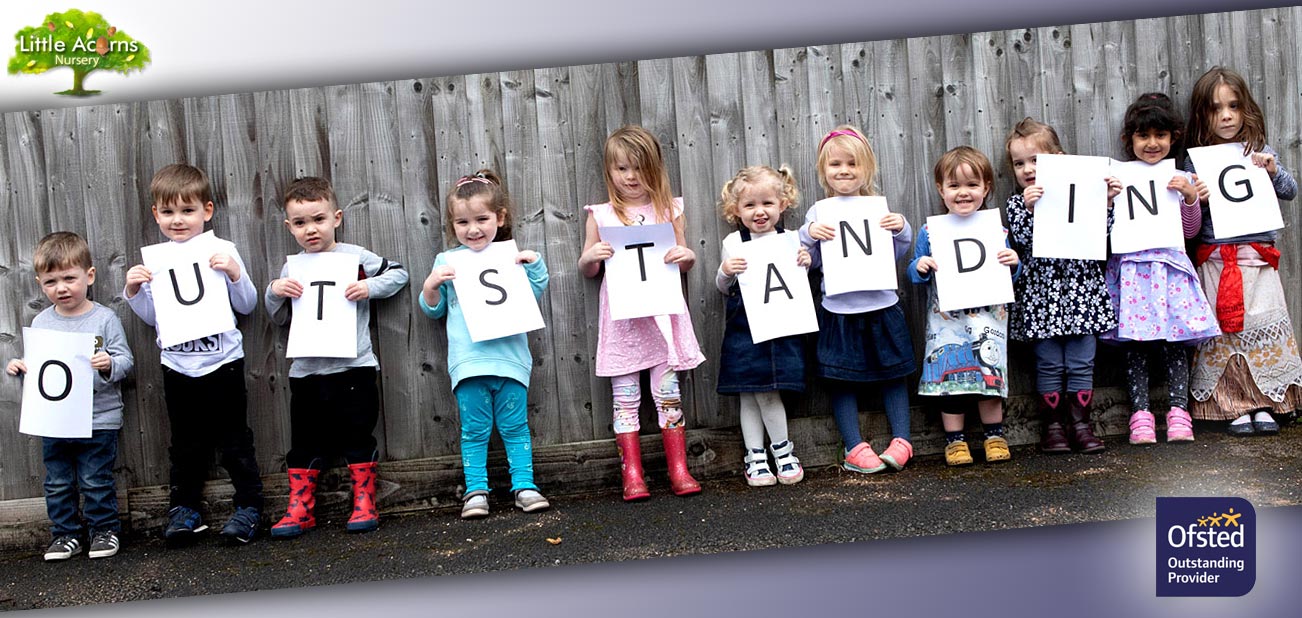
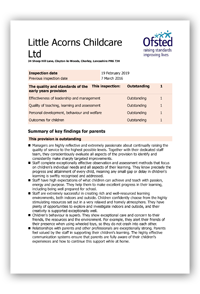
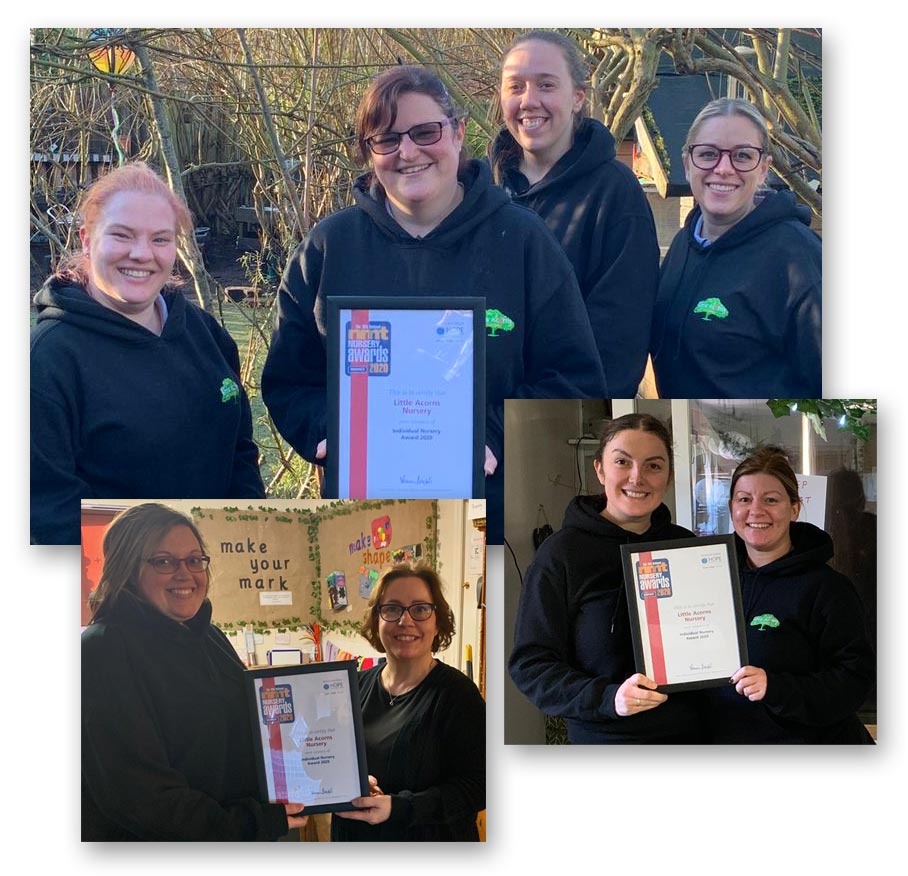
 Little Acorns is an award-winning daycare nursery for babies and under-fives in Clayton-le-Woods, very close to Clayton Green and Clayton Brook, Chorley. It’s also graded as An Outstanding Nursery by Ofsted and even has its own Forest School. Nurseries and pre-schools simply don’t get any better than Little Acorns Nursery so, if you’d like your baby, toddler or under-five child to attend the best nursery and pre-school in Clayton-le-Woods, Chorley and Central Lancashire, please get in touch to register your interest — while nursery places are still available. Please choose an option below:
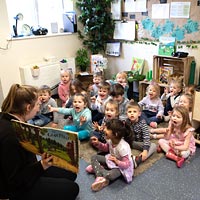
 Communication & Language is the first of the three prime areas of our EYFS-based curriculum. Without good communication and language skills, all other areas of learning could suffer, so these are critically important skills for children to master in their early years. Staff at the nursery therefore encourage rich communications between staff and children — and from peer to peer — from the very first day they join the nursery. Language and communication skills grow naturally to children through engaging, fun activities like role-play, story-telling and question-and-answer games. High quality books and other rich reading materials are also employed by staff to read with children in an interactive way. Using these kind of approaches helps children to learn new vocabulary and grammar, to improve reading and comprehension and to almost effortlessly broaden their language and communication skills as they grow.
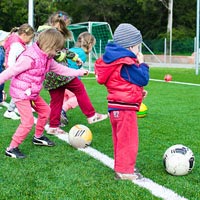 coordination and fitness among the children at every stage. This is all done incrementally through a physical development programme that’s custom-designed for each individual child. This tailored programme takes consideration of their natural abilities, preferences and, of course, any disabilities or limitations. As they grow, the programme of fun, physical activities will help every child to reach their own personal bests for traits like fitness, balance, coordination, hand-eye coordination, agility and spatial awareness. In turn these physical improvements will help with their general wellbeing and happiness. And, at all times, the children will have been having immense fun, making friends and improving social skills, self-confidence and more along the way.
 The social and emotional aspects of it aim to help children fit in with adults and peers around them, support one another, themselves feel supported by others and together learn to manage emotions and behave in acceptable, appropriate ways. As they learn to do all of this, they will become more confident, feel rightly valued, more easily resolve any conflicts and form closer friendships with peers and create stronger bonds with staff. All of this will act as a social and emotional foundation to build everything else upon.
 Literacy is the first of the remaining four areas of focus. A curriculum would be sadly lacking if children didn’t end up literate at the end of study. Literacy is absolutely fundamental and will give each young child the very best start when they leave early years settings to start school. On the face of it, it’s all about reading and writing. However, getting these right will help with many other areas of learning. At Little Acorns, we encourage nursery children to take enjoyment from reading. After all, once they can read they will understand so much more about the world from non-fiction material and so much more about the possibilities of the imagination and creativity from fiction books. So, they have access to a wide, rich variety of reading materials. Grammar, spelling, punctuation, phonetics and overall comprehension of a huge variety of topics will all go hand-in-hand with active and regular reading. In a similar way, writing will benefit too, as the children learn to recognise the correct spelling, composition and sentence structure and so on. Exposure to our rich variety of books will feed their imaginations and help them to be more creative themselves. We also encourage our children to verbalise, for example by reading out loud to themselves and others in an interactive way. By so doing, speech, pronunciation and articulation also benefit, as does their confidence to speak up.
 Mathematics is our fifth area of study within the core EYFS curriculum at Little Acorns Nursery. It’s another fundamental skill that children need to learn but, as with everything at Little Acorns, we make it fun. Through play and interactive sessions, children will learn the concepts behind mathematics, soon learning to distinguish things like odd and even numbers, number patterns and sequences, concepts like larger or smaller, wider or taller and more or less. Counting will first be mastered from one to ten, then in reverse, then extended to 20 or more. Concepts like volume, shape, measuring and space will also be included. So, by the time they leave our early years setting, they’ll have learnt the requisite maths skills and concepts that they’ll need in order to hit the ground running when they start school.
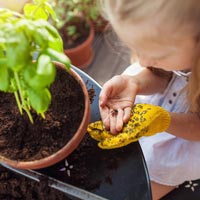 After all, there is so much around them and they need to understand it and to give everything they see context. With that in mind, we’ll help them to recognise, understand, describe and even sometimes draw what’s immediately around them. They will also learn about the technology they see and use around them. Our excellent
 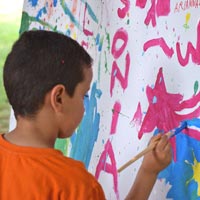 A wide variety of media, equipment and tools are available to them at the nursery and activities encourage the children to get involved and to create. It’s not just art, though; the children can involve themselves in role-play activities, they can sing, dance, tell stories and perform. Their imaginations can run riot and be free as they can express themselves and their creativity in a rich variety of ways.
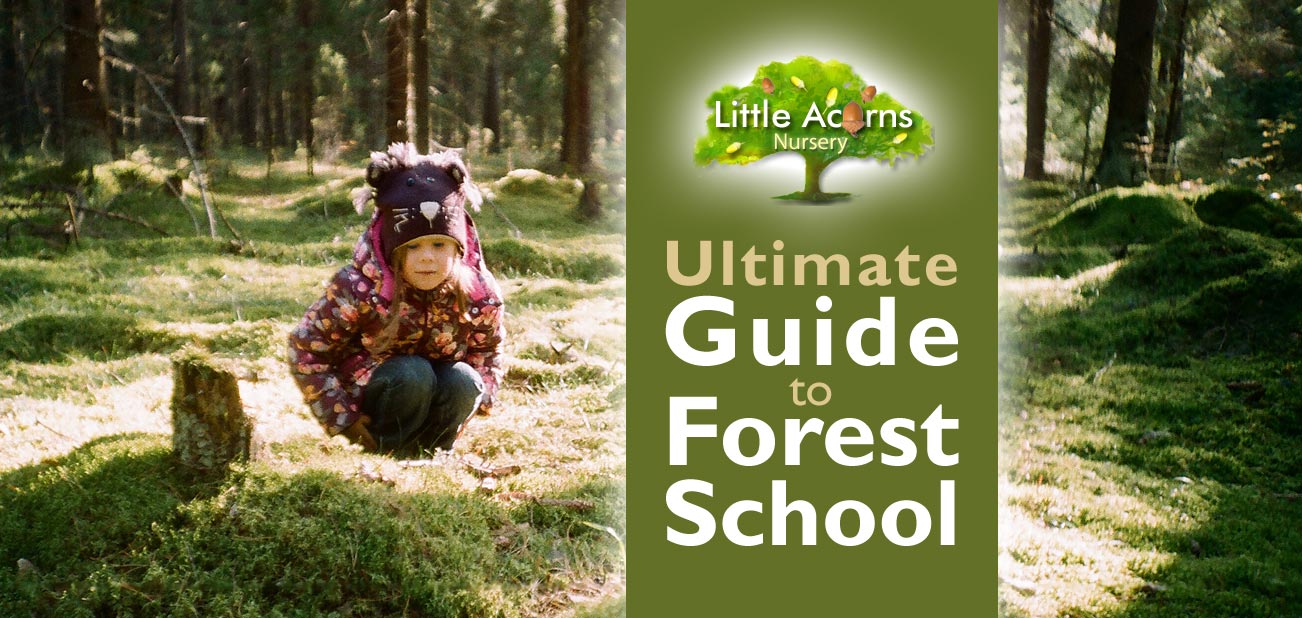
 Little Acorns Nursery offers Forest School sessions and, indeed, was the first childcare setting in the Chorley area to offer them. Many parents understand that ‘Forest School’ offers children outdoor discovery sessions where they can explore nature and all that the Great Outdoors has to offer. However, what’s it really about? What is the ethos behind it? How did it come about and what is its history? Perhaps most importantly, what are its benefits to children? Here we’ll answer all those questions and more, in our Ultimate Guide to Forest School.
 The biggest influence, however, came from Scandinavia and the play-based, child-centric educational system of Denmark’s outdoors (‘friluftsliv’) approach to early years education. Their revolutionary outdoor system was hugely successful, so nursery staff from Bridgewater College in Somerset visited Denmark to see it in action for themselves. They were so impressed that they founded the first Forest School, following their return to the UK, in 1993.
 With a focus on nature and the natural world, Forest School sessions take place outdoors, ideally in natural, woodland settings. If that’s not possible, natural areas containing trees would be the next best setting, although more urban locations may necessitate the use of school grounds if no woodlands are available locally. In that scenario, practitioners would bring in natural materials such as sticks, logs, fir cones and so on.
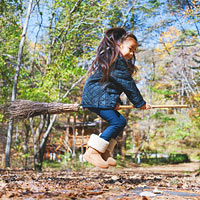 Forest Schools focus on each child’s individual interests, skills, preferences and needs as well as balancing them with those of the whole group. Indeed, this builds a community that’s immersed in this natural environment, learning from it and also from one another. Play is a huge part of this and, as always, ensures that learning is immense fun.
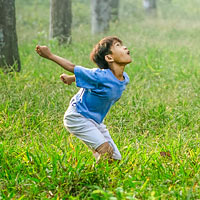 Nature teaches children so much — about flora, fauna and the make-up of the world (of course); but it also teaches children about themselves. Children will learn or discover new hard and soft skills when out in the natural world. They’ll discover skills that they didn’t know they had. Leadership, critical thinking, team-working and problem-solving are just a few examples.

 “Exceptionally Effective Observation & Assessment” of Children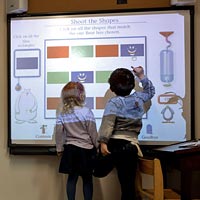
 Outstanding Personal Development, Behaviour & Welfare
 Are you looking for the best nurseries or pre-schools for your baby or child? Then consider