
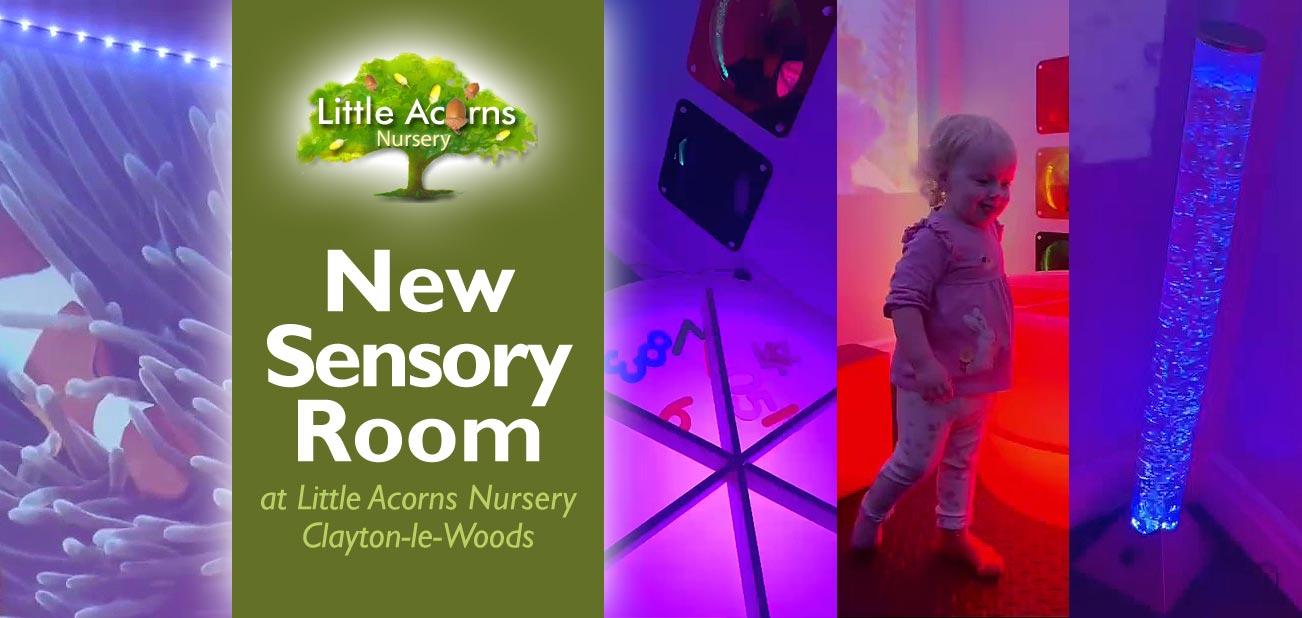
Little Acorns was delighted recently to unveil our new Sensory Room at our Clayton-le-Woods nursery near Chorley. The space offers a holistic experience tailored to each child’s individual needs and features calming lights, soft play equipment, a variety of textures, and a sensory den. Designed to enhance engagement and enjoyment, the new sensory equipment, accessories, and resources facilitate a wide range of sensory experiences that support therapeutic, educational, and recreational goals for every child. Indeed, the new room has been a huge hit with the children who love to go there to relax, explore, learn, and engage with the wide range of stimulating activities.
The new Sensory Room is accessible throughout the day under the watchful eye of our dedicated early years professionals. It’s an inclusive environment that not only provides diverse sensory opportunities for all children but also offers a safe and calming space to help regulate and reduce instances of sensory overload. Watch our video and view the image gallery to get a flavour of what’s on offer in the new sensory space.
Sensory Room Gallery
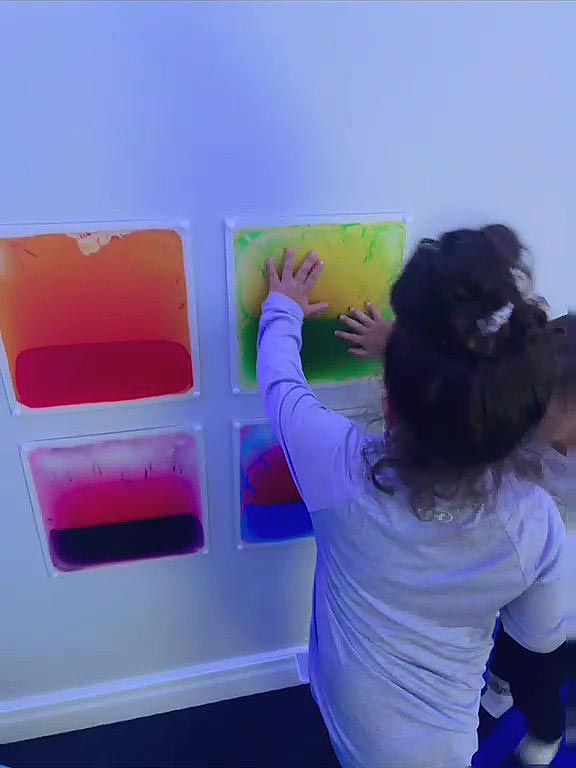
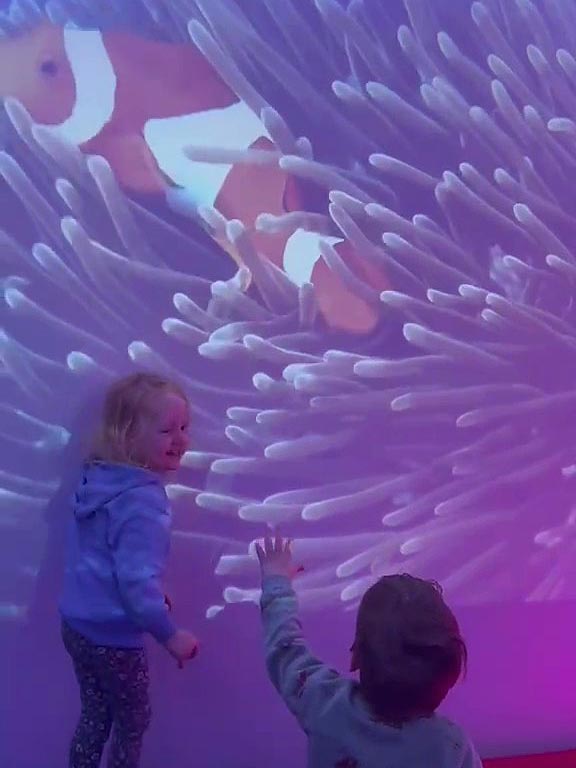
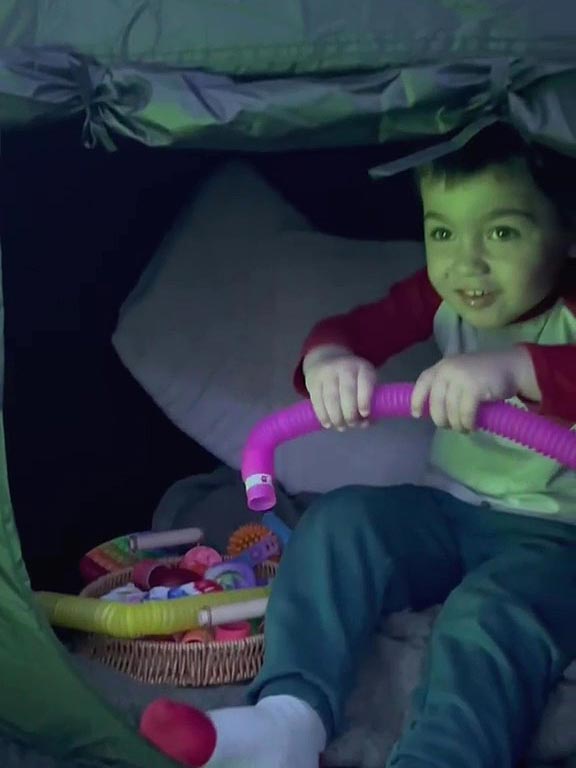
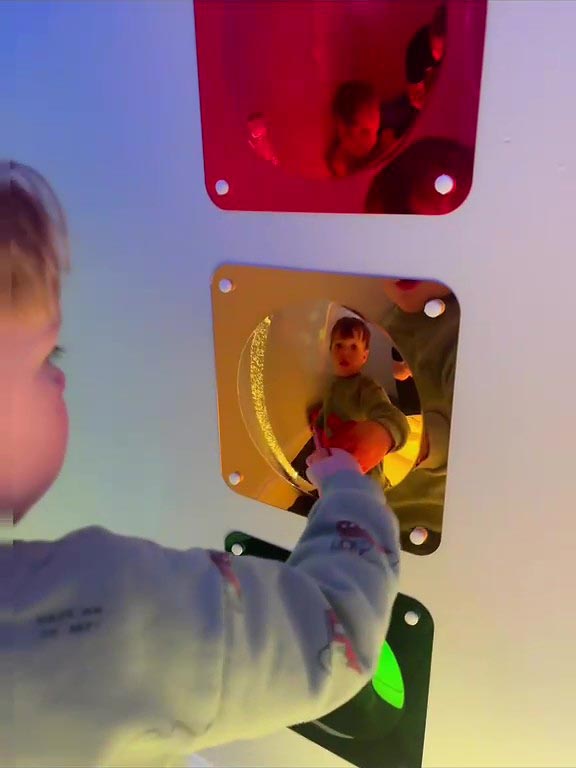
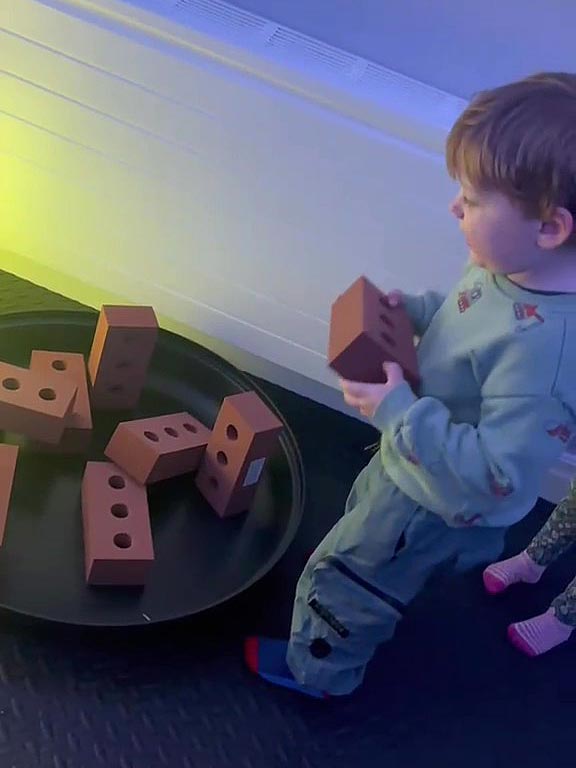
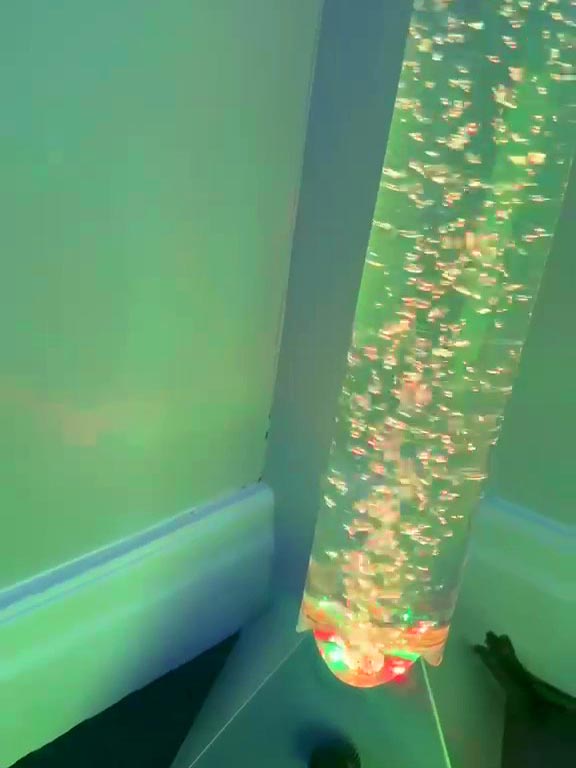
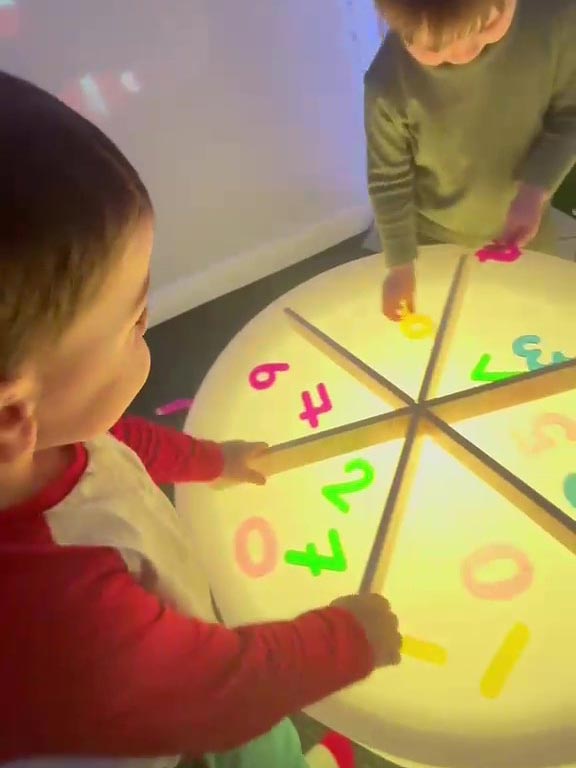
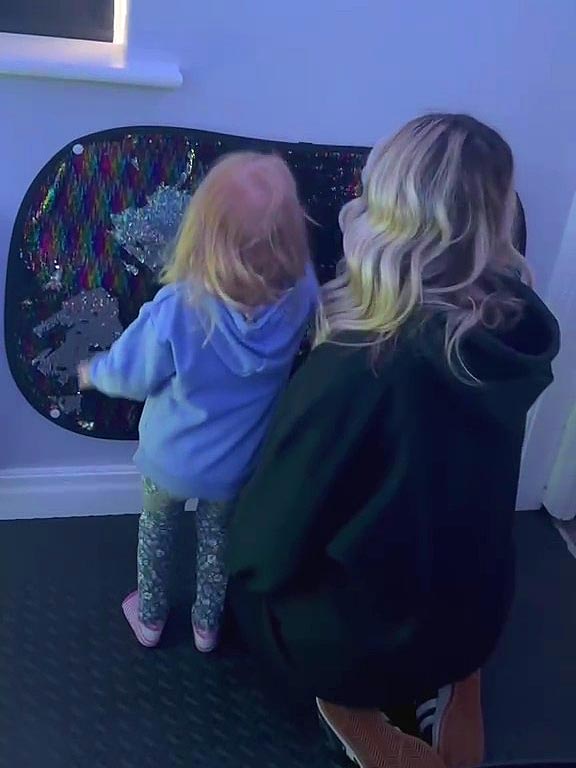
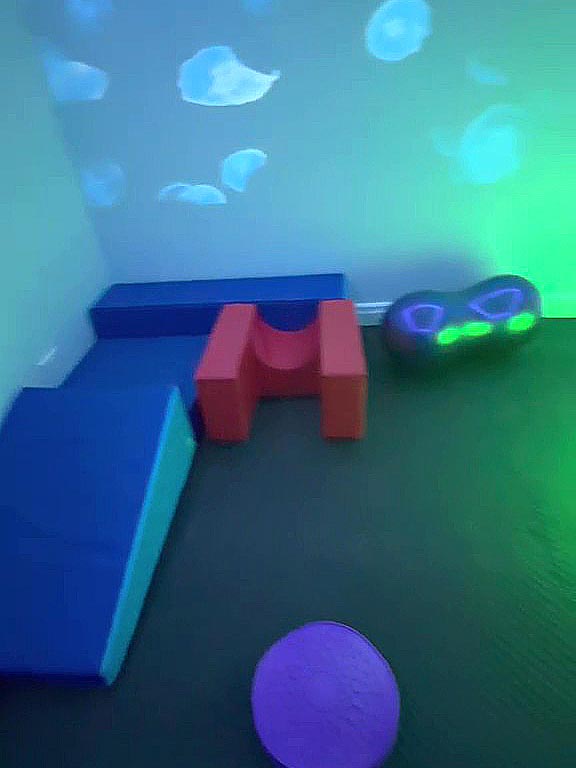
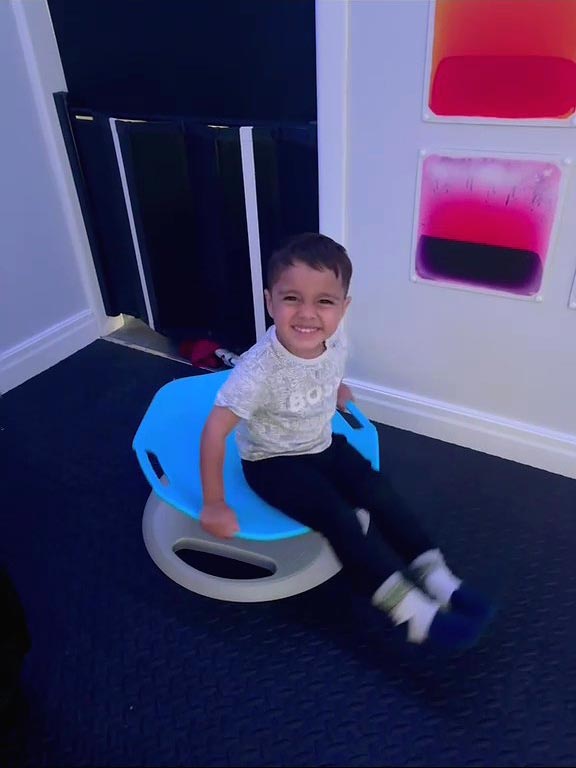
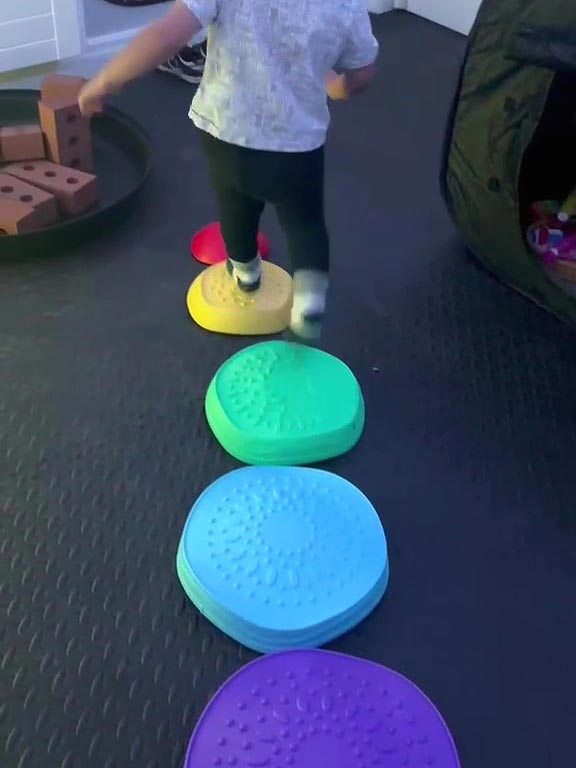
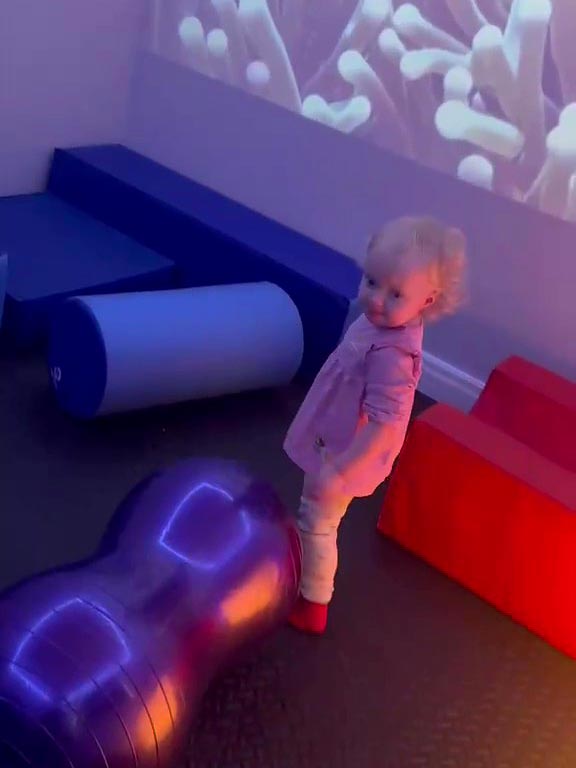
(Click the images to view them large along with a full description).
The new Sensory Room at Little Acorns Nursery is designed to engage many of the eight senses, which help people and animals make sense of stimuli coming from the world and feelings within their own bodies.
The 8 Senses
What are the eight senses? There are five internal and three external senses:
The 5 External Senses
These help us make sense of stimuli coming from things outside our bodies:
- Sight (visual), i.e. what people see, including colours, shapes, movement, etc.
- Hearing (auditory), i.e. sounds people hear via their ears, including qualities such as pitch and volume.
- Touch (tactile), i.e. how things feel via receptors in the skin. Aspects like pressure, texture, temperature, and pain can be identified through this sense.
- Smell (olfactory), i.e. the sense, associated with the nose, that identifies the odours/scents of things around us.
- Taste (gustatory), i.e. the sense that identifies flavours — sweet, savoury, salty, bitter, etc.
The 3 Internal Senses
These help us to make sense and practical use of feelings inside us:
- Vestibular, i.e. the sense governed by inner ear mechanisms that help us with balance, movement (especially of the head), and spatial orientation.
- Proprioception, i.e. the sense of body awareness that gives us greater understanding and control of body/limb position through stimuli feeding back from muscles, joints, etc.
- Interoception, i.e. the sense that tells us about internal states like temperature, heart rate, and pain, as well as feelings like hunger, thirst, and even needing the bathroom.
Sensory Integration
One of the most important things to understand about senses in early childhood is that, although children are born with some basic senses and sensory equipment, their brains and neurological pathways need to both develop further and learn to process sensory stimuli. Such learning is aided only by active physical exploration and a wide range of experiences. This leads to something called ‘Sensory Integration’ — the interpretation and organisation of incoming stimuli, which will aid a person’s appropriate responses to them.
Some of the Benefits of Our New Sensory Room
For children at Little Acorns Nursery in Clayton-le-Woods, the equipment, accessories, and resources in our new Sensory Room will help in achieving that all-important sensory integration. Touching different textures, climbing, running, balancing, spinning, hearing sounds and seeing visual stimuli will all help young brains and synapses to better organise themselves and give meaning to the incoming stimuli and internal senses. By giving meaning to signals received, and enabling children to make sense of the related feelings and emotions, they will become better equipped to react in appropriate ways. Examples of such reactions may include moving in a particular way to achieve a specific outcome, adjusting their balance to prevent a fall, improving coordination and gross motor skills, optimally adjusting body position within a space, or even learning, through repeated experience, to ‘filter out’ some of the background stimuli when needed. The latter can be useful, for example, when a child is trying to focus on a particular task or, indeed, is trying to be calm and relaxed despite multiple stimuli being present.
A Safe Space for Children
As well as helping to stimulate those whose senses may be under-active or in need of development, sensory rooms also represent a safe and soothing space where children who are at risk of overstimulation can retreat. Whatever the scenario, the sensory room is a place where all children can decompress in a peaceful space and reset before returning to a group.
Sensory rooms are highly inclusive and will therefore also support development in children who are neurodivergent, for example, affected by ADHD or autism.
Nursery Places at Little Acorns Nursery
A Nursery Place for Your Child in Clayton-le-Woods, Near Chorley
 If you are local and your child is under five, consider a nursery place for your child at
  Little Acorns Nursery (Clayton-le-Woods, Chorley). We are rated as a good childcare provider by Ofsted, and support free/funded childcare hours for eligible children. The nursery day also begins early, at 7:30 am, and remains open until 6:00 pm — convenient for working parents.
If this sounds of interest, please get in touch using one of the following options:
As well as providing weekday childcare for families in and around Clayton-le-Woods, Little Acorns Nursery may also suit those nearby in towns and villages like Clayton Brook, Clayton Green, Chorley, Penwortham, Farington, Bamber Bridge, Leyland, Thorpe Green, Whittle-le-Woods, Lostock Hall, Pippin Street, Buckshaw Village, and Euxton.