
Today’s guide is an important one — and is essential reading for expectant parents and those with newborn babies. For such families, heeding today’s guidelines could potentially save a baby’s life, so they are well worth attention. Today, we highlight the huge risks potentially associated with allowing friends, family, and others to kiss your newborn baby and why such infants are so uniquely at risk. Read on to learn more about the dangers of people kissing newborns and the measures you can take to keep yours safe during their most vulnerable early months of life.
Isn’t it Natural for Others to Want to Kiss Your Newborn?
 It is absolutely natural for close friends and family members to want to kiss a newborn baby when it arrives. However, most are unaware of the danger they may be putting the baby in at this pivotal stage. Such dangers are potentially catastrophic to the health of the newborn and, in the very worst cases, even life-threatening. Read on to learn why and discover measures you can take to counter such risks to keep your little one safe.
The Immature Immune System of Newborns
Although newborn babies are equipped to fight off some infections through antibodies inherited while in the womb and from breast milk, their immune systems remain somewhat immature. In other words, immune systems are incomplete during a baby’s earliest months of life. The infants have not yet built up a full suite of infection-fighting antibodies, and their immune system’s ‘memory’ is still limited. Such factors alone mean that infections can spread more rapidly than might happen in older children and adults. However, the most crucial factor to understand relates to something called the Blood-Brain Barrier.
The Incomplete Blood-Brain Barrier in Newborn Babies
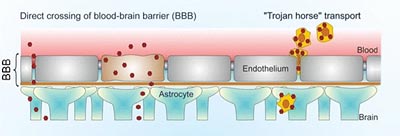
The Blood-Brain Barrier is a crucial internal protection layer that, once fully formed, keeps the brain and central nervous system safe from microbes and other harmful substances that may be carried in the bloodstream. Think of the barrier as a filter that lets nutrients and other good things through from the bloodstream, but keeps bad stuff like bacteria and viruses out. When such a filter is fully formed, the brain and central nervous system are well-protected from potential infections. However, if the Blood-Brain Barrier hasn’t finished forming, there’s a real danger that something harmful could slip through.
 During their first months of life, babies have an incomplete Blood-Brain Barrier. It is still developing, to a degree, so its ability to protect is not yet fully optimised. Therefore, if a virus or bacterial infection is passed to a newborn or infant baby, there’s more chance that it could pass through the bloodstream straight into the infant’s brain. Such an infection could be potentially devastating. Dangers include possible sepsis, meningitis, brain inflammation (Encephalitis), brain swelling, brain damage, other neurological issues like seizures, and breathing difficulties. Some such dangers could prove fatal in the worst cases. It’s also worth noting that babies born prematurely are even more at risk, because their Blood-Brain Barriers are more immature when they’re born.
Many infections that would cause only mild symptoms in adults may be catastrophic to a newborn due to their unique vulnerabilities in their earliest months.
The Particular Danger of Passing HSV to Newborns
 One infection that should be of particular concern to parents of newborns is the HSV virus. HSV stands for Herpes Simplex Virus, also known as Neonatal Herpes. There are two kinds: HSV-1, which is typically associated with cold sores, and HSV-2, also known as genital herpes. What’s key is that both kinds can be passed on through touch if skin carries infection, or through saliva. And, while transmission of HSV-1 is more likely to be transmitted when cold sore blisters are evident, it’s also possible to pass the virus on when none appear to be present. What’s more, many people carry such viruses without even knowing it.
“70% of the UK population carry one or two forms of this virus, but many of those people have no idea they are carriers as they have no symptoms at all.” — The Kit Tarka Foundation.
For newborn babies and those in their earliest weeks and months, transmission of Neonatal Herpes can be potentially catastrophic. Infections can spread rapidly at this point in a baby’s life due to the immature immune system and incomplete Blood-Brain Barrier protection.
“A baby is most at risk of getting a herpes infection in the first 4 weeks after birth.” — NHS.
Signs to Look Out For
Parents — as always — need to look out for signs of infection like a raised temperature and skin rashes, as well as fluid-filled blisters on the skin, inside the child’s mouth, and on their scalp. The baby may also exhibit a lack of hunger, irritability, and sores/redness around their eyes.
Internal organs are also at risk and, if infected with Neonatal Herpes, a baby may start to display symptoms similar to those of sepsis. Signs may include yellowing of the skin, difficulty breathing, extreme lethargy, and a raised or erratic temperature.
The central nervous system, if infected, can also result in extreme listlessness and irritability along with tremors, seizures, and a bulge to the soft spot. Such infections are potentially fatal and therefore require urgent medical attention — the earlier the better.
“The younger the baby, the more vulnerable they are to the harmful effects of infection.” — NHS.
Kissing Infant Babies is Risky
Given the above, one can better understand why kissing newborn and infant babies is so risky. It’s therefore important to politely discourage friends, relatives and, of course, anyone else from kissing your little one in the first few months of their lives. Learn more about what the NHS says about the topic here.
Discouraging Friends & Family From Kissing Baby Using T.H.A.N.K.S.
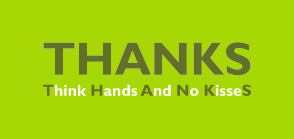 Despite the crucial need, many parents feel awkward asking friends and family not to kiss or touch their newborn. After all, doing so is often instinctive, especially for the closest family members like grandparents. Fortunately, the Lullaby Trust has a memorable and informative acronym for such an occasion: T.H.A.N.K.S. (Think Hands And No KisseS).
Drawing attention to the T.H.A.N.K.S. acronym is a quick and polite way to inform others that they should avoid touching and kissing the newborn baby. It’s a good opener to explaining the risks associated with infection and a way to introduce the need for extra care around infant babies. That includes avoiding kissing the baby, keeping away if unwell (even if only mildly), and keeping hands super-clean by washing them thoroughly with soap. Shared surfaces should also not be touched. Such an approach is critically important in the first 4 weeks and remains imperative for at least the first 4 months of a baby’s life.
We hope that today’s post is of interest and serves to keep newborn babies and young infants safer from possible infections during their most vulnerable few weeks and months. Please share this post freely — let’s spread the word!
Nursery Places at Little Acorns Nursery, Clayton-le-Woods
High-Quality Childcare Near Chorley
 If you are searching for a nursery place for your baby or child under five close to Clayton, near Chorley, Little Acorns Nursery would love to hear from you. We are recognised by Ofsted as a good childcare provider and support funded places for eligible children. We open from 7:30 am to 6:00 pm and are open virtually all year round, making us particularly convenient for working families and those with busy lives.
To register your child or explore more about a possible place for them at Little Acorns Nursery, please select an option below:
Little Acorns Nursery is located in Clayton-le-Woods, near Chorley, Central Lancashire. As such, it will be convenient for families nearby in Clayton Brook, Clayton Green, Penwortham, Farington, Bamber Bridge, Leyland, Thorpe Green, Whittle-le-Woods, Lostock Hall, Pippin Street, Buckshaw Village, and Euxton.
Blood-brain barrier diagram credit: (cropped detail shown) by Giovanna De Chiara, Maria Elena Marcocci, Rossella Sgarbanti, Livia Civitelli, Cristian Ripoli, Roberto Piacentini, Enrico Garaci, Claudio Grassi, Anna Teresa Palamara – CC BY 2.5. Follow the link for more information.